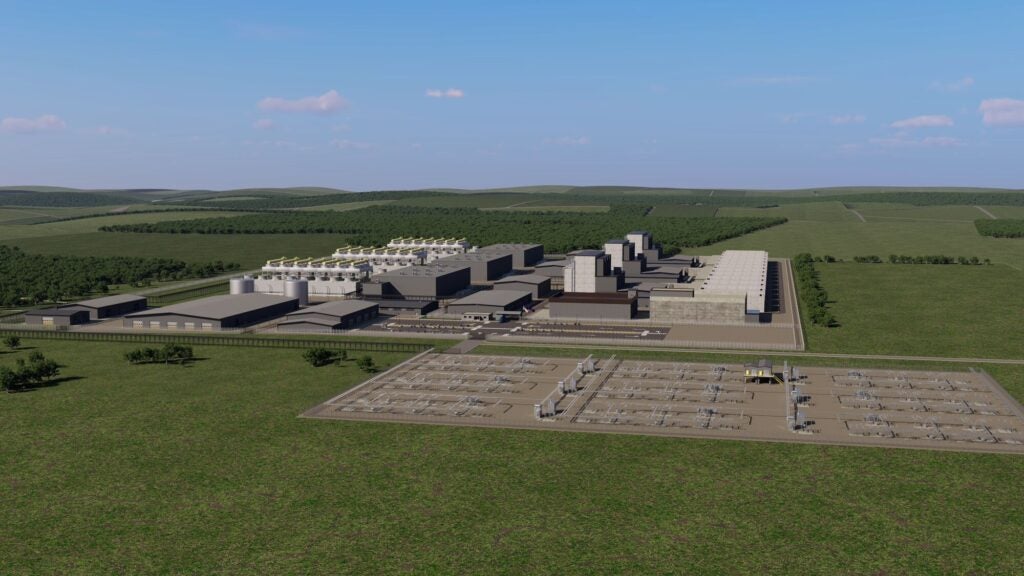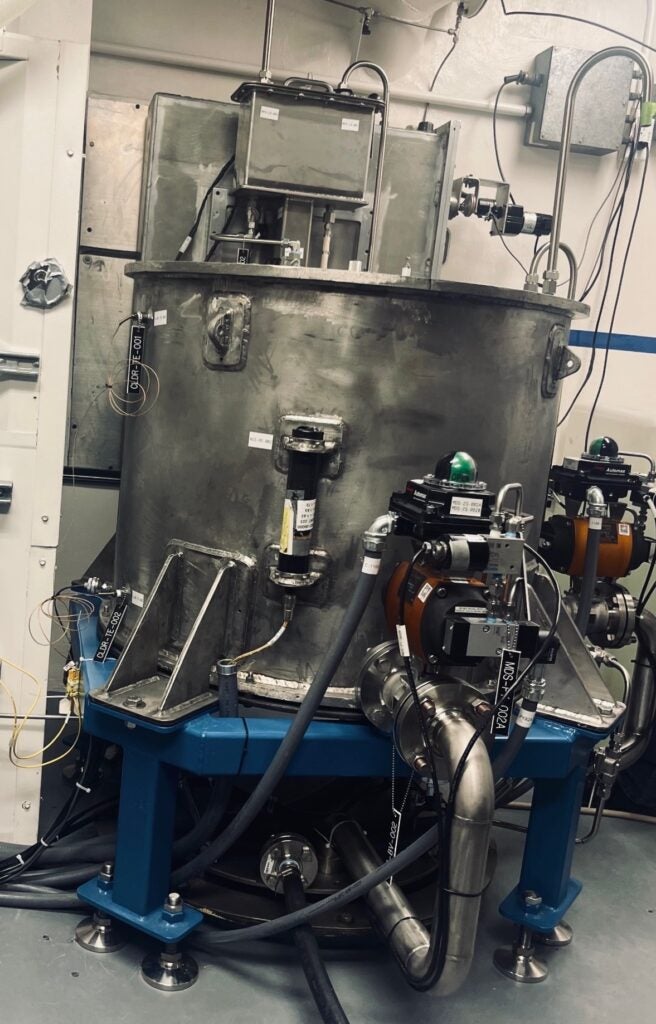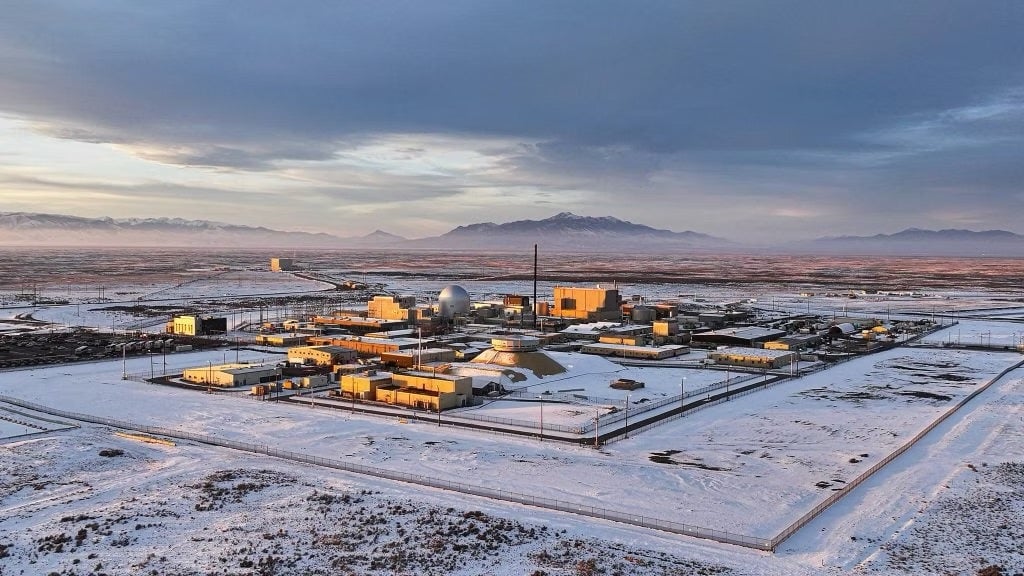

Valar Atomics has achieved self-sustaining criticality and completed zero-power testing at Ward 250, its Gen IV tri-structural isotropic (TRISO)-fueled modular high-temperature gas reactor (HTGR), at the Utah San Rafael Energy Lab in Emery County. The project is the second advanced reactor to go critical under the Department of Energy’s (DOE’s) Reactor Pilot Program and the first DOE-authorized reactor built and operated outside the national laboratory system.
The milestone, confirmed by DOE’s Office of Nuclear Energy at about 4:30 p.m. MDT on June 18, involved a “zero-power fueled criticality demonstration,” the DOE said. It marks the second advanced reactor criticality under Executive Order 14301, which directed DOE to achieve criticality for at least three advanced reactors by July 4, 2026.
Criticality is the point at which a nuclear fission chain reaction becomes self-sustaining. Zero-power criticality, which Valar said Ward 250 achieved, demonstrates reactor physics at essentially no measurable energy output before a reactor begins power ascension.
“Ward 250 reached these milestones as a complete, fully integrated system configured for power operations. The reactor has now begun non-commercial power ascension, and Valar will share further milestones as they are achieved,” Valar said in a statement. Valar noted that Ward 250 will continue “a series of experiments in the weeks ahead,” and that Valar expects to share milestones as they are achieved.
Second Advanced Nuclear Reactor to Achieve Criticality Under DOE’s Pilot Program
Ward 250’s criticality comes less than two weeks after Antares Nuclear’s Mark-0 became the first advanced reactor to go critical under the Reactor Pilot Program on June 4 at INL. Antares Nuclear’s Mark-0 is a sodium heat-pipe-cooled microreactor fueled by high-assay low-enriched uranium (HALEU) TRISO fuel compacts.
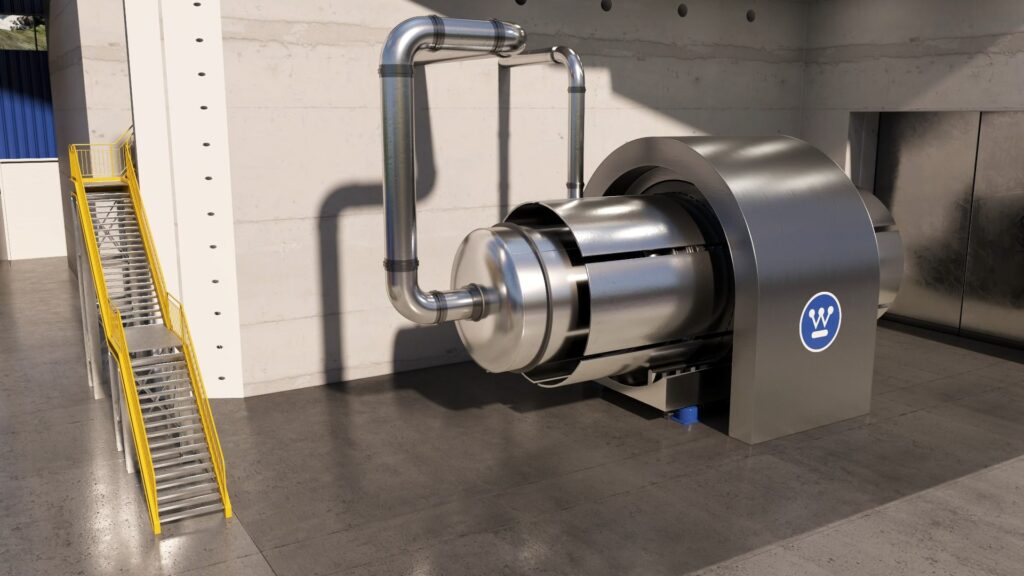
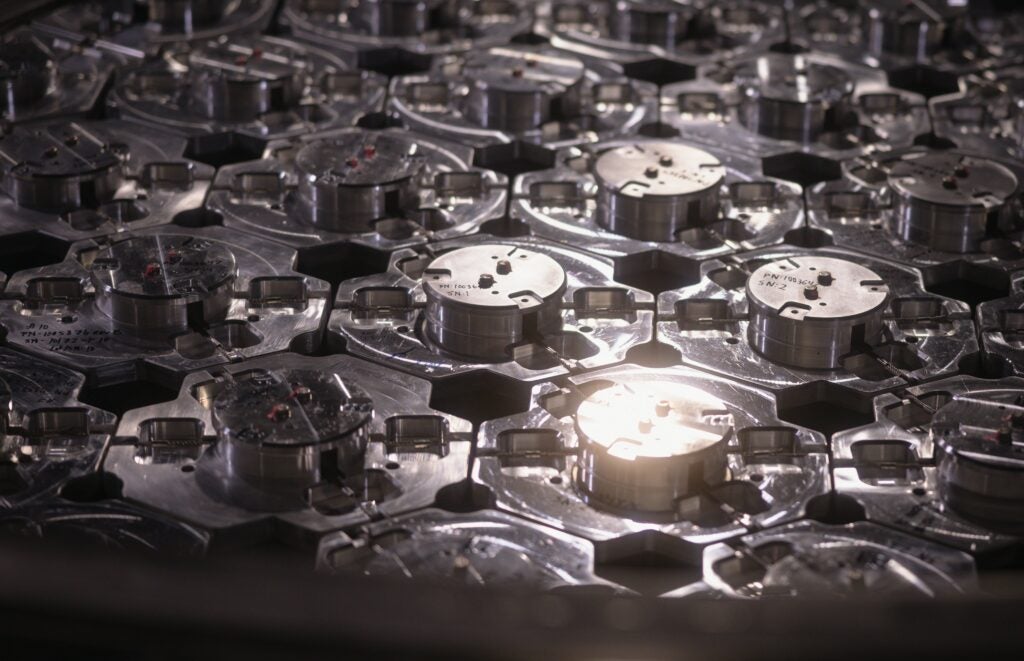
Ward 250, an HTGR rated at 100 kWt initial test power and scalable to 5 MWe, uses helium coolant and TRISO fuel particles in Advanced Gas-Cooled Reactor (AGR) compacts, according to an October 2025 Valar quality-assurance program description. The document says Ward 250 incorporates passive safety features and builds on WardZero prototype technology, while the co-located Valarin Fuel Fabrication Facility is designed to manufacture TRISO-coated particle fuel embedded in graphite compacts using German HOBEG technology with modern process improvements. Kiewit Nuclear Solutions served as the project’s engineering, procurement, and construction contractor.
“Criticality proves the physics; power operations prove the engineering,” Valar said. “Power operations require cooling, instrumentation, controls, advanced shielding, and power conversion to function together as a complete system. Ward 250 went critical with those systems integrated and in place.”
Valar received preliminary DSA approval in February 2026 and final DSA approval on April 23, which cleared the last design gate before DOE’s Operational Readiness Review. The company had said in May that its July 4 target was power operations, not zero-power criticality, calling that step “a massive leap in capability and complexity.”
“Nine months ago, this was an empty site. Today, there’s a critical reactor on it, built and operated by the Valar team,” Isaiah Taylor, Valar Atomics’ founder and CEO, said in the company’s press release. “We met the milestone the executive order set. This reactor was built to make power, and that’s exactly where we’re headed.”
Taylor noted in a LinkedIn post that Ward 250 is Valar’s second criticality as a company, following the cold criticality of its NOVA core at Los Alamos National Laboratory’s (LANL’s) National Criticality Experiments Research Center. NOVA reached zero-power criticality in November 2025 during a week-long campaign that produced 10 critical configurations, 26 subcritical tests, and 100 GB of experimental data, including foil activation measurements and helium-3 detector readings used to validate neutronics codes and control rod worth calculations. NOVA’s assembly, however, was a zero-power physics experiment that ran under NNSA oversight at LANL rather than under the DOE Reactor Pilot Program authorization pathway. Ward 250’s development path also included completion of Ward Zero, Valar’s full-scale non-nuclear thermal prototype.
Ward 250 went critical as a complete, fully integrated system configured for power operations at a privately built site under DOE Reactor Pilot Program authorization. In an August 2025 blog post, Valar said its WardZero prototype in Los Angeles had undergone five months of heat and pressure testing and two maintenance outages, part of what it called a “hardware-first, rapid, and incremental approach” to scaling its reactor design. The company described Ward 250 as a proof-of-concept reactor using TRISO fuel in a high-temperature configuration “optimized for both safety and rapid manufacturing,” with potential applications in electricity generation, industrial process heat, hydrogen production, and materials processing.
This February, notably, the reactor was transported to Utah aboard three C-17 Globemaster III aircraft in Operation Windlord—the first military airlift of a nuclear reactor—as part of a joint operation between DOE and the Department of War.
Ward 250 also provides Utah with a live-reactor project as part of Gov. Spencer Cox’s broader nuclear and energy strategy. The state’s Operation Gigawatt and Energy Superabundance Initiative aim to more than double Utah’s electricity generation and have made nuclear energy a cornerstone of state energy planning, Utah said in a response to DOE’s Nuclear Lifecycle Innovation Campus request for information in January. Utah’s response cited the San Rafael Energy Lab’s role in advanced nuclear research, including its hosting of Valar’s Ward 250 test reactor, and pointed to nuclear value-chain assets that include a low-level radioactive waste facility in Tooele County, nuclear-grade zirconium production in Weber County, and the nation’s only fully licensed and operating conventional uranium mill in San Juan County.
“America’s future depends on our ability to build,” Cox said in Valar’s release. “Utah is proud to be a place where frontier technologists can develop the reliable, abundant power needed to strengthen our nation’s energy security.”

Two More Reactors in the Running
Following Antares and Valar’s criticality milestones, the next July 4 candidate may be Austin-headquartered Aalo Atomics, which completed construction of its sodium-cooled Critical Test Reactor at INL—dubbed “Project First Light”—and received DOE-Idaho DSA approval on April 30, advancing into the Operational Readiness Review. The reactor is engineered to reflect the complexity and function of the commercial Aalo-1, and startup will validate core, control rod, and sodium systems that are direct analogs of the full-power Aalo-X demonstration reactor being built on the same INL parcel. Oklo’s Atomic Alchemy subsidiary is also targeting July 4 criticality for its Groves isotope test reactor in Lockhart, Texas, though as of the company’s May 12 earnings call, its authorization review remained in progress.
The DOE said the Reactor Pilot Program uses DOE authorization to “expeditiously certify and construct first-of-a-kind advanced reactor designs for demonstration.” To retain the Reactor Pilot Program’s momentum and establish a successor initiative, the DOE established the Nuclear Energy Launch Pad in March 2026. The Launch Pad extends the DOE authorization pathway to projects beyond the initial program cohort, such as those at other DOE sites, national laboratories, and non-federal locations. The Launch Pad now also covers reactors, fuel fabrication, recycling, and enrichment infrastructure. The DOE named its first four Launch Pad developers on April 27: Deployable Energy, General Matter, NuCube Energy in partnership with Idaho State University, and Radiant Nuclear.
—Sonal C. Patel is a POWER senior editor (@sonalcpatel, @POWERmagazine).
Editor’s note: This story is developing. POWER will update it as additional information becomes available, including details on fuel sourcing and power ascension progress.