President Trump’s four nuclear executive orders issued on May 23, 2025, represented a historic liftoff for American nuclear energy.
COMMENTARY
As electricity demand surges, geopolitical energy competition intensifies, and America’s power infrastructure faces mounting strain, the administration acted decisively. It recognized that American energy dominance—and leadership in the digital age—requires a resurgence of nuclear reactor capabilities.
The four executive orders moved beyond rhetoric by setting firm deadlines to modernize regulation, accelerate testing, rebuild domestic capabilities, strengthen deployment pathways, and address back-end fuel cycle challenges. They were fueled by reality: new nuclear technologies are strategic imperatives for a nation that needs to meet large load energy demands with new reliable electricity.
The aggressive July 4, 2026, goal to achieve test reactor criticality was successful and exceeded expectations—a major win for urgency and execution as reflected in the Department of Energy’s (DOE’s) report card. That same assessment ended with a fundamental question: what’s next?
One answer must be a fifth executive order with the same urgency and results-driven focus—one that crushes the remaining barriers between today’s nuclear momentum and U.S. global nuclear energy leadership.
First, federal support must be aligned with market credibility. Developers seeking federal assistance must bring more than a promising design. They should demonstrate committed private capital, customer demand through power purchase agreements or utility and industrial partnerships, a reliable fuel source, and credible deployment milestones. Federal agencies must use their expertise in concert with markets to pick sure-fire winners.
That principle is bigger than any one program. It should guide grants, awards, procurement, demonstrations, financing, regulatory prioritization, fuel support, transportation planning, and manufacturing investments. The DOE, the Nuclear Regulatory Commission (NRC), and other agencies have finite resources. Taxpayers provide finite funding. The U.S. government cannot simultaneously support more than 60 reactors developers equally. Efforts should be concentrated on technologies capable of addressing the nation’s existential large-scale bulk power needs within relevant timeframes. Similarly, that same discipline should apply to private capital.
The DOE’s Office of Energy Dominance Financing (EDF) should enforce this focused principle. EDF recently announced $17.5 billion in commitments to finance long-lead nuclear supply chain components for large-scale reactors—precisely the type of targeted financing the nation needs. But EDF’s nuclear priority shouldn’t stop with these legacy reactors. America must deploy fleets of new reactor designs across a range of sizes—the supply chain must be prepared before construction starts.
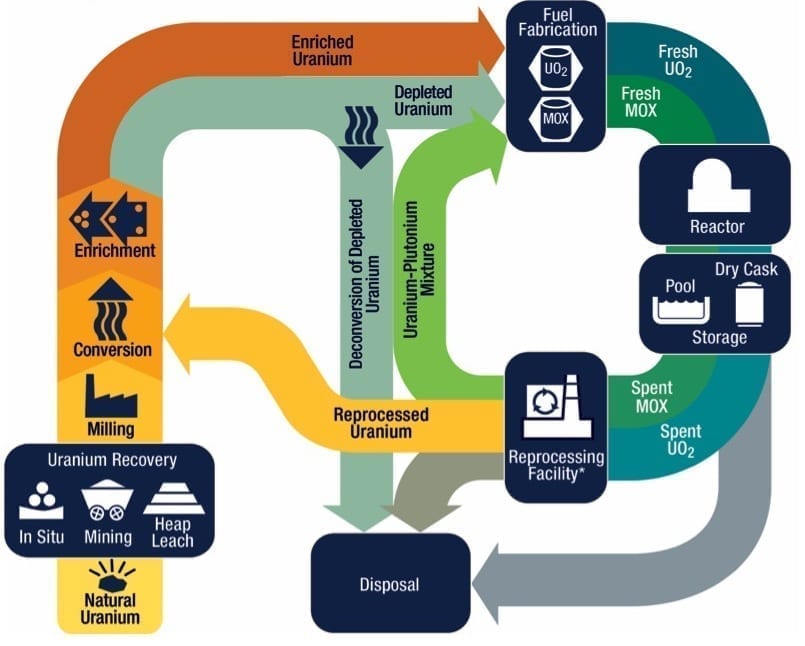
EDF should pick winners in the broader nuclear ecosystem, including fuel fabrication, conversion and enrichment, used nuclear fuel recycling, manufacturing, transportation infrastructure, and other deployment-critical components.
EDF leadership is critical, but it cannot carry the full weight of American nuclear deployment. A fifth executive order should direct agencies to use every available authority—not only financing—to prioritize nuclear supply chains, project development, permitting, procurement, transportation, workforce readiness, and other pathways that place more reactors onto the commercial grid.
In addition, we need to deploy Title III of the Defense Production Act (DPA) to fill critical manufacturing gaps across the nuclear component ecosystem and fuel cycle. Strategic investments must expand domestic manufacturing capacity for reactor vessels, forgings, pumps, heat exchangers, instrumentation and control systems, power conversion equipment, and specialized materials.
An American nuclear energy order book is growing for commercial and national security deployments. We must ensure that on-shored manufacturers can meet that demand rather than watching strategic supply chains migrate overseas. Deployment at speed and commercial scale requires an industrial base capable of designing, manufacturing, transporting, and operating nuclear reactors of all sizes and capabilities.
Federal agencies must also plan for the safe and secure transportation and deployment of pre-fueled modular advanced reactors. The Department of Transportation (DOT) has started assessing maritime nuclear transportation needs, but the DOE should work with the DOT to establish a clear framework for moving nuclear technologies over land, too.
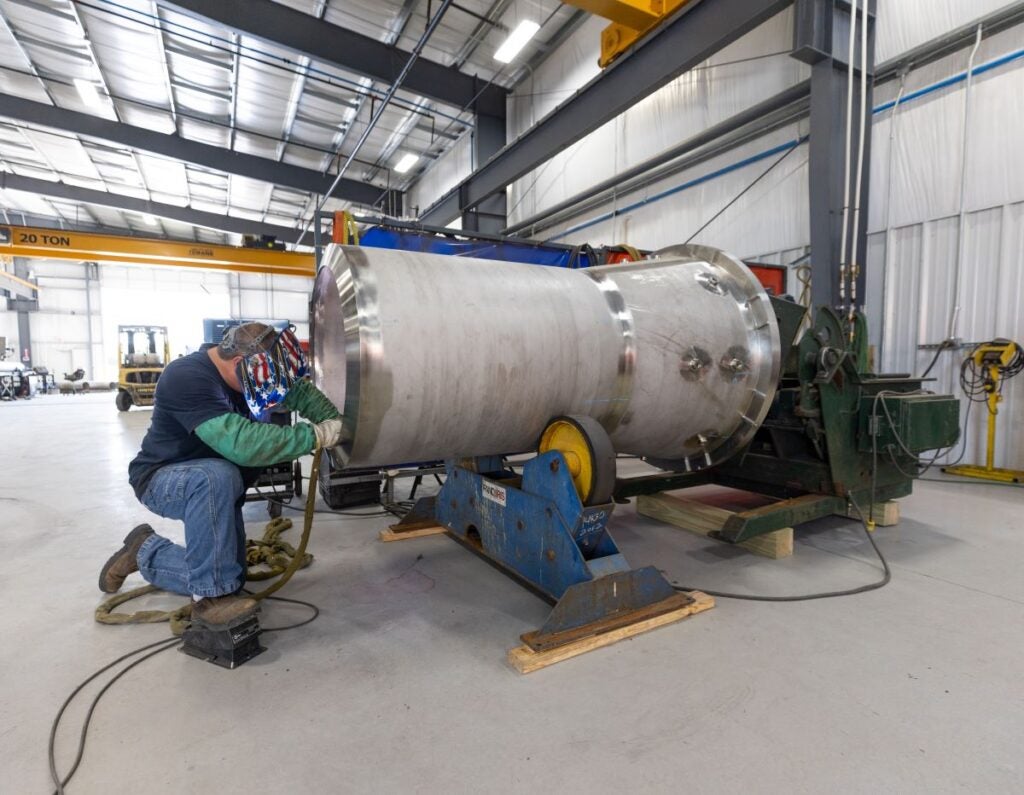
Moreover, a fifth executive order must require federal agencies to measure the success of nuclear energy workforce efforts directed in previous executive orders. We need accountable programs—not wasteful grants—that unite our nation’s labor unions, industry, academia, and training associations to expand apprenticeships and upskilling for critical trades. The nation’s shortage of experienced welders, electricians, pipefitters, and other skilled trades is already delaying projects and increasing costs. We must incentivize new generations to pick up the tools and go to work for good wages.
Finally, the administration should further incentivize responsible pathways for recycling the nation’s used nuclear fuel (UNF). UNF should no longer be viewed as a legacy liability. It represents a potential source of energy, strategic materials, and critical isotopes used for cancer treatment, medical diagnostics, industrial applications, scientific research, space exploration, and national security while reducing dependence on foreign supply chains. The DOE’s Office of Nuclear Energy (NE) and Office of Environmental Management (EM) recently issued complementary Requests for Applications to advance commercial UNF recycling—an important first step to a requirement for future federal projects to incorporate the use of recycled fuel.
A fifth executive order should also establish a Critical Isotopes List to prioritize federal support, procurement tools, financing programs, and funding opportunities around the isotopes most important to the nation. EDF’s conditional commitment to support a domestic medical isotope manufacturing facility is a good start. By identifying these priority isotopes, the federal government can align agency efforts, strengthen domestic production, reduce reliance on foreign suppliers, and provide clearer market signals.
President Trump’s first four nuclear executive orders mobilized federal agencies to restore American nuclear leadership. The next executive order must build upon that foundation with disciplined federal investment, expanded industrial capabilities, an auditable workforce strategy, and a renewed focus on using existing value in the fuel cycle to accelerate American nuclear dominance.
Now is the moment for a fifth nuclear executive order—one that converts renewed momentum into deployment at speed and restores the United States as the world’s leading nuclear energy nation.
—Christopher Ploch, Esq. served as a political appointee in the Department of Energy Office of Nuclear Energy and the Office of Policy. He also served as legislative counsel for Congressman Byron Donalds, representing Florida’s 19th Congressional District. He now serves as a principal for the United Coalition for Advanced Nuclear Power (UCAN Power), a non-profit organization committed to a clear path for the expanded use of civilian nuclear energy. Lucian Niemeyer served as former military engineer, U.S. Senate Armed Services Committee staffer, Assistant Secretary of Defense, and White House official. He is the co-founder of UCAN Power.