
Interview
-
 The POWER Interview
Exelon Executive Sees Potential Return to Regulated Generation to Meet Soaring Demand
Four years after separating from Constellation Energy, Exelon is expanding its transmission business and pressing for a greater role in power generation. Executive Vice President Carim Khouzami explains why rising data center demand, tightening capacity reserves, and shortcomings in PJM’s wholesale markets are changing the utility company’s strategy. When Exelon completed its separation from Constellation […]
-
 The POWER Interview
What Does Fleetwide AI Actually Mean for the U.S. Nuclear Industry?
Nuclear plants have accumulated decades of operating experience, technical research, regulatory guidance, and other industry knowledge. Finding the right information, however, can mean searching several separate systems and then piecing the relevant material together. To address that search burden, Atomic Canyon, a company developing artificial intelligence tools for the nuclear industry, built the Nuclear Industry […]
-
 The POWER Interview
Can U.S. High-Voltage Grid Equipment Supply Keep Pace With 765-kV Expansion and Data Center Demand?
From two-year bushing lead times and hyperscaler demand to U.S. manufacturing expansion and the emerging 765-kV build-out, Trench Group CEO Bahadir Basdere explains where high-voltage equipment supply is under the most pressure. High-voltage grid components are becoming a critical constraint as utilities, transmission developers, original equipment manufacturers (OEMs), and hyperscalers compete for equipment needed to […]
-
 Workforce
The POWER Interview: How the Data Center Power Crunch Is Reshaping the Talent Market
As data center developers confront tighter power supplies, longer interconnection timelines, and growing scrutiny over who should pay for the grid infrastructure required to serve large loads, those pressures are beginning to reshape another part of the development equation: talent. As states and utilities reconsider how the costs of serving large data center loads should […]
-
 Connected Plant
Energy Management Goes Beyond Monitoring to Decision-Making
Utilities and independent power producers have spent years adding sensors to their generating fleets and creating dashboards to view what they relay. But visibility into how a plant is operating isn’t the same as knowing what to do about it—and that gap is where Siemens Energy’s Omnivise Energy Management System is increasingly shedding light, explained […]
-
 Legal & Regulatory
The POWER Interview: How Is Rising Scrutiny Changing the Way Data Centers Secure Power?
A recent flurry of state and federal action points to a marked pivot from treating data center growth as a grid-planning challenge to requiring large-load customers to show who pays for grid upgrades, what capacity supports the load, and how projects will operate during system stress. Morgan Lewis partner Arjun P. Ramadevanahalli spoke with POWER […]
-
 Interview
AVEVA CEO: Sustainability Commitments Must Be Backed by Measurable Results
As artificial intelligence (AI)–driven data center demand strains grid infrastructure across the U.S. and beyond, operators are facing rising scrutiny from utilities, regulators, and the communities where they build. Caspar Herzberg, CEO of industrial software company AVEVA, argues that the industry’s response can’t stop at sustainability commitments—it requires operational transparency and measurable performance data that […]
-
 Interview
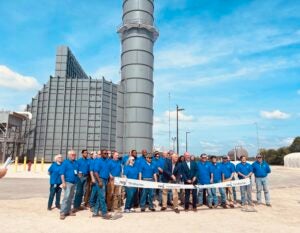
The POWER Interview: NRG’s Case for Bring Your Own Power—and the Labor to Build It
NRG Energy on Aug. 4 unveiled its first Bring Your Own Power (BYOP) project, a 1.2-GW combined-cycle plant in Texas supported by a 15-year contract with an investment-grade “leading global cloud and artificial-intelligence hyperscaler.” The $3.2 billion facility, backed by a customer parent guarantee, is targeted for commercial operation in late 2029 and could be […]
-
 Interview
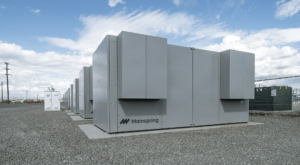
The POWER Interview: Mainspring Looks to Make Linear Generators Mainstream
Tom Linebarger, the new CEO at Mainspring Energy who spent 30 years at Cummins, where he also served as CEO, provides POWER with insight about Mainspring and why the time is right for adoption of Mainspring’s linear generator technology.
-
 Interview
The POWER Interview: Hardening Power Systems to Withstand Natural Disasters
The power sector recognizes the urgent need to harden the power grid, which involves upgrading and fortifying electrical infrastructure to withstand severe weather, cyberattacks, and surging demand for electricity. The U.S. Dept. of Energy is providing billions of dollars to groups involved with modernizing the grid, underscoring the importance of measures designed to support power […]
-
 Interview
The POWER Interview: Quantum Computing’s Importance for Utilities and Power Generators
Dr. Remy Notermans, director of Strategic Planning for Atom Computing, a Boulder, Colorado-based group developing large-scale quantum computers, recently provided POWER with information about how quantum computing works. Notermans discussed how quantum computing can benefit electric utilities and the power generation sector.
-
 Interview
The POWER Interview: Electrification, Decarbonization, and Optimizing Infrastructure
Khalid Mandri is president of ABB Installation Products. Mandri recently provided POWER with his insight about how electrification supports decarbonization, and how it aligns with optimizing power infrastructure, including the grid.
-
 Interview
The POWER Interview: Solving the Problem of Fuel for Nuclear Reactors
The U.S. Dept. of Energy’s Office of Nuclear Energy has spelled out several areas that present challenges to domestic and global development of nuclear power. Chief among those issues is building a process that enables fuel development on a repeatable, industrial scale, so that projects can move beyond the demonstration phase to commercial operation.
-
 Interview
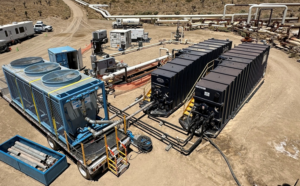
The POWER Interview: How the Oil and Gas Industry Is Advancing Geothermal
Lucy Darago, chief commercial officer with XGS Energy, shares her insight about the advancements in geothermal, including how new systems are being supported by technology from oil and gas exploration. XGS is utilizing those innovations to enhance its geothermal systems.
-
 Interview
The POWER Interview: Addressing Data Priorities as Severe Weather Season Looms
Though severe weather can happen at any time, April 1 is often considered the start of severe weather season—and now more than ever, utilities need reliable, accessible weather information to keep their staff safe and operations running smoothly.
-
 Business
Investing in Energy’s ‘Anti-Fragile’ Future
With federal tax credits under threat and regulatory stability in short supply, Bala Nagarajan, managing director of the energy investments team at S2G Investments, explained what he looks for in a company. “Is the product or the solution sold by this business cheaper, faster, better than the incumbent solution?” he asked. If so, it’s worth […]
-
 Interview
The POWER Interview: Electrification Key for Decarbonization, Energy Efficiency
Electrification has become key for the global move toward cleaner energy, even as government policies continue to impact the use of renewable resources and in some cases embrace continued and even increased support for fossil fuels. Governments and industries wanting to reduce their emissions of greenhouse gases look to electrification not only as an environmental […]
-
 Interview
The POWER Interview: Supporting C&I Power Systems in New York City
The commercial and industrial (C&I) sector has been a major contributor to the growth of solar power, as business owners look for ways to generate more of their own power, and do it in a sustainable way. Industries interested in decarbonizing their operations are adopting cleaner forms of energy; the effort has spread to the commercial housing sector, particularly in areas with dense populations.
-
 Interview
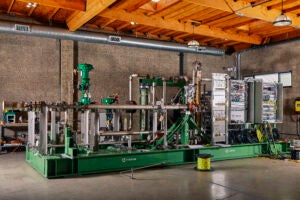
The POWER Interview: Former SpaceX Exec Drives Arbor’s Turbine Innovation
Demand for electricity from artificial intelligence (AI), data centers, industrial electrification and more is driving innovation in the power generation sector. Speed to power has become even more important, as companies seek ways to more quickly satisfy their hunger for power, without sacrificing efficiency and in some cases their clean energy goals.
-
 Interview
The POWER Interview: Helping Power Infrastructure ‘Keep Pace with Modern Ambition’
The challenge of upgrading how power is generated, along with needed improvements in electricity transmission and distribution, is being met in a variety of ways by an array of companies.
-
 Interview
The POWER Interview: Thea Energy’s Fusion Architecture
The discussion about nuclear fusion has long involved its potential to create limitless amounts of energy. Thea Energy is one of several companies working to turn that potential into reality.
-
 Geothermal
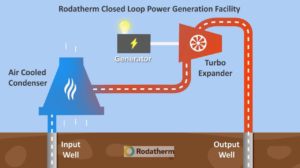
The POWER Interview: A Path Forward for Geothermal Energy
Among the companies working on advanced geothermal tech is Rodatherm Energy Corp., a privately held company with a primary focus on the Great Basin region in the Western U.S. The Utah-based company, which also has operations in Calgary, Alberta in Canada, is known for its pioneering Advanced Geothermal System (AGS).
-
 Interview
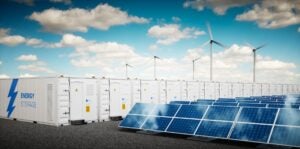
The POWER Interview: Grid Integration of DERs
Integrating distributed energy resources (DERs) such as solar, wind, batteries, and electric vehicles into the power grid is an important part of the energy transition. Utilities and transmission system operators know they need more flexibility when it comes to power generation and delivery, which involves modernizing infrastructure, using advanced controls, and developing new market rules to manage two-way power flow.
-
 Management
Five Years After Winter Storm Uri, a Texas Co-op Shares Its Lessons Learned
Rayburn Electric Cooperative faced three years of power costs in five days during the 2021 storm. The experience transformed the organization’s approach to risk, generation assets, and long-term planning. When Winter Storm Uri swept across Texas in February 2021, Rayburn Electric Cooperative found itself staring down a crisis that would reshape the organization’s entire operational […]
-
 Gas
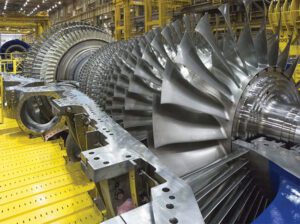
GasGas Turbine Supply Chain Bottlenecks Could Reshape the Generation Mix in 2030 and Beyond
The gas turbine industry is facing its most significant supply chain challenge in decades, with backlogs extending years into the future and utilities scrambling to secure dispatchable capacity. To better understand the scope of the problem and what options utilities have, POWER spoke with John Shingledecker, principal technical executive with EPRI, and Bobby Noble, senior […]
-
 Interview
The POWER Interview: Challenges and Opportunities for DERs
Akshai Baskaran is VP and GM, Energy Management, for Gravity, a San Francisco, California-based company that helps enterprises and their supply chain partners manage their carbon footprint. Baskaran provided POWER with his take on the challenges and opportunities for distributed energy resources in the current regulatory landscape.
-
 Interview
The POWER Interview: Investing in Energy Solutions for the Data Center Boom
The race to lead when it comes to artificial intelligence (AI) is becoming more about securing the power necessary for data centers and other AI infrastructure. In this POWER Interview, Andrejka Bernatova, founder, chairman, and CEO of Dynamix Capital Partners, discusses Dynamix’s belief that the energy and infrastructure industry is in the early phases of a decades-long transition to a low-carbon, sustainable future.
-
 Interview
How Remote Operations Centers Are Reshaping Power Plant Operations
Centralized remote monitoring is reshaping power plant operations, enabling specialized teams to oversee multiple facilities from a single location. This discussion examines the technology, benefits, and
-
 Data Centers
Data Centers, the Grid, and the Assumptions That Don’t Hold Up
The power sector is grappling with a fundamental mismatch: hyperscale data centers demand electricity at unprecedented speed and scale, while the infrastructure to serve them operates on timelines measured in years, not months. According to Stephen Empedocles, PhD, founder and CEO of Clark Street Associates (CSA), an advisory firm specializing in government funding for technology […]
-
 Coal
CoalCoal’s Not Dead Yet: B&W CTO Suggests Fossil Fuels Are Back in Favor
“The result of the 2024 presidential election probably had the biggest impact on the direction the U.S. energy industry is headed right now,” Brandy Johnson, Chief Technology Officer (CTO) with Babcock & Wilcox (B&W), told POWER. “It has opened up the pathway for fossil fuels in power generation again.” That shift is already visible across […]