The Department of Energy’s (DOE’s) Office of Nuclear Energy and the National Reactor Innovation Center (NRIC) have announced the first four developers selected for the freshly launched Nuclear Energy Launch Pad—a restructured deployment-support initiative that succeeds the DOE’s Reactor Pilot Program and Fuel Line Pilot Program and broadens federal assistance to cover the full nuclear technology stack.
The four initial participants announced on April 27 are Deployable Energy, General Matter, NuCube Energy in partnership with Idaho State University, and Radiant Nuclear.
All four were drawn from the existing pool of applicants to the predecessor pilot programs—the Reactor Pilot Program and the Fuel Line Pilot Program—and were competitively selected by DOE for inclusion, Idaho National Laboratory (INL) said on Monday. “Inclusion in the program allows these companies to begin discussion with NRIC on the enhanced technical, regulatory and deployment support Launch Pad is able to provide,” it said.
What Is the Nuclear Energy Launch Pad?
The Nuclear Energy Launch Pad, unveiled March 4, 2026, is a DOE Office of Nuclear Energy initiative administered by NRIC, a national program headquartered at INL, but is part of DOE’s Office of Nuclear Energy. Launched in 2019, NRIC’s portfolio can be generally split into two areas. One focuses on cost and scalability, while the other covers deployment infrastructure, siting, and technical support for the nuclear industry, including its testbeds and the Nuclear Energy Launch Pad.
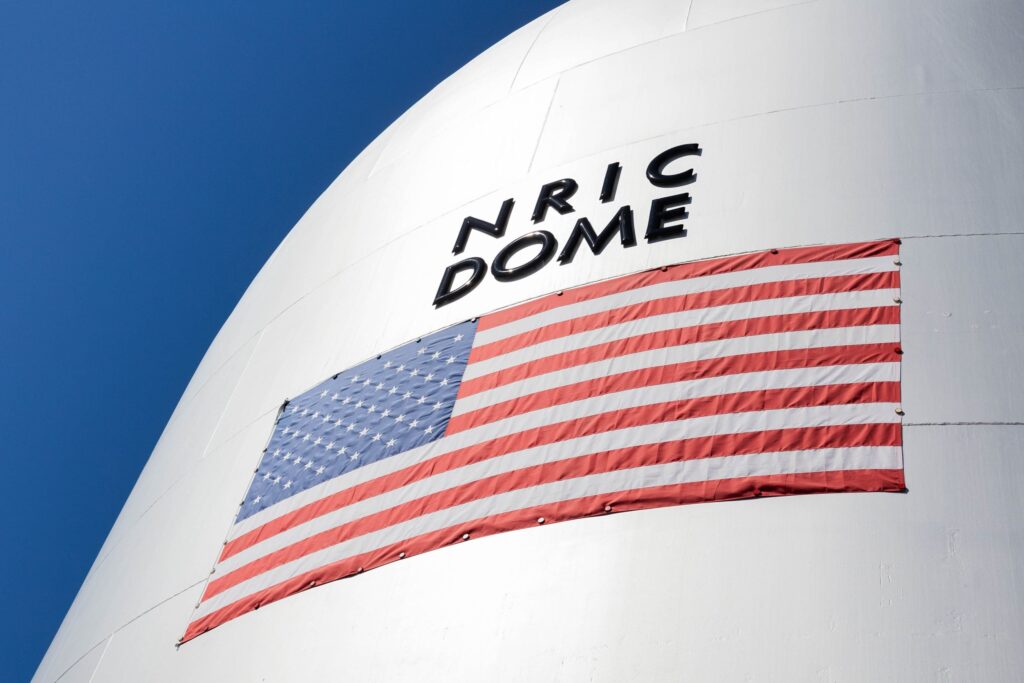
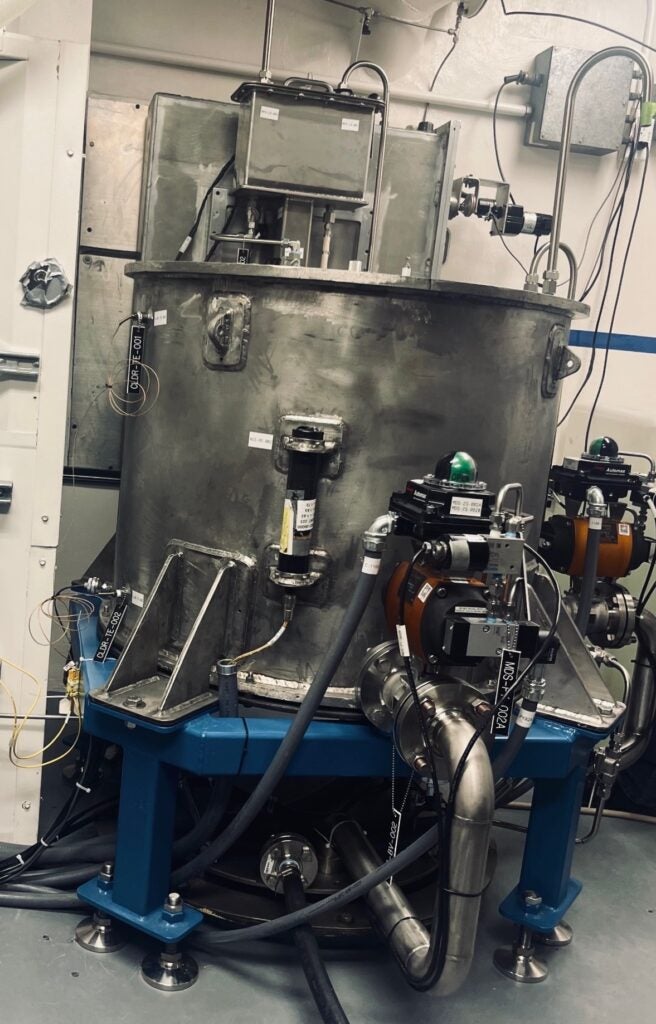
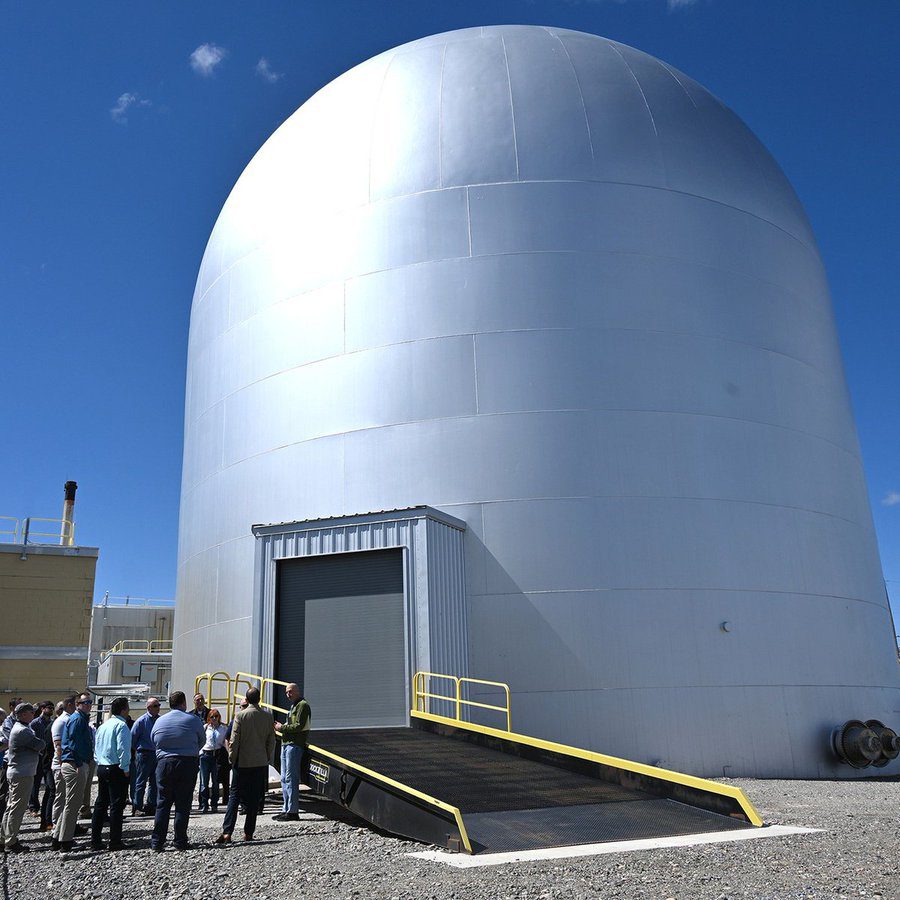
As NRIC Director Brad Tomer explained during a March 31 American Nuclear Society webinar, NRIC’s flagship testbed is the DOME facility, where INL has repurposed the Experimental Breeder Reactor-II containment structure into a testbed for advanced reactors. “We can handle up to 20-MW thermal using less than 20% enriched fuels,” he noted. DOME’s first tenant is Radiant Nuclear’s Kaleidos reactor, which took formal possession of the DOME on April 1, 2026, for a full year of testing.
The Nuclear Energy Launch Pad, meanwhile, serves as a complement to the testbeds and the successor to two shorter-lived DOE programs—the Reactor Pilot Program and Fuel Line Pilot Program. Both those programs were created under Executive Order 14301, signed by President Trump on May 23, 2025, which reformed and streamlined national laboratory processes for reactor testing and directed DOE to establish an expedited pilot program for advanced reactor designs.
The executive order also expanded the DOE’s nuclear mandate by declaring that advanced reactors over which the agency exercises sufficient control and that do not produce commercial electric power fall within its jurisdiction under the Atomic Energy Act—establishing the legal foundation for agency authorization as an alternative to Nuclear Regulatory Commission commercial licensing. Executive Order 14301 also set a concrete near-term benchmark: establish a pilot program for reactor construction and operation outside the National Laboratories and set the goal of approving and achieving criticality on at least three reactors by July 4, 2026.
While some details about progress to date remain under wraps, the Reactor Pilot Program (whose request for applications [RFA] was launched on June 18, 2025) has accepted 11 projects from 10 companies—Aalo Atomics, Antares Nuclear, Atomic Alchemy, Deep Fission, Last Energy, Natura Resources LLC, Oklo (selected for two projects), Radiant Industries, Terrestrial Energy, and Valar Atomics. The DOE issued the Fuel Line Pilot program RFA on July 15, 2025, seeking to establish a domestic nuclear fuel supply chain to serve reactor pilot participants. By DOE’s own count at the time of the March 5, 2026, Launch Pad announcement, nine projects had been accepted into the Fuel Line Pilot Program, but only five have been publicly identified. These include: Standard Nuclear (selected on August 4, 2025), Oklo, Terrestrial Energy, X-energy’s TRISO-X LLC, and Valar Atomics.
The Nuclear Energy Launch Pad’s key mission is to create a “strong innovative ecosystem to speed up advanced nuclear technology deployment using flexible technical and regulatory frameworks on federal and non-federal lands.” The program offers a “broader, more flexible deployment pathway” than the reactor and fuel pilot programs, Tomer said.
“It offers developers DOE authorization through two paths—one at Idaho National Laboratory [Launchpad INL], where we have set aside 2,000 acres available for siting advanced nuclear projects, and a second, we call Launch Pad USA, a pathway that enables projects at other DOE sites, national labs, and even non-federal locations,” he said.
Launch Pad INL places projects on that dedicated acreage near INL’s Central Facilities Area with proximity to existing electrical interconnect, potable water, fiber lines, and a non-commercial transport route to INL’s Materials and Fuels Complex. Parcel sizes are determined by each developer’s scope and standoff requirements, though developers fund all connection and local infrastructure buildout themselves, the program’s website says. Launch Pad USA will enable projects at other DOE sites, national laboratories, and non-federal locations nationwide, offering geographic flexibility and the ability to leverage regional advantages while still accessing DOE authorization support and remote expertise from INL and other national laboratories.
“It’s important to remember that this isn’t limited to reactors. It’s designed to support a full range of advanced nuclear technologies, including fuel fabrication, recycling, enrichment, and other infrastructure,” Tomer said.
Four Selections Ahead of Nuclear Energy Launch Pad’s Official RFA
While the four companies named Monday were competitively selected directly from the existing pool of Reactor Pilot Program and Fuel Line Pilot Program applicants, NRIC plans to launch an official call for Launch Pad applications “in the coming weeks and anticipates announcing additional selections for the initiative later this year,” it noted.
The RFA will mirror the review criteria and documentation requirements of the predecessor programs, meaning companies that already applied to either the Reactor Pilot Program or Fuel Line Pilot Program will not need to reapply—their existing application materials are eligible for Launch Pad review, the program’s website says. While DOE plans to issue the RFA on an annual basis, applications will be accepted and evaluated on a continual basis following each issuance.
The Launch Pad website, however, is explicit that the DOE will provide no funding. All costs—authorization, Nuclear Regulatory Commission (NRC) licensing, and any engagement with INL or other national laboratories—should be borne by the participant and spelled out in the agreement instrument between DOE and the developer. Developers have two primary contracting options: a direct Other Transaction Authority (OTA) agreement with DOE, under which the developer serves as its own design authority, or a Strategic Partnership Project (SPP) or a Cooperative Research and Development Agreement (CRADA) with Battelle Energy Alliance (BEA)—INL’s management and operations contractor—under which BEA takes on that design authority role. Additional contracting mechanisms are still being developed for Launch Pad USA participants.
Demand for the program appears strong, Tomer has noted. “There’s a lot of reactor developers waiting in the wings to use the Launch Pad,” he told the March 31 ANS webinar. “There’s a lot in addition to reactor developers and other folks who want to use these things as well.” He added that NRIC expects to play this bridge-to-deployment role through its testbeds and the Launch Pad “for at least the next 10 years or so.” As of March 2026, NRIC already held active contracts with approximately a dozen developers across its broader portfolio, he suggested.
The First Four Launchpad Selections
The first developers selected for the Launch Pad—Deployable Energy, General Matter, NuCube Energy in partnership with Idaho State University, and Radiant Nuclear—appear to reflect a deliberate mix of reactor demonstrators at multiple scales, a fuel-cycle startup, and an academic-industry partnership siting a full-scale reactor demonstration on a university campus to support operator training and NRC licensing.
Deployable Energy, a Houston-based microreactor company, is developing the Unity Nuclear Battery (UNB), a 1‑MWe gas‑cooled microreactor that uses an actively cooled helium primary loop and standard low-enriched uranium dioxide fuel, engineered for factory manufacture and shipment in a standard 20-foot container for deployment in remote, distributed, maritime, and defense applications. “Following a competitive review process initiated under the DOE Reactor Pilot Program, Deployable Energy’s application has been approved to enter the Launch Pad program and move forward with our scheduled reactor demonstration later this summer, with the aim to achieve criticality on or before July 4, 2026,” the company said on Monday.
On Feb. 19, 2026, the company signed a multi-year research agreement with the Texas A&M Engineering Experiment Station (TEES) to advance scalable microreactor technology and streamline future regulatory activities, including workforce development for a nuclear-ready pipeline. The company subsequently selected INL as its reactor demonstration site, where the initial non‑commercial criticality test will validate Unity’s core physics and generate early manufacturing and deployment data.
The company also says it has been engaged in NRC pre-application activities since October 2025 and has outlined a licensing strategy that begins with a 10 CFR 50 Class 103 non‑power production and utilization facility and could later leverage the NRC’s newly proposed Part 57 framework for rapid, high‑volume deployment of microreactors with comparable risk profiles. Lloyd’s Register is separately guiding Unity’s development for potential maritime applications. “This milestone reflects the strength of our Unity nuclear battery and the growing momentum behind deployable nuclear power,” CEO Bobby Gallagher said in the April 27 announcement. “We are appreciative of the ingenuity of NRIC and the Department of Energy in developing a program aimed at accelerating the path toward commercializing resilient, portable nuclear energy systems that can deliver reliable power wherever it is needed.”
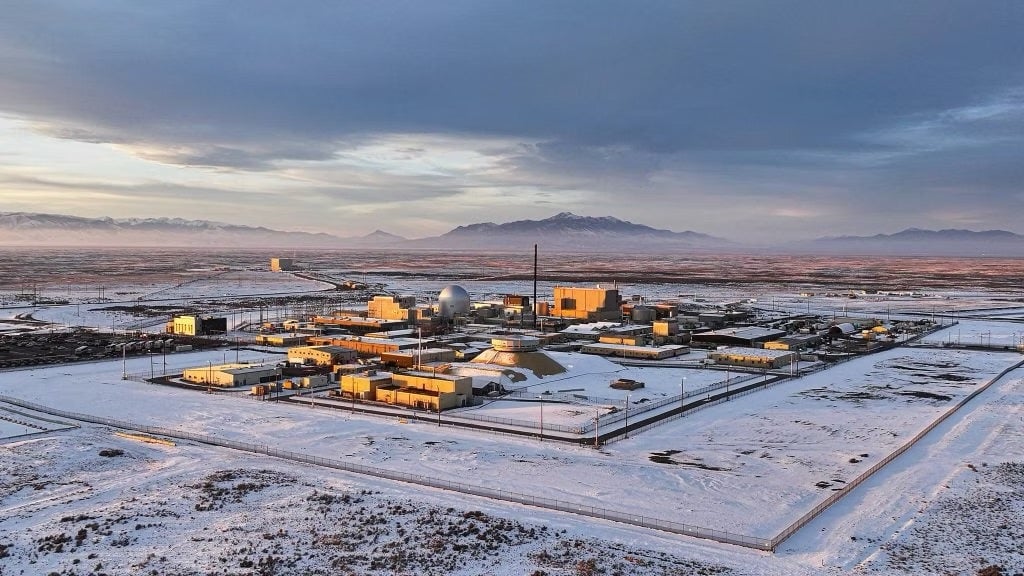
General Matter, a California-based enrichment startup, is building what it calls the first privately developed, U.S.-owned commercial uranium enrichment complex at the former Paducah Gaseous Diffusion Plant in Paducah, Kentucky. Under a $900 million DOE contract announced in January 2026, the company said it plans to produce and supply HALEU for the nation’s advanced reactors. General Matter has also signed a lease with DOE to reactivate the Hanford Site’s Fuels and Materials Examination Facility for advanced fuel cycle work, and, in March 2026, outlined plans—backed by U.S. Export–Import Bank indications of support—to supply American-enriched uranium to allied utilities in Japan and South Korea. The company characterizes its mission as “enriching uranium in America to fill the nuclear fuel gap,” a front-end role that complements the reactor demonstrations NRIC is supporting through the Launch Pad.
NuCube Energy, an Idealab Studio–founded microreactor startup co-founded by entrepreneur Bill Gross and CEO Dr. Cristian Rabiti, is developing a modular fission microreactor designed to produce both electricity and very high‑temperature process heat—greater than 1,000C—for industrial applications. The design uses TRISO fuel and heat pipe technology housed in a stainless-steel compartment to reduce moving parts and support factory fabrication and road-transportable deployment. The company is targeting data centers, microgrids, and industrial heat users.
While NuCube in June 2025, signed an MOU with the Utah San Rafael Energy Lab (USREL) in Orangeville, Utah, to host a test reactor, on April 29, 2026—the day after the Launch Pad announcement—the company and Idaho State University (ISU) revealed they had been jointly selected for Launch Pad USA, the program’s non-INL pathway, to site the Advanced Research and Test (ART) Reactor on ISU’s Pocatello campus. Adapted from NuCube’s 4-MWth microreactor platform and capable of reaching 1,100C, the ART Reactor is designed to be full-scale relative to NuCube’s first commercial unit and will support operator training, academic research, and NRC licensing under DOE authorization through Executive Order 14301. In April 2026, the company also won a GAIN voucher to validate remote operations for its microreactor design with Argonne National Laboratory—its second GAIN award, following an earlier INL collaboration on heat exchanger design.
“This is a defining moment for NuCube,” said Dr. Rabiti, who serves as NuCube Energy’s CEO. “Selection into the DOE’s Nuclear Energy Launch Pad USA program provides strong third-party validation of our technology, our safety approach, and our ability to deliver real-world nuclear solutions. This milestone accelerates our path toward siting, constructing, and operating our first full-scale demonstration reactor in the U.S.”
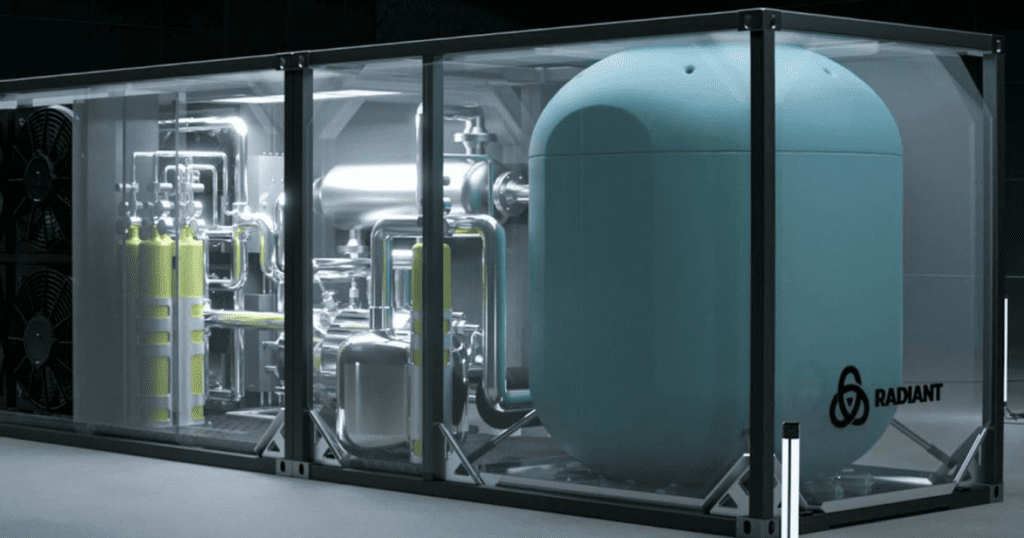
Radiant Nuclear, based in California, is the furthest along of the four, having received DOE approval of its Preliminary Documented Safety Analysis for its Kaleidos high-temperature gas-cooled reactor in February 2026 and taken formal possession of the DOME testbed at INL on April 1, 2026, for a full year of testing. Kaleidos is a 1-MWe TRISO-fueled HTGR designed for transportable, off-grid military and remote power applications. The company has focused on factory fabrication, dry cooling, and minimal on‑site construction, an approach it is backing with two facilities in El Segundo and a new “R‑50” microreactor factory now under development at a former Manhattan Project site in Tennessee, which it ultimately intends to scale to about 50 Kaleidos units per year. On April 22, 2026, the U.S. Air Force selected Radiant as one of three companies to deliver microreactors to power air bases. Radiant has targeted the first delivery of its reactors for 2028.
—Sonal C. Patel is senior editor at POWER magazine (@sonalcpatel, @POWERmagazine).
Updated (April 29, 2026): NuCube Energy and Idaho State University announced on April 29 that they have been jointly selected for DOE’s Nuclear Energy Launch Pad USA to site NuCube’s Advanced Research and Test (ART) Reactor on ISU’s Pocatello, Idaho campus.