
Legal & Regulatory
-
 T&D
T&DThe Blackout Behind the Blackout: What Sarnia’s 2003 Outages Reveal About Restart Risk
Restoring customer supply is not the same event as restoring a process plant. Sarnia’s 2003 outages show why power-system resilience has to be carried through safe shutdown, utilities, environmental controls, and staged restart. The Grid Event Was Only the First Failure State At 4:11 p.m. on Aug. 14, 2003, the Northeast blackout began to pull […]
-
 Commentary
Nuclear Plant Restarts Show What Government Can Do With a Clear Mandate
On Aug. 30, workers at the Palisades Nuclear Plant in Covert Township, Michigan, began loading 204 fuel assemblies into a reactor vessel that had sat empty since the plant shut down in 2022—the first time in U.S. history that a commercial reactor that had entered decommissioning began reloading fuel. Holtec International Chairman and CEO Dr. […]
-
 Commentary
Growing Impact of ESA Jurisdiction Amid Unprecedented Energy Demand
Many environmental statutes have narrowed as streamlined permitting and efficient project development are prioritized.
-
 Commentary
The Grid’s Wasted-Power Problem Has a Sector-Coupling Fix
For most of the last century, electricity and heat have been planned and regulated as two separate systems, a design choice that made sense when both were produced by burning fuel on demand. However, that design is a poor match for how the grid actually runs today. Generation, transmission constraints, and price all shift by […]
-
 Legal & Regulatory
Court Rules Against Trump Order to Keep Michigan Coal-Fired Plant Operating
The D.C. Circuit Court of Appeals has ruled against the Trump administration’s order to keep the J.H. Campbell coal-fired power plant in Michigan operating. The decision that could impact other orders that have been issued to keep U.S. coal-fired power plants operating past their scheduled retirement dates.
-
 Commentary
Modern Regulation for a New Nuclear Era
Nuclear energy is entering a new era. Across the United States and around the world, countries are looking to nuclear power to provide reliable electricity, strengthen energy security, and support economic growth. Advanced reactors and other innovative technologies are creating opportunities that would have been difficult to imagine when many of our current regulations were […]
-
 Nuclear
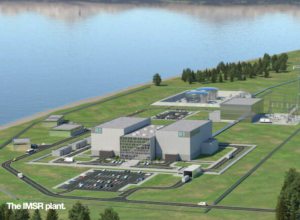
Three Questions Every Utility Should Ask About Advanced Reactors
The U.S. power grid is entering a period unlike any it has experienced in decades. Rapid electrification, domestic manufacturing, and the exponential growth of artificial intelligence are reshaping electricity demand. A recent report from Lawrence Berkeley National Laboratory, supported by the U.S. Department of Energy, projects that data centers alone could account for between 9.5% […]
-
 Legal & Regulatory
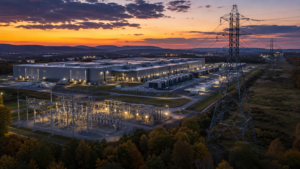
Make Every Data Center a Power Hub
America is debating data centers as though technological leadership and affordable electricity are competing goals. That framing misses the opportunity.
-
 Military Microreactors
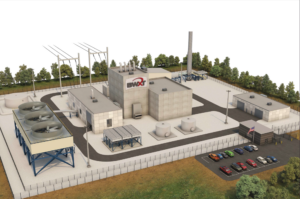
U.S. Army Mobilizes $2.2B Janus Program to Deploy More Than 20 Commercial Microreactors
The U.S. Army has mobilized up to $2.2 billion for a five-year effort to build and operate more than 20 commercial nuclear microreactors across military installations, selecting five reactor developers and five initial sites for a program designed to push advanced nuclear systems beyond federal test programs and into sustained operation by a Sept. 30, […]
-
Legal & Regulatory
The POWER Interview: How Is Rising Scrutiny Changing the Way Data Centers Secure Power?
A recent flurry of state and federal action points to a marked pivot from treating data center growth as a grid-planning challenge to requiring large-load customers to show who pays for grid upgrades, what capacity supports the load, and how projects will operate during system stress. Morgan Lewis partner Arjun P. Ramadevanahalli spoke with POWER […]
-
 advanced nuclear
NRIC Adds 13 Projects to Nuclear Energy Launch Pad, Expanding Advanced Reactor and Fuel-Cycle Pipeline
The Department of Energy’s (DOE’s) National Reactor Innovation Center (NRIC) has selected 13 new projects across 12 companies for its Nuclear Energy Launch Pad initiative in a significant expansion of the DOE-authorization pathway that channels advanced reactor and fuel-cycle developers toward demonstration on federal and non-federal sites. The selections—spanning microreactor developers, enrichment startups, fuel fabrication […]
-
Legal & Regulatory
Shapiro Sets Binding GRID Requirements in Pennsylvania, Targets Data Center Power Costs
Pennsylvania Gov. Josh Shapiro signed an executive order on Aug. 18 that raises the bar for large data center development in the state, directing agencies to condition favorable permitting treatment and tax benefits on compliance with new energy, infrastructure, environmental, workforce, and community requirements. Executive Order 2026-05 applies its central permitting provisions to data centers with […]
-
 Trends
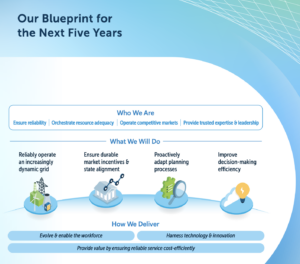
PJM Widens Response to Data Center Load as Capacity Shortfalls Deepen
PJM Interconnection has proposed a new framework that would allow large data centers and other major electricity users to enter service without first securing enough new capacity to cover their demand—but would make the uncovered portion of that load available for reduction before PJM calls on existing pre-emergency demand-response resources if electricity supplies become dangerously […]
-
 Commentary
The New Economics of AI Infrastructure: Why Tax Strategy Is Now Part of Energy Strategy
The conversation around data center development has changed dramatically over the past few years. Earlier, when developers needed to evaluate a new facility, the questions were relatively straightforward. Is the market attractive? Can we secure the land? Can we obtain reliable power? Can we raise the necessary capital? All those questions still matter. But a […]
-
 Commentary
Energy Dominance Requires Commitments That Last
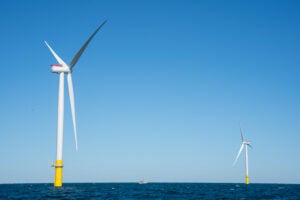
The Trump administration’s decision to unwind offshore wind leases through negotiated buybacks has predictably reignited the debate over renewable energy. Many welcome the move as a correction to policies that heavily favored offshore wind during the previous administration. That debate is perfectly legitimate. However, the recent agreements involving TotalEnergies, Bluepoint Wind, Golden State Wind, Duke, Invenergy, and […]
-
 Commentary
3 GW Off PJM, Again: What NERC’s 2024 Investigation Already Told Us
More than 3 GW of data center load left the PJM system on July 22, 2026, after a single transmission fault. The North American Electric Reliability Corporation (NERC) investigated the same failure mode in 2024 and found that utility equipment shed none of it. Customer-side protection did all of it. Those settings are about to […]
-
 Gas
GasNebraska Public Power District Breaks Ground on 694-MW Princeton Road Station
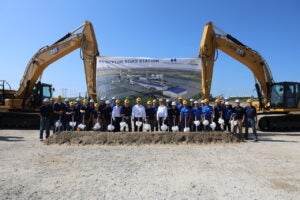
Nebraska Public Power District (NPPD) marked the start of construction on Princeton Road Station with a groundbreaking ceremony the morning of July 17, drawing state and local officials, community stakeholders, and NPPD staff to the site just north of Hallam, Nebraska. The 694-MW dual-fuel facility will be the largest natural gas generation plant in NPPD’s […]
-
 Legal & Regulatory
Abbott Orders Full Audit of Texas Data Center Interconnection Queue, Threatens to Deny Grid Access
Texas Governor Greg Abbott has directed the Public Utility Commission of Texas (PUCT) and the Electric Reliability Council of Texas (ERCOT) to conduct a comprehensive audit of every data center advancing through the state’s interconnection queue, warning that projects that fail to disclose ownership, financial, water, and community-impact information could be denied grid access. The […]
-
 Commentary
Understanding NERC Impact Ratings and Compliance Timing for Generation Control Facilities
For power generation operators navigating the complex landscape of North American Electric Reliability Corporation (NERC) compliance, two critical questions frequently arise: when does a generation control facility become a Low Impact BES (Bulk Electric System) Control Center, and when does it escalate to Medium Impact status? Understanding these thresholds is essential for proper planning and […]
-
 Gas
GasRayburn Energy Station: A Cooperative’s Answer to Texas-Sized Risk
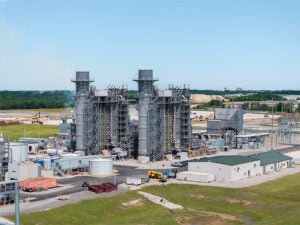
For Rayburn Electric Cooperative, ownership of the 758-MW combined cycle plant in Sherman, Texas, means stable rates, hardened reliability through heat waves and winter storms, and a hedge against the
-
 Legal & Regulatory
Will Siting Keep SMRs From Reaching Critical Mass?
Demand for electricity—particularly for large-load users like data centers—is increasing, raising the question of how best to meet the new demand.
-
 Legal & Regulatory
Five States Emerge as Finalists for DOE’s Nuclear Lifecycle Innovation Campuses
The Department of Energy (DOE) has selected Utah, Tennessee, Oklahoma, Louisiana, and Idaho as initial contenders to host Nuclear Lifecycle Innovation Campuses—voluntary federal–state partnerships designed to co-locate fuel fabrication, enrichment, spent fuel reprocessing, and waste disposition within integrated, full‑cycle nuclear ecosystems. U.S. Secretary of Energy Chris Wright signed non-binding memorandums of understanding (MOUs) with the […]
-
 Legal & Regulatory
Federal Court Upholds NRC’s Generic Severe-Accident Review for Nuclear Plant License Renewals
A federal appeals court has upheld the Nuclear Regulatory Commission’s (NRC’s) use of a generic environmental analysis for nuclear plant license renewals, rejecting claims that the agency failed to adequately consider how aging components and climate change could affect the risk of severe reactor accidents. The July 21 decision from the U.S. Court of Appeals […]
-
 Commentary
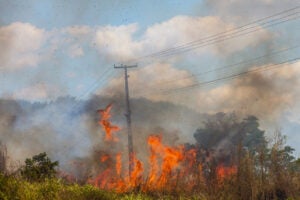
Wildfire Liability Is Becoming a Data Problem, Not Just a Legal One
For years, utility wildfire liability was largely framed around a straightforward question: who caused the fire? That question still matters, but it is no longer the only one that matters.
-
 Data Centers
White paper: Measuring and monitoring emissions at data centers. A practical guide to compliance and performance
Sponsored by:Thermo Fisher ScientificAs data centers expand to meet growing AI, cloud computing, and digital infrastructure demands, many facilities are incorporating onsite power generation to support reliability and accelerate deployment. This shift creates new emissions monitoring, reporting, and compliance responsibilities. Download this white paper for a practical overview of emissions monitoring strategies for data centers with onsite […]
-
Legal & Regulatory
PJM’s 2028/2029 Capacity Auction Falls Short of Reliability Standard for Second Straight Year
PJM Interconnection’s capacity market fell short of its reliability requirement for the second consecutive Base Residual Auction (BRA), clearing at the Federal Energy Regulatory Commission (FERC)-approved price ceiling of $325/MW-day for the June 2028–May 2029 delivery year and leaving the grid operator’s 13-state footprint about 6,800 MW below the reserve target needed to meet its […]
-
 Legal & Regulatory
FERC Orders Mandatory NERC Reliability Standards for Data Center and Other Computational Loads
The Federal Energy Regulatory Commission (FERC) has directed the North American Electric Reliability Corporation (NERC) to file one or more new or modified mandatory reliability standards governing the integration of computational loads—a category defined broadly enough to cover generative-AI data centers, cryptocurrency mines, and other information-technology facilities—by Dec. 31, 2026. FERC’s order, issued on July […]
-
Commentary
The New Large-Load Compact
Why AI Data Centers Can No Longer Be Treated as Passive Customers For decades, even very large electric customers fit inside a familiar planning model. A factory, refinery, industrial campus, hospital complex, hospital system, or manufacturing facility requested service. The utility studied the load, identified required facilities, assigned costs, and folded the demand into its […]
-
 T&D
T&DDOE Closes $3.26 Billion Transmission Loan to AEP Texas
The U.S. Department of Energy has closed a loan of up to $3.26 billion to AEP Texas to finance a portfolio of nearly 100 transmission projects, the agency’s Office of Energy Dominance Financing (EDF) said on July 8. The financing will fund the rebuilding, reconductoring, and new construction of roughly 2,800 miles of transmission lines across […]
-
 Data Centers
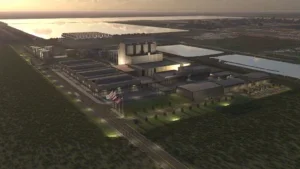
The New Power Build Cycle for AI Data Centers
AI-driven load growth is putting significant strain on the grid, intensifying pressure on utilities and developers to secure firm capacity and meet increasingly compressed delivery timelines. While tools such as transmission optimization can deliver incremental gains, they do not address the core issue: the pace of AI data center expansion is forcing a shift from […]