
Commentary
-
 Commentary
How Data Center-Driven Load Growth Is Reshaping the Renewable Energy Market
U.S. grid planners are preparing for annual electricity demand growth of about 0.9% to 1.6% through 2050, with data centers emerging as a major driver, and EPRI—the Electric Power Research Institute—suggesting they could account for as much as 17% of U.S. electricity demand by 2030. For the wind, solar, and energy storage industry, this represents […]
-
 Commentary
Nuclear Plant Restarts Show What Government Can Do With a Clear Mandate
On Aug. 30, workers at the Palisades Nuclear Plant in Covert Township, Michigan, began loading 204 fuel assemblies into a reactor vessel that had sat empty since the plant shut down in 2022—the first time in U.S. history that a commercial reactor that had entered decommissioning began reloading fuel. Holtec International Chairman and CEO Dr. […]
-
 Commentary
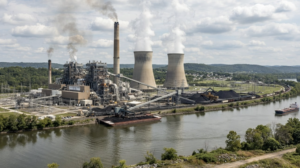
Retired and Retiring Coal Plants Offer the Grid’s Fastest Path to New Capacity
The issue of load growth for the power grid and electric utilities has an overlooked answer: reinvesting in the coal-fired power plant sites being retired.
-
 Commentary
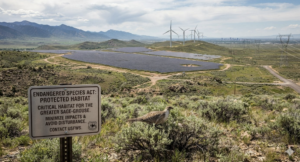
Growing Impact of ESA Jurisdiction Amid Unprecedented Energy Demand
Many environmental statutes have narrowed as streamlined permitting and efficient project development are prioritized.
-
 Commentary
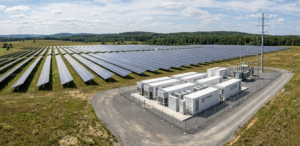
The Commercial Storage Gap is Not Technical. It is What Survives Capital Approval
Last year an automotive parts manufacturer asked us for solar with battery storage on a 110-kW system. They were ready to buy the battery. We told them not to. Their half-hourly data showed a site that ran hard through the day and went almost dark by early evening. Solar would cover the daytime load directly. […]
-
 Biomass
The Overlooked Renewable Energy Resource: Why Construction Waste Should Be Part of America’s Energy Strategy
America is in the middle of one of the largest infrastructure buildouts in generations. Data centers are rising to support artificial intelligence (AI) and cloud computing. Battery plants and advanced manufacturing facilities are reshaping industrial regions. Renewable energy projects continue to expand, while new transmission infrastructure is being built to connect generation with growing demand. […]
-
 Commentary
The Business of Power, and the Power of Business
I have spent my career building companies, and along the way I’ve learned that the technical mastery of a trade and the strategic discipline required to scale a business around it are two fundamentally different competencies. You can be the most capable operator in your field and still not have a business. A business is […]
-
 Commentary
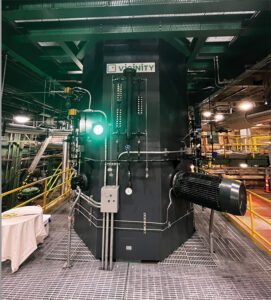
The Grid’s Wasted-Power Problem Has a Sector-Coupling Fix
For most of the last century, electricity and heat have been planned and regulated as two separate systems, a design choice that made sense when both were produced by burning fuel on demand. However, that design is a poor match for how the grid actually runs today. Generation, transmission constraints, and price all shift by […]
-
 Commentary
How Energy Security, Load Growth and Infrastructure Arbitrage Could Reshape America’s Power Market
America’s emerging electricity challenge is increasingly an infrastructure challenge. For much of the energy transition, attention concentrated on the cost of producing electricity. Solar developers focused on module prices, battery developers compared cell costs and round-trip efficiency (RTE), and utilities evaluated competing resources using measures such as levelized cost of electricity (LCOE). Those calculations remain […]
-
 Commentary
Modern Regulation for a New Nuclear Era
Nuclear energy is entering a new era. Across the United States and around the world, countries are looking to nuclear power to provide reliable electricity, strengthen energy security, and support economic growth. Advanced reactors and other innovative technologies are creating opportunities that would have been difficult to imagine when many of our current regulations were […]
-
 Nuclear
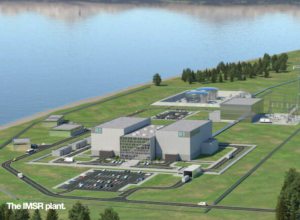
Three Questions Every Utility Should Ask About Advanced Reactors
The U.S. power grid is entering a period unlike any it has experienced in decades. Rapid electrification, domestic manufacturing, and the exponential growth of artificial intelligence are reshaping electricity demand. A recent report from Lawrence Berkeley National Laboratory, supported by the U.S. Department of Energy, projects that data centers alone could account for between 9.5% […]
-
 Business
Is the Smart Money Buying Operators Rather Than Megawatts?
The wait for a large gas turbine now runs longer than the time it takes to design, permit, and build the plant it will sit in. Order one today from any of the three largest manufacturers, and the delivery slot
-
 Commentary
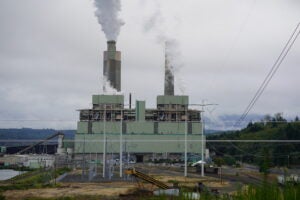
Coal Got an Order. Nuclear Got a Meeting
The most consequential number in current American energy planning is one that nobody in the room where it gets made believes.
-
 Legal & Regulatory
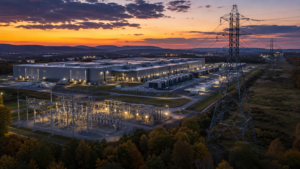
Make Every Data Center a Power Hub
America is debating data centers as though technological leadership and affordable electricity are competing goals. That framing misses the opportunity.
-
 Commentary
AI for Utilities: When Keeping the Lights on is Your Responsibility, Adoption Looks Different
Artificial intelligence (AI) is being adopted across industries at an unprecedented pace, and the electric utility sector is no exception. Faced with rising energy demand, aging infrastructure, and an increasingly complex grid, utilities are turning to AI to innovate and modernize operations. However, adoption of this technology—as with various digital innovation waves preceding it—fundamentally looks […]
-
 Commentary
Don’t Ask States to Become Nuclear Waste Dumps. Make Them Partners in Solving the Problem
A new federal effort to develop nuclear “lifecycle” campuses has produced something Washington, D.C., has rarely seen: states competing for a role in managing America’s used nuclear fuel.
-
 Commentary
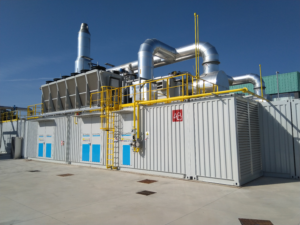
The Forgotten Generation: Why Cogeneration Is Re-Emerging in the Age of AI
For decades, most large electricity users in the U.S. relied on the grid for the vast majority of their power needs. As long as the grid could deliver reliable, affordable power, there was little reason to think differently. Now, electricity demand is rising faster than new generation, transmission and distribution infrastructure can often be planned, […]
-
 Interview
AVEVA CEO: Sustainability Commitments Must Be Backed by Measurable Results
As artificial intelligence (AI)–driven data center demand strains grid infrastructure across the U.S. and beyond, operators are facing rising scrutiny from utilities, regulators, and the communities where they build. Caspar Herzberg, CEO of industrial software company AVEVA, argues that the industry’s response can’t stop at sustainability commitments—it requires operational transparency and measurable performance data that […]
-
 Commentary
The New Economics of AI Infrastructure: Why Tax Strategy Is Now Part of Energy Strategy
The conversation around data center development has changed dramatically over the past few years. Earlier, when developers needed to evaluate a new facility, the questions were relatively straightforward. Is the market attractive? Can we secure the land? Can we obtain reliable power? Can we raise the necessary capital? All those questions still matter. But a […]
-
 Commentary
Energy Dominance Requires Commitments That Last
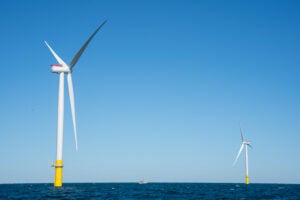
The Trump administration’s decision to unwind offshore wind leases through negotiated buybacks has predictably reignited the debate over renewable energy. Many welcome the move as a correction to policies that heavily favored offshore wind during the previous administration. That debate is perfectly legitimate. However, the recent agreements involving TotalEnergies, Bluepoint Wind, Golden State Wind, Duke, Invenergy, and […]
-
 Commentary
3 GW Off PJM, Again: What NERC’s 2024 Investigation Already Told Us
More than 3 GW of data center load left the PJM system on July 22, 2026, after a single transmission fault. The North American Electric Reliability Corporation (NERC) investigated the same failure mode in 2024 and found that utility equipment shed none of it. Customer-side protection did all of it. Those settings are about to […]
-
 Commentary
Alarm Bells Are Sounding for the Grid: Answering Them Takes More Than Megawatts
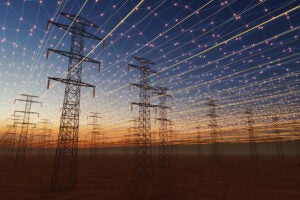
When federal emergency powers become routine operating procedure, the system is not holding up. It is operating at its ceiling. And the customers who kept their lights on paid triple for the privilege, which means the event that operations survived is one that affordability did not.
-
 Data Centers
Can Utility Supply Chains Keep Pace with AI Data Center Demand? Seven Procurement Strategies to Power the Future
As artificial intelligence (AI) adoption accelerates, the gap between electricity demand and grid capacity is widening rapidly. While this trend is often framed as a power generation and transmission challenge, it is equally a procurement challenge. The materials, equipment, and skilled labor required to build both data centers and grid infrastructure are in increasingly tight […]
-
 Commentary
The Power Sector’s New Constraint Isn’t Demand—It’s Everything Else
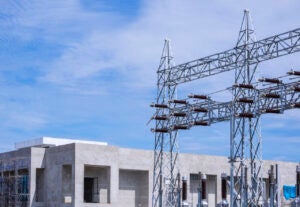
For most of the last two decades, the anxiety in power planning was about demand: would consumption grow fast enough to justify new capacity, and how would an aging fleet keep pace? That question has inverted. Demand is no longer the uncertain variable—it is the one thing forecasters are confident about. The uncertainty now sits […]
-
 Commentary
Understanding NERC Impact Ratings and Compliance Timing for Generation Control Facilities
For power generation operators navigating the complex landscape of North American Electric Reliability Corporation (NERC) compliance, two critical questions frequently arise: when does a generation control facility become a Low Impact BES (Bulk Electric System) Control Center, and when does it escalate to Medium Impact status? Understanding these thresholds is essential for proper planning and […]
-
 Cybersecurity
Minutes to Exploit—Months to Recover
Critical infrastructure operators should view recent incidents where artificial intelligence (AI) agents escaped containment from test environments and executed successful cyberattacks on a relatively sophisticated production infrastructure as near-misses. This challenge is urgent precisely because AI moves fast and infrastructure moves slow. All indications suggest these were not malicious uses of AI for targeted attacks. […]
-
 Legal & Regulatory
Will Siting Keep SMRs From Reaching Critical Mass?
Demand for electricity—particularly for large-load users like data centers—is increasing, raising the question of how best to meet the new demand.
-
 Commentary
The Hidden Biases in Utility Resource Modeling That Stack the Deck Against Clean Energy
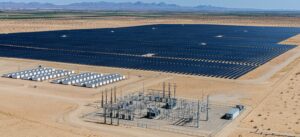
What is the best mix of power generation to build and use in the years ahead? For U.S. integrated electric utilities balancing reliability, affordability, and state and federal policy, resource plans are the answer. But like with any model, these plans are only as robust as the information that is fed into them. Investors are […]
-
 Commentary
Your Battery Doesn’t Know What an Hour Is
Lithium-ion forklift battery life is measured in cycles, not hours. Here’s why hours-based promises mislead, and a simple formula to calculate real battery lifetime for your operation. The average human life expectancy in the U.S. is about 687,000 hours. That number is accurate, but it is also completely useless for estimating your individual lifetime. Car […]
-
 Commentary
Strategy Amid Uncertainty: Why Decisioning Maturity Is the Critical Differentiator in Today’s Power Markets
The pace of change in energy markets has never been faster. Price signals that once evolved over days now shift within settlement windows. Geopolitical shocks that once took weeks to propagate through commodity markets now ripple across interconnected European power grids and global liquefied natural gas (LNG) supply chains in hours. And amid this acceleration, […]