
T&D
-
 T&D
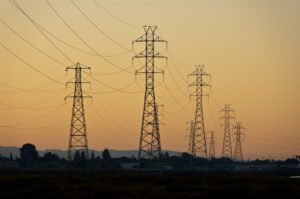
T&DThe Blackout Behind the Blackout: What Sarnia’s 2003 Outages Reveal About Restart Risk
Restoring customer supply is not the same event as restoring a process plant. Sarnia’s 2003 outages show why power-system resilience has to be carried through safe shutdown, utilities, environmental controls, and staged restart. The Grid Event Was Only the First Failure State At 4:11 p.m. on Aug. 14, 2003, the Northeast blackout began to pull […]
-
 T&D
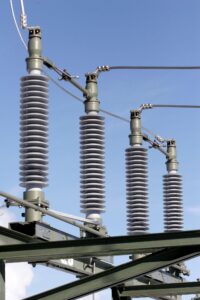
T&DThe Grid Reliability Risk Hiding on High-Voltage Insulation
A high-voltage insulator can look unchanged for years while its operating environment steadily alters the conditions on its surface. Salt carried inland from a coast, industrial residue, road dust, moisture, ultraviolet radiation, and repeated weather cycles create an exposure history that can influence electrical performance and maintenance demands long before an asset reaches a predetermined […]
-
 T&D
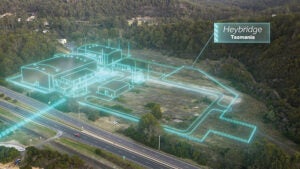
T&DBuilding the Connections Australia’s Energy Transition Needs
Moving Tasmania’s abundant renewable power to the mainland means threading a subsea and underground cable through farmland, coastline, and Victoria’s Latrobe Valley—each stretch carrying its own
-
 Data Centers
On-Demand Podcast – The Data Center Challenge: Build Faster, Be Efficient, and Keep the Data Flowing
Data centers face big challenges, from processing trillions of search queries, storing billions of emails and photos and serving countless hours of video every day while at the same time developing ways of decreasing their energy and carbon footprints and increasing data security. In this episode, Angad Sandhu, CTO of Giga Energy (director of […]
-
Data Centers
Keeping the Lights On — Smarter Fault Management for Data Center Power Systems
Data centers commonly deploy looped medium-voltage (MV) distribution systems with automated protection and control schemes to deliver exceptionally high levels of power availability. However, these automation schemes rely on communications infrastructures where latency and scalability can affect fault-response performance. This paper presents a robust, hybrid FLISR strategy that integrates centralized and decentralized control to […]
-
 Commentary
The Grid’s Wasted-Power Problem Has a Sector-Coupling Fix
For most of the last century, electricity and heat have been planned and regulated as two separate systems, a design choice that made sense when both were produced by burning fuel on demand. However, that design is a poor match for how the grid actually runs today. Generation, transmission constraints, and price all shift by […]
-
 T&D
T&DA Phased Framework for Adaptive Protection Migration in DER-Heavy Transmission Substations
This article presents a practical four-phase engineering methodology for migrating legacy transmission substations toward adaptive protection architectures in power systems with high distributed energy resource (DER) penetration. Increasing DER integration introduces significant challenges to conventional protection schemes, including bidirectional power flow, dynamic fault current behavior, relay coordination complexity, and reduced protection reliability in aging substations. […]
-
 solid state transformers
Major Leap for Solid-State Transformers: Megawatt-Class Unit Demonstrated on Live Feeder
North Carolina State University, the New York Power Authority (NYPA), and EPRI have demonstrated a megawatt-class solid-state transformer (SST) on a live 13.2-kV utility distribution feeder, marking what the partners describe as the first independent validation of a megawatt-class SST under real-world distribution conditions. The NC State-built prototype was connected at EPRI’s power delivery laboratory […]
-
 The POWER Interview
Can U.S. High-Voltage Grid Equipment Supply Keep Pace With 765-kV Expansion and Data Center Demand?
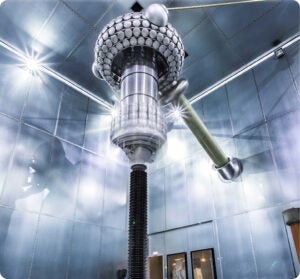
From two-year bushing lead times and hyperscaler demand to U.S. manufacturing expansion and the emerging 765-kV build-out, Trench Group CEO Bahadir Basdere explains where high-voltage equipment supply is under the most pressure. High-voltage grid components are becoming a critical constraint as utilities, transmission developers, original equipment manufacturers (OEMs), and hyperscalers compete for equipment needed to […]
-
 T&D
T&DConstruction Starts on Last Segment of Major Western U.S. Transmission Project
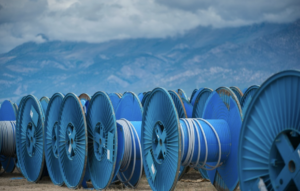
Construction of the final segment of the Southwest Intertie Project, a 576-mile transmission corridor connecting an area from Idaho to just south of Las Vegas, Nevada, is underway. Officials celebrated the latest milestone for the installation during a groundbreaking ceremony in Ely, Nevada, on September 3.
-
 Supply Chains
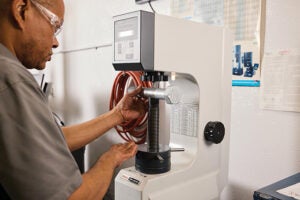
Matching Fasteners to the Application: Five Quality Controls
According to the U.S. Department of Energy, the domestic power system is facing mounting pressure from growing electricity demand, a backlog of generation interconnection requests, and an aging transmission
-
 O&M
O&MHow IoT and Industrial AI-Enabled Grids Are Transforming Utility Operations
Electricity grids historically have been relatively predictable systems. Power flowed in one direction, from centralized generation facilities through transmission and distribution networks to homes and
-
 Commentary
3 GW Off PJM, Again: What NERC’s 2024 Investigation Already Told Us
More than 3 GW of data center load left the PJM system on July 22, 2026, after a single transmission fault. The North American Electric Reliability Corporation (NERC) investigated the same failure mode in 2024 and found that utility equipment shed none of it. Customer-side protection did all of it. Those settings are about to […]
-
 Commentary
Alarm Bells Are Sounding for the Grid: Answering Them Takes More Than Megawatts
When federal emergency powers become routine operating procedure, the system is not holding up. It is operating at its ceiling. And the customers who kept their lights on paid triple for the privilege, which means the event that operations survived is one that affordability did not.
-
 Data Centers
Can Utility Supply Chains Keep Pace with AI Data Center Demand? Seven Procurement Strategies to Power the Future
As artificial intelligence (AI) adoption accelerates, the gap between electricity demand and grid capacity is widening rapidly. While this trend is often framed as a power generation and transmission challenge, it is equally a procurement challenge. The materials, equipment, and skilled labor required to build both data centers and grid infrastructure are in increasingly tight […]
-
 Smart Grid
Resilience and Digital Transformation Spearhead the Energy Infrastructure Transition
The transition to sustainable energy infrastructure has been experiencing steady progress in recent years across the globe, while simultaneously undergoing constant fluctuation. Actual progress is influenced by a wide variety of factors, such as the drivers behind participants’ motivations and the technologies enabling the transition, as well as the status of supply chains and geopolitical […]
-
 Energy Security
World’s Largest Energy Lender Steers Federal Financing Toward Baseload, Transmission, and Nuclear
The U.S. Department of Energy’s (DOE’s) Office of Energy Dominance Financing (EDF) closed a loan of up to $3.26 billion to American Electric Power (AEP) Texas on July 8, the office’s third utility
-
 Smart Grid
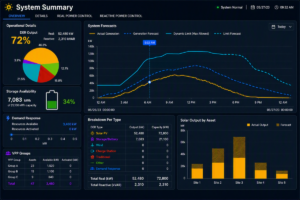
Enabling Modern Grid Flexibility With Coordinated, Location-Specific Optimization
Integrate high-load data centers and renewable energy without compromising grid reliability. Grid reliability hinges on the flexibility identified, managed, and optimized by operational technology (OT). The
-
 Energy Storage
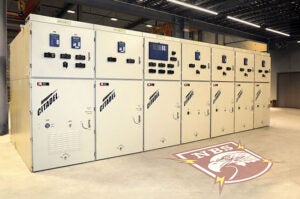
The BESS Connection to the Grid—Ensuring Flexibility and Reliability
When designed to interface directly with a utility’s medium-voltage infrastructure, battery energy storage systems (BESS) must meet stringent performance, protection, and reliability requirements that extend
-
 Energy Storage
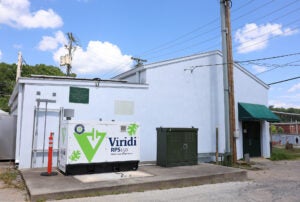
Viridi BESS Installed at Oak Ridge Lab as Part of Grid Technology Research
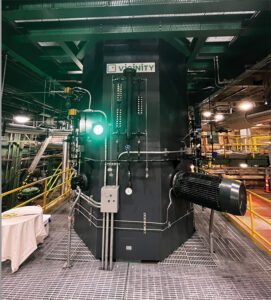
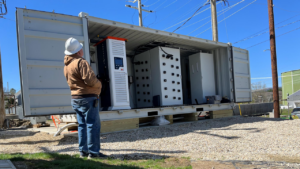
Battery storage developer Viridi has announced a strategic partnership with the Dept. of Energy’s Oak Ridge National Laboratory (ORNL) in Tennessee to support research into next-generation utility grid technologies that advance grid resilience and reliability.
-
 Commentary
Strategy Amid Uncertainty: Why Decisioning Maturity Is the Critical Differentiator in Today’s Power Markets
The pace of change in energy markets has never been faster. Price signals that once evolved over days now shift within settlement windows. Geopolitical shocks that once took weeks to propagate through commodity markets now ripple across interconnected European power grids and global liquefied natural gas (LNG) supply chains in hours. And amid this acceleration, […]
-
 Research and Development
AI Is Usually Cast as a Grid Burden. The Genesis Mission Is Betting It’s a Grid Tool.
The explosion of artificial intelligence (AI) computing is, for most utilities, a problem to be absorbed: gigawatts of new data-center demand arriving faster than transmission can be planned or built. The U.S. Department of Energy’s (DOE’s) Genesis Mission does not dispute that framing. But buried in the national research portfolio it unveiled July 22 is […]
-
 Technology
Quantum Computing Is Emerging as a Tool for Tomorrow’s Electrical Grids
Artificial intelligence and high-performance computing have helped electrical utilities modernize how they model, forecast, and manage grid operations. These tools already play a central role in maintaining reliability, balancing supply and demand, and planning new infrastructure. But as electrical grids become more distributed, data-intensive, and renewable-heavy, some of the most complex decision-making problems are becoming […]
-
 Business
Siemens Energy Will Shed the Siemens Name, Rebrand as Omterra
The Siemens name is coming off one of the power industry’s largest equipment and service suppliers. Siemens Energy announced July 14 that it has begun preparing the transition to an independent corporate brand, with Siemens Energy and Siemens Gamesa Renewable Energy to be united under a single new name: Omterra. The rebranding process is scheduled […]
-
Commentary
The New Large-Load Compact
Why AI Data Centers Can No Longer Be Treated as Passive Customers For decades, even very large electric customers fit inside a familiar planning model. A factory, refinery, industrial campus, hospital complex, hospital system, or manufacturing facility requested service. The utility studied the load, identified required facilities, assigned costs, and folded the demand into its […]
-
 T&D
T&DDOE Closes $3.26 Billion Transmission Loan to AEP Texas
The U.S. Department of Energy has closed a loan of up to $3.26 billion to AEP Texas to finance a portfolio of nearly 100 transmission projects, the agency’s Office of Energy Dominance Financing (EDF) said on July 8. The financing will fund the rebuilding, reconductoring, and new construction of roughly 2,800 miles of transmission lines across […]
-
 News and Notes
POWER Digest [July 2026]
X-energy Advances 6-GW Nuclear Partnership With UK’s Centrica. Advanced nuclear reactor developer X-energy on June 2 said it submitted an application for the UK’s Generic Design Assessment (GDA)—the
-
 Data Centers
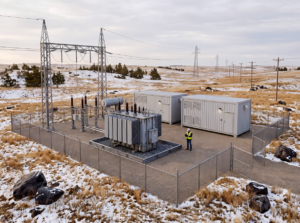
Energizing AI: How Modular Substations Alleviate Data Center Power Bottlenecks
Data center developers have mastered server density and cooling, but power interconnection remains stubbornly slow. Modular substations built in factories rather than fields are emerging as the most practical
-
 Commentary
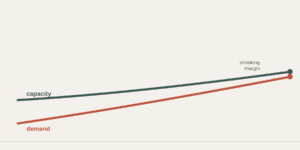
The Grid, Not Just Generation, Has Become the Central Climate Story
For much of the past decade, the climate and energy debate has been fixated on how electricity is generated: which technologies are cheapest on paper, how renewables can scale fastest, which breakthrough is
-
 Commentary
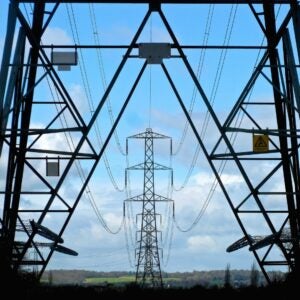
Looking for Power in the Wrong Places
The U.S. averages 470 GW of demand, reaches summer peaks of 759 GW, and has 1,250 GW of generation capacity. Does that sound like a grid running out of power? PJM’s latest capacity auction signals the need for an additional 14.9 GW of power resources, while the industry is expected to invest $1.4 trillion over […]