
O&M
-
 T&D
T&DMaintaining Uninterrupted Operations Amid Persistent Drastic Weather Conditions
Severe weather conditions have become constant. Cyclones, storms, heatwaves, floods, and droughts continue to put critical infrastructure, homes, livelihoods, and lives at risk in the U.S. and around the world. Heat waves and droughts are the second-deadliest weather category, causing critical infrastructure instability, power line inefficiency, thermal sagging, and overloaded transformers that can lead to […]
-
 O&M
O&M5 Critical Factors That Determine Condensate Polishing Performance
An Ecolab executive brief for fossil power plant operators, engineers, and specifiers focused on condensate polishing performance. The document argues that condensate polishing resin selection should be viewed as a turbine-life and asset-protection decision, not a commodity purchase. It identifies five critical resin characteristics that influence water quality, equipment protection, resin longevity, operating efficiency, […]
-
 Infographics
A Changing Grid Is Reshaping Fossil Power Reliability
Keep water chemistry under control when flexible operation, aging assets, and workforce turnover put fossil-plant reliability at risk. Download the infographic to see how high-performance resins coupled with leading expertise can help protect critical equipment, stabilize operations, and reduce the risk of costly excursions and outages. Explore practical approaches for improving condensate polishing, extending […]
-
 O&M
O&MReducing Performance Losses in Utility-Scale Solar Plants: An O&M Approach
Utility-scale solar plants can lose energy without experiencing a complete equipment failure. Dust accumulation can reduce module output, inverter derating can constrain power conversion, tracker faults can leave arrays at suboptimal angles, and communication problems can prevent operators from recognizing underperformance promptly. Some losses are unavoidable, but others can be identified, quantified, and corrected through […]
-
 O&M
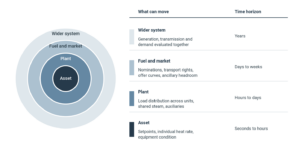
O&MBetween the Assets and Past the Fence
Power plants have largely optimized individual assets. The next opportunity lies in how assets, resources, and operating decisions work together. Power producers are experts at optimizing equipment. Decades of advancement in engineering and operating practices have improved the performance of gas turbines, pumps, steam systems and other critical assets. Operators can measure unit-level performance in […]
-
 O&M
O&MWhy Power Plant O&M Teams Need Better Inspection History, Not Just More Maintenance Data
Power plants generate a large amount of maintenance and inspection information every day. Operators complete rounds. Technicians document repairs. Contractors submit reports. Engineers review abnormal conditions. Reliability teams analyze failures. Asset managers track age, condition, criticality, and replacement plans. The challenge is not always that power generation facilities lack data. The challenge is that much […]
-
 Technology
Asset Information Lifecycle Management: The Digital Backbone of Trusted Operations, Compliance, & AI
This eBook explains how organizations in the Power & Utilities industry can evolve from scattered, uncontrolled engineering information to a governed, connected, and AI-ready digital foundation. It introduces Asset Information Lifecycle Management (AILM) as the extension of engineering document control across the full asset lifecycle—keeping engineering records aligned with the physical plant as assets […]
-
 Technology
Transformation from Drawing Management Chaos to a More Adaptable, Resilient, and Secure Utility
This customer webinar brings together engineering and IT leaders from Eversource, Great River Energy, and Hoosier Energy to share how their utilities moved from fragmented drawing storage to centralized Engineering Document Management. Through firsthand experiences, the panel explores the risks of shared drives, paper drawings, conflicting revisions, and tribal knowledge—and how a single source […]
-
 Technology
Why Engineering Document Management is Critical for Your Utility’s Future
This playbook explores how utilities can use Engineering Document Management (EDM) to improve access to critical engineering information, connect teams, automate workflows, and reduce operational risk. Drawing on real-world experiences from Con Edison, Eversource Energy, Great River Energy, and Hoosier Energy, it demonstrates how centralized document control supports everything from design and capital projects […]
-
 T&D
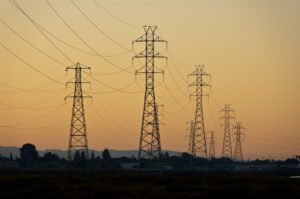
T&DThe Blackout Behind the Blackout: What Sarnia’s 2003 Outages Reveal About Restart Risk
Restoring customer supply is not the same event as restoring a process plant. Sarnia’s 2003 outages show why power-system resilience has to be carried through safe shutdown, utilities, environmental controls, and staged restart. The Grid Event Was Only the First Failure State At 4:11 p.m. on Aug. 14, 2003, the Northeast blackout began to pull […]
-
 T&D
T&DThe Grid Reliability Risk Hiding on High-Voltage Insulation
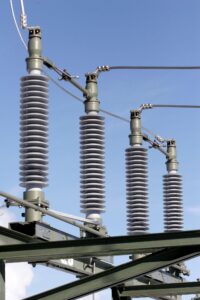
A high-voltage insulator can look unchanged for years while its operating environment steadily alters the conditions on its surface. Salt carried inland from a coast, industrial residue, road dust, moisture, ultraviolet radiation, and repeated weather cycles create an exposure history that can influence electrical performance and maintenance demands long before an asset reaches a predetermined […]
-
 O&M
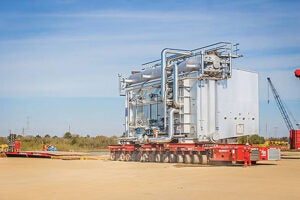
O&MTemporary Boilers, Permanent Strategy: How Rental Fleets Are Reshaping Reliability Planning
As rental boiler programs expand across the industry, suppliers describe a shift from emergency-only stopgaps to planned capacity and redundancy strategy. When the U.S. Department of Veterans Affairs (VA)
-
 O&M
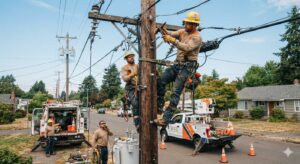
O&MOperational Drift Is Risky Business for Power Generators
Power generation operators are navigating a major workforce transition at the same time operations and maintenance (O&M) work is becoming more complex. Deloitte’s 2025 Power and Utilities Industry Outlook notes that demand for U.S. electricity surpassed expectations in 2025, driven by artificial intelligence (AI) training workloads and electrification initiatives, naturally creating a corresponding surge in […]
-
 O&M
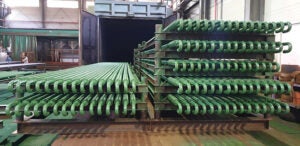
O&MSeven Years of Operation in Heat Recovery Economizers: A Phenolic Coating Case Study
A South Korean power plant needed a coating that could survive corrosive condensates without sacrificing heat transfer—the industry’s usual workaround for that trade-off fell short.
-
 O&M
O&MFrom Underground Heat to Reliable Power: Engineering Geothermal for the Field
Next-generation geothermal is moving from technical promise to commercial deployment. Advances in drilling and reservoir engineering are making it possible to reach heat resources in more locations.
-
 O&M
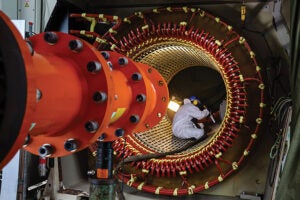
O&MOld Data, Still-Valid Lessons: What Two EPRI Studies Confirm About Generator Maintenance
A shorted rotor winding doesn’t care what year it is. Neither does a cracked retaining ring or a degraded stator insulation system. The physical mechanisms that take generators offline—fatigue
-
 Biomass
The Overlooked Renewable Energy Resource: Why Construction Waste Should Be Part of America’s Energy Strategy
America is in the middle of one of the largest infrastructure buildouts in generations. Data centers are rising to support artificial intelligence (AI) and cloud computing. Battery plants and advanced manufacturing facilities are reshaping industrial regions. Renewable energy projects continue to expand, while new transmission infrastructure is being built to connect generation with growing demand. […]
-
![LRS Article_photo 1_LRS assessment[23]](https://www.powermag.com/wp-content/uploads/2026/09/lrs-article-photo-1-lrs-assessment23-225x300.jpeg) O&M
O&MBeyond the Grease Gun: Turning Lubrication Into a Strategic Reliability Advantage
For too many industrial organizations, lubrication is a mere maintenance task, a routine chore performed without strategic consideration. This oversight ignores the profound impact that lubrication has on asset reliability and, by extension, overall business performance. Achieving lubrication excellence often requires the support of a dedicated, full-service lubrication solutions provider rather than reliance on transactional […]
-
 Data Centers
The Rise of Low-Power Instrument Transformers in Data Center and Industrial Applications
Traditional magnetic induction-based instrument transformers have served the power industry reliably for decades, but a new generation of low-power alternatives is gaining ground — particularly in data centers and industrial facilities where accuracy, size, and integration with digital secondary systems matter. This paper reports on LPIT history, standardization, and some of the applications in […]
-
Data Centers
On-Demand Podcast – The Data Center Challenge: Build Faster, Be Efficient, and Keep the Data Flowing
Data centers face big challenges, from processing trillions of search queries, storing billions of emails and photos and serving countless hours of video every day while at the same time developing ways of decreasing their energy and carbon footprints and increasing data security. In this episode, Angad Sandhu, CTO of Giga Energy (director of […]
-
Data Centers
Keeping the Lights On — Smarter Fault Management for Data Center Power Systems
Data centers commonly deploy looped medium-voltage (MV) distribution systems with automated protection and control schemes to deliver exceptionally high levels of power availability. However, these automation schemes rely on communications infrastructures where latency and scalability can affect fault-response performance. This paper presents a robust, hybrid FLISR strategy that integrates centralized and decentralized control to […]
-
 O&M
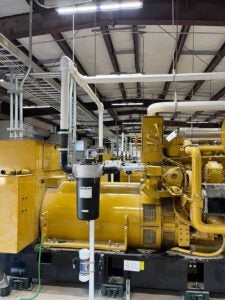
O&MWhy Crankcase Ventilation Matters in Engine-Based Power
As reciprocating engines/gensets assume a larger role in distributed generation, data center infrastructure, and other critical duty applications, crankcase ventilation and the resulting emissions warrant increased attention and mitigation. When power generation professionals discuss engine emissions, the conversation typically focuses on the exhaust stack. While this emphasis is justified, it underestimates another emissions pathway: the […]
-
 Connected Plant
Energy Management Goes Beyond Monitoring to Decision-Making
Utilities and independent power producers have spent years adding sensors to their generating fleets and creating dashboards to view what they relay. But visibility into how a plant is operating isn’t the same as knowing what to do about it—and that gap is where Siemens Energy’s Omnivise Energy Management System is increasingly shedding light, explained […]
-
 Business
Is the Smart Money Buying Operators Rather Than Megawatts?
The wait for a large gas turbine now runs longer than the time it takes to design, permit, and build the plant it will sit in. Order one today from any of the three largest manufacturers, and the delivery slot
-
 Connected Plant
Condenser Chemistry Management: From Grab Samples to Predictive Digital Twins
When I walk into the main office of a power plant, it’s always on the main TV screen, along with heat rate, load, and other critical numbers. I’m talking about condenser backpressure. Every power plant manager watches this number (Figure 1), and they should. A PEPSE (Performance Evaluation of Power System Efficiencies) analysis of a […]
-
 Technology
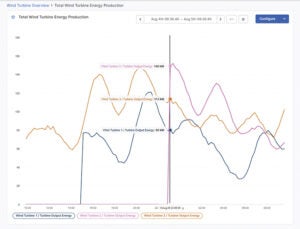
Making Energy Intensity a Controlled Variable
Rising power costs and load increases have elevated energy monitoring and analysis on plant agendas, but consumption only becomes controllable once it is reliably measured per unit produced and modeled
-
 Water
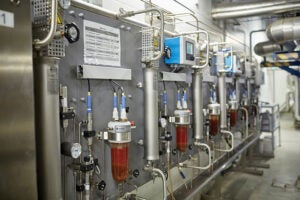
WaterManage Water Use in Power and Energy With Reliable Process Instrumentation
From green hydrogen and coal wastewater, to data center cooling and steam cycle chemistry, reliable measurement helps power producers moderate water use, protect critical equipment, and comply with
-
 Gas
GasSupercritical CO2 for Gas Turbines: Accelerating Speed to Power
Many simple-cycle gas turbines are running harder than they were ever intended to—yet steam retrofits have never penciled out for most of that fleet. Supercritical CO 2 bottoming cycles change the economics
-
 Supply Chains
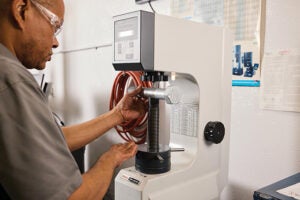
Matching Fasteners to the Application: Five Quality Controls
According to the U.S. Department of Energy, the domestic power system is facing mounting pressure from growing electricity demand, a backlog of generation interconnection requests, and an aging transmission
-
 O&M
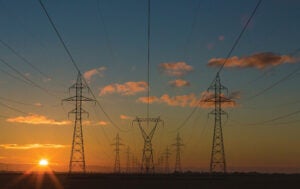
O&MHow IoT and Industrial AI-Enabled Grids Are Transforming Utility Operations
Electricity grids historically have been relatively predictable systems. Power flowed in one direction, from centralized generation facilities through transmission and distribution networks to homes and