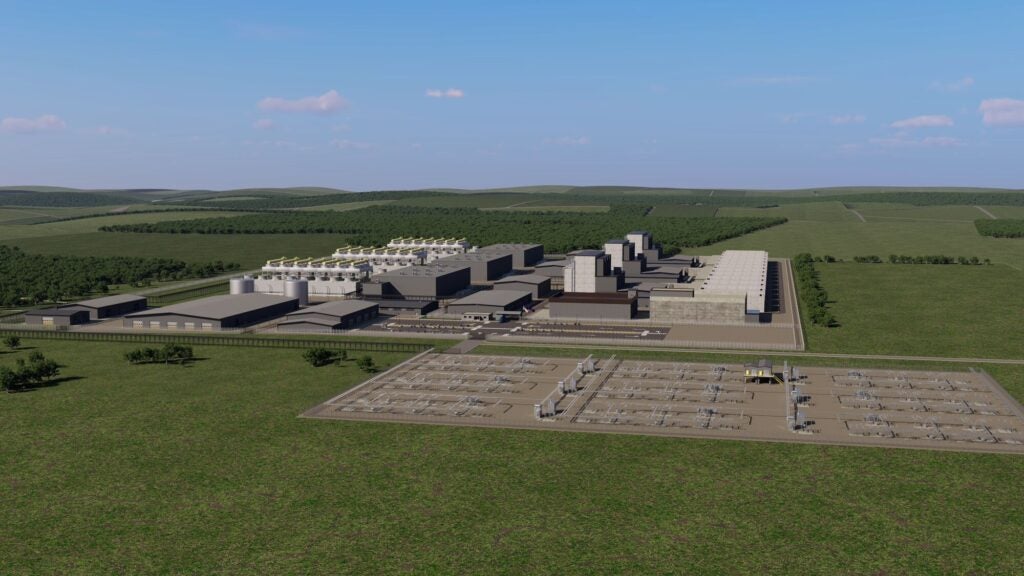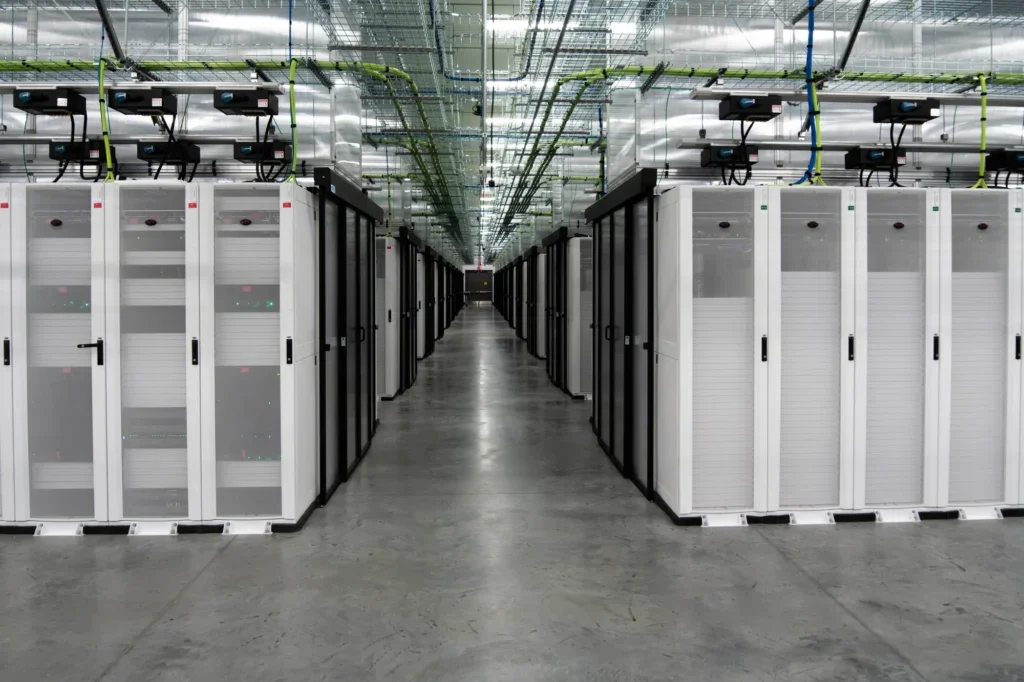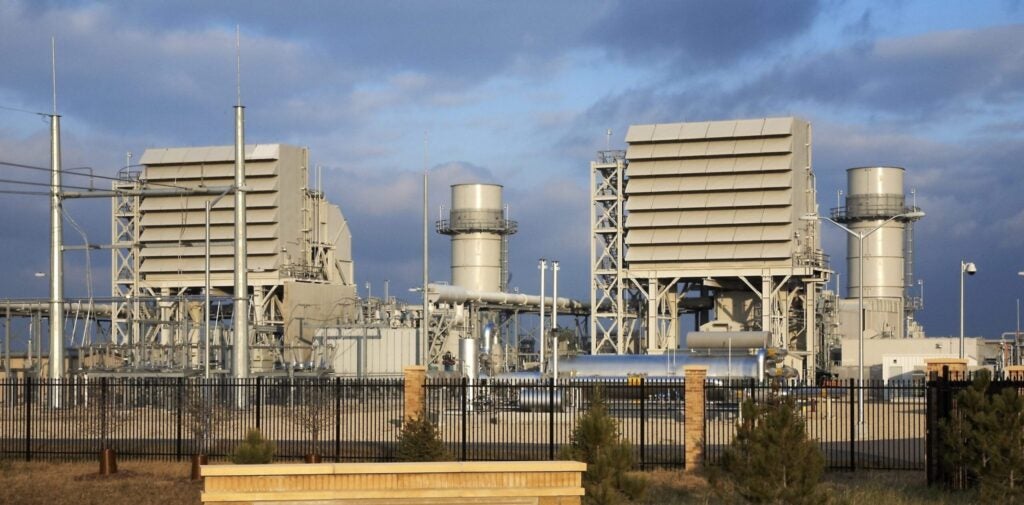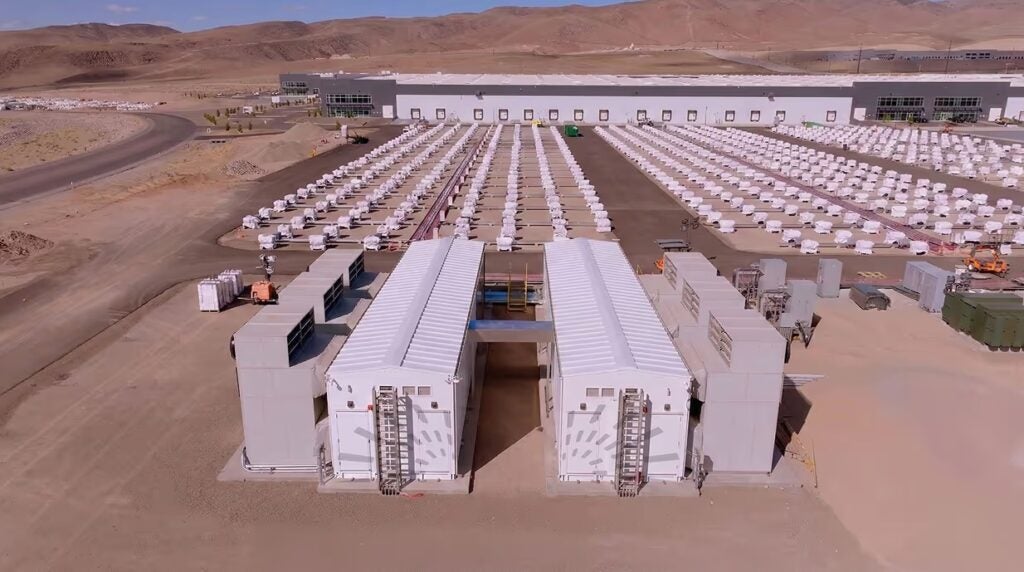

The Federal Energy Regulatory Commission (FERC) has directed the North American Electric Reliability Corporation (NERC) to file one or more new or modified mandatory reliability standards governing the integration of computational loads—a category defined broadly enough to cover generative-AI data centers, cryptocurrency mines, and other information-technology facilities—by Dec. 31, 2026.
FERC’s order, issued on July 16 in Docket No. RD26-7-000, mandates that NERC must also propose changes to its Rules of Procedure, including registry criteria for bringing computational-load entities directly under the mandatory reliability framework, and file a Phase II work plan for additional standards by March 1, 2027.
The directive serves as a crucial step that brings computational loads—until now treated primarily as ordinary customers on the distribution side—under the mandatory reliability framework that has governed generators and transmission owners since Congress made NERC’s standards enforceable through the Energy Policy Act of 2005.
While NERC has moved quickly to address large-load reliability risks—including through its August 2024-established Large Loads Task Force and documentation on reliability risks posed by emerging large loads—FERC’s order converts NERC’s voluntary accelerated schedule into an enforceable federal requirement. For the first time, the directive also opens the door to registering the loads themselves as entities directly accountable under Section 215 of the Federal Power Act.
“Certain large loads like data centers and crypto mining operations that NERC calls computational load have the potential to change their demand almost instantly,” FERC Chairman Laura Swett noted during the commission’s open meeting. “And this rapid fluctuation causes voltage stability issues that threaten grid reliability.”
Swett said FERC’s action was intended to remove any uncertainty surrounding NERC’s proposed schedule. “Today we recognize that this schedule NERC has proposed is not optional, and we must ensure that the critical work of winning the AI race does not threaten reliability in our country,” she said.
Immediate Action Warranted Now
The order’s rationale appears to stem almost entirely from the record NERC assembled in Docket No. RM26-4-000, the “Interconnection of Large Loads to the Interstate Transmission System” proceeding. That docket grew out of the Department of Energy’s Oct. 23, 2025, advance notice of proposed rulemaking (ANOPR), which directed FERC to consider reforms for the timely and orderly interconnection of large loads to the transmission system.
However, NERC has for more than two years been moving to tackle challenges posed by large commercial and industrial loads that are rapidly connecting to the bulk-power system (BPS). “Computational loads, such as data centers (including cryptocurrency and artificial intelligence), present unique challenges in forecasting and planning for increased demand,” it has said. NERC has also reported observing “customer-initiated large load reductions and significant oscillations that occur in seconds, leaving little or no room for real-time responses and posing a threat to BPS reliability.” In a March 20 filing, NERC President and CEO Jim Robb pointed to grid events in Virginia and Texas “where large data center loads have responded to, and amplified, grid instability,” and said NERC must “quickly secure the reliable contribution of these loads to the future system.”
Working through the Large Loads Task Force established in August 2024—now the Large Loads Working Group under the Reliability and Security Technical Committee—NERC published its first white paper, Characteristics and Risks of Emerging Large Loads, in July 2025, which flagged long-term planning, operations and balancing, and stability as the highest-priority risk categories.
In September 2025, NERC issued a Level 2 Alert, which directed registered entities to assess industry preparedness. A second white paper followed in March 2026, identifying gaps in existing practices, requirements, and Reliability Standards and issuing 11 recommendations.
But on May 4, NERC escalated to a Level 3 Essential Action Alert on computational load modeling, studies, instrumentation, commissioning, operations, protection, and control—the highest-urgency category in its alert framework. The alert directs registered entities to implement seven immediate actions and follows NERC’s observations of customer-initiated large-load reductions and significant oscillations occurring in seconds, “leaving little or no room for real-time responses.” Responses from registered entities are due Aug. 3, 2026. NERC said in its Q2 2026 Large Loads Action Plan update, released this month, that it “has determined that it must act now to mitigate the risks associated with large computational loads.”
On Thursday, FERC concluded that voluntary timelines did not provide sufficient certainty and made the schedule mandatory. In light of “unprecedented load growth driven by data centers,” the Commission said, NERC needed to address the associated reliability risks “in a timely manner and with greater certainty than provided by voluntary timelines.”
The July 16 order also builds on the show-cause proceedings FERC issued June 18, which directed all six RTOs and ISOs under FERC jurisdiction to defend or reform tariff rules governing how data centers and other large loads access the transmission system.
“NERC has documented multiple grid disturbances in which computational loads have caused or contributed to the instability of the Bulk-Power System,” FERC said in the order, citing three NERC reports:
- A Jan. 8, 2025 incident review, which documented a July 10, 2024 event in the Eastern Interconnection in which a 230 kV transmission line fault triggered six successive faults and the near-simultaneous loss of roughly 1,500 MW of data-center load, briefly pushing system frequency to 60.047 Hz.
- A Jan. 9, 2026, review of crypto load reductions, which examined 26 large electronic load ride-through events in ERCOT from January 2023 through September 2025, found that crypto-mining facilities can lose between 17% and 95% of pre-disturbance consumption within milliseconds of a normally cleared transmission fault.
- And NERC’s 2026 State of Reliability, issued June 24, which flagged large computational loads as a growing source of frequency and voltage instability during system disturbances.
A Two-Phase Standards and Registration Framework
While FERC’s order does not prescribe the final content of the new reliability standard requirements, it directs NERC to move its existing computational-load initiative through the formal standards-development process, beginning with a first tranche of near-term measures intended to address the most immediate reliability risks.
Under NERC’s designated Phase I, the Electric Reliability Organization must file one or more new or modified reliability standards by Dec. 31 covering “essential actions” for integrating computational loads, along with any associated additions or revisions to the NERC Glossary. Notably, NERC’s pending Standard Authorization Request proposes to define computational load as “load comprised of power demand from information technology equipment, such as servers, storage, and networking hardware.”
That work appears to be already well underway. In May, NERC’s Standards Committee approved the final Standard Authorization Request and authorized drafting. According to NERC’s second-quarter update, proposed standards and glossary revisions are scheduled for release in August for a 45-day stakeholder comment period, followed by another comment period in October if needed. NERC expects to seek Board approval on Dec. 5 and file the final package with FERC by Dec. 31.
The same year-end deadline applies to proposed changes to NERC’s Rules of Procedure, including registry criteria needed to identify which computational-load entities should be registered. NERC said those determinations will be based on “specific physical and electrical criteria” and will require revisions to Appendix 5B, its Statement of Compliance Registry Criteria. An initial draft was posted for comment on April 1, and NERC expects to issue revised criteria for another stakeholder comment period in August.
The technical standards will establish measurable reliability obligations, while the registry criteria will determine which entities are directly subject to them. FERC did not establish a size threshold, registration category, or compliance obligations in the July 16 order, leaving those questions to NERC’s standards and governance processes.
FERC also allowed NERC to proceed in phases, reflecting the Commission’s recognition that both the technology and the associated reliability risks continue to evolve. The order directs NERC to prioritize near-term measures to reduce identified risks while preserving flexibility to refine the framework as operators and planners gain more experience with large-load interconnections.
A second stage will extend beyond the initial year-end filing. By March 1, 2027, NERC must submit an informational filing detailing its work plan for additional computational-load reliability standards. FERC said it does not expect that plan to forecast every future requirement, but it does expect NERC to identify the next steps in what the Electric Reliability Organization has termed its Phase II initiative. NERC’s current action-plan timeline calls for it to draft and file additional applicable standards during 2027 “as needed.”
Commissioners Frame the Timeline as Ambitious but Achievable
On Thursday, all five FERC commissioners voted for the order. All reinforced the order’s urgency while endorsing NERC’s role.
Commissioner David Rosner tied the order to the show-cause proceedings the commission issued at its June open meeting, saying the goal is to “get large loads online quickly, reliably, and with safeguards that protect regular consumers.” While he acknowledged the compressed schedule, he said it was warranted. “In the regulatory world, these are actually very rapid timelines, and I think they really need to be because we’ve seen enough of NERC’s reporting on this to know that, you know, we have some work to do here,” Rosner said. He added that the deadlines are “also really achievable, in part thanks to the good work that NERC has already done on its own.”
Commissioner Lindsay See also suggested the order was a continuation of FERC’s large load action in June. The order “confirms the great work that NERC is [working on] in order to propose new and updated standards by year’s end to tackle the most urgent reliability challenges from large computational loads, to help ensure that rapid data center growth can ultimately aid and not undermine the grid that we all rely on,” See said.
Commissioner Judy W. Chang pointed to prior NERC work as the intellectual foundation for the directive. “At the March open meeting, I highlighted NERC’s second white paper on the Large Loads Working Group, which identified key risks and 11 recommendations. And in today’s order, we direct NERC to implement some of these recommendations,” Chang said. She called NERC’s registry criteria and reliability standards for computational load “an essential component of keeping a reliable system.”
For its part, NERC said the FERC directive will “provide meaningful support for NERC’s Large Loads Action Plan.” NERC said it “appreciates FERC’s attention to computational loads and its support for NERC to take action on a timeline that is consistent with the urgency of the moment,” and that it “looks forward to continuing to work with industry stakeholders and FERC to address this critical electric reliability issue.”
—Sonal Patel is senior editor at POWER magazine (@sonalcpatel, @POWERmagazine).
Editor’s note: This story is developing and will be updated as additional details, stakeholder reactions, and related commission documents become available.