Last week, Microsoft announced a $60 million, multiyear commitment to the Department of Energy’s (DOE’s) Genesis Mission, the national initiative to embed artificial intelligence (AI) across the country’s 17 national laboratories. The company’s stated goal, echoing DOE’s own framing, is to help “double the productivity and impact of American research and innovation within a decade.” Two nuclear energy projects anchor the announcement: a research reactor at Purdue University that Idaho National Laboratory (INL) helped adjust remotely and autonomously using distributed cloud computing, and an AI tool built to speed up the document-heavy work of nuclear licensing.
Bryan Lopez, Microsoft’s senior director for Federal Strategic Science Missions, offered POWER insight on what each project actually involves and where the company sees them heading next. Together with background materials on the underlying lab work, the picture that emerges is one of real, specific progress on a research reactor and a documentation tool—building blocks toward a longer-term goal of AI-assisted nuclear deployment.
A $60 Million Deal, Structured in Two Parts
Microsoft’s investment, detailed in a blog post by Chris Barry, president of the company’s U.S. Public Sector Industries business, breaks into two pieces: $40 million in Azure compute and AI credits distributed over three years, meant to give researchers “room to train, simulate and iterate at a scale that matches their ambition,” and $20 million in solution engineering enablement services—dedicated engineering, architecture, deployment, and adoption support intended to convert that cloud capacity into results labs can actually use.
Alongside the money, Microsoft is standing up a new coordination hub called SPARK—Scientific Partnership Advancing Research and Knowledge—which the company describes as the “single front door” for Genesis Mission collaboration with Microsoft. Lopez was specific about what that means in practice. “SPARK isn’t a computing platform or a pool of compute,” he explained. “When we call it the ‘single front door,’ we mean coordination and support, not infrastructure: SPARK helps projects onboard, manages how Azure credits and capabilities are allocated, and provides a dedicated bench of Azure- and AI-skilled specialists to help teams execute.” He described it as “the people-and-project layer that helps researchers get the most out of the platform”—complementary to what labs already have, rather than a replacement for it.
SPARK is built around five stated commitments: a dedicated Genesis Mission program management office to handle intake and reporting; an “AI for Science Center of Excellence” to move projects from concept to deployment; optimization of how Azure credits get allocated across projects; management of technical services to help labs adopt AI capabilities; and joint research and development on Genesis Mission–aligned challenge problems co-developed with DOE scientific leadership.
One practical question raised by the three-year credit structure is what happens to lab workloads once the initial funding is drawn down. Lopez said the arrangement is designed for continuity. “As the three-year investment is drawn down by project teams, workloads don’t simply switch off when allocations are exhausted,” he said. “Projects that need to continue can pursue additional investment, and Microsoft’s dedicated program office works directly with each project to identify the right next steps for ongoing funding and payment—whether that’s further co-investment, Department of Energy funding, or the cost-management path being built into the platform from the outset.” The goal, he said, is “a positive, uninterrupted experience for the research teams, with a clear plan for what comes after the initial credits.”
Testing Autonomous Reactor Operations, One Step at a Time
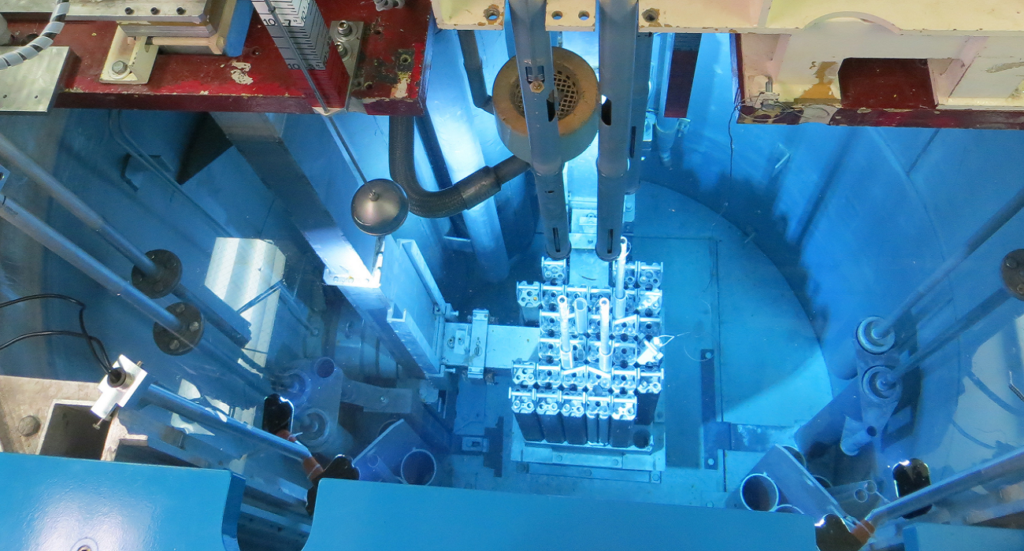
The nuclear example Microsoft’s announcement leads with is a project run by INL involving autonomous remote operation of a research reactor. Asked what the demonstration showed and how it fits into the longer path toward licensed deployment, Lopez described it as meaningful, bounded progress: “This was a successful demonstration of autonomous reactor power adjustments on a research reactor using distributed computing and cloud infrastructure, with safety systems always retaining control,” he said. “It is an important step forward for nuclear innovation.”
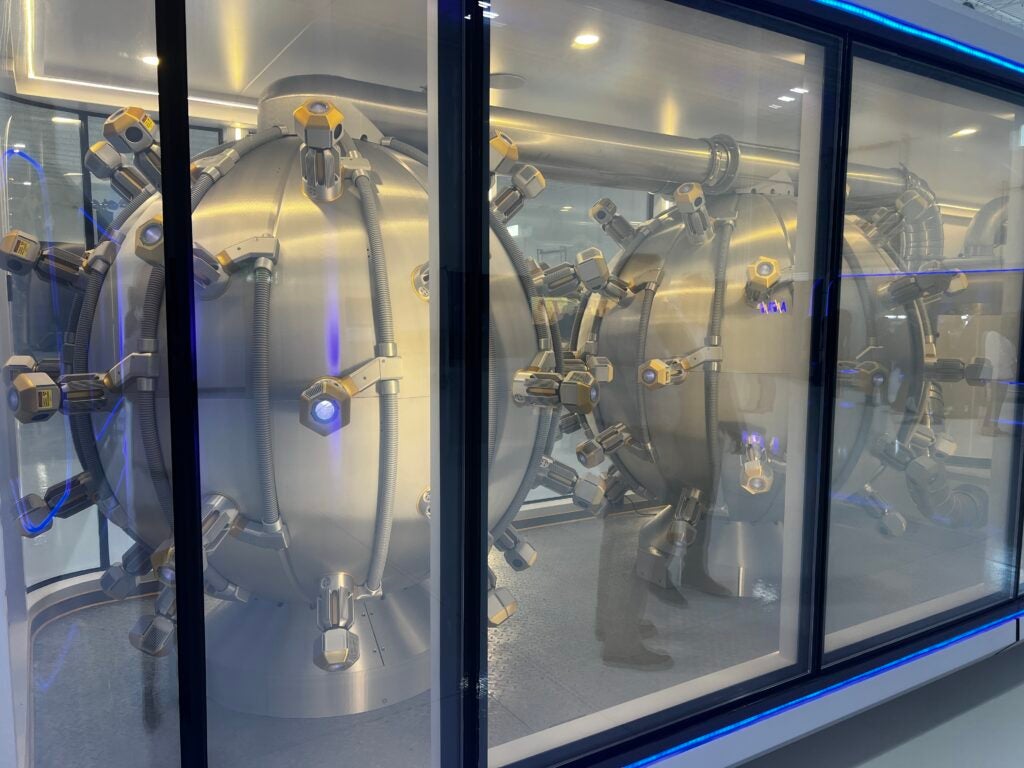
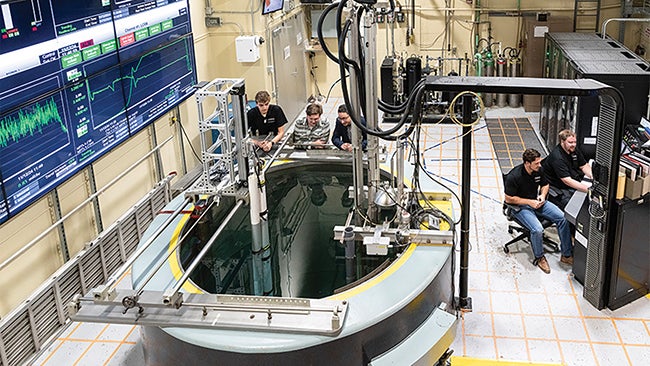
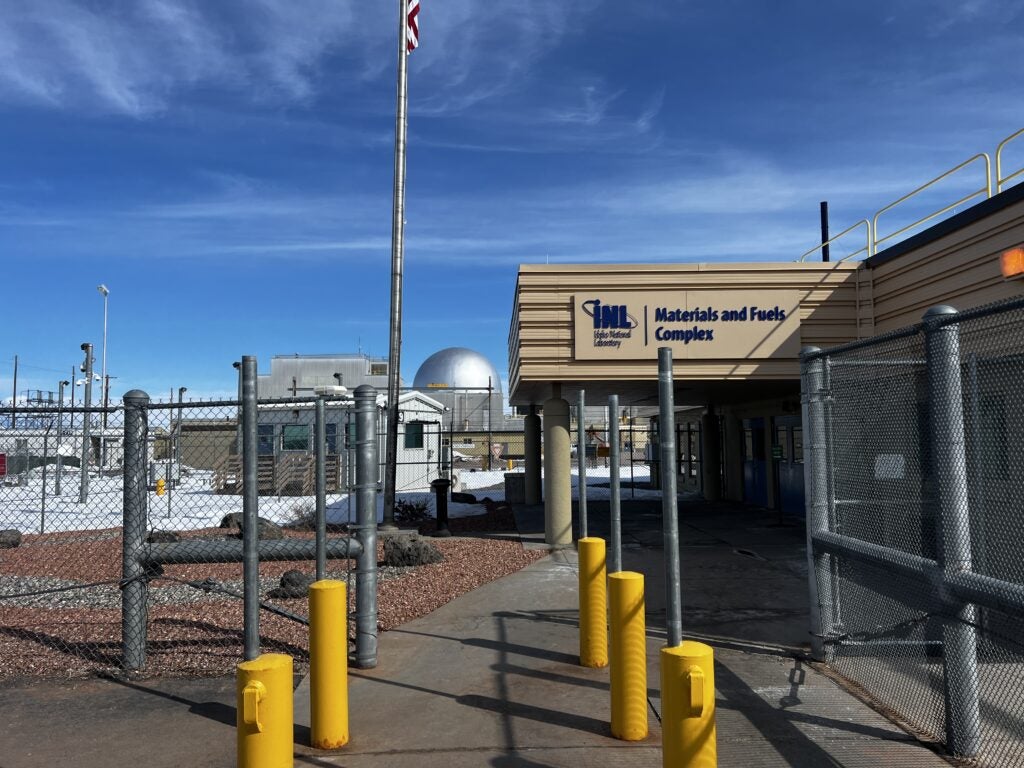
INL provided more detail in a July 13 news release. It said researchers from the lab, the University of Illinois Urbana-Champaign’s Grainger College of Engineering, and Purdue University used a geographically distributed control system to remotely and automatically adjust the power of PUR1, a low-power research reactor at Purdue, with the reactor’s own safety systems retaining full control throughout. The team first built an automatic digital control loop, then made it more autonomous with a reinforcement learning model. The demonstration linked three sites in real time: high-performance computing systems in Idaho, the PUR1 reactor in Indiana, and a Microsoft Azure cloud environment in Virginia. From Idaho Falls, the team fine-tuned reactor power and carried out live autonomous adjustments without any manual control-rod manipulation on site.
“Researching autonomous operations is essential to the future of nuclear energy; it’s a key component of making future nuclear power plants safer, more efficient and more reliable,” said Chris Ritter, INL’s Scientific Computing and AI division director. “The idea is that if you can model a reactor with enough fidelity, you can eventually let AI safely assist in operating it. The safety case is what makes this real: the system analyzes, predicts, and adjusts, but the reactor’s own safety controls always have the final say in this experiment.” INL said the approach “aligns with Nuclear Regulatory Commission (NRC) requirements by operating alongside, not in place of, the reactor’s safety control systems”—a design principle consistent with how Lopez described Microsoft’s role in the work.
Speeding Up Licensing Paperwork, With Engineers Still in the Loop
The other nuclear-focused piece of Microsoft’s Genesis Mission work involves applying AI to nuclear licensing and permitting. Asked which parts of that process Microsoft is targeting, Lopez said, “Our current focus is on the most document-intensive portions of the licensing and permitting process, where engineers and subject matter experts spend significant time drafting, cross-referencing, validating, and updating large volumes of technical and regulatory documentation.” He noted, “AI is being applied to document drafting, gap analysis, consistency checking, and the unification of project information needed to support licensing and permitting applications,” with the aim of making those workflows “more repeatable, traceable, auditable, and efficient while maintaining engineering accountability and regulatory rigor.” The intent, as he put it, is for AI to handle portions of the documentation workload so that “engineers and regulators can focus their attention on technical and safety judgments rather than manually reconciling thousands of pages of text.”
That description aligns with how INL and Microsoft characterized their original collaboration on this front. In an announcement from July last year, INL said it would use “a Microsoft-developed solution built with Azure AI services to generate engineering and safety analysis reports, which are standard reports submitted as a part of applications for construction permits and operating licenses for nuclear power plants.” At the time, Jess Gehin, INL’s associate laboratory director for Nuclear Science and Technology, called the work “a big deal for the nuclear licensing process,” adding that “introducing AI technologies will enhance efficiency and accelerate the deployment of advanced nuclear technologies.”
The tool’s role was specifically scoped: “[It] does not perform analyses on the documents but rather automates the process of constructing licensing documents for subsequent human verification,” INL explained. Ritter, commenting on the collaboration, framed it as the start of an important national effort: “AI holds significant potential to accelerate the process to design, license, and deploy new nuclear energy for the nation’s increasing energy needs. INL looks forward to early research to evaluate the applicability of generative AI in the nuclear licensing space.”
Meanwhile, the NRC has its own views on AI. Its public materials show an agency building out AI governance and use cases in parallel: an internally developed tool called SimplifAI, used for text retrieval and generation, is listed in the agency’s use-case inventory as “deployed” to support licensing, oversight, and other regulatory activities, alongside Microsoft 365 Copilot for administrative tasks; a unified platform for accessing multiple AI models and testing of additional large language models remain in “pre-deployment” status. Separately, the NRC completed a regulatory framework gap assessment in October 2024, reviewing the agency’s regulations and more than 500 regulatory guides, and concluded the existing framework is “generally sufficient” to accommodate AI, with only targeted areas identified for further clarification.
Same Number, Different Program: Enter Prometheus
Readers may notice a coincidence worth clarifying: the same day Microsoft announced its $60 million Genesis Mission commitment, the DOE announced a separate $60 million Phase II award to the Prometheus project, a 32-partner collaboration involving INL, Oak Ridge National Laboratory (ORNL), Argonne National Laboratory, Sandia National Laboratories, academia, and more than 20 industry partners including X-energy, TerraPower, and Oklo. The two efforts are complementary but distinct.
The Prometheus project is considerably larger in scope than a single company’s contribution. Conceived as an integrated AI platform rather than a single tool, Prometheus is meant to link specialized AI agents across the full lifecycle of a nuclear project—design, licensing, manufacturing, construction, and operations—through what ORNL described as a “persistent digital thread” connecting requirements, models, analyses, and records from one stage to the next. The effort has an explicit target: cutting nuclear deployment timelines and operating costs by half. The DOE backed that ambition with a three-year, $60 million Phase II award, subject to appropriations—the first Phase II award made under the Genesis Mission—on top of more than $200 million in industry cost share and $30 million in industry capital the Prometheus team has raised on its own. “America’s nuclear future depends on our ability to move with greater urgency and drive down costs, while maintaining the uncompromising commitment to safety and technical rigor that defines our industry,” INL Director John Wagner said.
[Ed. update made 7/29/2026. This article has been updated to include additional comment from Microsoft on its relationship to the Prometheus project.]
Microsoft confirmed after this article’s initial reporting that the two efforts are more directly connected than they first appeared. “Microsoft is proud to be a named partner in the Prometheus project, a strategic initiative focused on addressing the nation’s growing energy demands through innovation and operational excellence,” Lopez said. “We are excited to collaborate with Idaho National Laboratory to advance the future of nuclear energy in the United States.” Lopez added that Prometheus is expected to be among the first Genesis Mission projects onboarded through Microsoft’s SPARK program.
Building Toward What’s Next
Both nuclear projects Microsoft highlighted—the PUR1 autonomous control demonstration and the INL licensing tool—are described by the companies and labs involved as early, deliberately bounded steps: research-reactor scale rather than commercial scale, and document drafting rather than safety analysis. That framing was consistent across Microsoft’s answers and INL’s own project materials, and it sets up a clear next chapter for the Genesis Mission’s nuclear work as SPARK-backed projects mature and as the NRC continues developing its own AI framework in parallel.
Readers who want a closer look at the Genesis Mission’s progress will have the opportunity at POWER’s Experience POWER event, Sept. 29–Oct. 1 at the Omni Shoreham in Washington, D.C. Dr. Dario Gil, DOE’s Under Secretary for Science and director of the Genesis Mission, will deliver a keynote on the initiative’s ambitions—from fusion reactors to grid-scale AI—and what it will take to produce dozens of “AlphaFold moments” across science in the next five years. Later that day, a Genesis Mission deep dive session will bring together Microsoft and its mission partners for a closer look at how the initiative is playing out in practice, including the nuclear licensing work at INL discussed in this article. Bryan Lopez will join that panel. Learn more and register to attend at: experience-power.com/.
—Aaron Larson is POWER’s executive editor.