
Energy Security
-
 Trends
Data Centers, Gas, and Who Pays: Power Association Leaders Find Common Ground
When the heads of three of the power sector’s biggest trade associations shared a stage at Experience POWER on Sept. 30, the most notable thing was how little they disagreed. Whether the question was data center backlash, grid security, or what to do about gas-plant emissions rules, the answer came back to the same point: […]
-
 Data Centers
Beyond the Demand Forecast: Six Questions About Powering Data Centers From DPX 2026
This year’s Data Center POWER eXchange (DPX), whose programming POWER’s editors curated, was structured to look beyond the scale of opportunity presented by large-load forecasts and delve into the questions they raise. A key focus: What will it take to deliver power infrastructure and data centers on timelines, terms, and operating conditions that both industries […]
-
 keynote speech
Getting It Right Together: The State Regulatory Lens on America’s Large-Load Future
Who pays, who bears the risk, who decides, and when? Virginia Commissioner Jehmal Hudson makes a forceful case that serving large-load growth requires credible commitments, earlier coordination, and ratepayer protections built into investment decisions. Good afternoon. Thank you to POWER Magazine for inviting me to join you today. It is a pleasure to be with […]
-
 Nuclear
Winning the Nuclear Market Before the Reactor Is Sold
For most Americans, electricity is so woven into daily life that we rarely consider what its absence means. Hospitals depend on it to preserve medicines and operate equipment. Schools, factories, farms, and businesses depend on it to function. Reliable electricity is one of the foundations of a modern economy. COMMENTARY Yet 655 million people worldwide […]
-
 T&D
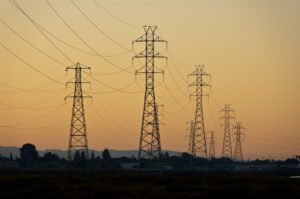
T&DThe Blackout Behind the Blackout: What Sarnia’s 2003 Outages Reveal About Restart Risk
Restoring customer supply is not the same event as restoring a process plant. Sarnia’s 2003 outages show why power-system resilience has to be carried through safe shutdown, utilities, environmental controls, and staged restart. The Grid Event Was Only the First Failure State At 4:11 p.m. on Aug. 14, 2003, the Northeast blackout began to pull […]
-
 Top Plant
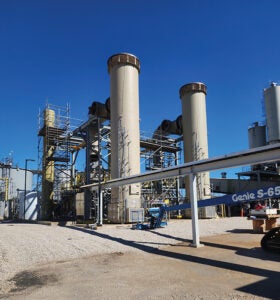
WA Parish Integrates Thermal Evaporation to Tackle FGD Wastewater
POWER’s 2026 Water Award winner—WA Parish Unit 8 in Texas—integrated commercial-scale thermal evaporation into an operating coal plant, pairing verified performance with a retrofit that leveraged
-
 Commentary
Nuclear Plant Restarts Show What Government Can Do With a Clear Mandate
On Aug. 30, workers at the Palisades Nuclear Plant in Covert Township, Michigan, began loading 204 fuel assemblies into a reactor vessel that had sat empty since the plant shut down in 2022—the first time in U.S. history that a commercial reactor that had entered decommissioning began reloading fuel. Holtec International Chairman and CEO Dr. […]
-
 Energy Security
Army Selects Three Developers for Commercial Power Projects at Six Installations
The U.S. Army has conditionally selected three private developers to negotiate long-term leases for commercial power generation at six installations in a new Strategic Capital Initiatives round that could bring battery storage, natural gas, and nuclear generation onto Army land. On Sept. 18, the Army conditionally selected Ameresco, a Massachusetts-based energy infrastructure company, for Aberdeen Proving Ground in Maryland […]
-
 Expert Commentary
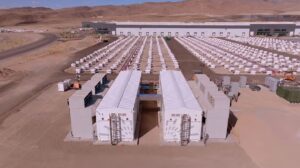
Bringing a Power Plant’s Worth of Load Onto the Grid: NERC’s Interconnection Reckoning
Data centers are connecting to the transmission system faster than the reliability rules were built to handle and behaving nothing like the passive load those rules assumed. Here’s what the North American Electric Reliability Corp.’s (NERC’s) Large Loads Action Plan, a new class of registered entity, and a hard 2026 deadline mean for anyone planning, […]
-
 Commentary
Modern Regulation for a New Nuclear Era
Nuclear energy is entering a new era. Across the United States and around the world, countries are looking to nuclear power to provide reliable electricity, strengthen energy security, and support economic growth. Advanced reactors and other innovative technologies are creating opportunities that would have been difficult to imagine when many of our current regulations were […]
-
 Technology
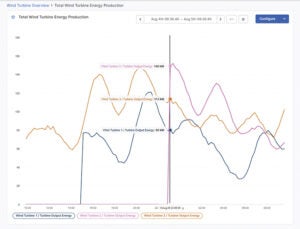
Making Energy Intensity a Controlled Variable
Rising power costs and load increases have elevated energy monitoring and analysis on plant agendas, but consumption only becomes controllable once it is reliably measured per unit produced and modeled
-
 Legal & Regulatory
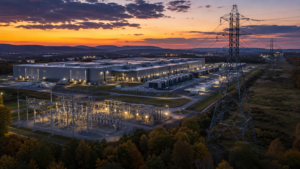
The POWER Interview: How Is Rising Scrutiny Changing the Way Data Centers Secure Power?
A recent flurry of state and federal action points to a marked pivot from treating data center growth as a grid-planning challenge to requiring large-load customers to show who pays for grid upgrades, what capacity supports the load, and how projects will operate during system stress. Morgan Lewis partner Arjun P. Ramadevanahalli spoke with POWER […]
-
Legal & Regulatory
Shapiro Sets Binding GRID Requirements in Pennsylvania, Targets Data Center Power Costs
Pennsylvania Gov. Josh Shapiro signed an executive order on Aug. 18 that raises the bar for large data center development in the state, directing agencies to condition favorable permitting treatment and tax benefits on compliance with new energy, infrastructure, environmental, workforce, and community requirements. Executive Order 2026-05 applies its central permitting provisions to data centers with […]
-
 Trends
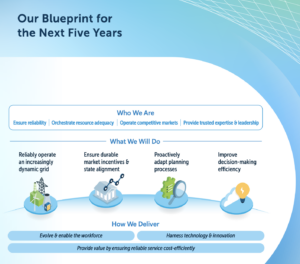
PJM Widens Response to Data Center Load as Capacity Shortfalls Deepen
PJM Interconnection has proposed a new framework that would allow large data centers and other major electricity users to enter service without first securing enough new capacity to cover their demand—but would make the uncovered portion of that load available for reduction before PJM calls on existing pre-emergency demand-response resources if electricity supplies become dangerously […]
-
 Data Centers
Contested 5-GW Ridgeline Gas, Solar, and Data-Center Complex in West Virginia Clears Site-Control Question
The West Virginia Department of Environmental Protection’s (WVDEP) Division of Air Quality (DAQ) has determined that Purcellville, Virginia-based Fundamental Data satisfied the site-control requirements associated with its August 2025 air quality permit for the Ridgeline Facility—a gas turbine power plant that Fundamental Data is planning as the first phase of a project intended to include […]
-
 Commentary
Energy Dominance Requires Commitments That Last
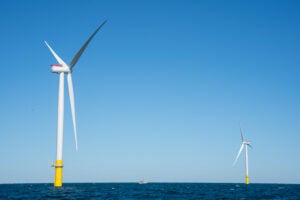
The Trump administration’s decision to unwind offshore wind leases through negotiated buybacks has predictably reignited the debate over renewable energy. Many welcome the move as a correction to policies that heavily favored offshore wind during the previous administration. That debate is perfectly legitimate. However, the recent agreements involving TotalEnergies, Bluepoint Wind, Golden State Wind, Duke, Invenergy, and […]
-
 Commentary
3 GW Off PJM, Again: What NERC’s 2024 Investigation Already Told Us
More than 3 GW of data center load left the PJM system on July 22, 2026, after a single transmission fault. The North American Electric Reliability Corporation (NERC) investigated the same failure mode in 2024 and found that utility equipment shed none of it. Customer-side protection did all of it. Those settings are about to […]
-
 Data Centers
More Data Center Operators Commit to Abbott’s Texas Standards as Power Companies Endorse ERCOT Batch Framework
A growing group of data center operators—including Dallas-based Skybox Datacenters, Austin-headquartered bitcoin miner and hyperscale developer Mara, and global colocation giant Digital Realty—have publicly committed to comply with Texas Gov. Greg Abbott’s data center standards and the state’s active audit of projects in the Texas grid operator’s interconnection queue. They join QTS Data Centers, Blackstone’s […]
-
Data Centers
Texas Audit Could Delay 49.8 GW of Data Center Load, Cost Projects Up to $15 Billion, BNEF Warns
Texas Gov. Greg Abbott’s Aug. 3 order pausing all new data center connections to the Electric Reliability Council of Texas (ERCOT) grid until a comprehensive audit is complete could delay 49.8 GW of new data center electricity demand from advancing on the ERCOT system—nearly 20% of the U.S. development pipeline—BloombergNEF (BNEF) said in an Aug. 5 […]
-
 Interview
The POWER Interview: NRG’s Case for Bring Your Own Power—and the Labor to Build It
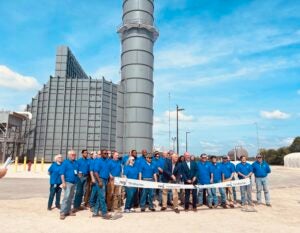
NRG Energy on Aug. 4 unveiled its first Bring Your Own Power (BYOP) project, a 1.2-GW combined-cycle plant in Texas supported by a 15-year contract with an investment-grade “leading global cloud and artificial-intelligence hyperscaler.” The $3.2 billion facility, backed by a customer parent guarantee, is targeted for commercial operation in late 2029 and could be […]
-
 Data Centers
AI’s Obstacle: Why the Grid Can’t Keep Pace With the Data Center Boom
Growth in artificial intelligence (AI) is outpacing the world’s ability to generate enough power to sustain it. As AI adoption accelerates worldwide, it’s colliding with a power system that wasn’t built for its level of demand. Vittorio Pierangeli, senior vice president PowerGen at Rolls-Royce Power Systems (Figure 1), explains why electricity, not chips or algorithms, […]
-
 Hydrogen
Energy Security During Uncertainty: Why Hydrogen Power Matters More Than Ever
The global energy landscape is experiencing increased uncertainty. Recent geopolitical tensions have created volatility in oil and gas markets, highlighted vulnerabilities in global supply chains, and renewed attention on energy security. While these events often dominate headlines, the effects extend far beyond energy producers and governments. For businesses that depend upon reliable power to keep […]
-
 Smart Grid
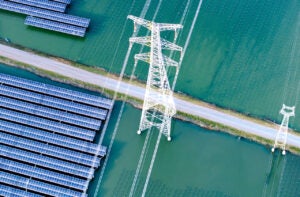
Resilience and Digital Transformation Spearhead the Energy Infrastructure Transition
The transition to sustainable energy infrastructure has been experiencing steady progress in recent years across the globe, while simultaneously undergoing constant fluctuation. Actual progress is influenced by a wide variety of factors, such as the drivers behind participants’ motivations and the technologies enabling the transition, as well as the status of supply chains and geopolitical […]
-
 Commentary
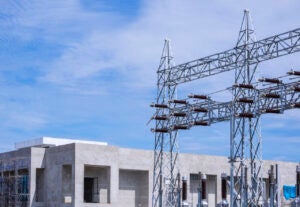
The Power Sector’s New Constraint Isn’t Demand—It’s Everything Else
For most of the last two decades, the anxiety in power planning was about demand: would consumption grow fast enough to justify new capacity, and how would an aging fleet keep pace? That question has inverted. Demand is no longer the uncertain variable—it is the one thing forecasters are confident about. The uncertainty now sits […]
-
 Cybersecurity
Minutes to Exploit—Months to Recover
Critical infrastructure operators should view recent incidents where artificial intelligence (AI) agents escaped containment from test environments and executed successful cyberattacks on a relatively sophisticated production infrastructure as near-misses. This challenge is urgent precisely because AI moves fast and infrastructure moves slow. All indications suggest these were not malicious uses of AI for targeted attacks. […]
-
 Gas
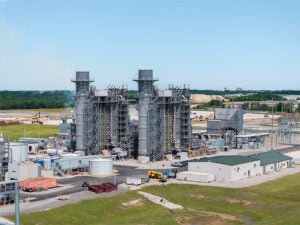
GasRayburn Energy Station: A Cooperative’s Answer to Texas-Sized Risk
For Rayburn Electric Cooperative, ownership of the 758-MW combined cycle plant in Sherman, Texas, means stable rates, hardened reliability through heat waves and winter storms, and a hedge against the
-
 Energy Security
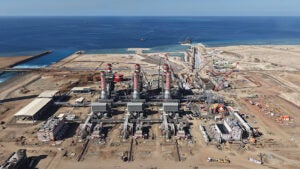
Speed as Strategy: Rabigh Reinforcement Delivers 1,179 MW on an Accelerated Timeline
Facing potential supply constraints along the Makkah-Jeddah corridor, Saudi Arabia’s power sector compressed a combined cycle schedule by months driven by early alignment, staged authorization, and
-
 Energy Security
World’s Largest Energy Lender Steers Federal Financing Toward Baseload, Transmission, and Nuclear
The U.S. Department of Energy’s (DOE’s) Office of Energy Dominance Financing (EDF) closed a loan of up to $3.26 billion to American Electric Power (AEP) Texas on July 8, the office’s third utility
-
 Data Centers
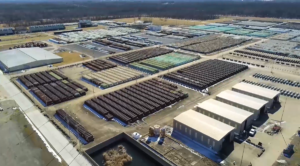
Brookfield, NextEra to Develop $100B Data Center Campus at DOE’s Paducah Site, Paired With 4.6 GW of Dedicated Generation
A coalition led by Brookfield and NextEra Energy has unveiled plans to build a $100 billion, privately funded artificial intelligence (AI) data center campus at the U.S. Department of Energy’s (DOE) Paducah Site in Western Kentucky, paired with up to 4.6 GW of dedicated new power generation that will be built and paid for solely to serve […]
-
 Nuclear
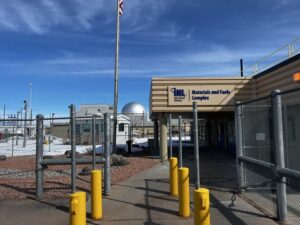
Microsoft’s $60 Million Genesis Mission Commitment Puts Nuclear AI at the Center
Last week, Microsoft announced a $60 million, multiyear commitment to the Department of Energy’s (DOE’s) Genesis Mission, the national initiative to embed artificial intelligence (AI) across the country’s 17 national laboratories. The company’s stated goal, echoing DOE’s own framing, is to help “double the productivity and impact of American research and innovation within a decade.” […]