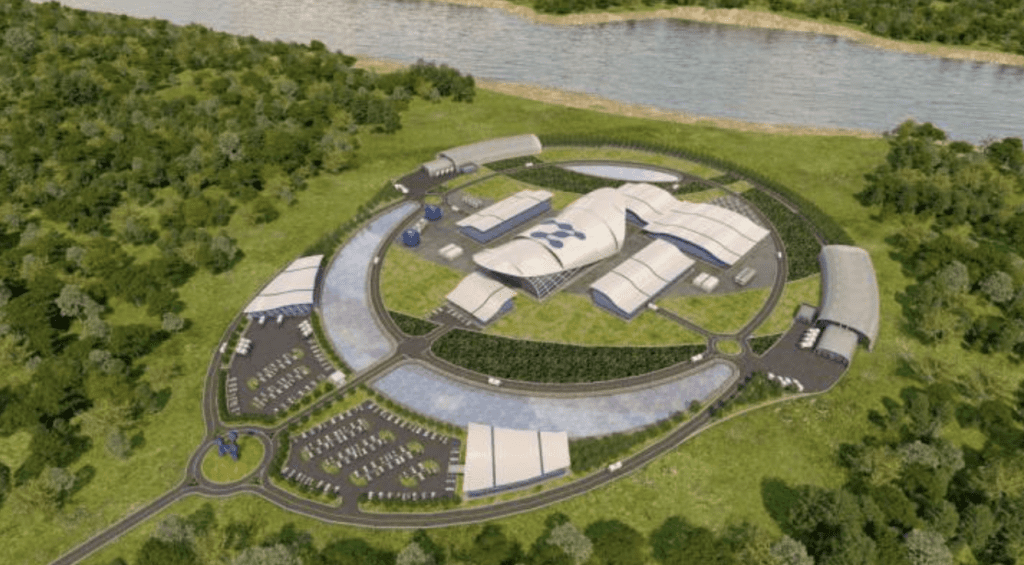

The Department of Energy (DOE) has selected Utah, Tennessee, Oklahoma, Louisiana, and Idaho as initial contenders to host Nuclear Lifecycle Innovation Campuses—voluntary federal–state partnerships designed to co-locate fuel fabrication, enrichment, spent fuel reprocessing, and waste disposition within integrated, full‑cycle nuclear ecosystems.
U.S. Secretary of Energy Chris Wright signed non-binding memorandums of understanding (MOUs) with the five states on July 24 to continue evaluating potential sites, development structures, and state and federal commitments before any hosting agreements are negotiated. The selections followed DOE’s review of 28 applications from 26 states, Wright noted. States that “choose to pursue hosting an innovation campus” will sign hosting agreements with the DOE “at a later date,” the agency said. The Oklahoma Department of Commerce said DOE plans to select three of the five finalists and announce the host states by the end of 2026.
On Tuesday, the five states linked their bids to existing nuclear and energy-development efforts. Utah tied its proposal to Operation Gigawatt and a prospective Tooele County campus spanning fuel production through reactor deployment. Tennessee centered its bid on Oak Ridge and its Manhattan Project legacy, while Oklahoma presented the campus as an extension of its “energy abundance agenda” and a possible hub for nuclear research, biotechnology, and aerospace applications. Louisiana pointed to its Nuclear Strategic Framework, which prioritizes component manufacturing, power generation, and uranium conversion and enrichment. Idaho emphasized Idaho National Laboratory’s seven decades of nuclear research and development.
Nuclear Lifecycle Innovation Campuses Aim to Rebuild the U.S. Nuclear Fuel Cycle
Introduced in January 2026 as part of a federal push launched by the Trump administration’s four nuclear executive orders issued in May 2025, the DOE’s Nuclear Lifecycle Innovation Campuses concept envisions each campus as an “integrated, full‑cycle nuclear ecosystem” that can co‑locate fuel fabrication, uranium conversion and enrichment, deconversion, reprocessing or recycling of used nuclear fuel, and “the management of waste streams,” while potentially adding advanced reactor deployment, power generation, advanced manufacturing, data centers, and isotope production.
The American Nuclear Society (ANS) called the finalist selection “an important step in evaluating how the U.S. can strengthen its nuclear fuel cycle and expand domestic nuclear capabilities.” The effort, it said, would explore “a more complete domestic nuclear fuel cycle—from uranium production and fuel fabrication to reactor operations and long-term management of used nuclear fuel,” including consolidated storage, recycling technologies, and eventual disposal.
The DOE said candidate sites would need enough land to accommodate enrichment and fuel-fabrication plants, reactor demonstration and testing complexes, reprocessing facilities, waste storage or disposal capabilities, data centers, and supporting industries, along with secure transportation and long-term monitoring infrastructure.
The January 28 Request for Information (RFI), which launched the concept, describes the campuses as private-sector-led ventures developed through voluntary federal–state partnerships. While private and state capital would provide the primary funding, the DOE could offer targeted support through cost-sharing, loan guarantees, grants, cooperative agreements, or other mechanisms authorized under existing law. The RFI, however, “does not announce or commit DOE to provide any specific form of financial assistance,” and suggests facility-specific infrastructure and capital investment should be funded primarily by private partners and, where appropriate, state and local governments.
The DOE has said nuclear campuses could anchor long-term nuclear industrial clusters and serve as testbeds for next-generation reactors, microgrids, and energy-intensive digital infrastructure such as AI data centers. The RFI suggests that a single campus could eventually generate 2-5 GW of power and host multiple advanced reactors and data centers, although it stresses that the scale and economic outcomes would depend on project-specific decisions, market conditions, and the availability of private and state capital.
Notably, the initial selections emerged from a competitive process launched in late January, when the DOE asked governors to submit “clear statements of interest and constructive feedback” outlining how a campus would advance priorities like workforce development, infrastructure investment, economic diversification, or technology leadership. States were also asked to propose candidate sites, identify potential private‑sector partners, detail the availability of power, water, transportation, and security infrastructure, and explain how they would share costs and long‑term responsibilities for decommissioning and waste management. The DOE also sought specific plans for managing high-level waste, used nuclear fuel, and secondary waste streams through options that could include interim storage, recycling, deep geologic disposal, or boreholes.
Initial responses, due by April 1, 2026, elicited “record levels of interest,” and while only five of the 28 applications have cleared initial selection, the DOE said, when it launched the process, that submissions would be reviewed on a rolling basis.
However, the DOE also set an unusually compressed timetable for the initiative. In its RFI, the DOE envisioned campuses being “deployed quickly, with initial facilities online in the 2027 timeframe,” and asked states to specify when construction and operations could begin. It also made speed an explicit selection factor, noting that “preference will be given to states with more ambitious timelines.”
For now, any campus that advances beyond initial selection would require a separate, legally binding DOE–state agreement, which would assign responsibilities for site development, infrastructure, permitting, financial risk, used fuel and waste management, decommissioning, and site remediation, according to the RFI.
The agreement could also require decommissioning and closure funds, insurance, surety bonds, escrowed funds, or other financial assurances intended to prevent long-term costs from falling to federal taxpayers. The RFI acknowledges that the Nuclear Waste Policy Act and related waste laws “may require targeted amendments” to accommodate expanded funding and waste-management responsibilities.
“A Nuclear Lifecycle Innovation Campus has the potential to advance two important national objectives: strengthening America’s nuclear fuel infrastructure and improving long-term management options for used nuclear fuel,” noted ANS CEO Craig Piercy. But he also stressed that the voluntary process will require informed local participation. “Communities considering these opportunities deserve clear, accurate, and independent technical information,” Piercy said. “As a professional scientific society, ANS can help provide objective technical expertise to inform these discussions.”
Five States, Five Distinct Nuclear Campus Proposals
Utah’s Operation Gigawatt. Utah’s proposal is tied to Operation Gigawatt, Gov. Spencer Cox’s broader initiative to double the state’s power-generation capacity over the next decade and expand its nuclear energy capabilities. In its March 31 response to DOE’s RFI, the Utah Office of Energy Development identified a remote site in Tooele County’s West Desert as the state’s preferred location for a Nuclear Lifecycle Innovation Campus.
“We’re building the advanced technologies that will drive affordable, abundant power across our country,” Cox said on Tuesday. “Through Operation Gigawatt, Utah is developing the entire nuclear lifecycle, from fuel production to advanced reactor deployment—strengthening our national security while helping secure America’s energy independence. This campus will accelerate that work.”
Utah has since codified the effort in state law. Legislation enacted in May authorizes the Office of Energy Development to pursue a campus that could include fuel fabrication, uranium conversion and enrichment, reprocessing of used nuclear fuel, advanced modular reactors and microreactors, and co-located users or suppliers of campus products such as isotopes, process heat, and nuclear supply-chain manufacturing. The law also directs the state to pursue consent-based siting, develop transportation plans for nuclear materials, coordinate with the DOE, NRC, and Utah Department of Environmental Quality, and establish workforce partnerships with Utah universities and technical colleges.
Tennessee’s Oak Ridge Bid. Tennessee Gov. Bill Lee on Tuesday pointed to Oak Ridge’s Manhattan Project legacy and described the state as “the global epicenter of nuclear energy,” noting that Tennessee submitted a proposal in April that positions Oak Ridge as the preferred site for a campus.
The state said the ecosystem spans nearly the full nuclear lifecycle—including fuel fabrication, enrichment, reprocessing, advanced separations, and recycling of used nuclear fuel—and could support DOE’s preference for rapid, large-scale deployment. Tennessee’s April 1 RFI response identified candidate sites, priority campus functions, and options under evaluation for interim and long-term storage.
The proposal cites Oak Ridge National Laboratory and the Y-12 National Security Complex, as well as more than 230 nuclear lifecycle companies operating in the Oak Ridge–Knoxville corridor. Tennessee also pointed to more than 60 years as a Nuclear Regulatory Commission Agreement State, the state’s fusion-energy regulatory framework, and its participation in the federal FAST-41 permitting program as evidence of an established regulatory and industrial base.
Tennessee, notably, has paired the bid with reactor-development funding and legislative backing. In December 2025, the DOE announced a $400 million grant to the Tennessee Valley Authority (TVA) to accelerate deployment of GE Vernova Hitachi’s BWRX-300 small modular reactor at TVA’s Clinch River Site in Oak Ridge. That funding was secured through the DOE’s Generation III+ SMR program, for which TVA led the application alongside a coalition of utility and industry partners.
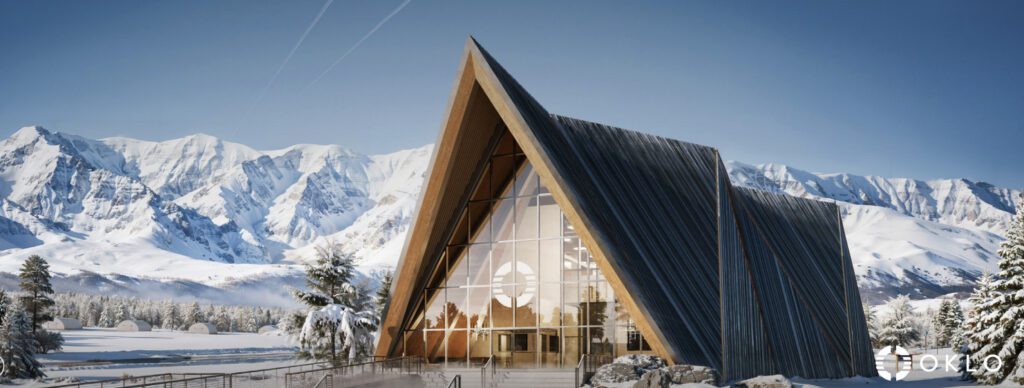
Tennessee’s bid is also reinforced by its rapidly expanding Oak Ridge nuclear industrial base. In February, the Nuclear Regulatory Commission granted X-energy subsidiary TRISO-X the first new U.S. commercial fuel fabrication license in more than 50 years—a 40-year Category II special nuclear material license covering its planned TX-1 and TX-2 facilities. Construction of the $768 million TX-1 plant began in November 2025, and Tennessee’s Nuclear Energy Fund awarded TRISO-X another $11 million on July 15 to add a third Oak Ridge facility, part of an expansion expected to create about 1,100 jobs. The fund has also committed support to proposed Oak Ridge projects from Orano USA, Oklo, Centrus Energy, LIS Technologies, and BWXT spanning uranium enrichment, centrifuge manufacturing, advanced reactors, fuel recycling, and nuclear-component production.
Idaho’s National Laboratory Bid. As Idaho’s Gov. Brad Little’s office noted, Idaho’s proposal was prepared in coordination with the newly established Advanced Nuclear Energy Task Force, which was created via executive order in September 2025. “The submission is supported by more than a dozen letters from private industry, as well as federal, state, and local leaders, underscoring broad momentum behind Idaho’s proposal.” The office added: “Securing this designation would bolster Idaho’s economy, expand access to reliable baseload power, and position the state at the forefront of next‑generation nuclear technologies.”
The state’s nuclear heritage is most firmly entrenched at Idaho National Laboratory (INL), the DOE’s principal applied-energy laboratory for nuclear energy and an 890-square-mile federal site that already houses much of the technical infrastructure, expertise, and industry activity envisioned for a Nuclear Lifecycle Innovation Campus.
Established in 1949 as the National Reactor Testing Station, the site has hosted 52 reactors, demonstrated the first usable electricity from nuclear energy, supported naval propulsion development, and assembled the nation’s most comprehensive collection of capabilities for nuclear fuels and materials fabrication, irradiation, characterization, and post-irradiation examination, as INL Director John Wagner described during a recent POWER visit. Today, the site includes four operating reactors, hot cells, radiological facilities, and extensive fuel-testing and materials-characterization infrastructure. Its Materials and Fuels Complex also supports fuel fabrication, recycling, and post-irradiation examination, while the Advanced Test Reactor and Transient Reactor Test Facility provide steady-state and accident-condition testing for nuclear fuels and materials.
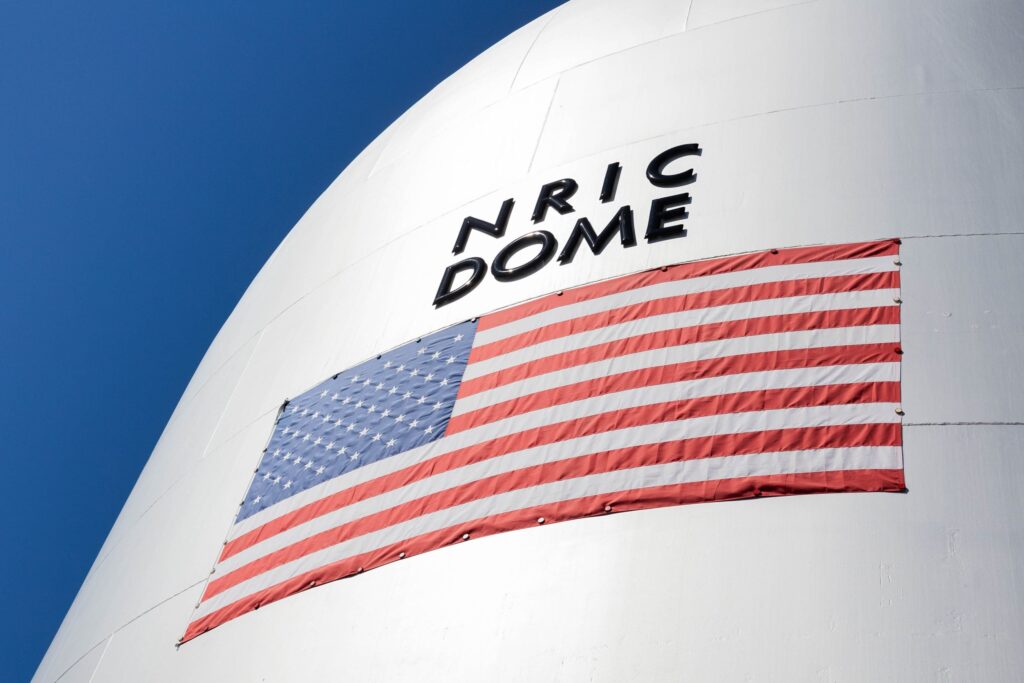
INL is also increasingly functioning as a launch site for private nuclear developers through the National Reactor Innovation Center (NRIC), DOE test beds such as DOME, and the laboratory’s new Nuclear Energy Launchpad. Wagner said INL accelerated completion of the DOME test bed from early 2027 to March 2026, allowing Radiant to begin moving equipment into the facility, while the 2,000-plus-acre launchpad offers developers largely pre-characterized land, basic infrastructure, access to nuclear expertise, and, where applicable, DOE authorization pathways. That model has already produced a rapid string of criticality milestones: Antares Nuclear’s Mark-0 reactor on June 4, Deployable Energy’s Unity reactor on June 30, and Aalo Atomics’ Critical Test Reactor on July 4, making it the fourth DOE-authorized advanced reactor criticality in about a month.
“The U.S. has an opportunity to strengthen its nuclear enterprise for generations to come, and today’s announcement is a critical step in that process,” Wagner said in a statement on Tuesday. “We’re pleased that Idaho has been selected to advance to the next phase alongside other highly qualified states. Idaho has spent decades building the infrastructure, expertise, and partnerships that support the full nuclear lifecycle, and we look forward to continuing to work with the Department of Energy as it evaluates the strongest path forward.”
Louisiana’s Nuclear Strategic Framework. Louisiana grounded its proposal in a Nuclear Strategic Framework released alongside its RFI response, which identifies three statewide priorities: building an in-state nuclear component manufacturing ecosystem, preparing Louisiana for nuclear-powered industrial growth, and exploring nuclear fuel expansion supported by the state’s existing workforce and industrial base. Notably, the framework points to Louisiana’s experience in energy, chemicals, manufacturing, and large-scale infrastructure, along with its port and rail network and direct access to the Mississippi River, as advantages for nuclear manufacturing, fuel supply, and advanced reactor development.
Louisiana has also tied nuclear expansion to rising electricity demand from advanced manufacturing, industrial growth, and data centers. The state said additional nuclear generation could support those loads while reducing competition for natural gas used as petrochemical feedstock. Its RFI response evaluated potential nuclear energy, fuel-cycle, and supporting functions across possible sites in northern, central, and southern Louisiana rather than identifying a single preferred location. In a July 28 release announcing the state’s advancement, Louisiana said the proposal reflected both the Nuclear Strategic Framework and its broader “Whole-of-Louisiana Energy Strategy.”
Oklahoma’s Quest for Nuclear Feasibility. Oklahoma entered the process on the strength of a legislatively mandated feasibility study, required by Senate Bill 130, enacted in 2025, which directed the Oklahoma Corporation Commission (OCC) to assess the technical and legal feasibility of nuclear generation in the state. The resulting March 2026 report concluded that “there are no apparent technical barriers preventing the development of nuclear energy in the state,” but warned that timelines, financing, policy, economic impacts, workforce readiness, and public perception would require active state intervention. It stressed that nuclear’s cost relative to competing generation “poses a significant obstacle to development, absent proactive state and federal policy.”
The OCC recommended establishing an ongoing authority, task force, state office, or other coordinating entity to develop a nuclear deployment strategy and align utilities, regulators, industry, universities, and state agencies. Gov. Kevin Stitt has since described a prospective campus as a hub for nuclear research and development, with possible biotechnology and aerospace applications.
The proposed campuses “could support the full nuclear fuel lifecycle while also serving as hubs for advanced manufacturing, reactor deployment, and power generation, creating thousands of new jobs and generating billions of dollars in capital investment,” the Oklahoma Department of Commerce said on July 28. While the state has not identified a preferred site, the agency said the state would work with communities to identify a partner willing to host the campus and invest in nuclear development.
“While five states have signed MOUs with the DOE, only three will be selected to host a NLIC. The selected states will be announced by the end of 2026,” the agency noted.
“Oklahoma has always been the leader in energy production and innovation, from the oil boom of the early 1900s to the shale revolution in mid-2000s,” said Oklahoma Governor J. Kevin Stitt. “Today marks a new frontier—the chance to add nuclear to our energy abundance agenda. This opportunity is an all-hands-on-deck moment, and I look forward to working with communities across our state to make this campus a reality. I’m grateful to President Trump and Secretary Wright for their leadership in considering Oklahoma, and for the companies, research institutions, and leaders across our state who have already pulled a seat up to the table to be a part of this project.”
A Path Around Yucca Mountain’s Failure
The voluntary interest is striking after decades in which federal efforts to site spent-fuel facilities have repeatedly met resistance from states and communities. While the Nuclear Waste Policy Act of 1982 tasked the federal government with building a permanent geologic repository, Congress’s 2002 designation of Yucca Mountain in Nevada was halted in 2010 amid opposition from the state and was later defunded. The DOE has since pursued a separate, parallel track for interim storage. In 2024, it received Critical Decision-0 approval for a Federal Consolidated Interim Storage Facility in May 2024 and issued an RFI on its design and construction that year, promoting a consent-based siting approach that inspired the Innovation Campus program.
More recently, Executive Order 14299, signed in May 2025, directed the DOE to identify recyclable uranium and plutonium in its own inventories and use available authorities to site privately funded reprocessing facilities on federal land. A companion order, Reinvigorating the Nuclear Industrial Base, directed the agency to redirect its surplus plutonium disposal program toward producing usable reactor fuel. The DOE moved on that mandate in April 2026, when its Office of Nuclear Energy and Office of Environmental Management jointly issued two Requests for Applications seeking private-sector partners to advance the nation’s used-nuclear-fuel recycling capabilities. Industry trade group Nuclear Energy Institute (NEI) has suggested the Innovation Campus concept could build on recycling but cautioned it would not replace the need for disposal in a geologic repository, because some byproducts will still require permanent disposal.
NEI’s own vision for a durable used-fuel system comprises eight principles: a dedicated, federally chartered organization with the authority and resources to manage the program, strategic use of the Nuclear Waste Fund solely for repository development, preservation of utilities’ contract rights against the federal government’s past failures to accept fuel, collaborative siting processes that win support from tribal, state, and local governments, one or more licensed and operational geologic repositories, continued reliance on onsite and consolidated interim storage given its safety record, sustainable recycling that turns used fuel into an economic and energy-security asset, and sustained public and political support for nuclear energy.
—Sonal Patel is a POWER senior editor (@sonalcpatel, @POWERmagazine).