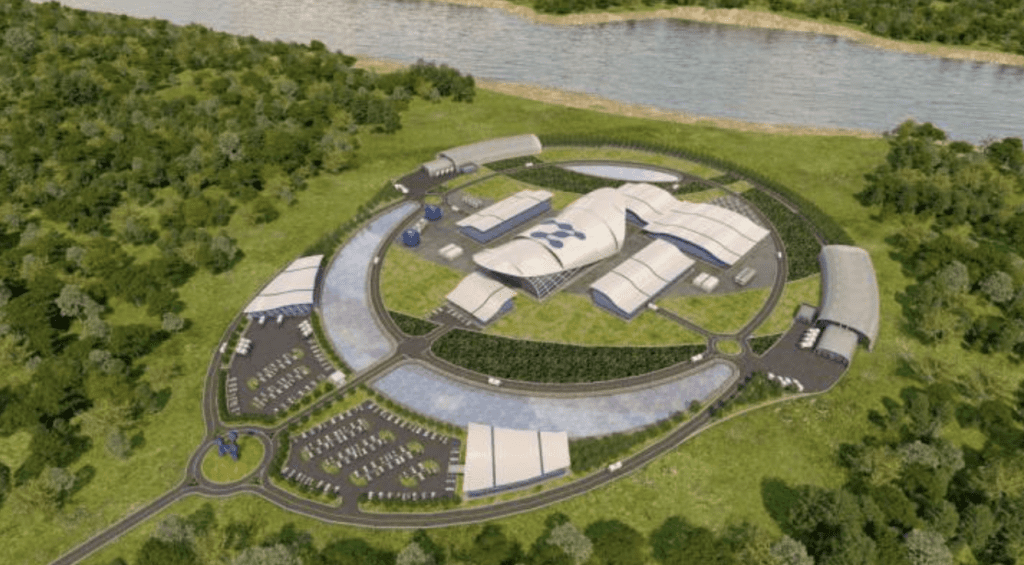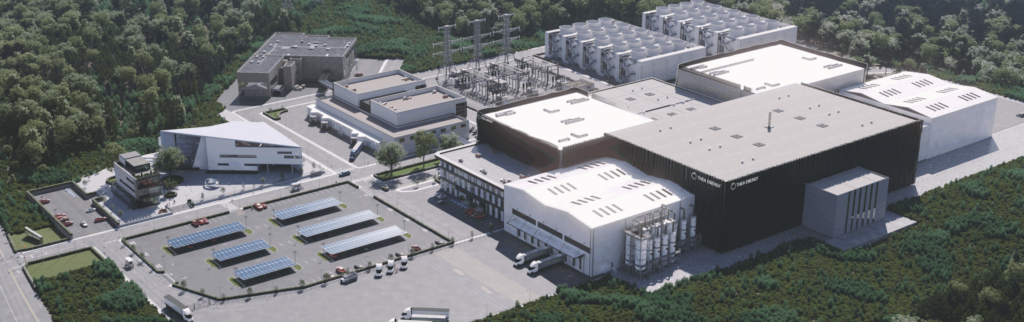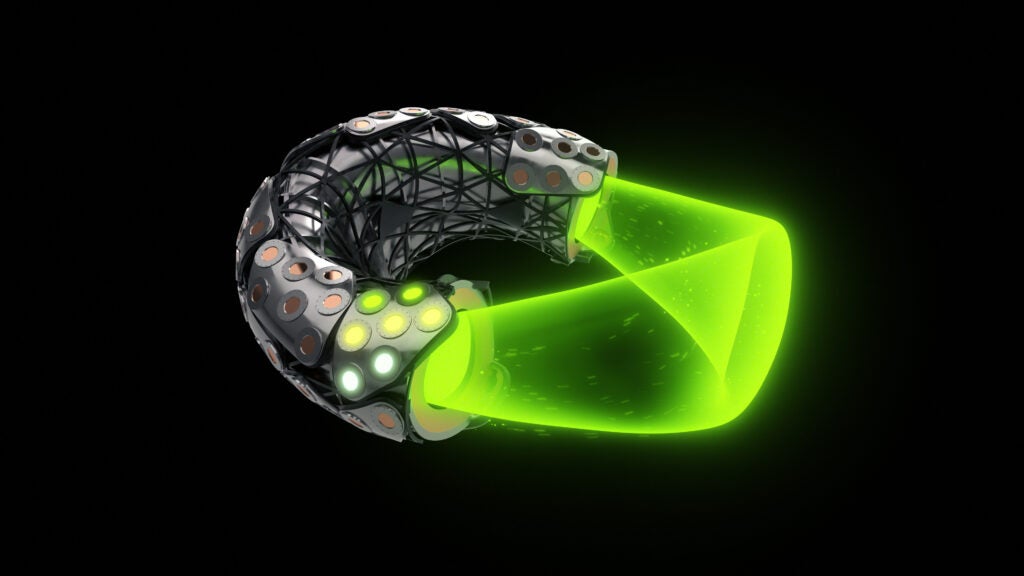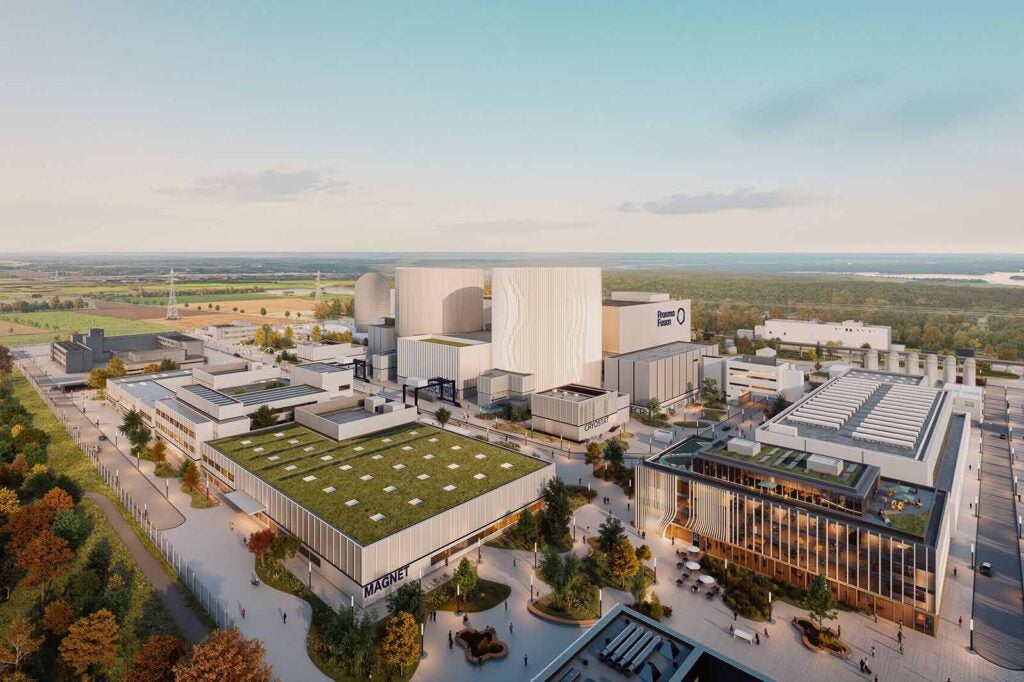
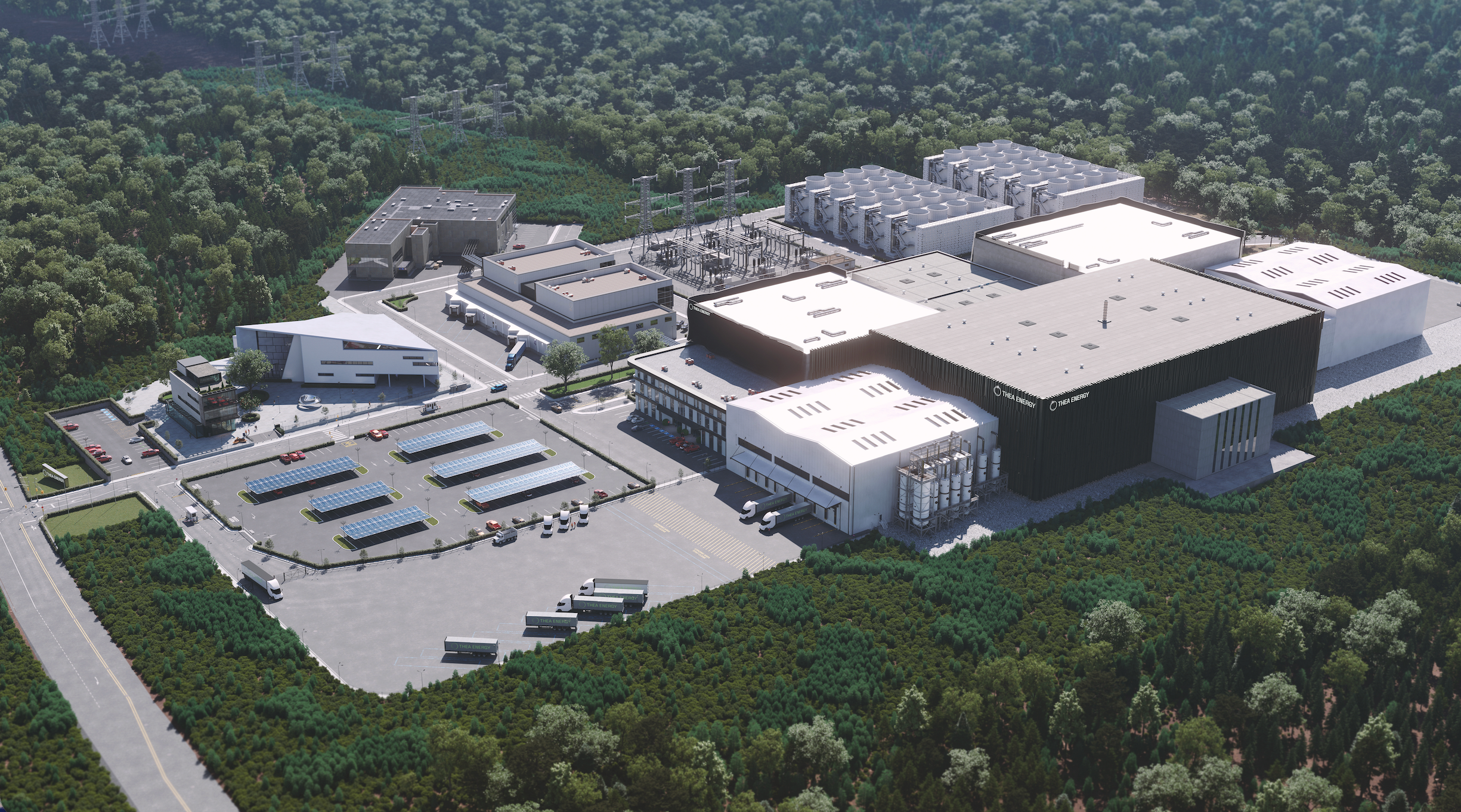
New Jersey-based Thea Energy, one of several U.S. companies working to commercialize fusion energy, said the company has raised $100 million in Series B funding. Thea is advancing stellarator technology to provide baseload fusion power. The company, which has several investors, is moving toward beginning construction of its Helios power plant (Figure 1) by the end of the decade.
A spokesperson for Thea in an email to POWER on May 27 wrote that the company’s goal is to “deliver cost-competitive, scalable fusion power plants with lower-risk and higher uptime—enabled by its simplified magnet technology. Compared to prior generations of the stellarator, Thea Energy’s tech uses flat, AI-enabled superconducting magnets. This makes the company’s system simpler to manufacture, faster to construct, and more tolerant.”
The spokesperson said the additional funding will help Thea Energy expand its manufacturing infrastructure for its magnets, including the addition of a second facility in New Jersey. The group is progressing toward siting and construction of Eos, the company’s first large-scale integrated stellarator. The spokesperson told POWER that Thea is preparing to select a location later this year, and also expects to double its team. The spokesperson said the company also is setting discussions with more than a dozen power offtakers, hyperscalers, and utility partners.

The power industry’s most urgent decisions are being made right now.
Be in the room where they happen.
View Conference Program
Thea Energy was part of an extensive review of companies working on fusion technology that were featured in a special report from POWER in February of this year.
The U.S. Dept. of Energy (DOE) earlier this year certified Thea Energy’s power plant preconceptual design, making the company the first to receive this distinction as part of the DOE’s Milestone-Based Fusion Development Program. Brian Berzin, the company’s co-founder and CEO, at the time said, “This final design milestone, now certified by the DOE, substantiates the validity of the planar coil stellarator and shows a clear pathway to a deployable power plant.” Berzin was the subject of a POWER Interview earlier this year.
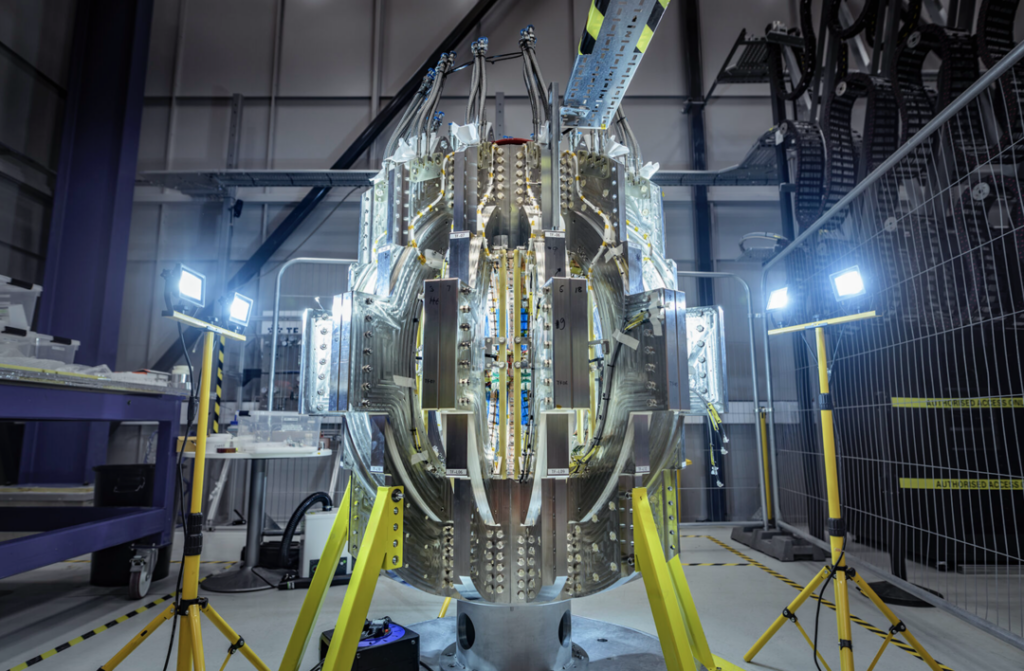
Thea Energy earlier this month recently announced de-risking of its core fusion technologies, including the magnets for its Eos system.
Series B Funding
The company’s Series B funding was supported by Thomas Tull’s US Innovative Technology Fund (USIT), General Innovation Capital Partners (GICP), Linse Capital, Calm Ventures, Climate Capital, Divergent Capital, Emerald Technology Ventures, Gaingels, Idemitsu Kosan, Overlay Capital, Timescale Ventures, and Whatif Ventures. Thea Energy said existing investors Alumni Ventures, Hitachi Ventures, Lowercarbon Capital, Mercator Partners, Orion Industrial Ventures, Prelude Ventures, and Starlight Ventures also participated, among others.
“We built Thea Energy to take fusion out of the lab and onto the grid. Our architecture is simpler to manufacture, faster to construct, and more tolerant of real-world conditions compared to all other approaches,” said Berzin. “Commercial fusion requires adaptable, high-uptime power plants; this Series B accelerates that reality. With the U.S. Department of Energy’s certification of our power plant preconceptual design milestone, proven magnet hardware, best-in-class team, and the capital now in place, we are on the path to delivering the first commercial stellarator power plants.”
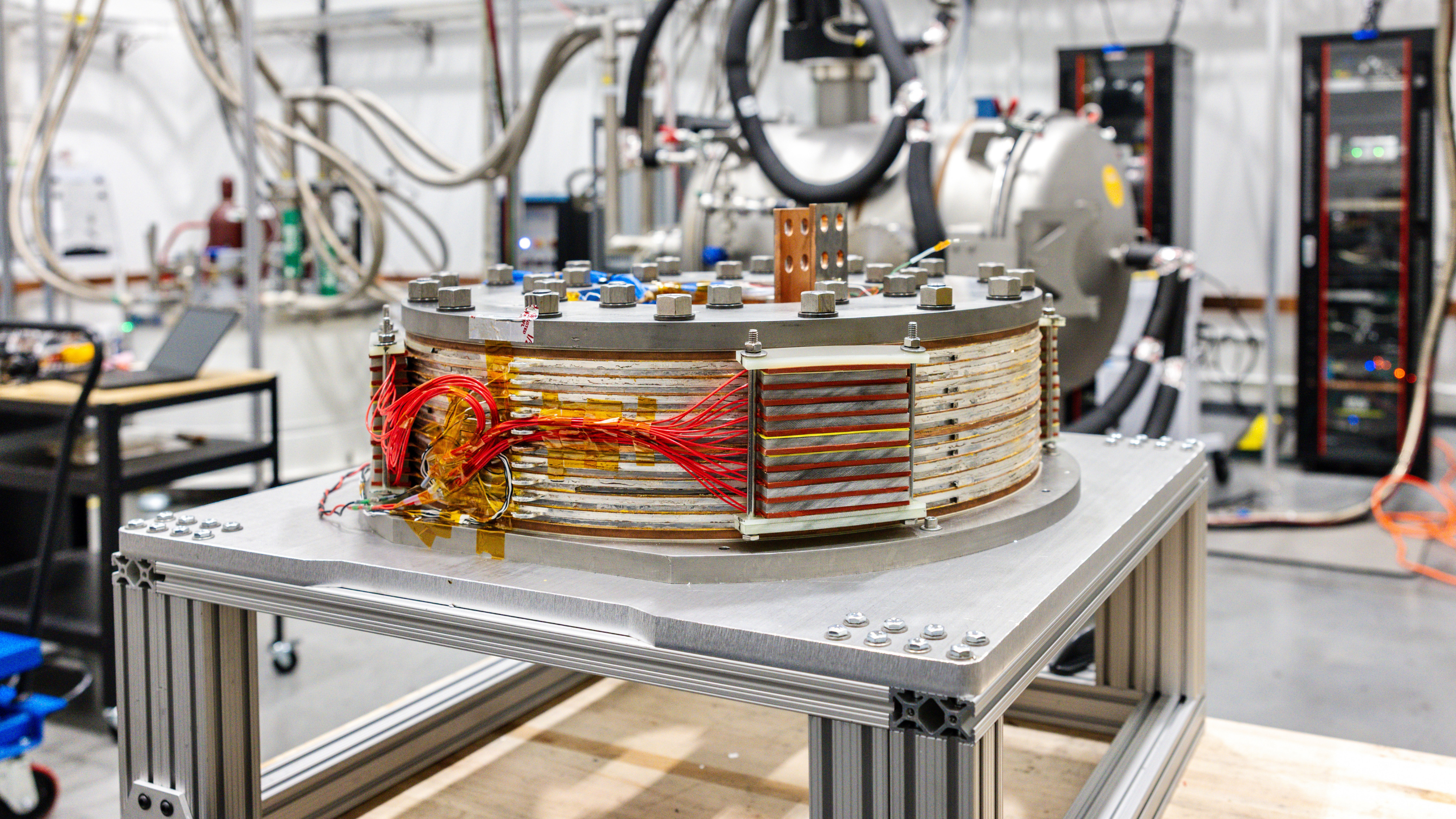
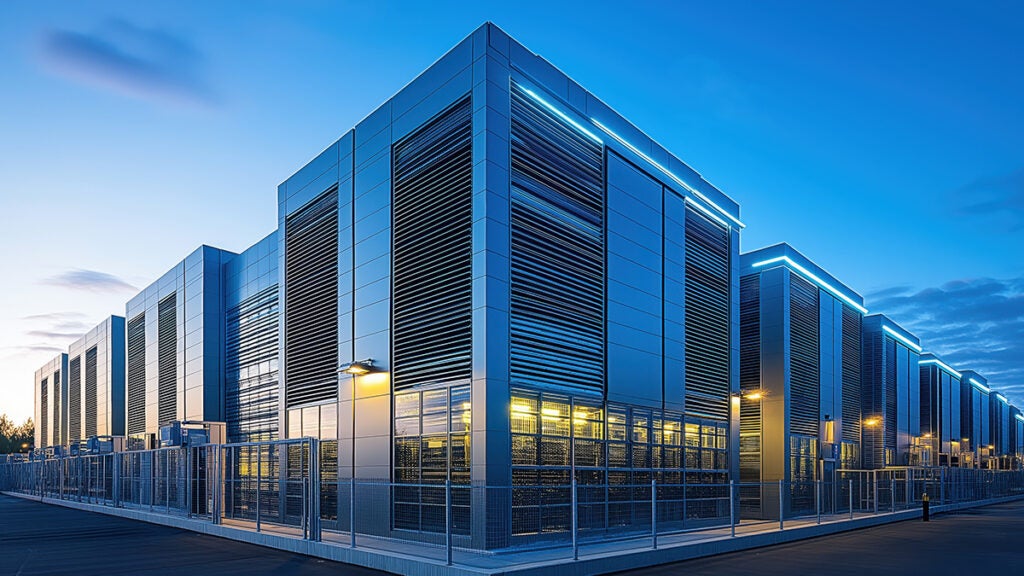
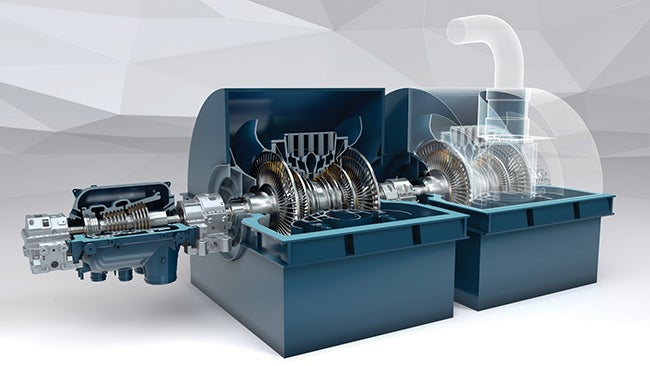
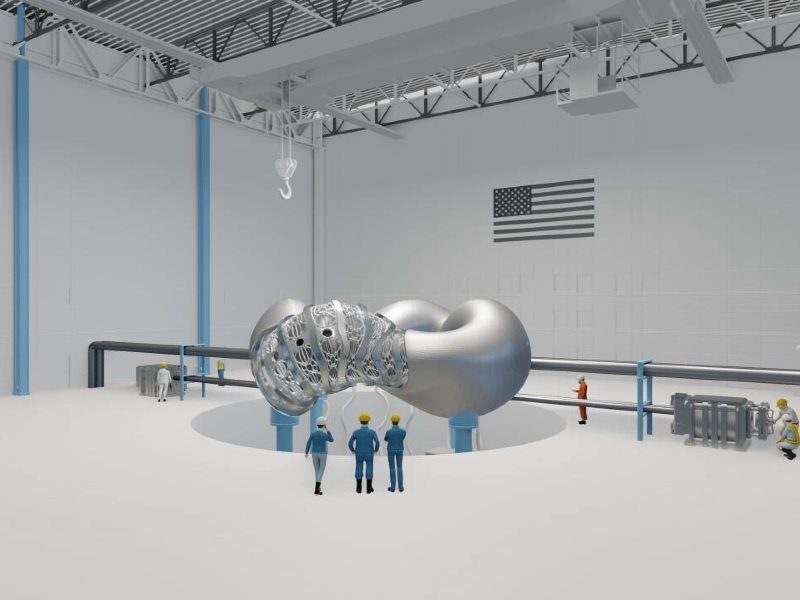
The company on Wednesday reiterated that construction of its Eos stellarator, designed to create steady-state fusion, is enabled by Thea Energy’s simplified architecture (Figure 2) as well as its ability to build fusion systems on shorter timescales and at lower costs.
“Thomas Tull has been clear about why he wanted USIT to lead this round: he believes the stellarator is the right architecture for commercial fusion, and Thea Energy is the company that makes it commercially viable,” said Gaetano Crupi, managing director at USIT. “The stellarator is an inherently stable fusion architecture that offers the most efficient path to long-term power generation, but prior 3D stellarator magnets historically made the system impractical to build. Thea Energy’s breakthroughs shift complexity from precision mechanical fabrication to software-defined controls. As energy security and rapidly increasing power demands take center stage amidst re-industrialization and the AI boom, the U.S. cannot cede leadership in fusion. Thomas believes this team and their software-based technology are a winning combination.”
—Darrell Proctor is a senior editor for POWER.