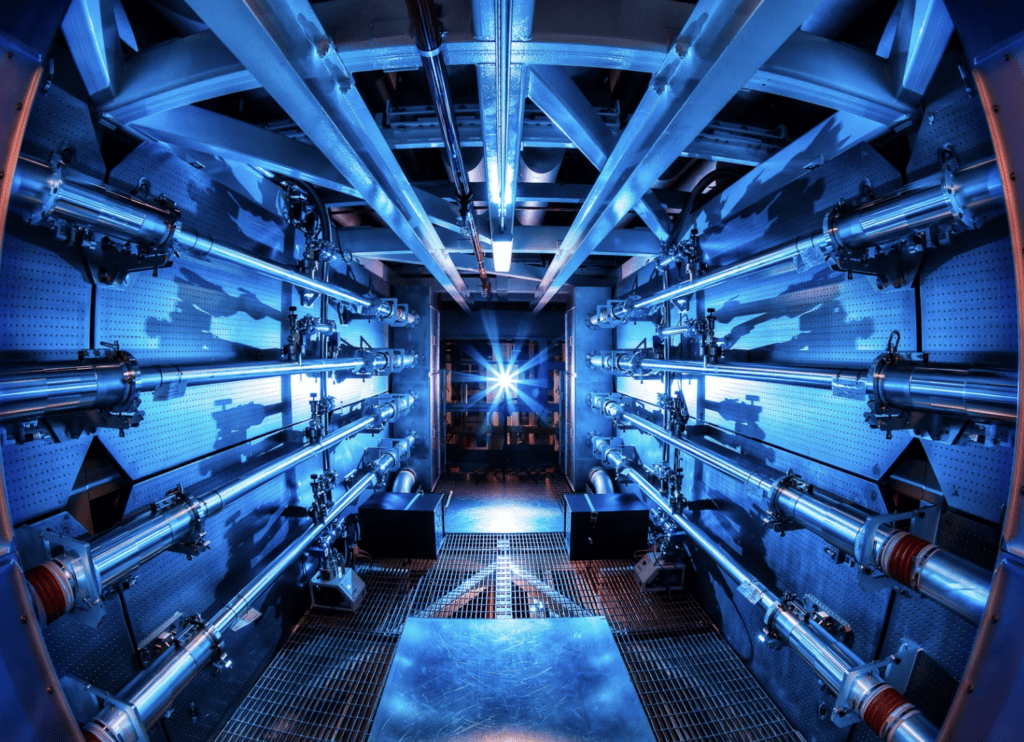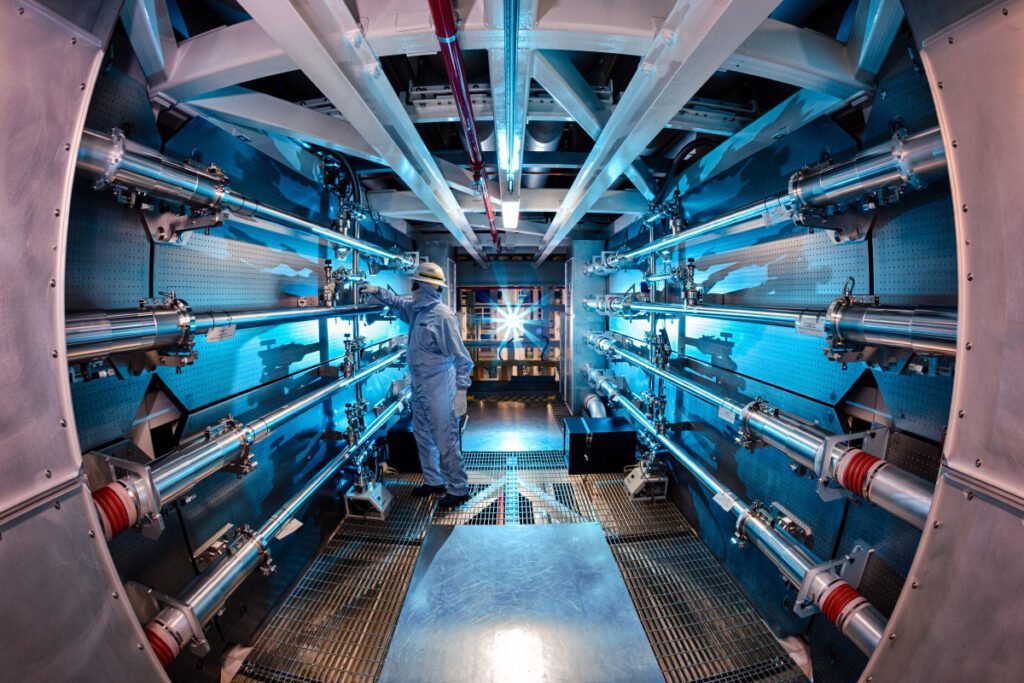
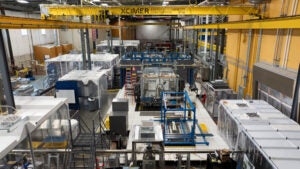
Colorado-headquartered Xcimer Energy has announced the start of operations for Phoenix, what the company calls the largest privately owned laser system in the world. Phoenix, named after the legendary bird from Greek and Egyptian mythology, is the company’s prototype for commercializing laser fusion.
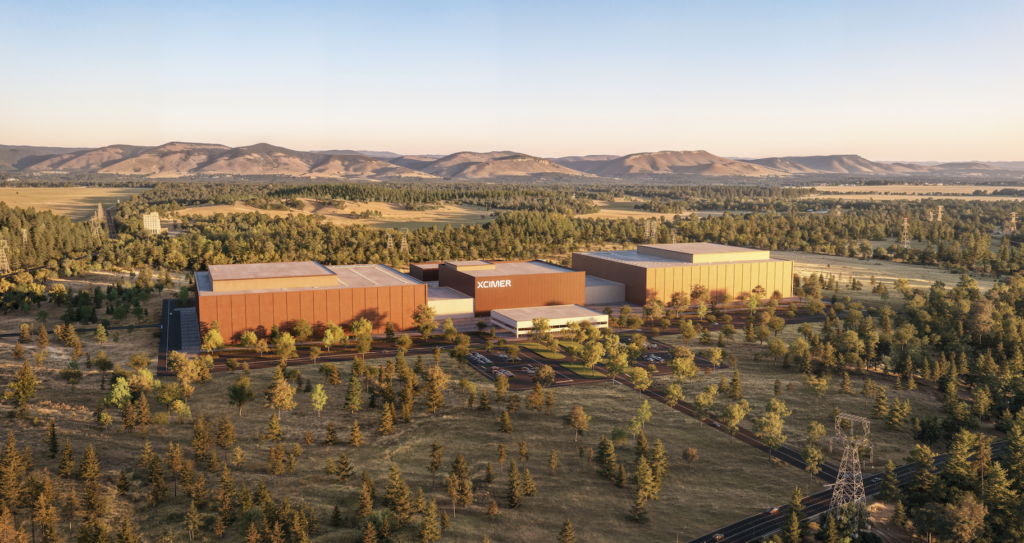
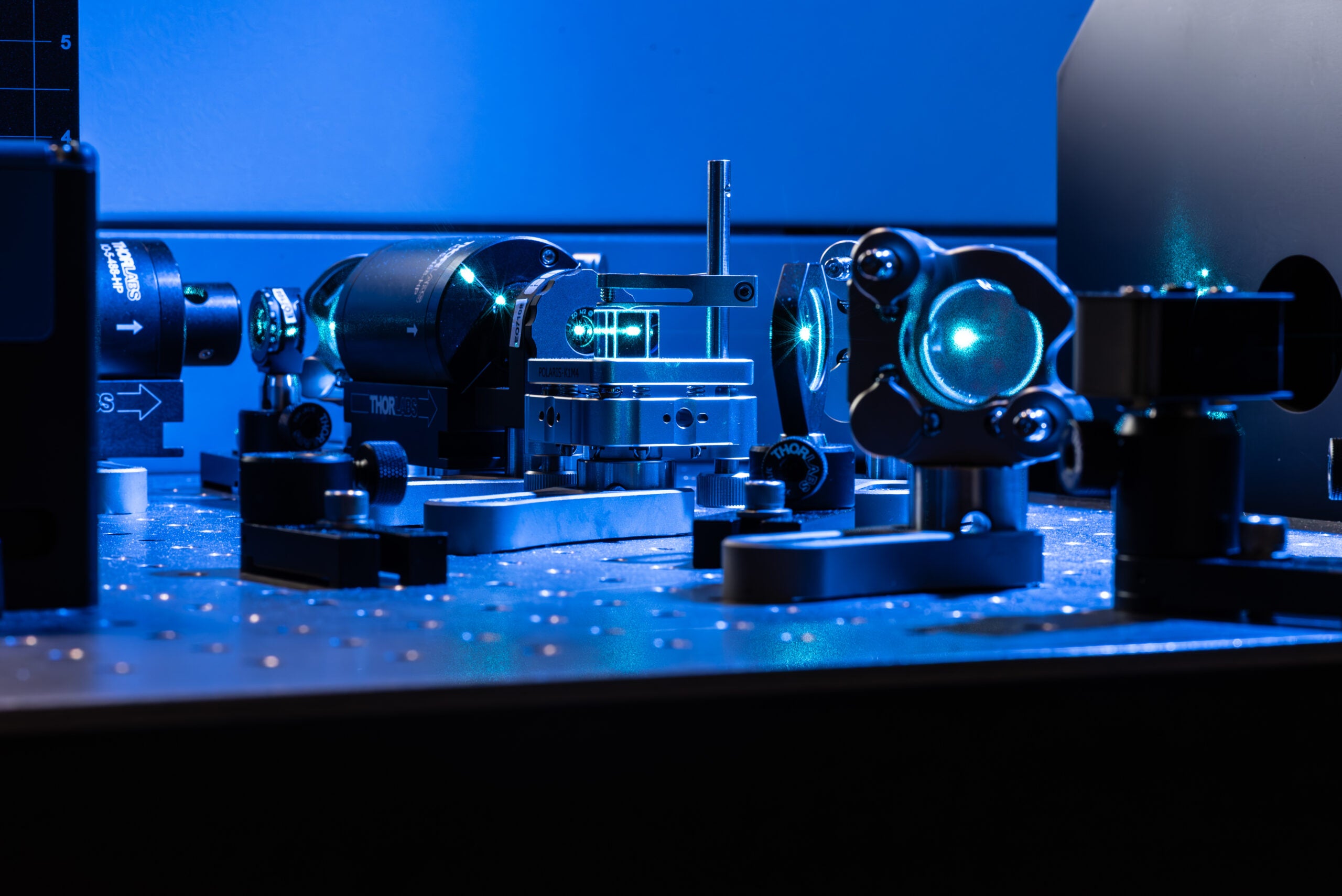
Phoenix, housed in Xcimer’s 74,000-square-foot Denver laser facility, is a proof of concept for what company officials call an “unconventional” fusion architecture: a krypton fluoride (KrF) excimer laser using Stimulated Brillouin Scattering (SBS) to compress a microsecond-long pulse into the nanosecond timescales fusion requires. The company on June 3 said Phoenix successfully demonstrates integrated operation of excimer amplification and SBS pulse compression.
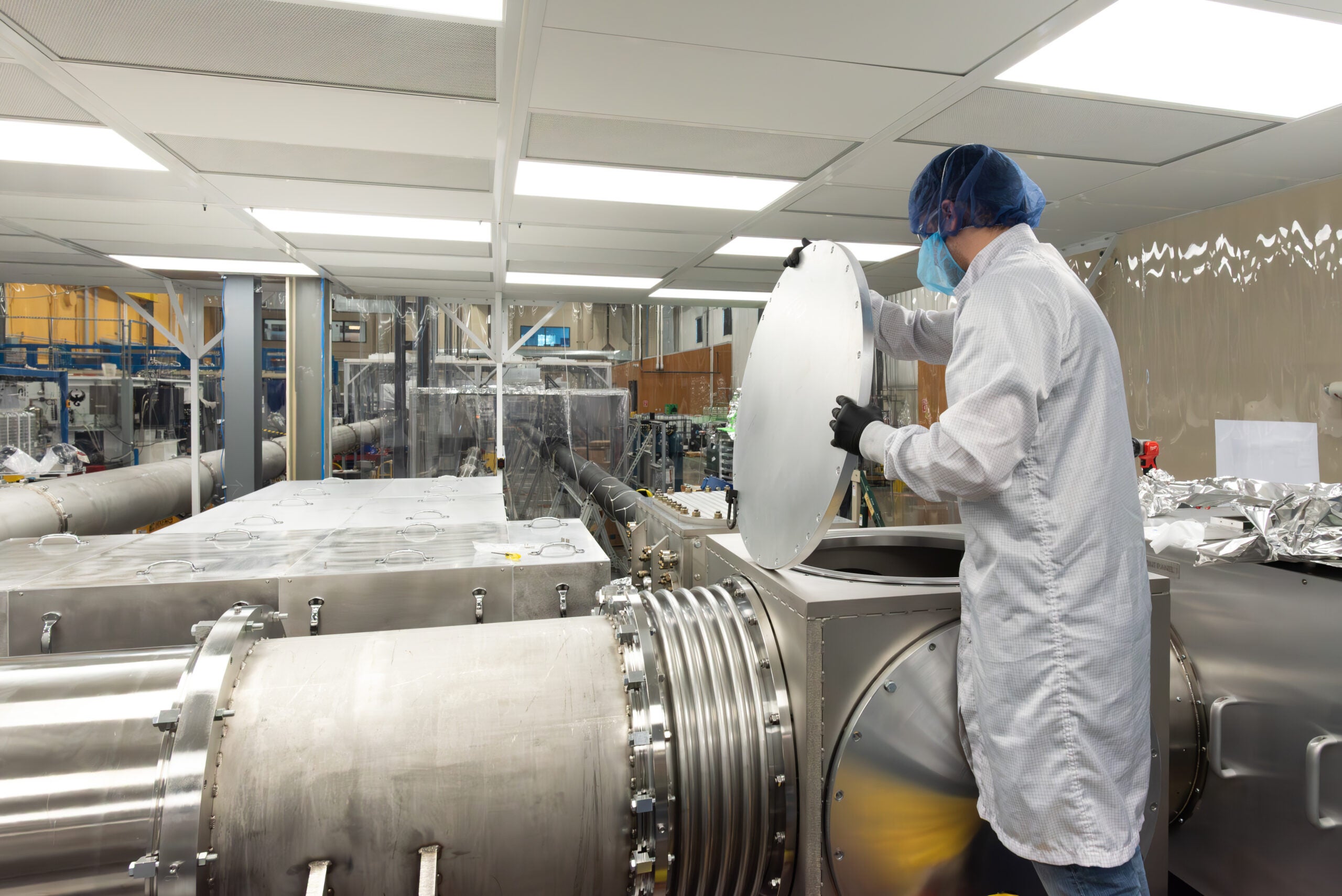
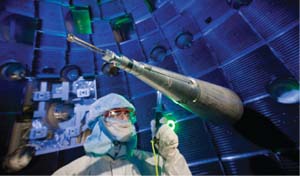
Company executives said Phoenix is the first step toward Xcimer’s goal of building Vulcan, the world’s largest laser, and Athena, the first commercial fusion power plant for continuous grid-scale electricity generation. The group said that designing, building, and operating Phoenix required Xcimer to rebuild industrial capabilities around large-scale electron-beam-pumped excimer lasers, a competence that company officials said was in danger of disappearing after the Cold War.
Xcimer, which is backed by venture investors and funding from the U.S. Department of Energy, spent four years assembling a deep concentration of fusion and laser expertise. Xcimer recruited engineers, physicists, pulsed-power specialists, and technicians from national laboratories, the National Ignition Facility (NIF), commercial aerospace, the U.S. Navy, and past government excimer laser efforts. (Note: The U.S. Naval Research Laboratory, which built and operated the only two remaining large-scale KrF excimer laser systems in the U.S., preserved critical technical knowledge that helped bridge the gap between earlier government programs and today’s renewed commercial efforts.)
“We had to rebuild an industrial capability the United States largely abandoned after the Cold War, restoring specialized supply chains, recruiting many of the last engineers with direct experience in these systems, and transferring that knowledge to a new generation,” said Conner Galloway, co-founder and CEO of Xcimer. “Phoenix represents both a technical milestone and the reindustrialization of high-energy excimer lasers in America.”
The Physics and the Economics
Laser fusion is the only fusion approach to achieve scientific breakeven in a laboratory. In 2022, the NIF demonstrated net energy gain from fusion, and in 2025 produced 8.6 megajoules of fusion energy from 2 megajoules of laser input.
Xcimer officials on Wednesday noted that NIF was built as a scientific research facility, not a commercial power plant. They said that facility’s technology, using solid-state glass laser architecture, “is too expensive, complex, and maintenance-intensive for economical grid-scale electricity generation.” Xcimer officials said they think commercial fusion requires a fundamentally different industrial system, and noted that their krypton fluoride excimer lasers are designed for higher efficiency, fewer beamlines, lower thermal stress, and compatibility with industrial-scale manufacturing. The architecture uses two beamlines rather than NIF’s 192, and is designed to reduce operational complexity and maintenance requirements.
“NIF proved laser fusion physics works,” said Alexander Valys, Xcimer co-founder and president, who on June 1 gave an overview of work being done at Xcimer. Valys spoke during the opening plenary of the American Nuclear Society’s conference in Denver. Valys said that Xcimer, which is participating in the U.S. Dept. of Energy’s Milestone-Based Fusion Development Program, recently completed its “first major engineering activity as a company, which is the construction of our prototype laser system.”
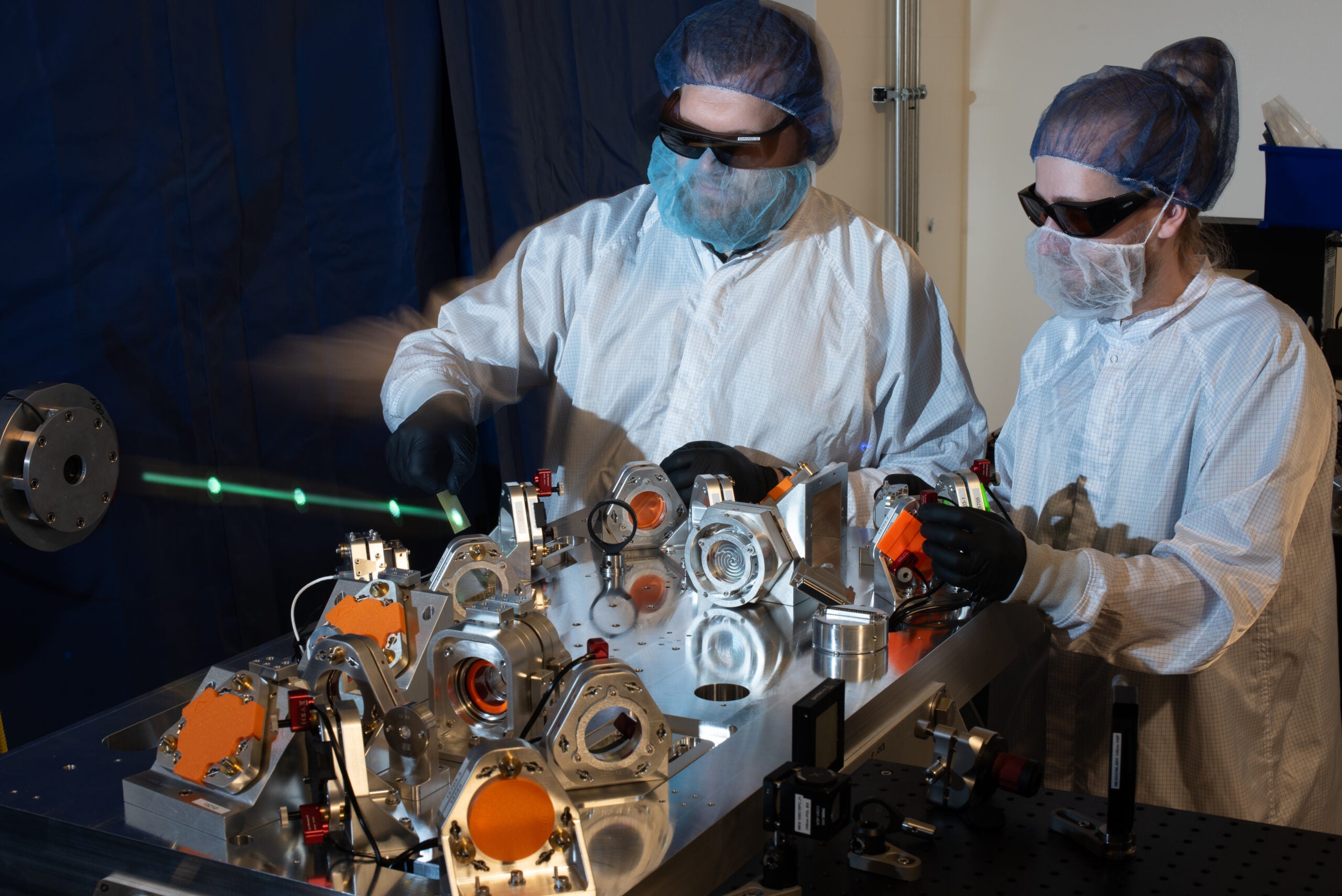
Valys described the Phoenix prototype as “the largest privately owned laser system in the world.” He added, “Our thesis is that commercial laser fusion becomes possible only if the laser system itself becomes dramatically simpler, cheaper, and more manufacturable.”
What Comes Next
Phoenix is the first step in Xcimer’s roadmap toward commercial fusion energy. Its goals include:
- Anvil (2028): Commercial-scale excimer amplifier delivering 200 kilojoules on target in a complete two-sided beamline.
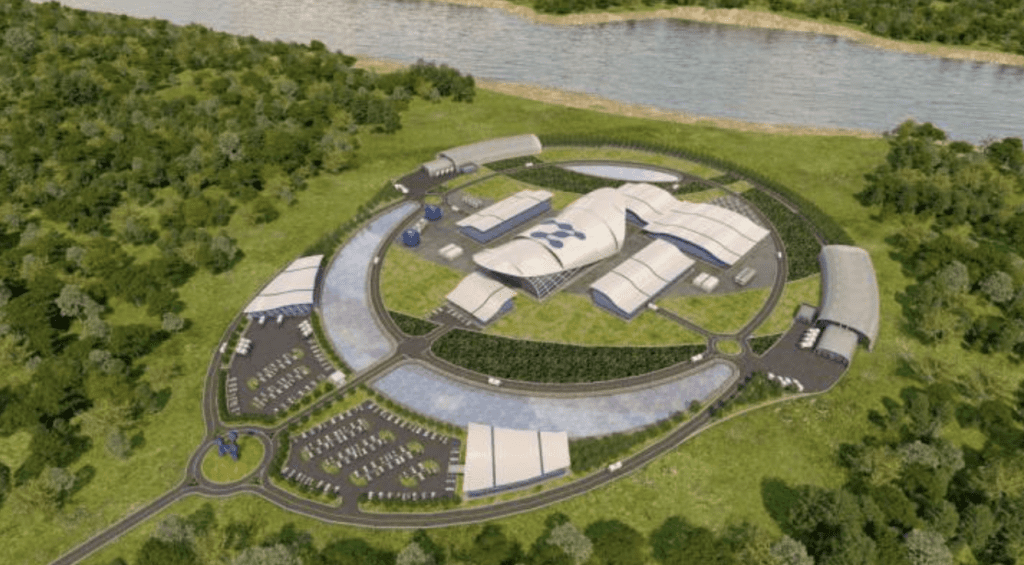
- Vulcan (early 2030s): 4–12 megajoule laser system targeting wall-plug breakeven and supporting high-energy-density and national-security applications. Xcimer expects to select a Vulcan site this year.
- Athena (mid-2030s): Commercial-scale laser fusion power plant designed for continuous grid-scale electricity generation.
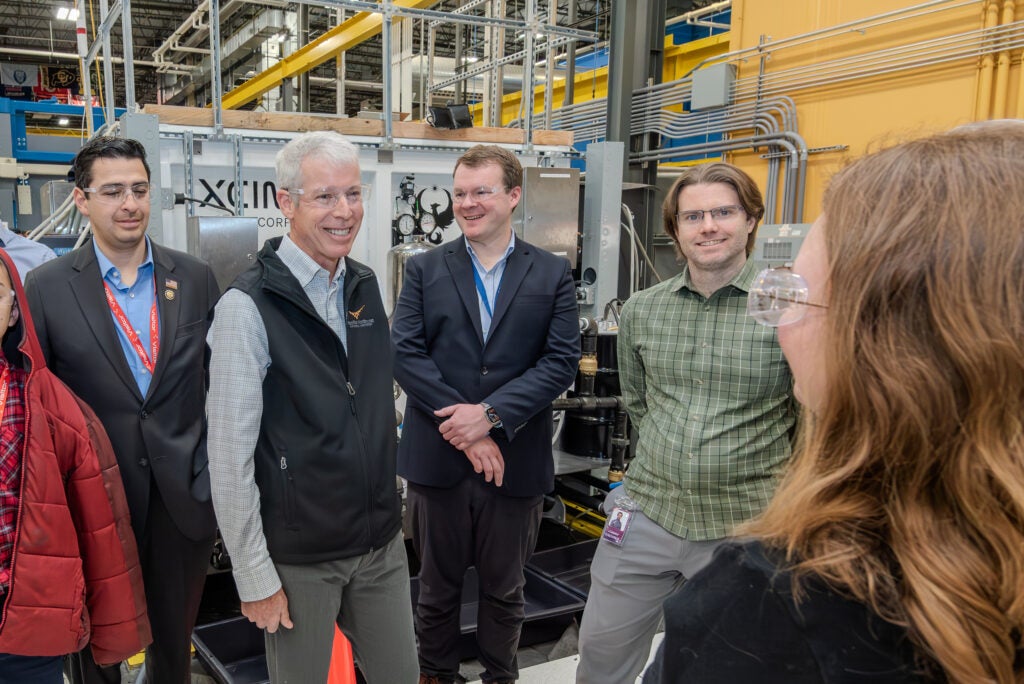
Xcimer on June 4 is conducting a tour of its Denver facility in conjunction with the ANS meeting in the Mile High City.
—Darrell Proctor is a senior editor for POWER.