
Trends
-
 O&M
O&MWhy Power Plant O&M Teams Need Better Inspection History, Not Just More Maintenance Data
Power plants generate a large amount of maintenance and inspection information every day. Operators complete rounds. Technicians document repairs. Contractors submit reports. Engineers review abnormal conditions. Reliability teams analyze failures. Asset managers track age, condition, criticality, and replacement plans. The challenge is not always that power generation facilities lack data. The challenge is that much […]
-
 Technology
Asset Information Lifecycle Management: The Digital Backbone of Trusted Operations, Compliance, & AI
This eBook explains how organizations in the Power & Utilities industry can evolve from scattered, uncontrolled engineering information to a governed, connected, and AI-ready digital foundation. It introduces Asset Information Lifecycle Management (AILM) as the extension of engineering document control across the full asset lifecycle—keeping engineering records aligned with the physical plant as assets […]
-
 Technology
Transformation from Drawing Management Chaos to a More Adaptable, Resilient, and Secure Utility
This customer webinar brings together engineering and IT leaders from Eversource, Great River Energy, and Hoosier Energy to share how their utilities moved from fragmented drawing storage to centralized Engineering Document Management. Through firsthand experiences, the panel explores the risks of shared drives, paper drawings, conflicting revisions, and tribal knowledge—and how a single source […]
-
 Technology
Why Engineering Document Management is Critical for Your Utility’s Future
This playbook explores how utilities can use Engineering Document Management (EDM) to improve access to critical engineering information, connect teams, automate workflows, and reduce operational risk. Drawing on real-world experiences from Con Edison, Eversource Energy, Great River Energy, and Hoosier Energy, it demonstrates how centralized document control supports everything from design and capital projects […]
-
 Expert Commentary
Bringing a Power Plant’s Worth of Load Onto the Grid: NERC’s Interconnection Reckoning
Data centers are connecting to the transmission system faster than the reliability rules were built to handle and behaving nothing like the passive load those rules assumed. Here’s what the North American Electric Reliability Corp.’s (NERC’s) Large Loads Action Plan, a new class of registered entity, and a hard 2026 deadline mean for anyone planning, […]
-
 solid state transformers
Major Leap for Solid-State Transformers: Megawatt-Class Unit Demonstrated on Live Feeder
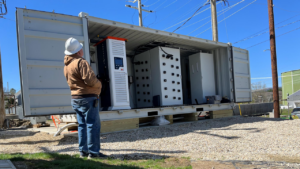
North Carolina State University, the New York Power Authority (NYPA), and EPRI have demonstrated a megawatt-class solid-state transformer (SST) on a live 13.2-kV utility distribution feeder, marking what the partners describe as the first independent validation of a megawatt-class SST under real-world distribution conditions. The NC State-built prototype was connected at EPRI’s power delivery laboratory […]
-
 Commentary
How Energy Security, Load Growth and Infrastructure Arbitrage Could Reshape America’s Power Market
America’s emerging electricity challenge is increasingly an infrastructure challenge. For much of the energy transition, attention concentrated on the cost of producing electricity. Solar developers focused on module prices, battery developers compared cell costs and round-trip efficiency (RTE), and utilities evaluated competing resources using measures such as levelized cost of electricity (LCOE). Those calculations remain […]
-
 Workforce
The POWER Interview: How the Data Center Power Crunch Is Reshaping the Talent Market
As data center developers confront tighter power supplies, longer interconnection timelines, and growing scrutiny over who should pay for the grid infrastructure required to serve large loads, those pressures are beginning to reshape another part of the development equation: talent. As states and utilities reconsider how the costs of serving large data center loads should […]
-
 gas turbines
Ansaldo Returns to U.S. Gas Turbine Market as Equipment Crunch Widens Supplier Field
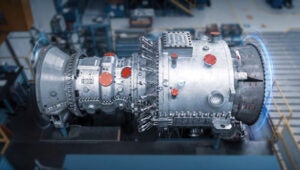
A widening gas turbine supply crunch has prompted Ansaldo Energia to explore a new path back into the U.S. generation market after more than 30 years. The Italian manufacturer will supply California-based
-
 Commentary
AI for Utilities: When Keeping the Lights on is Your Responsibility, Adoption Looks Different
Artificial intelligence (AI) is being adopted across industries at an unprecedented pace, and the electric utility sector is no exception. Faced with rising energy demand, aging infrastructure, and an increasingly complex grid, utilities are turning to AI to innovate and modernize operations. However, adoption of this technology—as with various digital innovation waves preceding it—fundamentally looks […]
-
 Trends
PJM Widens Response to Data Center Load as Capacity Shortfalls Deepen
PJM Interconnection has proposed a new framework that would allow large data centers and other major electricity users to enter service without first securing enough new capacity to cover their demand—but would make the uncovered portion of that load available for reduction before PJM calls on existing pre-emergency demand-response resources if electricity supplies become dangerously […]
-
 Commentary
Alarm Bells Are Sounding for the Grid: Answering Them Takes More Than Megawatts
When federal emergency powers become routine operating procedure, the system is not holding up. It is operating at its ceiling. And the customers who kept their lights on paid triple for the privilege, which means the event that operations survived is one that affordability did not.
-
 Data Centers
More Data Center Operators Commit to Abbott’s Texas Standards as Power Companies Endorse ERCOT Batch Framework
A growing group of data center operators—including Dallas-based Skybox Datacenters, Austin-headquartered bitcoin miner and hyperscale developer Mara, and global colocation giant Digital Realty—have publicly committed to comply with Texas Gov. Greg Abbott’s data center standards and the state’s active audit of projects in the Texas grid operator’s interconnection queue. They join QTS Data Centers, Blackstone’s […]
-
 Data Centers
Can Utility Supply Chains Keep Pace with AI Data Center Demand? Seven Procurement Strategies to Power the Future
As artificial intelligence (AI) adoption accelerates, the gap between electricity demand and grid capacity is widening rapidly. While this trend is often framed as a power generation and transmission challenge, it is equally a procurement challenge. The materials, equipment, and skilled labor required to build both data centers and grid infrastructure are in increasingly tight […]
-
 Trends
Oklo’s Groves Becomes Fifth DOE Pilot Reactor to Reach Criticality, First on Private Land
Oklo’s Groves Isotope Test Reactor in Lockhart, Texas, has become the fifth reactor to achieve criticality under the U.S. Department of Energy’s Reactor Pilot Program (RPP), and the first under the program to do so on private land. The low-power test reactor reached criticality at 9:19 p.m. ET Aug. 5, achieving a controlled, self-sustaining nuclear […]
-
 Smart Grid
Resilience and Digital Transformation Spearhead the Energy Infrastructure Transition
The transition to sustainable energy infrastructure has been experiencing steady progress in recent years across the globe, while simultaneously undergoing constant fluctuation. Actual progress is influenced by a wide variety of factors, such as the drivers behind participants’ motivations and the technologies enabling the transition, as well as the status of supply chains and geopolitical […]
-
 Commentary
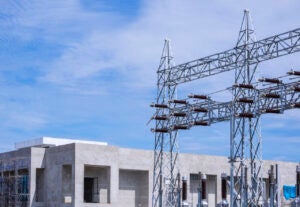
The Power Sector’s New Constraint Isn’t Demand—It’s Everything Else
For most of the last two decades, the anxiety in power planning was about demand: would consumption grow fast enough to justify new capacity, and how would an aging fleet keep pace? That question has inverted. Demand is no longer the uncertain variable—it is the one thing forecasters are confident about. The uncertainty now sits […]
-
 Trends
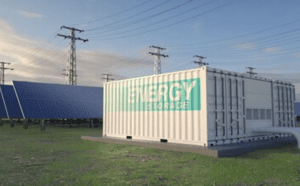
Scalable, Grid-Ready Storage: How Connector Design Is Shaping the Next Generation of Energy Systems
As utility-scale battery energy storage systems (BESS) scale from megawatts to gigawatts, the engineering complexity grows exponentially. Higher-voltage architectures and denser rack configurations are pushing the limits of conventional component design and exposing gaps that can compromise system performance and site safety. For the electrical engineers and systems integrators building these projects, the cells, fire […]
-
 Gas
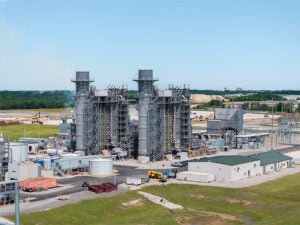
GasRayburn Energy Station: A Cooperative’s Answer to Texas-Sized Risk
For Rayburn Electric Cooperative, ownership of the 758-MW combined cycle plant in Sherman, Texas, means stable rates, hardened reliability through heat waves and winter storms, and a hedge against the
-
 Waste to Energy
Unlocking Waste-to-Energy for Energy Security and Regional Growth
Waste-to-energy technologies, long viewed mainly for waste management, are finding renewed relevance.
-
 Data Centers
Aalo, Crusoe Plan 2027 INL Demonstration Pairing Nuclear Power and AI Data Center Load
Advanced nuclear firm Aalo Atomics has formed a strategic partnership with energy-first AI infrastructure company Crusoe to develop a nuclear-powered “AI Factory” data center in a project that will combine Aalo’s advanced reactor development program at Idaho National Laboratory (INL) with Crusoe’s modular AI data center platform. The companies said on July 30 that under […]
-
 Trends
Holtec Targets 2036 for 1.36-GW SMR-300 Project at Oyster Creek
The U.S. Nuclear Regulatory Commission (NRC) has approved the License Termination Plan (LTP) for the Oyster Creek Generating Station in New Jersey, a regulatory milestone that clears the final phase of decommissioning and sets the stage for Holtec International to pursue construction of four SMR-300 small modular reactor units at the Lacey Township, New Jersey, […]
-
 Data Centers
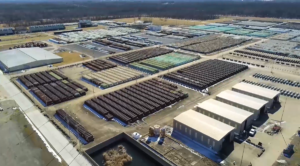
Brookfield, NextEra to Develop $100B Data Center Campus at DOE’s Paducah Site, Paired With 4.6 GW of Dedicated Generation
A coalition led by Brookfield and NextEra Energy has unveiled plans to build a $100 billion, privately funded artificial intelligence (AI) data center campus at the U.S. Department of Energy’s (DOE) Paducah Site in Western Kentucky, paired with up to 4.6 GW of dedicated new power generation that will be built and paid for solely to serve […]
-
 Commentary
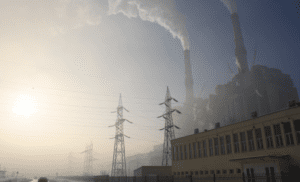
Strategy Amid Uncertainty: Why Decisioning Maturity Is the Critical Differentiator in Today’s Power Markets
The pace of change in energy markets has never been faster. Price signals that once evolved over days now shift within settlement windows. Geopolitical shocks that once took weeks to propagate through commodity markets now ripple across interconnected European power grids and global liquefied natural gas (LNG) supply chains in hours. And amid this acceleration, […]
-
 Commentary
Your Customers Are Asking AI About You. Do You Know What It’s Saying?
Why Generative Engine Optimization Is the Next Reputation Management Secret Weapon for Energy Brands Energy has become a kitchen-table issue. Bills are climbing. Data centers are being built at a breakneck pace, and new technologies are being launched faster than ever before, often facing NIMBY concerns. As customers and stakeholders look for answers, they may […]
-
 Commentary
Wildfire Liability Is Becoming a Data Problem, Not Just a Legal One
For years, utility wildfire liability was largely framed around a straightforward question: who caused the fire? That question still matters, but it is no longer the only one that matters.
-
 Press Releases
WeaveGrid, GM Advance Grid-Integrated EV Charging and Home Energy Programs
WeaveGrid, a grid-edge orchestration software provider for electric utilities, is collaborating with GM Energy to support access to utility programs across the country. The collaboration is aligned with General Motors’ vehicle-to-grid (V2G) efforts and is designed to help eligible Chevrolet, GMC, and Cadillac EV drivers participate in utility programs that can help support a more […]
-
 Fusion
Google Invests in $468-Million Funding Round for German Fusion Group
Proxima Fusion, a Munich, Germany-based group that is considered among the leading European companies working on fusion energy, said it completed a €411 million ($468 million) funding round. Proxima on July 7 said investors included technology giant Google along with global energy company RWE.
-
 Fuel Cells
Brookfield, Bloom Energy Expand AI Infrastructure Partnership to $25 Billion
Fuel cell systems developer Bloom Energy and investment firm Brookfield said the companies are expanding their partnership agreement and increasing their project financing to $25 billion. The companies initially announced a $5-billion partnership deal in October of last year.
-
 Legal & Regulatory
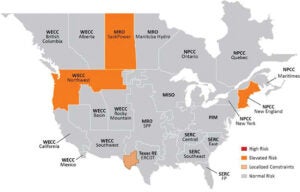
Why a Calmer Summer Outlook Hasn’t Settled the Capacity Question
A milder reliability assessment, 58 GW of new resources, and softening load forecasts have eased the near-term mood. Analysts and executives warn the breathing room is borrowed time. For the first time in