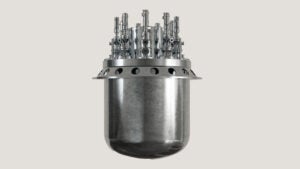
Sweden’s nuclear reversal marked three major developments this past week, as advanced modular reactor developer Blykalla and long-established nuclear services firm Studsvik filed separate applications for up to 1.7 GW of new reactors at two sites, while the government formalized an unprecedented financial commitment to another flagship project. The filings, among the first in Sweden’s new government-led siting process, underscore the accelerating pace of a nuclear buildout that is now drawing both private developers and direct state capital.
Blykalla and Studsvik’s separate filings arrive as the Swedish government on May 28 made public a proposal to acquire a 60% ownership stake in Videberg Kraft AB—the Vattenfall-led vehicle pursuing new small modular reactor capacity at Ringhals—with an initial capital injection of SEK 1.8 billion (about $194 million) and authority to inject up to SEK 34.3 billion (about $3.7 billion) during construction.
The government also proposed assuming a share of an estimated SEK 122 billion (about $13.2 billion) in baseline fixed costs for a new nuclear waste management system for new reactors—with authorization for an additional SEK 61 billion (about $6.6 billion) to cover potential cost increases—and with potential state liability running from 2035 to 2159.
“The aim is to limit the initial actor’s share of fixed costs with the expectation of additional reactors being built, which will ultimately share in the overall fixed costs,” said Acting Minister of Climate and Environment Johan Britz. “We are already seeing interest from several actors in the construction of nuclear power facilities in Sweden.”
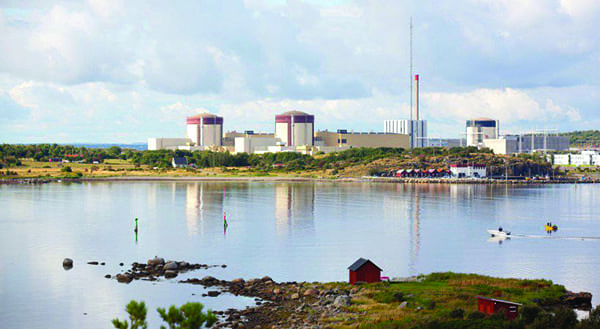
Studsvik: Up to 1.4 GW Proposed for Established Nuclear Site Near Stockholm
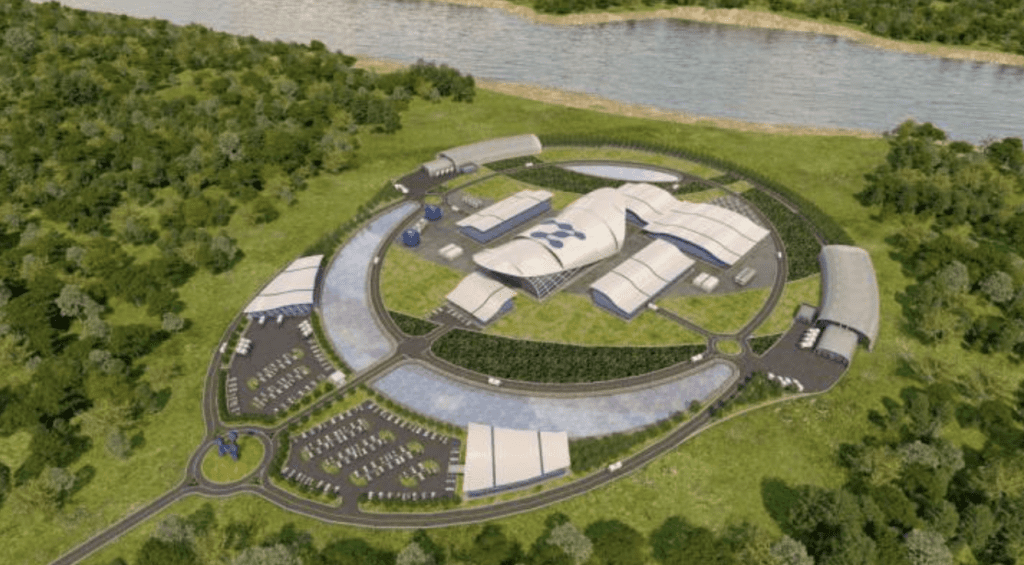
Studsvik on May 25 announced that it submitted an application to the Swedish government to build between 600 MW and 1,400 MW of new SMR capacity “at and around” its long‑standing nuclear site in Nyköping, a coastal city about 100 kilometers south of Stockholm, with the first reactors targeted for commercial operation in the 2030s. The Nyköping project is part of Studsvik’s ReFirm program—a multi-site SMR development platform covering proposed campuses across southern Sweden at Valdemarsvik, Motala, and Karlshamn—but the company has not yet named a specific reactor vendor or design for the Nyköping site. The Studsvik application suggests that while the company has been conducting a project-specific supplier analysis since 2024, “only a few Western reactor suppliers” now remain in a parallel evaluation process. A final supplier and reactor type will be determined later in the development and permitting process.
The filing marks the Studsvik Group’s second new‑build effort this spring and follows a March 2026 application by Kärnfull Next, Studsvik’s SMR project development arm, which sought Sweden’s first approval under a new Act on Government Approval of Nuclear Facilities. Kärnfull envisions a 1,200–1,600 MW SMR campus at Valdemarsvik, a Baltic coastal municipality in Östergötland, roughly 220 kilometers south of Stockholm, where the company targets first power in the early 2030s under its ReFirm South SMR program.
“Sweden has decided to build new nuclear power, and the country needs new firm, fossil-free capacity on a scale not seen in a generation,” said Studsvik President and CEO Karl Thedéen. “Few sites in the country are as ready to contribute as Nyköping. Studsvik combines an active nuclear site and decades of technical expertise with one of Sweden’s most experienced new-build development teams. Our intention is to turn that into real capacity for the Swedish grid.”
The site, in the SE3 bidding zone serving Stockholm and surrounding demand centers, has hosted reactor physics, fuel, and materials research for nearly eight decades. Studsvik traces its origins to AB Atomenergi, the state company founded in 1947 to build Sweden’s nuclear capability. The Nyköping site’s proximity to the E4 motorway, Stockholm Skavsta airport, and the regional transmission grid, surrounded by major industrial energy consumers, makes it well-suited for SMR co-location economics, it said.
“The application is the start of a permitting process,” said Christian Sjölander, Studsvik’s head of new-build projects. “Our task now is to do the technical, environmental and community work needed to build confidence among the municipality, the authorities and our neighbors that this is a project worth backing—and to keep that dialogue going at every stage.”
Blykalla Eyes 330-MW Advanced Lead Reactor Park at Sweden’s Grid Seam
Meanwhile, Blykalla, a Swedish developer of lead‑cooled advanced reactors, on May 18 said it submitted the first commercial application to the Swedish government to build an advanced nuclear reactor park at Norrsundet, an industrial port community in Gävle municipality, about two hours north of Stockholm. The proposed project will feature six SEALER lead‑cooled advanced modular reactors (AMRs) for a combined output of 330 MWe.
“This application is a historic first for Sweden. We’re not just planning an advanced reactor park—we’re building Sweden’s energy future and putting the country at the forefront of the global nuclear power renaissance,” said CEO Jacob Stedman. “Building new energy infrastructure is critical, and the energy systems of the future need to be predictable, reliable, and fossil-free. As AI and electrification grow worldwide, we need to accelerate the deployment of predictable, clean baseload power. That’s exactly what Blykalla’s technology does, and we are uniquely positioned to meet this moment.”
The 55-MWe SEALER design—which derives from 25 years of research at KTH Royal Institute of Technology in Stockholm and represents one of the most compact passive-safety configurations among leading coolant technologies—runs on long-life uranium nitride fuel that is never replaced during operation, with a core outlet temperature of 550C that could enable high-temperature process heat applications including hydrogen production and water desalination. It says lead’s boiling point of 1,700C enables a low-pressure system, and passive safety is ensured by natural convection of the lead coolant to remove decay heat from the core—meaning no active cooling systems are required. In the event of a core-disruptive accident, Blykalla says that volatile fission products are retained in the lead coolant, eliminating the need to evacuate personnel at the site boundary.
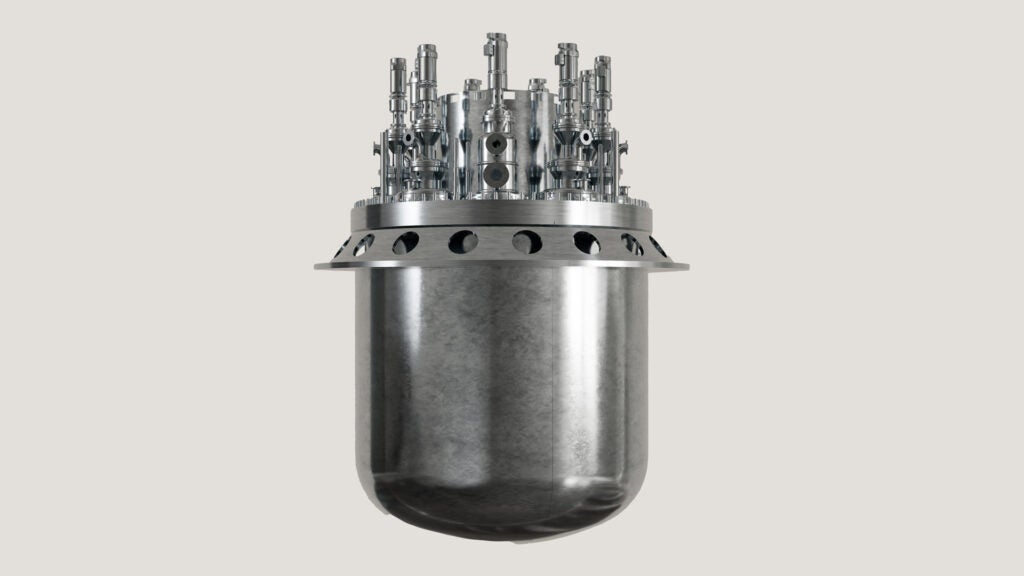
According to Blykalla, the key enabling breakthrough is a family of three proprietary alumina-forming steels that solve the corrosion problem that has historically blocked commercial lead-cooled reactors. Standard stainless steel degrades rapidly in liquid lead through dissolution attack, but Blykalla’s patented alumina-forming austenitic (AFA) and alumina-forming martensitic (AFM) alloys form a protective oxide layer at the steel surface that physically prevents lead penetration—which enables reactor vessel components that can withstand continuous liquid lead exposure at operating temperatures, the company says.
Blykalla broke ground in February 2025 on a test facility and prototype SEALER-E reactor at Oskarshamn in partnership with Uniper, with Sweden’s Deputy Prime Minister attending the ceremony. The company has also expanded a strategic partnership with American advanced nuclear firm Oklo. Under a March 2026 agreement, Blykalla plans to deploy $100–200 million and 30–40 engineers in the U.S. across joint workstreams that include supporting Oklo’s Department of Energy-authorized reactor pilot project with neutronics and thermohydraulics analysis, and exploring fast-neutron irradiation testing using Oklo’s powerhouses to generate data for Blykalla’s advanced reactor development. “Blykalla and Oklo share an industrial, execution-driven approach,” said Blykalla CEO Jacob Stedman. “We’re excited to build deployment pathways that can reduce risk and accelerate timelines.”
On the industrial supply chain side, Blykalla in April 2026 signed a joint development agreement with ABB to co-develop key elements of the electrical prototype reactor and establish ABB as the lead partner for automation, control systems, and control room equipment. The effort moved the relationship from a memorandum of understanding signed in October 2024 into structured joint development with defined governance and intellectual property allocation. “This is exactly the kind of industrial backing SEALER needs to reach commercial scale and accelerate toward deployment,” Stedman said.
Blykalla’s Norrsundet proposal envisions siting the project on the transmission boundary between Sweden’s SE2 and SE3 power bidding zones—internal wholesale price areas that separate hydro‑rich northern regions from the more demand‑heavy south—so the plant can feed constrained parts of the grid while using existing port and industrial infrastructure at Norrsundet. Blykalla says the multi‑agency review now underway, which will involve the Swedish Radiation Safety Authority, the Land and Environment Court, and the municipality of Gävle. The effort will be the first step in licensing its compact, passively safe lead‑cooled design for commercial baseload service. However, the company has not yet published a target date for first power in Sweden.
Sweden’s Rapid Nuclear Reversal Has a Clear Policy and Legislative Arc
Sweden’s return to nuclear expansion stems from an urgent need to proactively tackle three key issues: grid instability driven by the growth of intermittent renewables, electricity prices that have been volatile enough to threaten industrial competitiveness, and a decarbonization trajectory that requires large additions of firm, dispatchable generation to reach net-zero emissions by 2045.
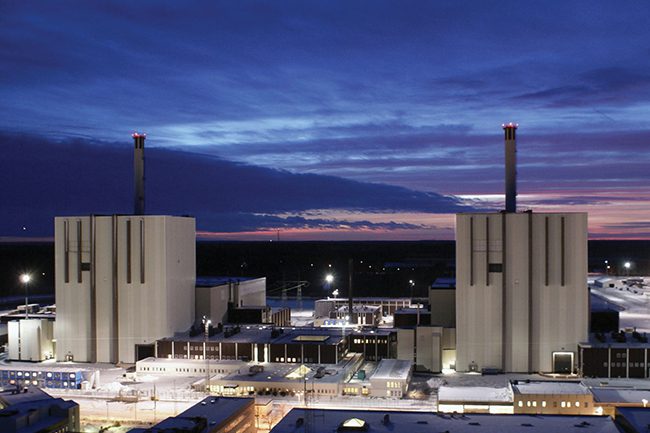
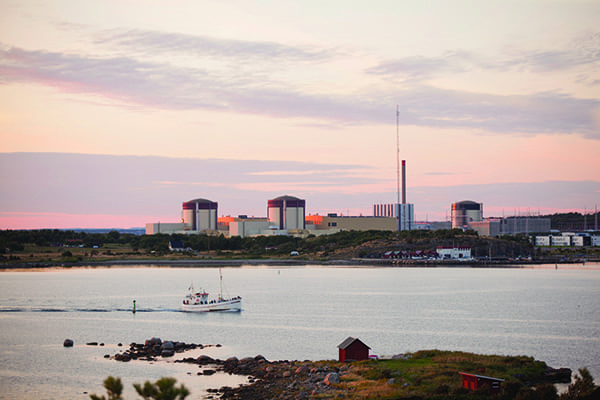
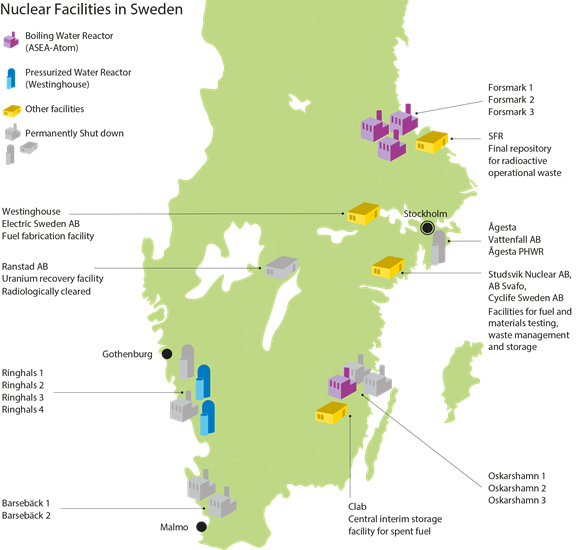
The country currently operates six reactors across three coastal sites, accounting for roughly 30% of national electricity generation. Forsmark, on the Baltic coast north of Stockholm and operated by Vattenfall, houses three boiling water reactors (BWRs) commissioned in 1980, 1981, and 1985, with a combined output of approximately 3,270 MW. Ringhals, on the Värö Peninsula roughly 65 km south of Gothenburg, operates two pressurized water reactors (PWRs)—Units 3 and 4—commissioned in 1981 and 1983, with a combined capacity of about 2,190 MW. Two older Ringhals units were retired in 2019 and 2020. Oskarshamn, on the Simpevarps Peninsula, contributes the 1,050-MW Oskarshamn 3, a BWR commissioned in 1985, after its two older units were shut down in 2015 and 2017. In June 2024, Vattenfall announced plans to extend the operating lifetimes of all five Forsmark and Ringhals reactors from 60 to 80 years, with an investment estimated at SEK 40–50 billion, to be incurred primarily in the 2030s.
The reversal for the existing fleet is especially notable given that only a few years ago, the nuclear fleet struggled to stay viable amid low wholesale electricity prices, rising maintenance costs, and a nuclear capacity tax. In September 2023, the government passed its first legislative step toward enabling new nuclear capacity, removing an Environmental Code provision that had prohibited building reactors anywhere other than existing nuclear sites and eliminating the ten-reactor cap on simultaneous operation—effectively marking the first move toward new nuclear in 40 years.
On permitting, the government commissioned an investigation into whether a dedicated fast-track environmental review process for nuclear could be introduced. In March 2026, it passed three further bills expanding eligible coastal siting locations, clarifying the legal definition of a nuclear facility, and establishing a more fit-for-purpose licensing assessment framework. Separately, it directed SEK 20 million to municipalities to accelerate their permitting processes and tasked the Swedish Environmental Protection Agency with developing coordinated planning methods for nuclear facility siting.
In tandem, the government moved to address regulatory capacity, furnishing the Swedish Radiation Safety Authority with a dedicated mandate and resources to rebuild licensing expertise that had atrophied during the phase-out years. The authority declared itself ready for new-build licensing reviews in December 2025.
Sweden Backs Its Nuclear Ambitions With Direct Equity and a Century of Waste Liability
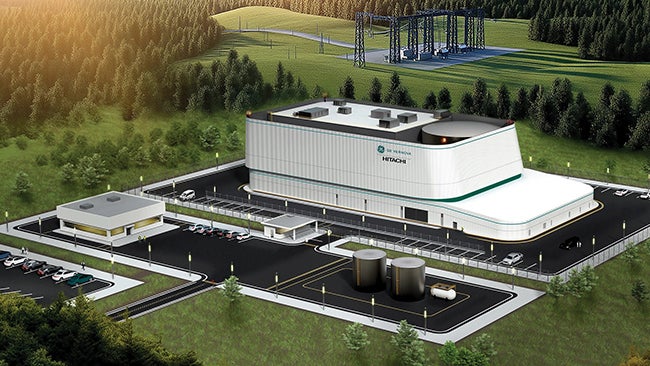
To bolster and sustain new nuclear financing, in May 2025 the Riksdag passed a new law authorizing state support for up to approximately 5,000 MW of new nuclear capacity—roughly equivalent to four large reactors. The support package combines loan guarantees with a contract-for-difference structure that shields investors from electricity price volatility, and applications opened Aug. 1, 2025. Videberg Kraft AB—the project vehicle backed by state-owned Vattenfall and Industrikraft i Sverige AB, a consortium of 17 large Swedish industrial companies including Alfa Laval, Boliden, Volvo Group, ABB, and SSAB—filed the first support application in December 2025 for new SMR capacity at Ringhals, envisioning either five GE Vernova Hitachi BWRX-300s or three Rolls-Royce SMRs for a combined 1,500 MW, as POWER reported last August. A final supplier decision is expected later this year, with a formal investment decision targeted for 2029.
The government’s commitment was underscored on May 28, when it proposed acquiring a 60% ownership stake in Videberg Kraft—with an initial capital injection of SEK 1.8 billion (about $194 million) and authority to inject up to SEK 34.3 billion (about $3.7 billion) during construction. The proposal suggests the state’s ownership will be adjustable to between 51% and 65% until the reactors are commissioned, but no later than 2045.
“In this project, we combine Vattenfall’s experience in operating nuclear power plants with industry know-how—and state ownership provides even greater stability,” said Minister for Financial Markets Niklas Wykman.
On nuclear waste—historically one of the most politically potent obstacles to new nuclear—Sweden has also made concrete progress. In January 2025, operator-owned waste management company SKB broke ground on a deep geological repository at Forsmark—the world’s second such facility now under construction, after Finland’s Onkalo—designed to store 12,000 tonnes of spent fuel 500 meters underground. Disposal operations are targeted for the 2030s. The government received an interim report in October 2025 from the Nuclear Power Review Commission proposing a comprehensive waste management system specifically for new reactors.
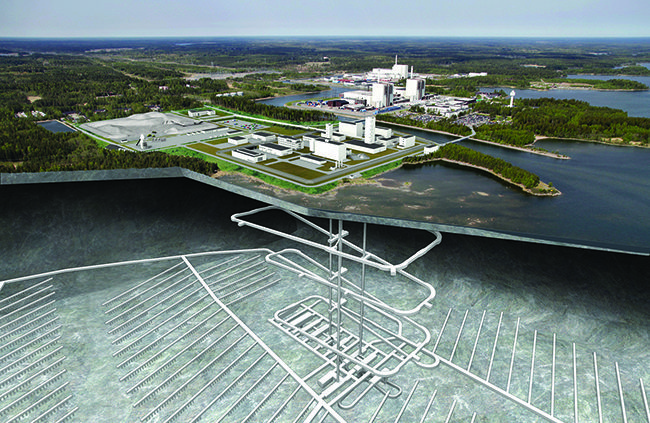
The May 28 budget amendment went further still, proposing that the state assume a share of an estimated SEK 122 billion (about $13.2 billion) in baseline fixed costs for a new nuclear waste management system—with authorization for an additional SEK 61 billion (about $6.6 billion) to cover potential cost increases—and with potential state expenditures running from 2035 to 2159, a 124-year liability window that reflects the generational scale of the commitment. The state’s share of those costs is structured to diminish as additional investors join the program and the fixed cost burden is distributed across more reactors.
The government has also moved to legalize uranium mining through amendments to the Environmental Code and the Minerals Act, a step that seeks to reduce its long-term fuel-chain dependency. On the security front, the Swedish Radiation Safety Authority delivered a report in February 2026 on how nuclear plants could be legally operated during a heightened military alert—a question with direct relevance given Sweden’s recent NATO accession.
—Sonal Patel is a POWER senior editor (@sonalcpatel, @POWERmagazine).
- Uniper
- Kärnfull Next
- advanced reactors
- Videberg Kraft AB
- nuclear waste
- Oklo
- Industrikraft i Sverige AB
- energy policy
- Swedish Radiation Safety Authority
- ABB
- Swedish Energy Agency
- nuclear financing
- Vattenfall
- Rolls Royce SMR
- SKB
- nuclear power
- GE Vernova Hitachi Nuclear Energy
- Studsvik
- European Energy
- small modular reactors
- Blykalla