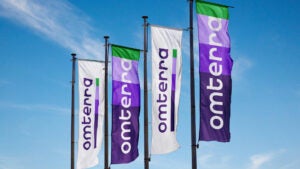
The Siemens name is coming off one of the power industry’s largest equipment and service suppliers. Siemens Energy announced July 14 that it has begun preparing the transition to an independent corporate brand, with Siemens Energy and Siemens Gamesa Renewable Energy to be united under a single new name: Omterra. The rebranding process is scheduled to begin later this calendar year and will be rolled out in stages.
The change is the scheduled endgame of the company’s 2020 spin-off from Siemens AG, which came with a time-limited license to use the Siemens brand—a license that is not free. A spokesperson with Siemens Energy confirmed to POWER that the brand royalty is structured as a revenue-linked fee, amounting to roughly €300 million in the most recent year, under an agreement that runs to 2030. For the utilities, plant owners, and contractors that hold long-term service agreements, warranties, and operations and maintenance (O&M) contracts under the Siemens Energy and Siemens Gamesa names, the company says the practical disruption will be limited: existing contracts remain valid, and equipment nameplates on the installed fleet will not change, at least at the present time.
“Since our spin-off, it has been clear that the licensed Siemens Energy brand would be available to us for a limited period,” said Christian Bruch, CEO of Siemens Energy, in a statement announcing the change. Bruch said the company is now well positioned strategically, operationally, and financially, has earned the trust of customers and capital markets, and has improved its profitability—and that against that backdrop, with the brand agreement time-limited, “now is the right time to begin the transition to our own independent brand.”
The Economics of a Borrowed Name
When Siemens AG announced the carve-out of its Gas and Power division in May 2019, the parent company said it would support the new business in part through “the licensing of the powerful Siemens brand,” as POWER reported at the time. Siemens Energy listed on the Frankfurt exchange in September 2020, and Siemens AG has steadily reduced its holding since; the spokesperson said the parent currently retains 5% of Siemens Energy.
Whether moving to Omterra ahead of the license’s 2030 expiration actually stops the royalty clock is an open question. Asked whether the roughly €300 million annual obligation ends when the company completes its transition or continues through 2030 regardless, the spokesperson said that is “not entirely clear yet.”
The costs of the rebranding itself—new signage, marketing, legal, and administrative work across a company operating in more than 90 countries—have been budgeted and will not affect current financial guidance, the spokesperson said.
What Changes for Customers, and What Doesn’t
For POWER’s readership, the more pressing questions concern the paper trail attached to two of the sector’s most recognizable brands: contracts, certifications, part numbers, and vendor records. According to the spokesperson, existing contracts remain valid through the transition, and nothing requires customer countersignature. Nameplates on installed equipment will stay as they are for now.
One area will require action on the customer side of the fence: vendor registration. The company will need to be re-registered in customers’ vendor qualification and procurement systems under the new name, which the spokesperson described as part of the upcoming transition phase. Utilities and engineering, procurement, and construction (EPC) firms that maintain approved-vendor listings should expect that administrative work to land during the rollout.
The company said this week’s announcement included direct outreach to customers. A detailed implementation timeline—which entities, regions, or business areas convert first, and the key milestones along the way—was not part of the announcement, with more information to come, the spokesperson said.
A Name Six Years in the Making
Omterra is not a fresh invention. The spokesperson told POWER the name was among those under consideration in 2020, when the company ultimately chose to launch as Siemens Energy, and that the company protected a number of candidate brands at the time—a common practice for international companies navigating a naming process. Trademark records show the company began protecting the name in October 2021—a year after the spin-off—when Siemens Energy Global GmbH & Co. KG filed for OMTERRA with the European Union Intellectual Property Office. An international registration followed in March 2022, extending protection to the U.S. and other markets, and successive filings broadened the coverage to roughly 30 jurisdictions. The most recent U.S. registration issued June 30, 2026—two weeks before the announcement.
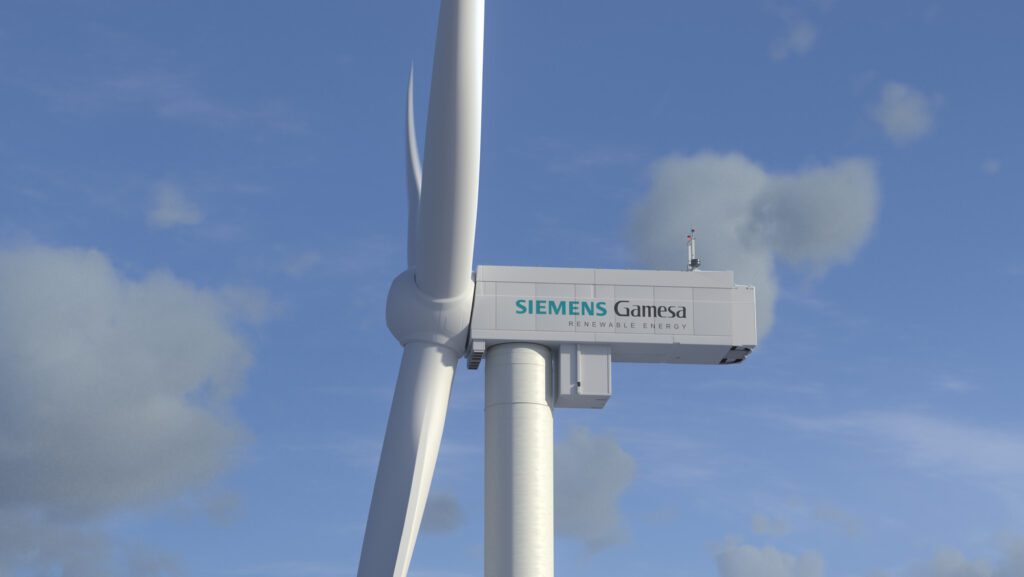
According to the company, the new name reflects its global footprint, its technological expertise, and its commitment to contributing to reliable energy supplies worldwide. The change also marks the end of the road for the Siemens Gamesa brand, created in 2017 through the merger of Siemens Wind Power and Spain’s Gamesa. Siemens Gamesa will be folded into Omterra entirely, the spokesperson said—it will not survive as a product line or sub-brand.
For a company whose lineage traces to Werner von Siemens’s discovery of the dynamo-electric principle in 1866, the departure from the founder’s name carries weight the company itself acknowledged. “Our founder’s name opened doors and supported us on our path to independence,” Bruch said, calling that legacy both an inspiration and a commitment as the company helps shape the energy world of tomorrow.
Siemens Energy—soon Omterra—supplies technology behind an estimated one-sixth of global electricity generation, spanning gas and steam turbines, generators, grid technology, and, through Siemens Gamesa, onshore and offshore wind. The company has said its strategic direction remains unchanged for customers, business partners, and employees. What remains to be seen is how quickly the industry’s procurement databases, spec sheets, and habits of speech catch up with a name that, unlike the one it replaces, has no 160-year head start.
—Aaron Larson is POWER’s executive editor.