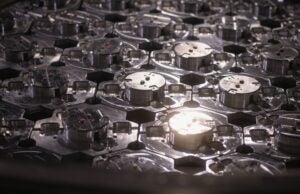
Aalo Atomics’ Aalo-X Critical Test Reactor (CTR)—dubbed “Project First Light”—has reached criticality at Idaho National Laboratory (INL), marking the fourth Department of Energy (DOE)–authorized advanced reactor startup under the federal push to accelerate reactor testing and demonstration.
The U.S. Department of Energy (DOE) said July 6 that Aalo’s test reactor, which DOE referred to as Aalo-X, “successfully completed a zero-power fueled criticality demonstration” at INL under DOE’s Reactor Pilot Program. Aalo told POWER the Critical Test Reactor reached criticality at 12:20 a.m. MT on July 4, allowing DOE to exceed the target in Executive Order 14301, which directed the department to approve at least three reactors to reach criticality by July 4, 2026.
“President Trump asked for three advanced reactors to be authorized and achieve criticality by the 250th anniversary of our great country,” Energy Secretary Chris Wright said in DOE’s July 6 statement. “I’m pleased to share that through the dedication and hard work of Aalo, INL, and DOE, we have surpassed that ask and delivered four!”
Aalo follows Antares Nuclear’s Mark-0 reactor, which reached criticality at INL on June 4, and Valar Atomics’ Ward 250 reactor, which reached criticality at the Utah San Rafael Energy Lab on June 18, as the third Reactor Pilot Program developer to reach the milestone. Deployable Energy’s Unity reactor reached zero-power criticality at INL on June 30 through DOE’s Nuclear Energy Launch Pad initiative, making Aalo the fourth DOE-authorized advanced reactor criticality in a month.
As Yasir Arafat, Aalo president and chief technology officer, explained in a July 2 post on X, after Aalo had begun fuel loading, “Criticality is not the birth of fission. It’s the moment when the reactor no longer depends on an external neutron source to sustain the chain reaction.” In reactor-physics terms, Aalo’s CTR crossed from subcritical operation, where k < 1 and each neutron generation produces fewer fissions than the last, to critical operation, where k = 1 and each generation sustains the next.
“The hardest problem in nuclear was never the physics, our country simply forgot how to build,” Arafat said in DOE’s July 6 announcement. “The success of the Department of Energy Reactor Pilot Program is proof America can execute again.” Arafat also noted that Aalo went “from breaking ground to a sustained chain reaction in just eight months,” calling it “one of the fastest reactor builds in modern American history.”
Inside Aalo’s Five-Hour Criticality Run
In this five-hour livestream made public on July 6, 2026, Aalo Atomics documents the July 4, 2026, startup sequence that brought its Critical Test Reactor (CTR) to initial criticality at 12:20 a.m MT. The stream opens as operators are loading shim rods and the 13th fuel assembly, the number Aalo said its calculations indicated would be needed to sustain a chain reaction. Yasir Arafat, Aalo president and chief technology office, explains criticality as the point at which neutron generation in the core balances neutron losses from leakage or absorption, stressing that the approach is “a very slow and deliberate process” that requires control mechanisms to be withdrawn in small, measured steps, with neutron counts taken at each step, and measured behavior checked against the company’s physics model before operators can proceed.
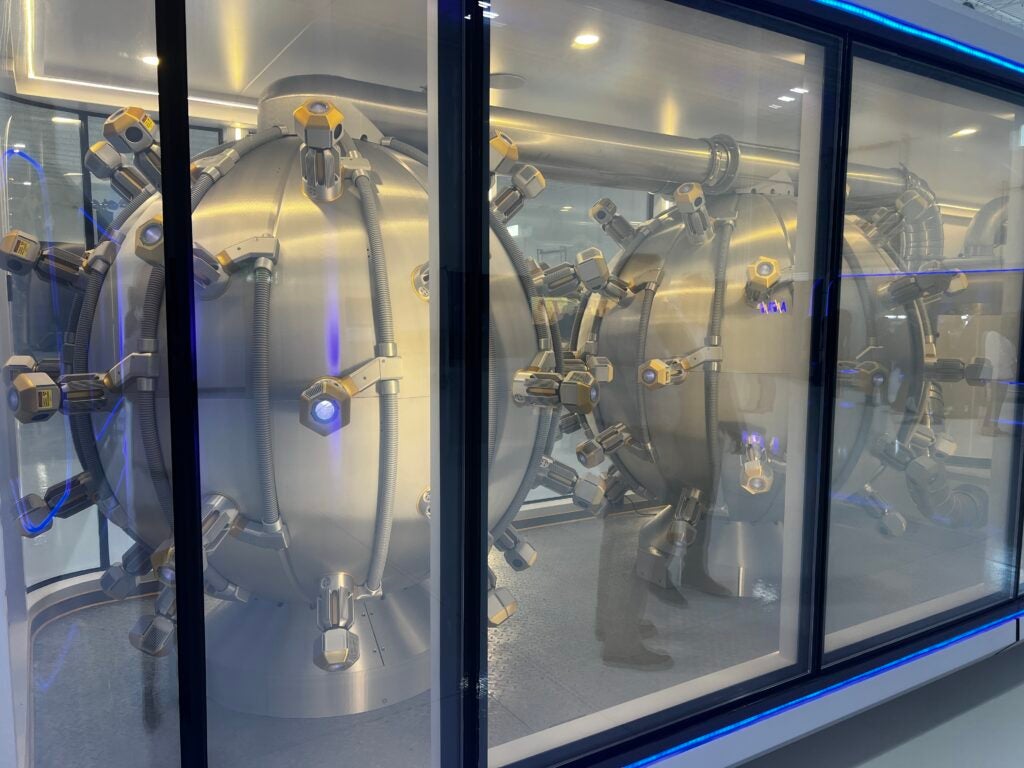
The livestream then proceeds through the CTR core and startup sequence. The configuration comprises a roughly full-scale Aalo-X fuel load arranged in a hexagonal lattice, a geometry Aalo said was inspired by historical sodium-graphite reactor designs, including the Hallam Nuclear Power Facility, and chosen to preserve core symmetry and make reactor behavior more predictable during transients. The core includes 13 uranium dioxide fuel assemblies enriched to about 5%, graphite moderation to slow neutrons enough to sustain the chain reaction, neutron detectors around the core barrel, four safety rods, six control rods, and shim rods to manage excess neutrons. After the final assembly was loaded, operators entered Mode 1 operations, fully withdrew the safety rods, and began withdrawing control rods toward an estimated critical position (ECP), stopping repeatedly to collect neutron count data and recalculate the ECP.
As the core neared criticality, operators switched to a wide-range neutron monitoring instrument and moved individual control rods to about 79.3 inches before the control room declared, “The reactor is critical!”
Aalo officials said the project moved from construction to criticality in under eight months, including a reactor building completed in 36 days, a reactor built in the company’s factory in 28 days, and 540 fuel rods assembled in two and a half days.
A Full-Scale Reactor Physics Campaign for Aalo-X
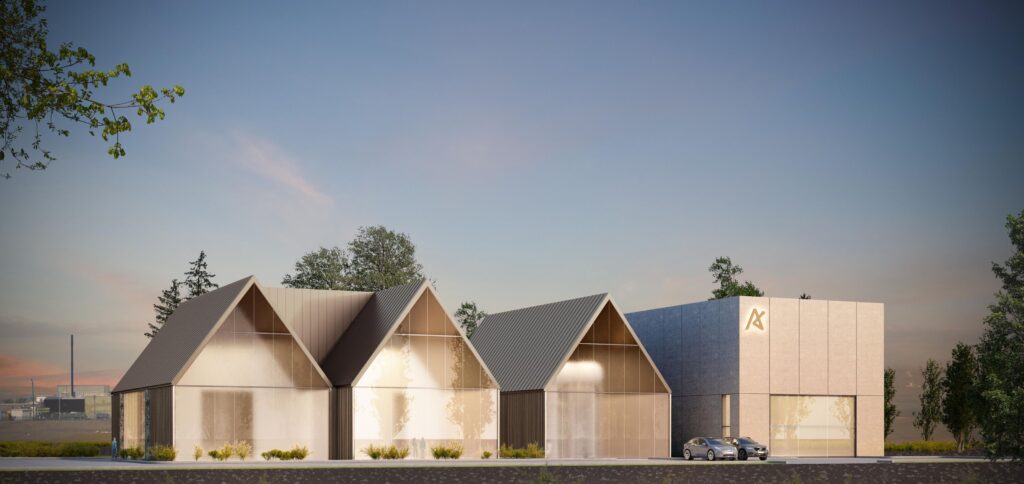
During a June 24 tour of Aalo’s two-acre INL site, Arafat told POWER the CTR campaign is geared to test four key execution questions: whether the company can build a nuclear facility quickly, factory-fabricate reactor hardware, establish a repeatable fuel pathway, and stand up an operating organization under DOE authorization. The criticality milestone marks a significant technical step in Aalo’s broader Aalo-X program, which is moving in stages from zero-power reactor physics to sodium systems testing, full-power operation, electricity production, and eventual deployment of Aalo’s commercial Pod configuration.
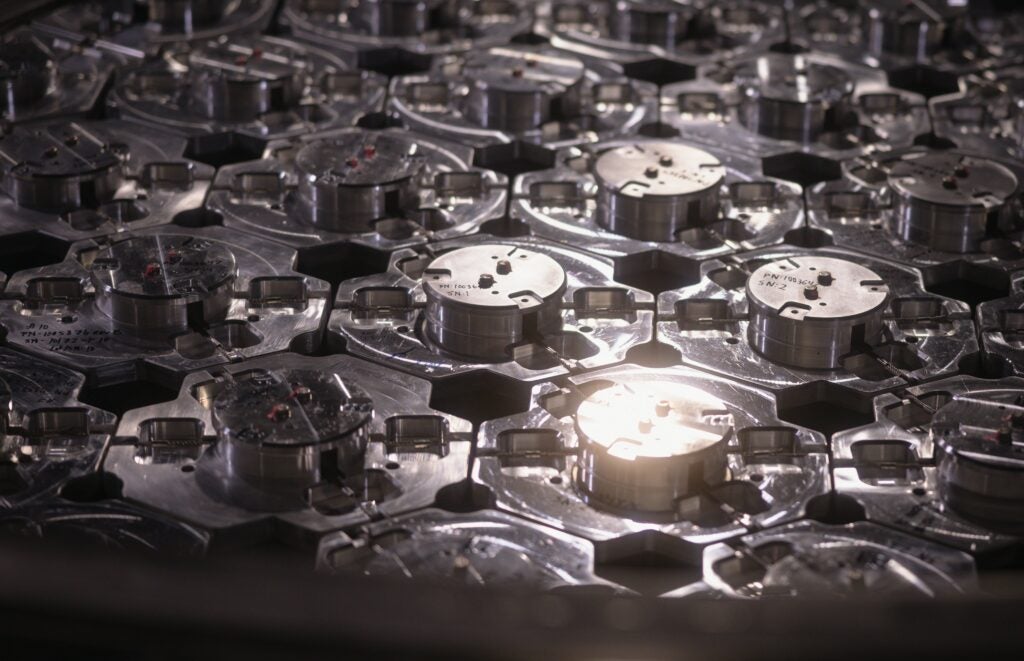
“Reaching criticality is our most significant milestone to date, as it paves the way for the deployment of the Aalo Pod to power commercial data centers once it receives authorization from the Nuclear Regulatory Commission,” Matt Loszak, Aalo’s CEO, said in the company’s July 6 release. “More importantly, the Aalo-X Critical Test Reactor has the same full-scale core components as our commercial reactors. The Aalo-X’s 10 MWe reactor design positions it as the premier power provider for the modern data center.”
However, “Criticality is just the beginning,” Arafat noted on July 6. “In the coming months, we will continue building and testing multiple reactors, including the commercial Aalo Pod design, which in the next 18 months will provide a scalable and affordable power option to data centers and enterprises.”
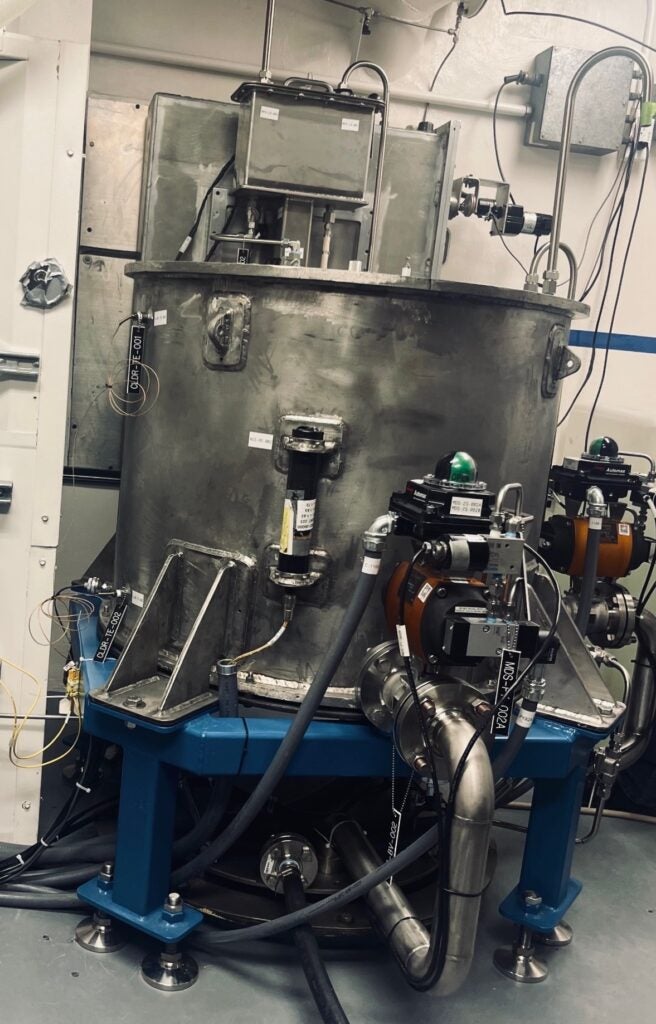
Company materials shared during the INL tour describe the CTR as a full-scale zero-power physics reactor built to test reactor physics, control systems, and the nuclear core before Aalo moves to power operation. The CTR applies Aalo’s staged development approach to the fueled core, graphite, control rods, instrumentation, fuel loading, and operating procedures at near-zero power.
Next Steps: From CTR to Aalo-0 to Aalo-X to Aalo Pod
Last week at the CTR, the final startup sequence kicked off following a series of DOE authorization milestones, including a final readiness assessment. After Energy Secretary Chris Wright signed the final approval to load fuel, the company was able to “flip the switch” and achieve criticality. “Aalo’s celebration was intentionally reminiscent of Chicago Pile-1 (CP-1), the first self-sustaining, controlled nuclear chain reaction that occurred 84 years ago on December 2, 1942,” the company noted. “CP-1 represents the birth of nuclear reactors, and today INL is the leading U.S. site for developing and testing them.”
Now that the CTR has achieved criticality, the campaign is slated to conduct controlled reactivity insertion tests, axial flux profiling with movable neutron detectors and flux wires, control rod calibration, shutdown-margin tests, and abnormal-configuration tests involving fuel or moderator changes. Those experiments are intended to qualify neutronics codes, verify reactivity margins, calibrate in-core instrumentation, and establish control behavior before Aalo-X operates at power, as Arafat explained in a February blog.
Near the CTR, Aalo is assembling Aalo-0, a full-scale, non-nuclear prototype designed to circulate 60,000 pounds of sodium under operating conditions and test heat-transport and power-conversion systems, including heat exchangers, plugging meters, cold traps, heat tracing, instrumentation and controls, welds, modules, and operating procedures. Modules for Aalo-0 were built at the company’s Austin manufacturing facility and shipped to Idaho, and Aalo says the system is slated for commissioning in fall 2026.
Loszak told reporters during the June 24 tour that Aalo intentionally split the test program into two full-scale campaigns—a fueled reactor-physics campaign in the CTR and a separate sodium campaign on the same INL site—because the approach allows Aalo to test “the nuclear fuel portion” and “the coolant, the sodium coolant” in isolation before combining them in a power-producing system.
“We’ve been testing the nuclear fuel at full scale in that building right there, and we’re going to be testing the sodium at full scale at this site as well,” he said. “Those learnings will all come together, and we’re going to be putting the sodium through the nuclear fuel, taking the heat away, turning a turbine, producing electricity,” Loszak said.
The next major undertaking is Aalo-X, the full-power 30-MWth/10-MWe sodium-cooled demonstration nuclear power plant at INL authorized under DOE’s Reactor Pilot Program. Aalo says the plant will use data from the CTR and Aalo-0 to support construction and licensing in 2027, followed by demonstrations of operations and safety mechanisms in 2028. The demonstration is intended to prove the 10-MWe Aalo-1 reactor for the company’s commercial 50-MWe Pod, which would use five 10-MWe reactors connected to a shared turbine.
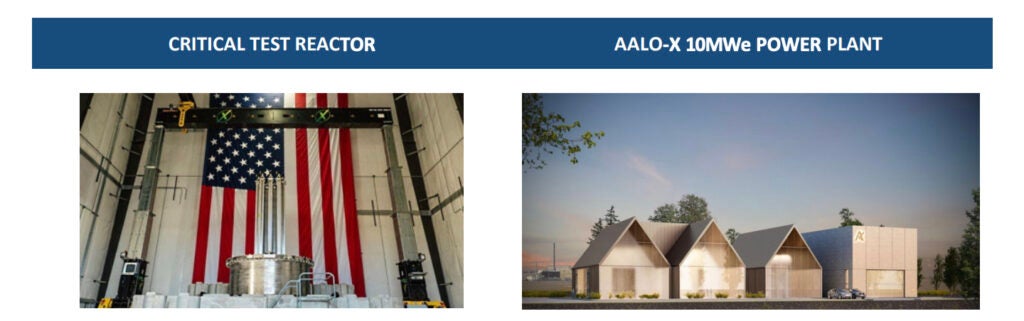
This week, Aalo announced it had already begun work on the second nuclear reactor on the Aalo-X campus at INL. Dubbed “Project Ascension,” the test commercial-scale system will “produce electricity and power for an on-site data center in the coming months,” the company said. As Loszak told POWER in August 2025, Aalo envisioned the pairing “could actually be the world’s first co-located and co-built nuclear-planted data center,” adding that while data centers have been installed near existing nuclear plants, “this would be the first time it’s been built hand in hand.” On Monday, in a video released with the criticality announcement, Loszak said excavation and earthwork for the second full-scale reactor had been completed the week before the milestone and that the company was preparing to pour first concrete. Aalo expects to finish the reactor by the end of 2026 and “make electrons at commercial scale” in 2027, he said.
The data center pairing is also tied to Aalo’s broader digitalization plan. In March, Microsoft said it was working with NVIDIA and Aalo on AI-for-nuclear tools intended to streamline permitting, accelerate design, and optimize operations across site permitting, design, construction, and continuous operations. Microsoft said its Generative AI for Permitting solution reduced Aalo’s time-intensive permitting process by 92%, with estimated savings of $80 million a year, and described the collaboration as focused on making complex nuclear project work “repeatable, traceable, secure, and predictable.”
Ultimately, as Arafat wrote in February, Aalo seeks Technology Readiness Level 9 by running Aalo-X at full 30-MWth power, generating 10 MWe, accumulating fuel burnup, demonstrating safety systems, handling transients such as rapid load changes and pump trips, and exercising refueling procedures. Aalo expects the reactor to run at 100% power for sustained periods, including a 100-hour endurance run, and to produce “an exhaustive dataset on neutronics, thermal performance, fuel behavior, and operations and maintenance activities,” he said.
“Achieving TRL 9 on a first-of-a-kind reactor is a rare feat,” he wrote. “It means that by the time we finish, Aalo-X will have graduated from an experiment to a fully proven system. This will be more than a milestone. It will represent scaling an engineering mountain—and it will validate the seriousness of the XMR product we plan to bring to market.
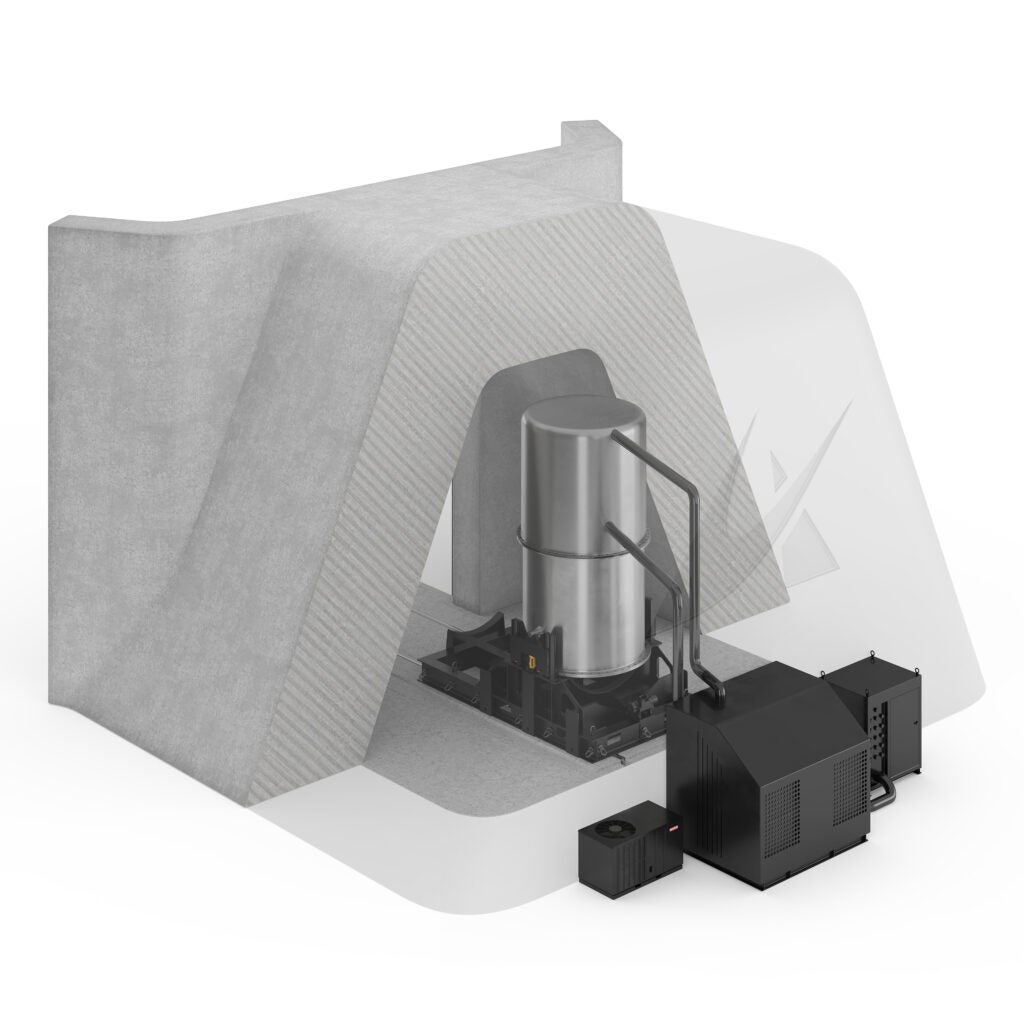
In a video tour posted in May 2026, Yasir Arafat, Aalo’s co-founder, president, and chief technology officer, walks through Aalo’s Critical Test Reactor (CTR) building, describing the 60-by-60-by-60-foot structure, reactor vessel, shielding, control rod drive mechanisms, reactor trip system, and neutron monitoring system (NMS). He also explains Aalo’s approach to the criticality process, in which fuel assemblies are added incrementally and neutron detector readings are compared against model predictions until the core reaches k = 1, the point at which neutron production and neutron loss are balanced. Courtesy: Aalo Atomics
Speed to Power: Supply Chain, Factory Fabrication, and Field Assembly
For Aalo, while the Reactor Pilot Program ramped up its schedule, its speed-to-power ambitions were already embedded in a long-held strategy. Aalo embraced the EO 14301 deadline “as a forcing function to innovate and iterate faster,” as Arafat wrote in February. “By signing up for DOE’s Test Reactor Pilot Program under EO 14301, we gained a pathway to build our reactor under DOE oversight (at the Idaho National Lab site) with an expedited authorization process. But we knew that to succeed where others might falter, we had to push beyond business-as-usual on every front: technical, regulatory, and organizational.”
It was about “proving nuclear can move at the speed of physics,” he added. “We recognized that meeting an aggressive schedule would require owning the critical paths and eliminating the traditional hand-offs and delays. In short, we chose to accept the impossible timeline so that we could reinvent how a reactor project is executed, leveraging our startup agility,” he wrote. “While others hesitated, Aalo committed to learning faster and working smarter, convinced that speed itself can be an advantage in uncovering issues early and driving creative solutions.”
One benefit was that Aalo had already planned to build up its internal capabilities and close partnerships in a form of vertical integration to bolster its technology. Arafat said the structure was designed to keep Aalo from getting stuck in “contractual limbo” or waiting on “another organization’s timeline.”
On the design side, for example, Aalo’s engineering team handles core and system design for Aalo-X, drawing on decades of sodium reactor experience from systems such as the Experimental Breeder Reactor-II (EBR-II), the Sodium Reactor Experiment (SRE), and Hallam, while developing and testing the integration. That includes the hybrid loop-pool configuration, passive safety features, and system-level architecture. Similar logic extended to the facility.
And, rather than place the CTR in an existing DOE facility, Aalo chose to build its own reactor building, a decision Arafat described as part of breaking away from the slow, bespoke construction model that has constrained past nuclear projects.
The company has also tailored its reactivity control and protection systems to Aalo-X rather than buying an off-the-shelf reactor instrumentation and control system. Aalo has been training its own operations crew, including former Navy nuclear submarine reactor operators and test engineers, on prototypes, simulations, and drills. By the time fuel was loaded, Arafat wrote, the operators would have “lived and breathed this reactor for months.”
Aalo’s factory model was as pivotal to the approach. At Aalo’s 40,000-square-foot manufacturing facility in Austin, Texas, crews fabricated reactor modules and assemblies in-house. “By controlling manufacturing, we iterate on design details rapidly and ensure quality,” Arafat wrote. “When something doesn’t fit just right in the prototype, we fix it immediately on the shop floor.” Aalo, notably, has said it is now expanding into a one-million-square-foot factory to apply assembly-line manufacturing to reactor production and support mass production of the Aalo Pod.
Ultimately, in a testament to the rapid field execution, Loszak said Aalo began site work in January, built the CTR structure in 36 days, and installed reactor hardware manufactured at the company’s Austin, Texas, factory and shipped to Idaho via standard highways. The transportation considerations led Aalo to design a reactor large enough to produce customer-relevant power but small enough to move through repeatable factory and road-transport channels, he noted.
Finally, to secure fuel on Aalo-X’s timeline—sidestepping a constraint that has slowed other advanced reactor developers—Aalo again leaned heavily on self-reliance. “Rather than wait in queue for someone else’s fuel, or one-off handout from DOE for the first reactor, Aalo took charge of the fuel cycle for Aalo-X,” Arafat wrote.
Aalo secured low-enriched uranium feedstock early, including fresh enriched uranium hexafluoride from Urenco. And for the CTR, Aalo used fuel rods fabricated by Global Nuclear Fuel (GNF), GE Vernova’s nuclear fuel arm, which were delivered to the site in early April. While the CTR uses 4.95% enriched uranium dioxide fuel, Arafat said Aalo built enough low-enriched uranium dioxide fuel assemblies “to ultimately produce 30 MWth,” from which the company can extract 10 MWe. The commercial reactor is expected to use standard uranium oxide fuel enriched between 5% and 8%, rather than high-assay low-enriched uranium (HALEU), Arafat told POWER.
Aalo’s team is “deeply involved in the fuel design and quality oversight, effectively integrating us as partners in fuel logistics even as we leverage an experienced fabricator,” he explained in February. “This work is foundational for us to scale to 100+ reactors.”
Four DOE-Authorized Criticalities, Four Different Reactor Cases
Aalo’s criticality capped a month in which DOE-authorized projects reached criticality across different reactor concepts, sites, fuels, and authorization pathways. Antares Nuclear’s Mark-0 reactor reached criticality at INL on June 4, becoming the first advanced reactor to do so under DOE’s Reactor Pilot Program. Mark-0 is a high-assay low-enriched uranium (HALEU), TRISO-fueled, sodium heat-pipe-cooled microreactor built as a test platform for Antares’ deployable nuclear power concept.
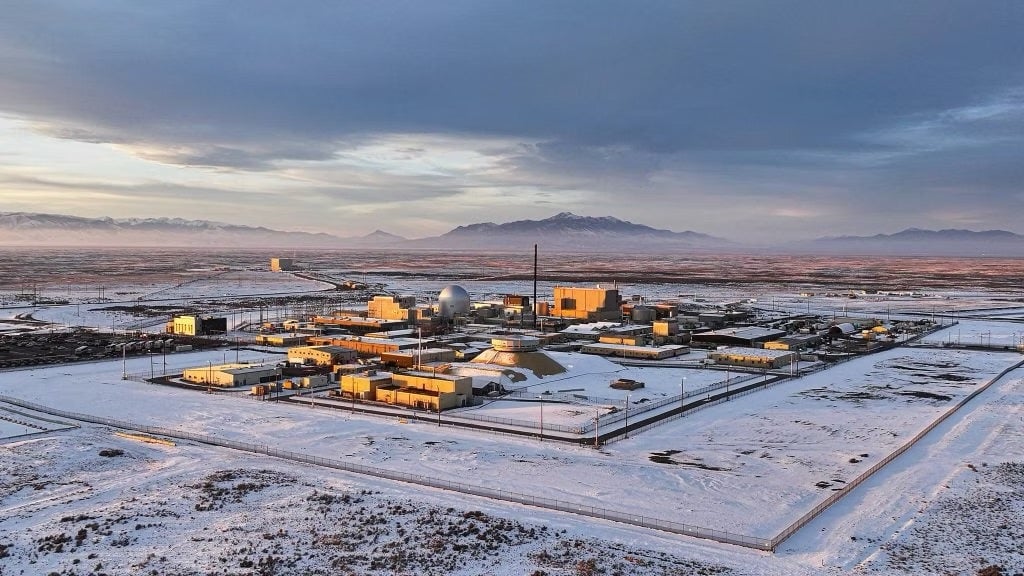
Valar Atomics’ Ward 250 reactor reached criticality at the Utah San Rafael Energy Lab in Emery County on June 18, becoming the second Reactor Pilot Program project to reach the milestone and the first outside the national laboratory system. Ward 250 is a TRISO-fueled modular high-temperature gas reactor (HTGR) using helium coolant, and Valar began power ascension after reaching criticality.
Deployable Energy’s Unity reactor reached zero-power criticality at INL on June 30 through DOE’s Nuclear Energy Launch Pad initiative rather than the Reactor Pilot Program. Unity is a water-moderated, helium-cooled microreactor using 4.95% enriched low-enriched uranium dioxide fuel and commercially available materials. Deployable moved from project kickoff to a delivered reactor, delivered fuel, and readiness for criticality in roughly 150 days, using an existing neutron radiography space at INL’s North Beam Station for a zero-power campaign focused on validating the physics basis for its 1-MWe-class Unity Nuclear Battery platform.
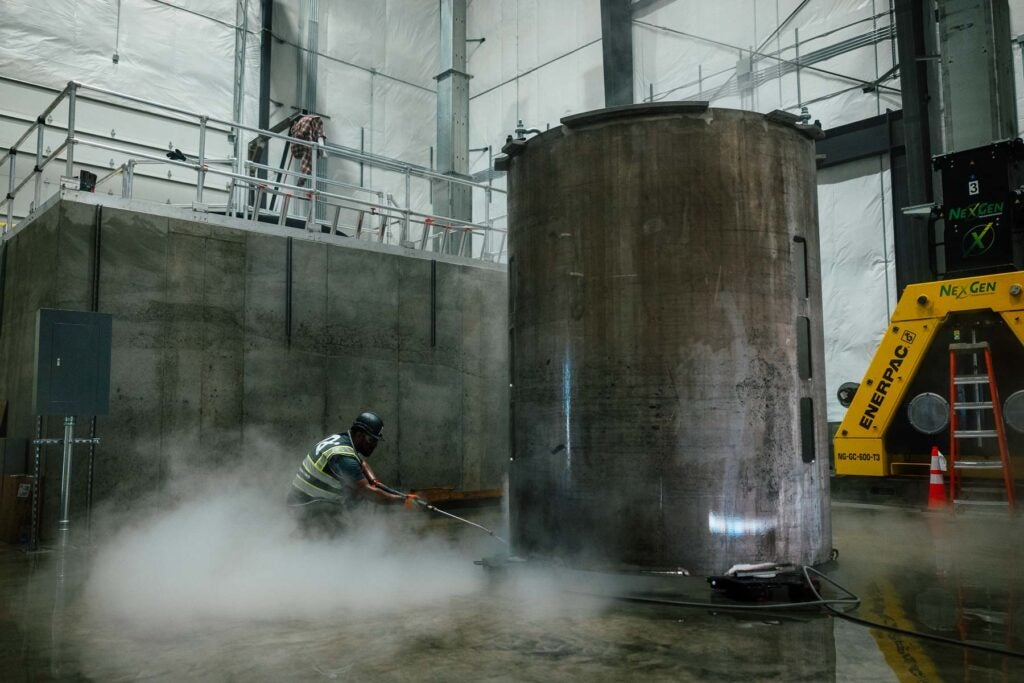
Aalo’s CTR, the fourth reactor, is also an experimental microreactor deployed on federal land, but outside the operational boundaries of the INL campuses in Idaho. In a letter requesting NRC observership, Aalo said the authorization pathway would follow the DOE framework set forth in DOE-STD-1271-2025 (Authorization Pathway for Nuclear Facilities). As it secured DOE approval of its documented safety analysis (DSA) at the end of April, it described the DSA as the authoritative safety basis for a DOE nuclear facility and compared it to a final safety analysis report (FSAR) issued by the NRC, suggesting the DOE framework’s “regulatory rigor is nevertheless comparable.” To meet that regime, the company established safety management programs spanning quality assurance, radiation protection, criticality safety, conduct of operations, training and qualification, maintenance, configuration management, emergency management, fire protection, and worker safety and health. While Aalo noted NRC licensing would not apply to the facility, it said early NRC feedback would support “development and preparation for future NRC licensing.”
Aalo also lauded collaboration with the DOE labs, in particular INL, which it said provides “foundational support,” including through the Reactor Pilot Program. “This support enables Aalo to evolve the next generation of nuclear tech in America: safe, mass-manufactured commercial systems that provide clean, 24/7 baseload electricity. INL’s experienced workforce, existing nuclear facilities, and decades of operational history are instrumental to Aalo’s historic speed,” it noted.
The next Reactor Pilot Program candidate poised to achieve criticality is Oklo Isotopes’ Groves Isotope Test Reactor in Texas, an isotope-production test reactor that will support Oklo’s isotope business and is intended to help establish a domestic supply chain for critical isotopes used in cancer diagnosis and treatment, advanced manufacturing, scientific research, space exploration, and national security applications. Oklo said on July 1 that the DOE had approved the DSA for Groves, moving the project from the documentation phase into DOE’s final pre-startup review. Remaining steps entail the DOE’s readiness review and startup approval, after which the facility would be authorized to receive and load nuclear fuel, conduct startup testing, and proceed toward first criticality. Oklo said it is targeting first criticality for Groves in July 2026.
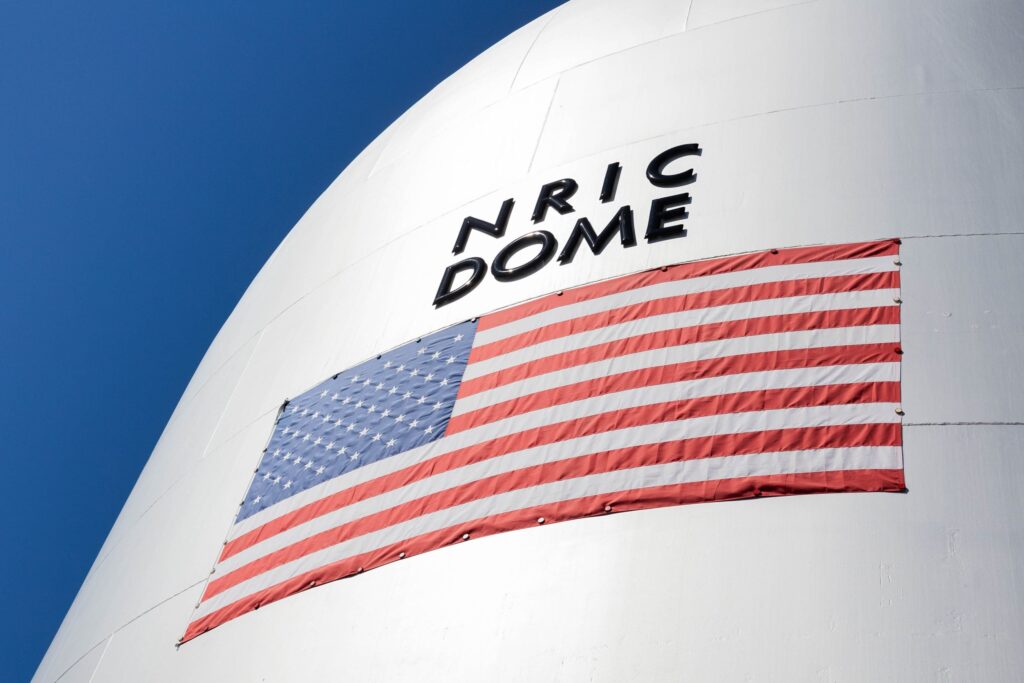
Radiant Nuclear is also approaching fueled testing at INL. Radiant took possession of INL’s Demonstration of Microreactor Experiments (DOME) facility—the repurposed Experimental Breeder Reactor-II containment structure, capable of handling up to 20 MWth—on April 1, 2026, for a one-year fueled test campaign. DOE approved Radiant’s Demonstration Authorization Request for Kaleidos (DARK), the second of three safety submittals in DOE’s authorization pathway and designed to meet the intent of a preliminary documented safety analysis, in February 2026, which Radiant described as the first full-power test approval granted under the program.
On July 1, Radiant said it had received its first tranche of tri-structural isotropic (TRISO) fuel at DOME, fabricated by Standard Nuclear in Oak Ridge, Tennessee, to Radiant’s specifications. The fuel will power Radiant’s Kaleidos reactor through a five-phase test program this summer, progressing through zero-power criticality, 1 MW thermal, full power, and full heat before at least 150 hours at full power without operator intervention. Radiant’s Kaleidos Demonstration Unit is a 1-MWe helium-cooled, TRISO-fueled high-temperature gas reactor packaged in a single shipping container, and the company says the campaign is intended to support manufacturing and customer delivery by 2028.
—Sonal C. Patel is a POWER senior editor (@sonalcpatel, @POWERmagazine).
Editor’s note: This story was updated July 8, 2026, to add Aalo Atomics’ criticality livestream, additional technical details about the CTR startup sequence, and more information on Aalo’s factory fabrication strategy.