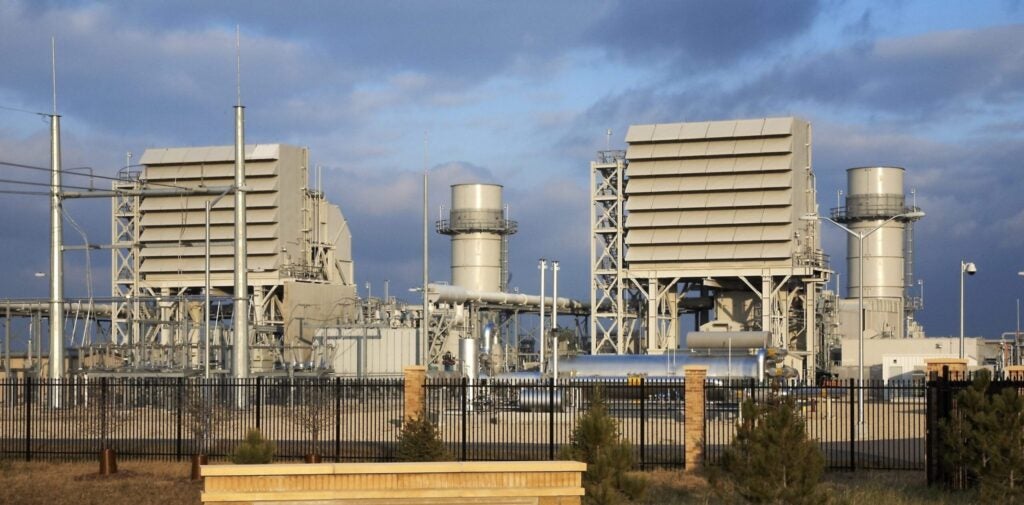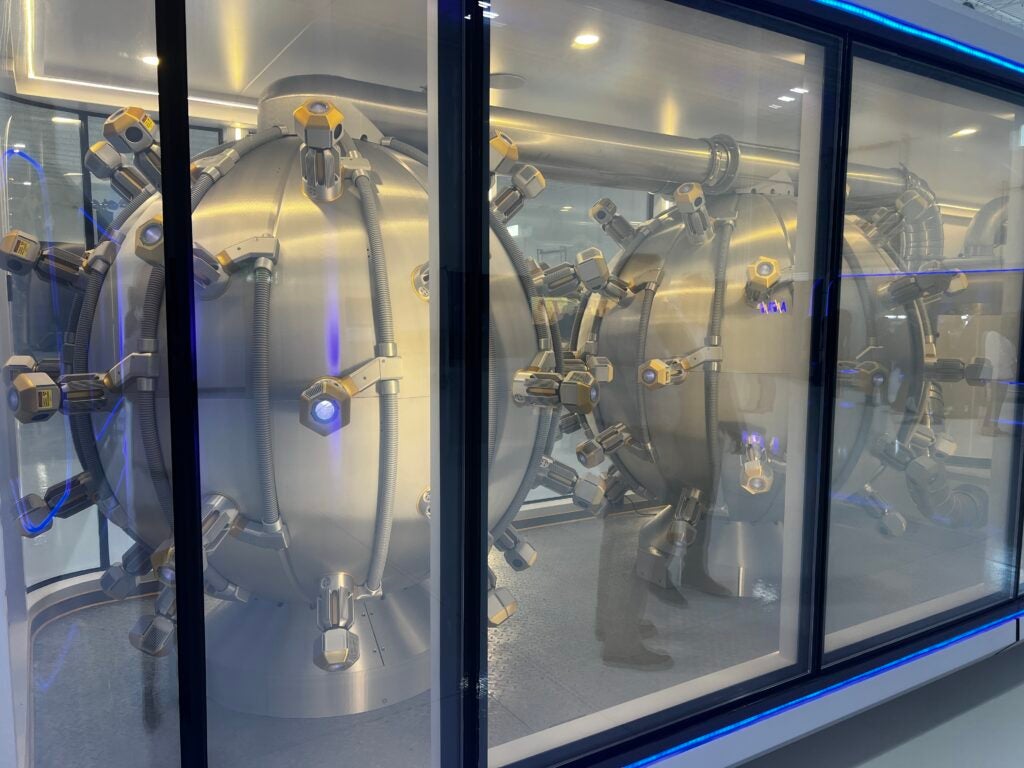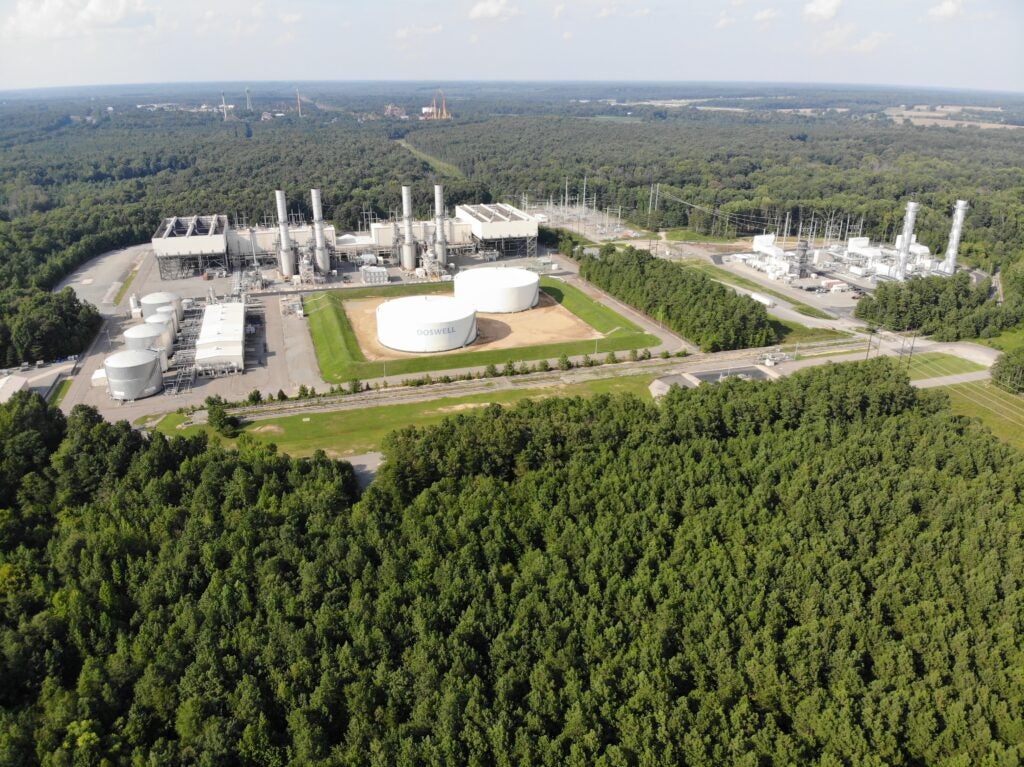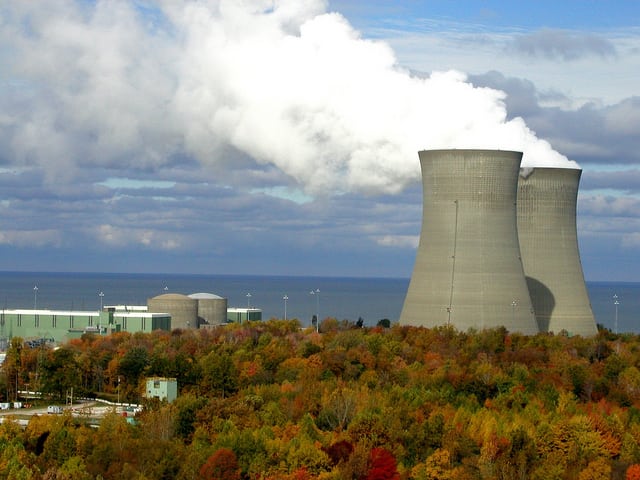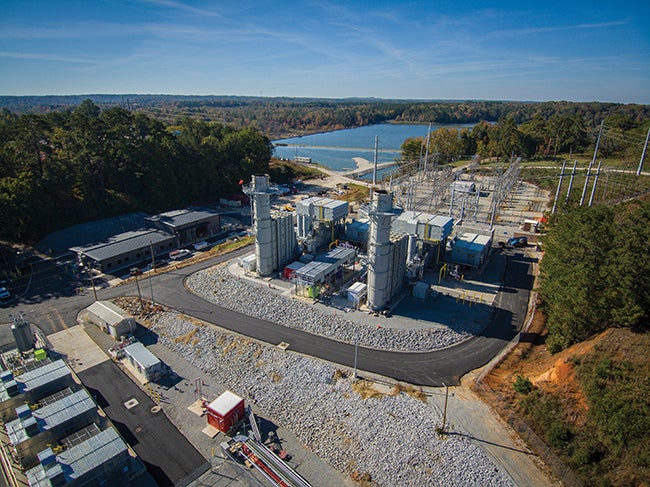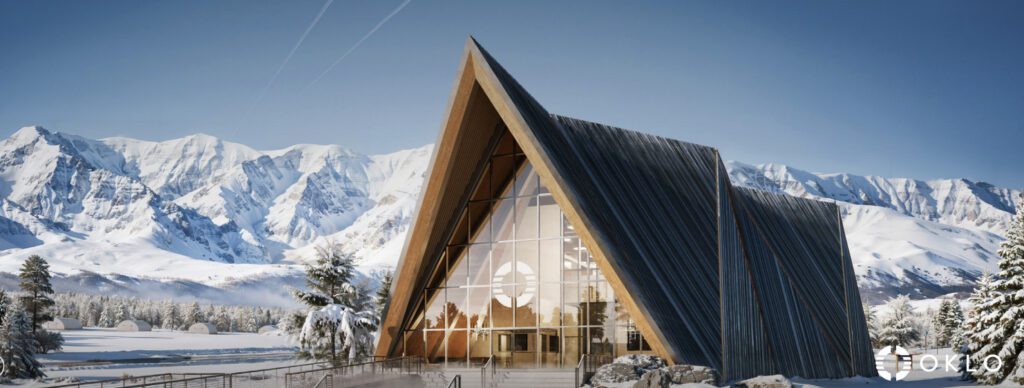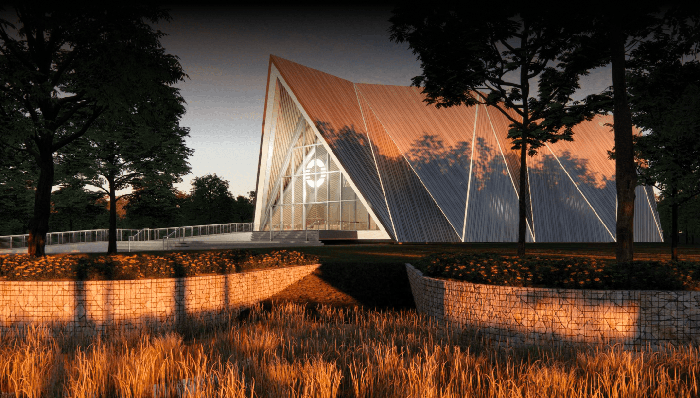
The steam turbine and generator package for Oklo’s first Aurora powerhouse at Idaho National Laboratory (INL)—a pioneering application of a commercially established industrial turbine platform at the heart of a first-of-a-kind advanced reactor’s conventional island—is in active production at Siemens Energy’s facilities in Görlitz and Erfurt, Germany.
In details provided to POWER, both companies confirmed the power conversion system is being manufactured in alignment with Oklo’s targeted 2028 startup, closing out all major long-lead equipment contracts for the 75-MWe sodium-cooled fast reactor and establishing the basis for a repeatable power-conversion configuration beyond the first unit.
The milestone follows a binding contract the two companies signed in November 2025, under which Siemens Energy committed to deliver a condensing SST-600 steam turbine, an SGen-100A industrial generator, and associated auxiliary systems. The contract authorized Siemens Energy to begin engineering and design work to expedite procurement of long-lead components and initiate the manufacturing process, effectively converting a preferred-supplier memorandum of understanding POWER first reported in December 2023.
Both companies told POWER the configuration is designed to be adapted with limited site-specific changes for future Aurora deployments.
The contract signals a broader boost for advanced nuclear as first movers race from reactor design and licensing ambition into procurement, supplier integration, and disciplined project execution. As several companies—including Kairos Power in Oak Ridge and TerraPower in Wyoming—enter active construction, industry has told POWER that execution demands credibility on procurement, a feasible path to de-risking first-of-a-kind deployment through proven industrial equipment, repeatability for scale, and the delivery discipline of established suppliers.
“Having all major long-lead equipment under vendor contract at this stage signals that Aurora-INL is moving beyond concept and into disciplined execution,” Paul Day, an Oklo spokesperson, told POWER in April. “The Siemens Energy power conversion contract fits that broader picture by helping enable the use of proven, off-the-shelf industrial components where appropriate, rather than relying solely on bespoke nuclear-grade equipment,” Day said. “That can help streamline procurement, reduce complexity, and support a more practical supply chain,” he said.
Aurora-INL Moves From Licensing Ambition to Site Execution
Siemens Energy’s power conversion system is one of three major procurement areas Oklo has been pursuing to bring Aurora-INL online. The plant is planned as a 75-MWe pool-type sodium-cooled fast reactor, whose reactor vessel will be sited below grade in a pool configuration. The design will use metallic high-assay, low-enriched uranium (HALEU) fuel, liquid sodium as its primary coolant, and passive decay heat removal through the reactor vessel auxiliary cooling system, with no pumps, valves, or operator intervention required. At full output, Aurora is designed to deliver dispatchable, zero-emissions baseload power on the continuous, high-capacity-factor basis that underpins Oklo’s commercial power sales agreements with data center and industrial customers.
Oklo has been working toward deploying the commercial fast reactor at INL since 2019, when the Department of Energy (DOE) issued the company a first-of-its-kind site use permit for a 40-acre parcel south of INL’s Materials and Fuels Complex, and INL awarded access to five metric tons of HALEU recovered from the decommissioned Experimental Breeder Reactor-II, the sodium-cooled fast reactor that operated at the same Idaho site from 1964 to 1994.
After submitting the first-ever combined license application for an advanced non-light-water reactor to the Nuclear Regulatory Commission (NRC) in March 2020—accepted for review in June 2020 but dismissed without prejudice in January 2022 for information gaps—Oklo relaunched its licensing effort and turned to a parallel DOE authorization pathway that would prove decisive.
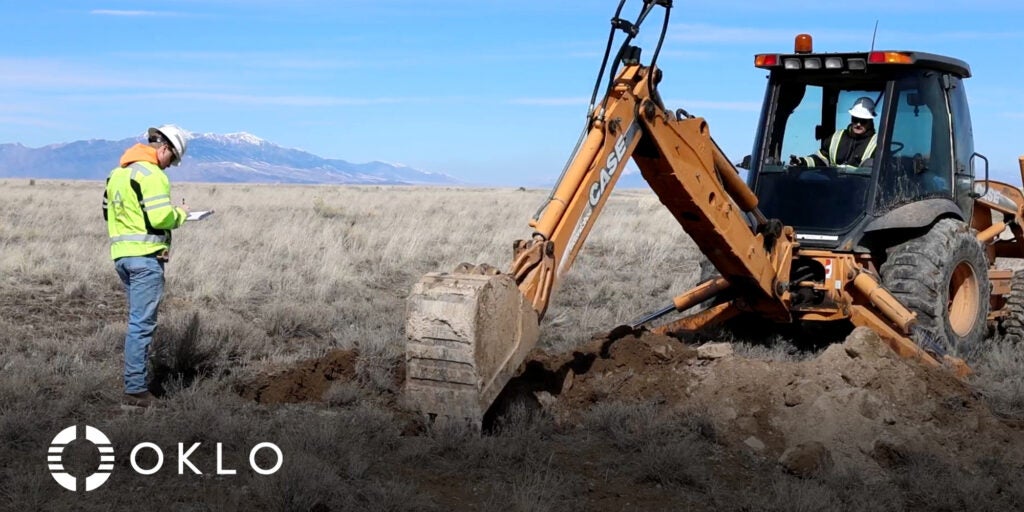
Site work accelerated through 2024 and into 2025. Oklo completed a memorandum of agreement with DOE’s Idaho Operations Office in September 2024, finalized an interface agreement with INL in March 2025 establishing environmental and geotechnical protocols developed in coordination with the Shoshone Bannock Tribes, and finished borehole drilling for site characterization in May 2025.
In July 2025, Oklo marked its first supply chain milestone, selecting Kiewit Nuclear Solutions as lead constructor under a master services agreement covering the full design, procurement, and construction scope. At the time, Oklo noted that roughly 70% of the powerhouse’s components draw from non-nuclear industrial supply chains. That same month, the NRC completed Phase 1 of its pre-application readiness assessment for the Aurora-INL combined license application, finding no significant gaps.
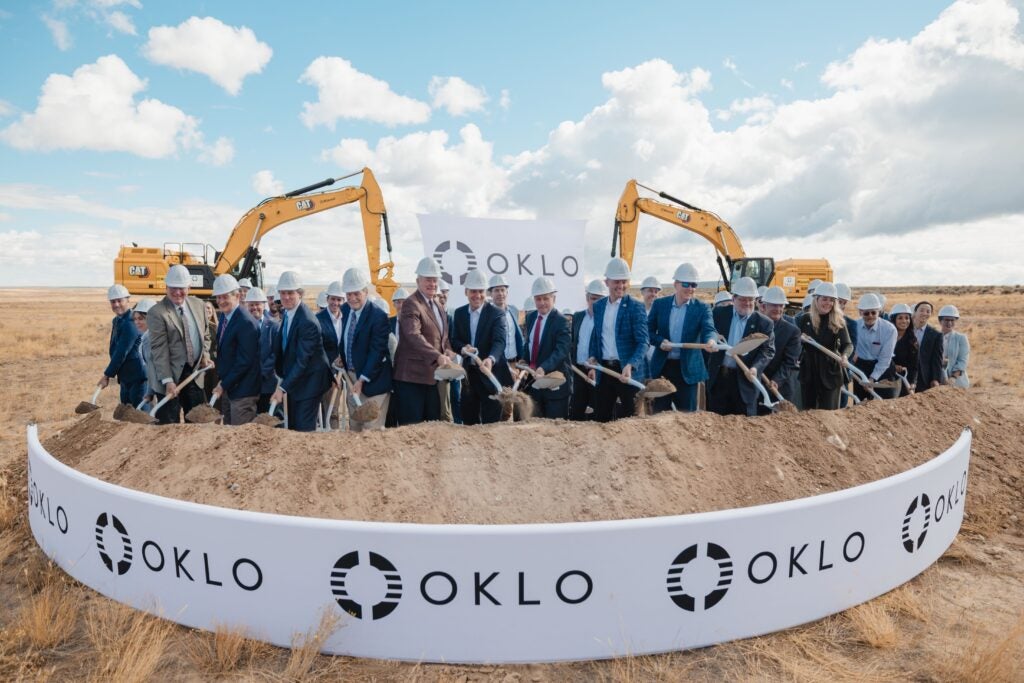
Oklo formally broke ground on Aurora-INL on Sept. 22, 2025, marking the first private-sector fast-reactor construction at a U.S. national laboratory under the DOE’s Reactor Pilot Program, which seeks to demonstrate criticality in at least three advanced-reactor concepts outside national labs by July 4, 2026. In November 2025, Oklo and Siemens Energy signed a binding contract for the power conversion system—a condensing SST-600 steam turbine, SGen-100A generator, and auxiliaries—one of the project’s major long-lead procurements.
From the DOE authorization side, the Idaho Operations Office signed an Other Transaction Agreement and approved the Nuclear Safety Design Agreement in March 2026—the first formal step under DOE’s Reactor Pilot Program authorization pathway. The NRC then approved Oklo’s Principal Design Criteria topical report for the Aurora powerhouse in May 2026, which, DeWitte said, “clears the path for the report to be referenced in future applications, reducing the need to re-review established material.” DeWitte also noted field crews had transitioned to deep-foundation excavation, while long-lead procurement was advancing across major systems.
On June 11, DOE approved the Preliminary Documented Safety Analysis for Aurora-INL—the third of four major authorization steps before operations—which represents a detailed review of the project’s hazard and accident analyses, safety controls, and design commitments. Approval of the Documented Safety Analysis, a readiness review, and startup approval remain ahead. Oklo has not yet filed a combined license application under the NRC’s framework. As DeWitte noted at the time of the OTA signing, Oklo is using “DOE’s pathway for the Aurora-INL” while “continuing progressing our engagement for future commercial licensing by the U.S. Nuclear Regulatory Commission.” For now, Oklo is targeting 2028 for first operations, contingent on regulatory approvals and construction progress.
The SST-600 and the Conventional Island: Industrial Technology Meets Advanced Nuclear
For Siemens Energy, the Aurora-INL contract marks a deeper recalibration—bringing its established industrial turbine technology into an emerging class of advanced reactors whose conventional islands, by design, fall outside the nuclear safety boundary and within the reach of proven commercial equipment.
Long before Siemens AG spun off its gas and power business in 2020 to form Siemens Energy, Siemens AG was a full-range nuclear power generation supplier. Its 1969-founded Kraftwerk Union subsidiary built Germany’s 17 nuclear power plants and supplied reactors to Argentina, Austria, and Brazil before being reintegrated into Siemens in 1987. In 2001, Siemens merged its nuclear activities with Framatome to form what became AREVA, but it sold its 34% stake in 2009. Two years later, influenced partly by the post-Fukushima nuclear downturn, Siemens AG withdrew entirely from nuclear plant construction and financing.
The retained business—now housed within Siemens Energy—centers on steam turbines, generators, instrumentation and controls, and balance-of-plant systems that convert reactor-produced steam into electric output. Its turbine-generator portfolio spans 2 MW to 1,900 MW, covering both small modular reactors and large conventional plants. Backed by more than 60 years of nuclear experience, the company counts over 60,000 steam turbines in service worldwide and 114 GW of installed capacity in nuclear applications.
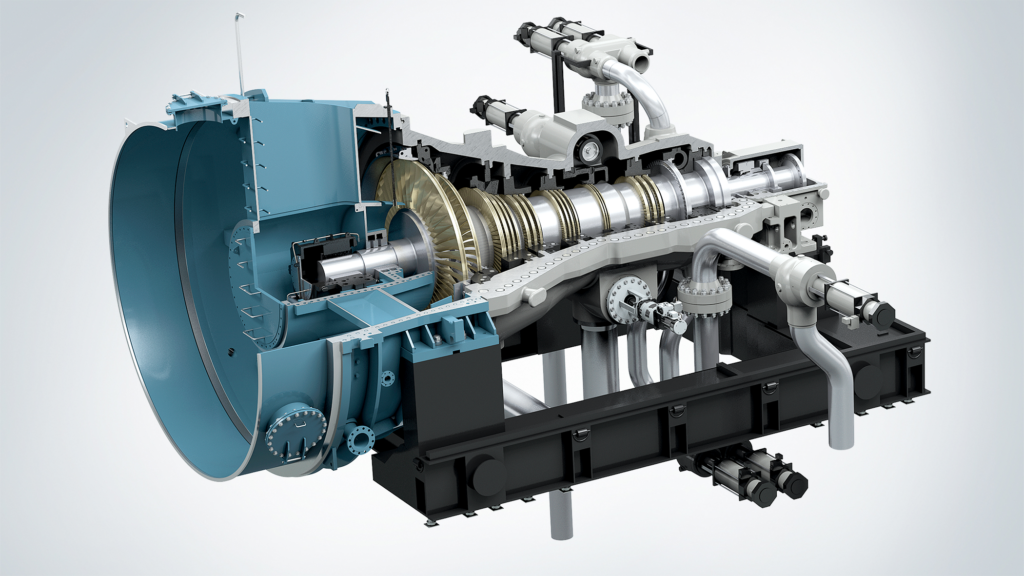
At Aurora-INL, Siemens Energy’s scope begins at the steam generator interface, where the sodium-to-steam secondary loop defines the boundary conditions for the power conversion system. For the configuration, Siemens Energy selected a condensing SST-600 steam turbine paired with an SGen-100A industrial generator, along with associated auxiliary systems. “The SST-600 is one of our most widely deployed turbine types and reflects our broader approach of bringing proven industrial technology into new applications in a way that supports execution confidence from the outset,” the company told POWER.
The primary engineering criteria, Siemens Energy noted, were “the project’s specific steam parameters, the overall thermal conditions and the broader requirements of the site’s steam cycle.” Once those conditions are matched to the SST-600 design envelope, Siemens Energy said, “this creates the basis for a modular and repeatable turbine-generator configuration aligned with Oklo’s requirements.”
However, configuring the package to a sodium-cooled fast reactor did not require departing from standard industrial practice. “The sodium-to-steam secondary loop defines the relevant boundary conditions for the turbine package,” it noted. “This is well within Siemens Energy’s normal industrial engineering practice. The focus is on aligning the turbine package with the required pressure, temperature, flow, and interface conditions while maintaining the reliability of a proven industrial platform.”
Siemens Energy also noted that early engagement between the two companies allowed both teams to align on steam-cycle layout, space constraints, and key mechanical interfaces. That work “helps reduce execution risk for the first unit and also creates a stronger basis for repeatable deployment in the future, with limited site-specific adaptation where required,” it said.
“Projects such as Oklo’s Aurora powerhouse demonstrate that advanced reactor concepts are moving from vision toward implementation, and that the market is increasingly focused not only on technical feasibility and licensing, but also on commercialization, delivery and scale,” Siemens Energy told POWER.
For Oklo, meanwhile, the partnership structure reflects a deliberate departure from how nuclear procurement has traditionally worked. Rather than treating the turbine vendor as a hardware supplier, Oklo suggested it structured the relationship as a design collaboration that runs from project kickoff through the facility’s operating life. “Our unique Siemens Energy partnership is enabled by Oklo’s business model. It goes beyond purchasing equipment into how both parties can work together to create a better product that benefits both companies,” Day told POWER. “Siemens Energy and Oklo collaborate on details from system configuration to hardware selection to find the optimal design taking into account cost, maintenance, and equipment commonality across facilities.” In addition, “Siemens Energy is committed to supporting Oklo throughout the life of the equipment, including service and maintenance, backed by their expertise and data from their existing installed fleet,” he said.
“This isn’t about showing that the reactor can go critical and produce heat,” Day noted. “It’s about producing power that can be sold commercially to the grid. Oklo sells power, not reactor designs. A key part in the process is the steam turbine, which converts the heat from the reactor into electricity.”
Beyond Idaho: The Repeatability Argument
Both Siemens Energy and Oklo stressed repeatability as a key priority. While Aurora-INL is a commercial project, Oklo is simultaneously advancing a 1.2-GW Aurora fast-reactor campus in Pike County, Ohio, where the company has purchased 206 acres and signed a January 2026 agreement with Meta structured to provide funding to advance fuel procurement and Phase 1 site development. As of April 27, it had submitted PJM interconnection applications while continuing with permitting, site readiness, and stakeholder work. The first phase is targeted as early as 2030, and the full campus is slated to scale to 1.2 GW by 2034.
The company is also advancing an Aurora powerhouse at Eielson Air Force Base in Alaska under a 30-year firm-fixed-price power purchase agreement to deliver electricity and heat. Site characterization is underway, and the project is designed to integrate at least 5 MW of electric output into existing base energy infrastructure. Its customer pipeline also includes a deal with Las Vegas-based data center designer, builder, and operator Switch to deploy 12 GW of Aurora powerhouses through 2044. The historic deal was hailed as “one of the largest corporate clean power agreements ever signed.”
On the fuel front, Oklo on June 18 announced a letter of intent with Centrus to supply enough domestic HALEU from Centrus’ American Centrifuge Plant in Pike County to power up to five Aurora powerhouses for multiple years. The effort, which targets deliveries beginning in 2029, is the latest in a fuel supply relationship that began with an August 2023 MOU and progressed through a March 2026 planned joint venture to advance nuclear fuel services in Ohio. The June 18 release also disclosed an MOU with Kiewit Nuclear Solutions to support engineering, procurement, and construction planning for the initial planned Aurora deployments in southern Ohio.
In tandem, Oklo is pursuing multiple domestic fuel pathways. At INL, the Aurora Fuel Fabrication Facility—which will fabricate fuel assemblies for Aurora-INL—has received DOE approval for its Nuclear Safety Design Agreement, Preliminary Documented Safety Analysis, and conceptual design, though full facility design completion and final DOE approval are required before construction can begin. In Tennessee, Oklo is developing a privately funded used nuclear fuel recycling facility in Oak Ridge as the first phase of an up to $1.68 billion Advanced Fuel Center, where the company completed NRC pre-application engagement in March 2026.
For the longer term, Oklo is advancing a plutonium bridge-fuel strategy—including fast-spectrum criticality experiments at Los Alamos—and in May 2026 was selected by DOE for advanced negotiations under the Surplus Plutonium Utilization Program alongside four other advanced nuclear companies. “Fuel availability is one of the most important gating items for advanced nuclear deployment,” DeWitte said on the Q1 2026 earnings call. “We are securing multiple fuel pathways.”
All of it is premised on the Aurora design moving beyond a single unit and into “deployable, repeatable projects” at scale, as Oklo has said. Siemens Energy has echoed that point. “The contract positions Siemens Energy and Oklo to replicate the design with limited site-specific adjustments, enabling faster deployment and more efficient support for future projects,” it told POWER.
“Long-term value in this sector will not come from a single successful unit alone, but from the ability to move toward a more repeatable and scalable deployment model.”
—Sonal C. Patel is a POWER senior editor (@sonalcpatel, @POWERmagazine).
- Siemens Energy
- advanced nuclear
- department of energy
- nuclear construction
- Centrus Energy
- small modular reactors
- power conversion systems
- steam turbines
- Nuclear Supply Chain
- Reactor Pilot Program
- Kiewit Nuclear Solutions
- nuclear licensing
- Oklo
- sodium-cooled fast reactor
- HALEU
- Nuclear Regulatory Commission
- Idaho National Laboratory
- nuclear fuel