 |
GE Vernova modernized four hydro units at the plant that supplies roughly 40% of Kyrgyzstan’s electricity—without ever taking the plant fully offline. The project is a POWER Top Plant award finalist.
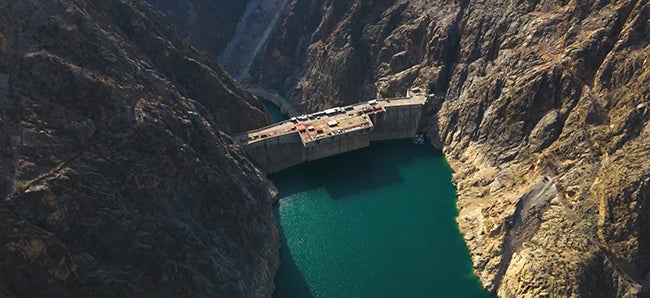
When a single power station carries about 40% of a country’s electricity, the conventional rehabilitation playbook—drain the plant, gut it, rebuild it, bring it back—is off the table. There is no spare grid to lean on while the work gets done. That was the constraint GE Vernova accepted when it took on the full rehabilitation of the Toktogul Hydroelectric Power Plant in Kyrgyzstan, a five-year campaign completed in 2025 that replaced the plant’s aging Soviet-era machinery, one unit at a time, while the rest of the station kept the lights on through a succession of Central Asian winters.
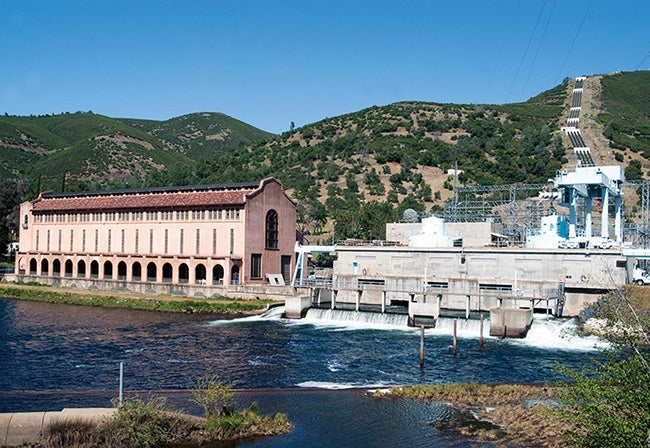
Commissioned in 1975 on the Naryn River, Toktogul has anchored Kyrgyzstan’s power system since before the country’s independence. By the time modernization began, its four Francis units had run for roughly half a century without a full rehabilitation. The project that GE Vernova executed for owner Open Joint-Stock Company (OJSC) Electric Power Plants lifted the station’s total capacity from 1,200 MW to 1,440 MW, added the equivalent of about 6% to national capacity, and—by the contractor’s account—positioned the plant to run for at least another three decades. More than that, it offered a working template for the broader problem facing the region: a fleet of aging Soviet-era hydro plants that all need the same kind of attention, and that mostly cannot afford to go dark to get it.
A Capacity Bump That Was Really a Rebuild
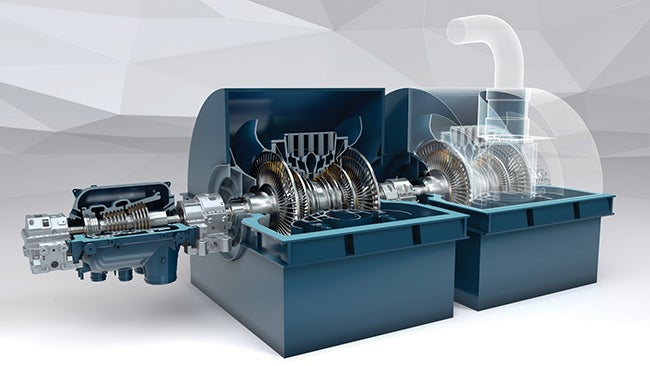
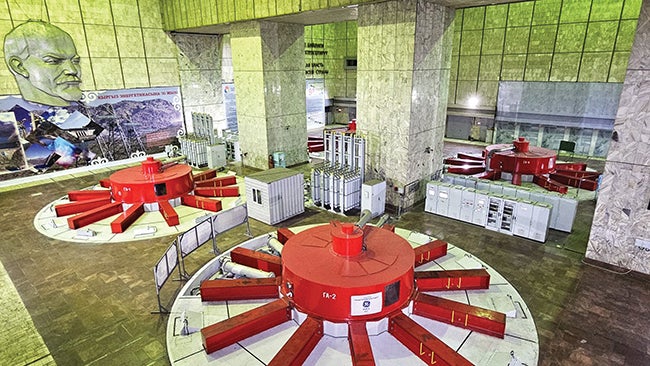
The headline number is a per-unit increase from 300 MW to 360 MW across all four machines. According to Sergey Sakhovskiy, project director for GE Vernova, the gain came not from any single component swap but from a combined modernization of the turbine and generator systems. The project team installed new Francis runners and hydraulic passage components, completed generator stator and rotor work, upgraded governors and control systems, and modernized excitation and protection systems, all backed by refurbishment of embedded and auxiliary equipment. The original 300-MW units were rebuilt to 360 MW with a corresponding improvement in efficiency, and the performance guarantees, Sakhovskiy said, point to higher guaranteed turbine output and strong generator efficiency at rated head (Figure 1).
 |
|
1. GE Vernova rebuilt all four Francis units from 300 MW to 360 MW apiece, lifting Toktogul’s total capacity to 1,440 MW. Courtesy: GE Vernovas |
The embedded civil and hydraulic structures—the spiral cases, draft tubes, and the like—were largely refurbished rather than replaced. After decades of high-duty service, the units showed the expected consequences of age: wear, corrosion, cracking, and erosion across some civil and hydraulic elements, along with the obsolescence and declining availability that come with half-century-old equipment. Rather than rip out sound structures, the team repaired leakages, cracks, and erosion in the draft-tube area, and preserved the embedded works where they remained serviceable, concentrating wholesale replacement on the rotating and electrical equipment that had reached the end of its useful life.
In This Issue
Full issueThe operational payoff extended beyond nameplate capacity. Sakhovskiy noted that the rehabilitation was designed to improve performance across Toktogul’s wide head range—a meaningful consideration for a plant drawing on a large reservoir with pronounced seasonal swings. The units, originally rated for a net head of roughly 140 meters, needed to perform across a broad band of operating conditions. The modernization improved efficiency at the rated point, reduced cavitation risk and improved behavior at off-design conditions, and widened the usable operating range across head variations, giving operators more flexibility for seasonal dispatch and reservoir management.
Four Units, One Rule: Never Go Dark
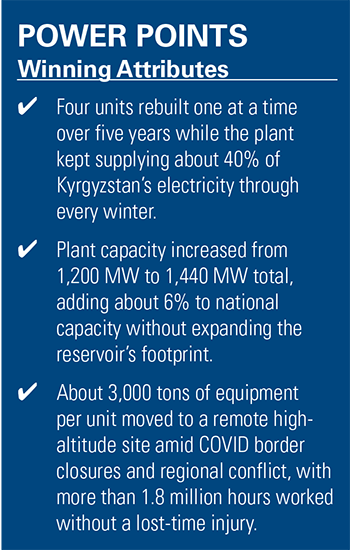
The defining engineering decision at Toktogul was not metallurgical but logistical—how to sequence the work so the plant never stopped carrying its share of national load. The answer was a strict one-unit-at-a-time discipline. The units were rehabilitated in the order U4, U2, U1, and U3, with each machine taken out for an outage window of roughly eight months while the remaining three stayed in service.
That sequencing is the heart of the Toktogul story. Because the plant accounts for so much of Kyrgyzstan’s annual electricity production, a full-shutdown rehabilitation was never an option; the station had to keep generating from three units while the fourth was opened up, then hand the rebuilt unit back and move on. The outages were timed to protect winter generation, when the country leans on Toktogul most heavily, with the heavy construction concentrated in a window that ran from spring into late autumn before the units returned to service for the cold months.
Three Thousand Tons, One Hundred Twenty Trucks, One Mountain Road
Toktogul sits in mountainous, landlocked terrain, and moving the new machinery to site was, by Sakhovskiy’s account, one of the project’s defining challenges. Each unit involved roughly 3,000 tons of equipment and about 120 truckloads. The heavy electro-mechanical components moved through a multimodal chain—ocean shipping, port handling, road transport, border crossings, and a final climb up steep mountain roads to the site.
The hardest stretches, Sakhovskiy said, were rarely the open ocean or the main overland corridors. They were the borders and the final high-altitude approach: customs and clearance bottlenecks compounded by steep, weather-exposed roads. The China–Kyrgyzstan border became a particular choke point during COVID-related disruptions, with material stranded for months at a time, and the team repeatedly rerouted cargo through alternative corridors when port or geopolitical constraints closed the original paths.
Weather and geography shaped the calendar as much as the cargo did. Snow, ice, and severe winter conditions constrain transport and site access for much of the year, which is part of why the project was organized around annual unit outages and a spring-to-autumn construction window. The supply chain itself was deliberately distributed—drawing on GE Vernova engineering and manufacturing centers, and suppliers across Europe, China, India, Brazil, Switzerland, and Turkey, alongside local operations in Kyrgyzstan—a spread that helped manage capability, lead time, and risk even as it added complexity to the logistics.
Few major infrastructure projects run their full course without disruption, but Toktogul absorbed an unusual concentration of it. COVID-19 hit transportation, border movements, manufacturing schedules, and site logistics directly. The project records, Sakhovskiy noted, document border blockages, delayed shipments, components stranded and sometimes damaged in transit, and transportation cost inflation, with critical items held at borders and requiring additional inspection or corrective work once they finally arrived.
Layered on top were political and regional pressures. Kyrgyzstan’s 2020 political transition, together with broader regional instability, added administrative complexity, slowed approvals, and raised the premium on continuous stakeholder coordination. A regional conflict on the Kyrgyz–Tajik border further disrupted logistics and complicated workforce mobility and site coordination. For stretches of the project, routine staff rotation became impossible. Sakhovskiy was candid that the work tested the team on logistics, quality, and geopolitics in roughly equal measure.
Through it all, the team reworked its logistics and execution plan as conditions shifted and sustained a strong safety record: more than 1.8 million hours without a lost-time injury, according to GE Vernova—evidence, the company says, that the discipline held even when conditions did not.
Handing Over More Than Hardware
A rehabilitation of this kind is only worth its cost if the owner can run what it inherits. Toktogul’s scope included a formal training and knowledge-transfer element, and the modernized plant introduced new control, monitoring, protection, excitation, and station supervisory control and data acquisition (SCADA) systems in place of the original Soviet-era equipment. The blended delivery model put GE Vernova in charge of engineering, procurement, installation supervision, commissioning, and project management; OJSC Electric Power Plants in the owner’s seat; and local subcontractors and labor at the center of site execution, erection, and logistics. At peak, more than 200 specialists worked the site across two shifts.
 The practical result, Sakhovskiy said, is a Kyrgyz operating staff equipped to run, diagnose, and maintain the station with modern digital tools rather than Soviet-era hardware—and, in his framing, a project that transferred the knowledge to own the plant, not just the equipment to replace it.
What 6% Buys a Small Country
For Kyrgyzstan, the added capacity registers first as energy security. Because Toktogul supplies such a large share of the national grid, the extra output helps shore up reliability through the high-demand winter season. GE Vernova estimates the modernization can supply roughly 200,000 additional households. Beyond the immediate margin, the company sees room for the upgrade to support industrial growth, ease reliance on emergency measures, and—when hydrology allows surplus generation—open seasonal export opportunities to neighbors.
The water question runs underneath all of it. Toktogul is as much a water-management asset as a power plant, and its outage windows have always been shaped by the need to balance generation against reservoir management in a region where water is a charged subject. The modernization does not change that role, Sakhovskiy said; it changes how much electricity the same volume of water can produce. With glacier-fed flows into Central Asian rivers under long-term pressure, that efficiency gain is as much a resilience measure as a capacity upgrade.
The financing reflected the scale of the undertaking: a multi-source, phased structure backed by the Asian Development Bank and the Eurasian Fund for Stabilization and Development, with arrangements staged by phase and lot—a blended public-finance model typical of major infrastructure rehabilitation in the region.
Which is finally why Toktogul matters beyond its own switchyard. Across Central Asia, a generation of Soviet-era hydro plants is approaching the same reckoning Toktogul just passed through, and most of them are too important to their grids to switch off for the duration. Toktogul demonstrates that the work can be done the hard way—unit by unit, through closed borders, bad weather, and shifting politics—and still extend a critical plant’s life by decades while the country it serves keeps the lights on. For the next plant in line, that is the more valuable export.
—Aaron Larson is POWER’s executive editor.