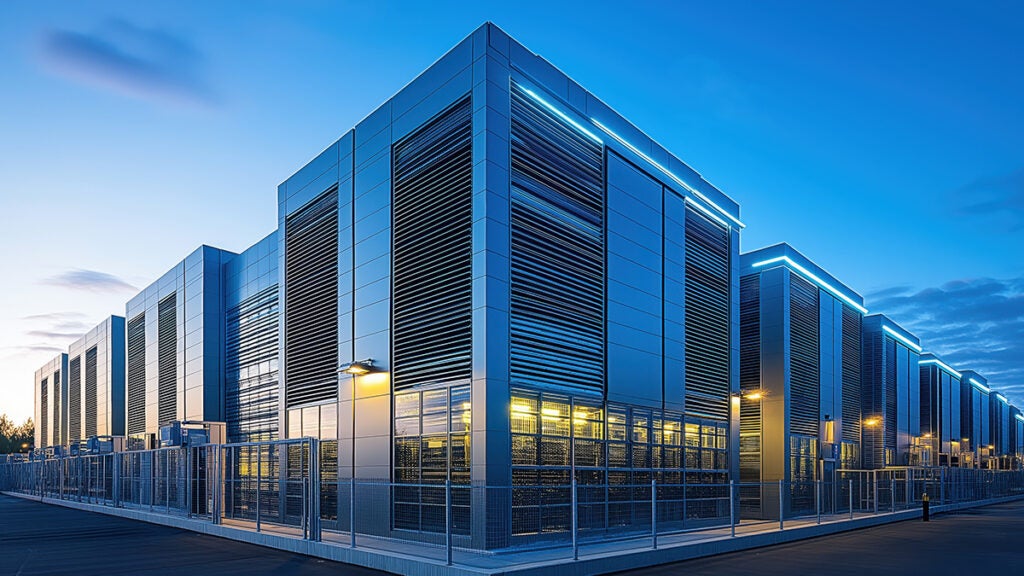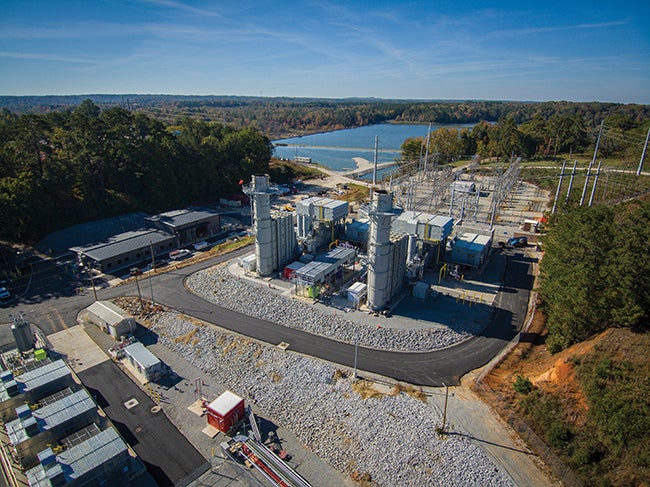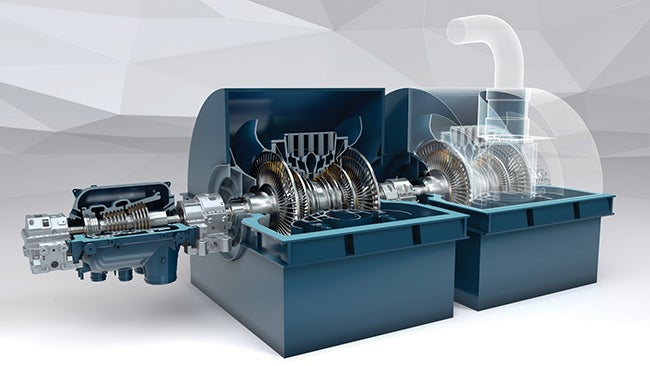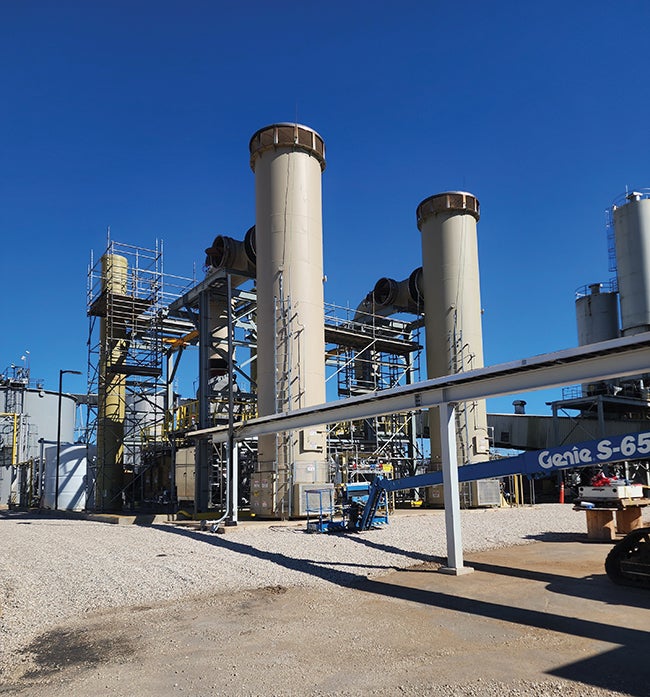
Data center developers have mastered server density and cooling, but power interconnection remains stubbornly slow. Modular substations built in factories rather than fields are emerging as the most practical tool for closing the gap between construction schedules and grid readiness.
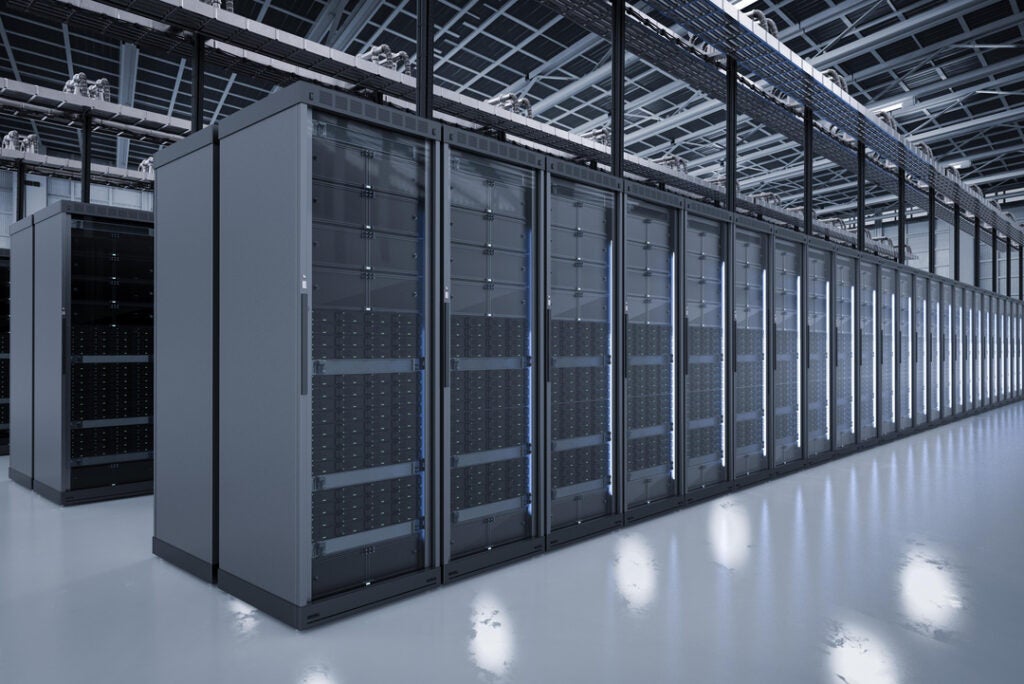
Artificial intelligence (AI) is rapidly reshaping the scale and behavior of data center electricity demand. AI training and inference clusters introduce highly concentrated, nonlinear, and fast ramping loads that challenge long-standing grid planning assumptions. High-density graphics processing unit (GPU) deployments now push rack level power into ranges once rare outside industrial environments, while aggregate site demand for large campuses reaches hundreds of megawatts. Recent industry assessments show that AI-driven data center growth is a significant driver of power infrastructure demand in the U.S.
This surge exposes structural limits across existing power infrastructure. In many regions, the most significant constraint is interconnection capacity and substation readiness. Transmission upgrades, fault-duty constraints, and substation permitting cycles increasingly dictate deployment schedules. Utility interconnection queues now stretch beyond traditional project timelines, creating uncertainty for data center developers attempting to align power energization with construction and information technology (IT) commissioning schedules.
Reliability expectations for data centers remain uncompromising. AI workloads tolerate neither prolonged outages nor power quality disturbances, and backup strategies are no substitute for robust primary infrastructure. This reality places substations at the center of the AI infrastructure challenge. To keep pace with exponential digital growth, it is imperative that substation design, delivery, and operation evolve as rapidly as the data centers they serve.
Modular and Digital Substations Enable Faster, More Reliable Deployment
Modular substation architecture has emerged as one of the most effective responses to these challenges. By shifting much of the construction, integration, and testing effort from the field to controlled factory environments, prefabricated and skid-mounted substations significantly compress project timelines. E-houses and containerized solutions reduce the need for extensive onsite civil works, equipment installation, and field wiring, allowing substation fabrication to proceed in parallel with data hall construction. Utilities use digital and modular substations as practical tools to improve flexibility and reliability in high-growth load corridors.
This approach is particularly valuable for hyperscale and multi-phase developments, where schedule risk translates into lost revenue opportunities. Factory assembly and pre-commissioning facilitate early validation of protection schemes, control logic, and system interfaces, minimizing late-stage design changes and reducing field rework during commissioning. Standardized modular medium-voltage (MV) platforms are also familiar to utilities and authorities with jurisdiction, which can streamline technical reviews and support an earlier design freeze for repeated data center configurations.

In This Issue
Full issueBeyond schedule acceleration, modular MV substations enhance operational reliability and system flexibility. Modern MV designs commonly employ dual-feed or ring-bus arrangements to support redundancy and fault isolation without interrupting critical loads. These configurations align with Tier III and Tier IV reliability objectives.
Digitalization further strengthens the role of MV substations in mission-critical environments. International Electrotechnical Commission (IEC) 61850-based architecture replaces extensive hard-wired copper interfaces with fiber-optic communications, enabling high-speed protection signaling, improved selectivity, and faster fault isolation. Digital substations also enable real-time condition monitoring of MV switchgear, transformers, and auxiliary systems, providing early visibility into abnormal operating conditions and supporting predictive maintenance strategies.
Redundant communication networks, direct-current (DC) power supplies, and automation layers support rapid fault localization and service restoration. Modular and digital MV substations provide a combination of speed, resilience, and operational flexibility that aligns with the evolving reliability expectations of modern data center operators.
Cost, Grid Alignment, and the Strategic Role of Substations
At scale, schedule certainty, lifecycle predictability, and reduced risk largely drive the economic case for modular and digital substations. Modular substations often deliver meaningful overall cost advantages through reduced site labor, fewer weather-related delays, and shorter commissioning durations. For large AI-driven campuses, compressed energization timelines enable earlier IT deployment and revenue generation. Factory-built assemblies also improve quality consistency, reducing wiring defects, commissioning errors, and downstream maintenance effort. Standardized documentation and repeatable designs lower lifecycle risk and support more predictable long-term operations. Regarding total cost of ownership, modular approaches often outperform conventional site-built substations, despite similar initial capital outlays.
Early and structured utility engagement is equally important. AI-driven load profiles introduce dynamics that differ substantially from traditional commercial or industrial demand, making early alignment on transformer sizing, protection schemes, grounding design, and fault-duty assumptions essential. Sharing dynamic load characteristics and protection models during concept phases can streamline interconnection studies and reduce late-stage design revisions that delay energization.
Together, these trends redefine the role of substations. Substations increasingly act as strategic enablers that determine the speed, reliability, and scalability of AI deployment. As digital infrastructure accelerates toward gigawatt-class campuses, the pace of innovation will depend not only on compute technology but also on how effectively power infrastructure is planned, approved, and deployed.
Modular, standard-aligned, and digitally enabled substations offer a practical path forward. By recognizing substations as active system assets rather than passive infrastructure, the power industry can support AI’s growth while safeguarding grid stability and long-term resilience.
—Suresh Subramanian (sureshsubramanianleus@ieee.org) is a power grid integration specialist and senior member of IEEE with more than 20 years of experience spanning high-voltage direct-current (HVDC), flexible alternating-current transmission systems (FACTS), and substation infrastructure.