
The U.S. Department of Energy has closed a loan of up to $3.26 billion to AEP Texas to finance a portfolio of nearly 100 transmission projects, the agency’s Office of Energy Dominance Financing (EDF) said on July 8.
The financing will fund the rebuilding, reconductoring, and new construction of roughly 2,800 miles of transmission lines across south and west Texas, AEP said. The AEP subsidiary, which serves more than 1 million customers in the deregulated retail market in Texas, also said the loan will support growth “in one of the nation’s fastest growing regions.” AEP Texas “has signed letters of agreement (LOAs) supporting up to 41 GW of potential new load additions through 2030,” it noted.
According to the DOE, by expanding transmission capacity, the projects are expected to help meet rapidly growing electricity demand from data centers, advanced manufacturing, and oil and natural gas development in the Permian Basin. “These projects will double the power-carrying capacity of upgraded transmission infrastructure, reduce power interruptions, and connect new sources of reliable baseload generation to the grid,” it said.
“Texas is poised for incredible growth over the next five years. AEP Texas is committed to enabling this opportunity, while leveraging resources to deliver future savings for our customers,” said Adrian Rodriguez, president and chief operating officer of AEP Texas in a statement on Wednesday. “This loan supports critical updates to our transmission infrastructure to strengthen reliability, connect new load and generation resources and manage affordability.”
A Federal Financing Model
EDF is the federal government’s in-house lender for large energy projects, and the rebranded successor to the DOE Loan Programs Office (LPO). The office operates under statutory authorities granted by Congress through the Energy Policy Act of 2005. DOE says EDF “possesses all authorities, receives all appropriations, and performs all requirements assigned to LPO.”
The office took its current form when the 2025 budget reconciliation law—which the administration markets as the Working Families Tax Cuts Act and which is widely known as the One Big Beautiful Bill Act—was signed July 4, 2025. That statute replaced the Biden-era Energy Infrastructure Reinvestment program under Section 1706, dropped the requirement that projects reduce greenhouse gas emissions, and substituted eligibility tests centered on infrastructure that has ceased operating, existing infrastructure that can add capacity, or “known or forecastable” electricity supply that supports grid reliability.
While the mechanism does not serve as a subsidy in the conventional sense, EDF lends, or guarantees loans, at interest rates pegged to the U.S. Treasury curve plus a modest spread, below what a utility would pay in commercial debt markets, and the borrower repays the loan in full. For a regulated utility such as AEP Texas, the lower cost of capital is expected to flow through the ratemaking process to customers over time.
However, EDF is deploying that authority at a scale that dwarfs LPO’s historical activity. On the one-year anniversary of the law, the office reported more than $250 billion in available loan authority and said it had deployed $30 billion to utility companies, passing more than $8 billion in projected savings to customers, DOE said on July 2. The DOE says the effort, which aligns with President Trump’s Executive Order, Unleashing American Energy, “will modernize Texas’ electric grid, support the energy needed for AI, advanced manufacturing, the Permian Basin, and help keep electricity costs down for Texans.”
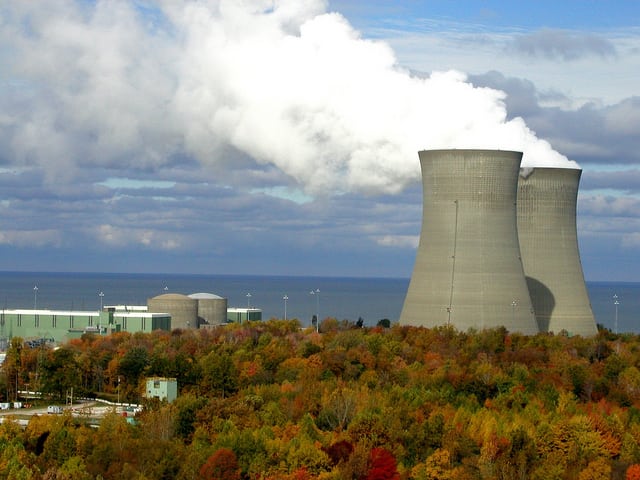
Since late 2025, the office closed three loans totaling $4.1 billion: a guarantee supporting Constellation Energy’s restart of the Crane Clean Energy Center in Pennsylvania—the former Three Mile Island Unit 1—an earlier loan to an AEP subsidiary for transmission reconductoring and line rebuilds, and financing for Wabash Valley Resources in Indiana to repurpose a coal plant for fertilizer production, as POWER reported.
On Feb. 25, 2026, it closed a $26.54 billion loan package with Southern Co. subsidiaries Georgia Power and Alabama Power—$22.4 billion to Georgia Power and about $4.1 billion to Alabama Power—the largest single loan commitment in DOE history. That package, carrying an approximately 30-year term and draws available through Sept. 15, 2033, supported more than 16 GW of firm generation and more than 1,300 miles of transmission and grid-enhancement work across the Southeast.
The new AEP Texas loan falls inside that $30 billion utility bucket, and its projected savings add to that $8 billion cumulative total. DOE estimated Wednesday that the AEP Texas loan will save more than one million Texas households and businesses approximately $685 million over the next 30 years. That figure represents a projected interest saving over three decades, not an immediate rate cut, and it will depend on the utility borrowing against the loan and completing the underlying projects.
AEP’s Loan Part of a Broader Strategy
According to AEP Texas, the loan is “part of AEP’s broader strategy across its 11-state service territory to secure federal funding to reduce customer costs while supporting growth and investing in reliability and resiliency.” The company’s corporate parent, AEP, noted that approach on its first-quarter earnings call in May, when it reported closing a separate $1.6 billion DOE transmission loan guarantee projected to deliver more than $275 million in customer savings and said it had applied for additional DOE loans to fund its generation and transmission investments.
AEP has moved to tap the federal financing as just one element of a broader affordability effort, executives noted. “We are also tapping federal tools to strengthen customer savings,” AEP Chairman, President, and CEO William Fehrman said on the May 5 call, adding that the company had also secured $315 million in generation and distribution grants. “These are meaningful dollars going right back to customers, which is just another example of how we are pairing growth with affordability,” he said.
The financing is poised to support a large capital program, executives said. AEP raised its five-year capital plan to $78 billion through 2030, with roughly $33 billion earmarked for transmission across its 11-state footprint, investor materials show.
The company has reported 63 GW of incremental contracted load expected by 2030, up from 56 GW a quarter earlier, of which nearly 90% is data centers, Fehrman said on the call. “Of the 63 GW, 53 GW are in Texas and Ohio requiring large-scale transmission projects, which we believe we excel at constructing and operating,” he said. Contracted load in the ERCOT region rose to 41 GW during the quarter, from 36 GW at the end of 2025, and accounted for the majority of the quarter’s load growth, CFO Trevor Mihalik said.
For AEP, the transmission expansion will remain crucial to affordability measures. The company is “forecasting up to $16 billion in cost offsets for existing customers” from the large-load contracts it has secured, Fehrman said, describing the figure as “a major affordability win for our existing customers.”
—Sonal Patel is a POWER senior editor (@sonalcpatel, @POWERmagazine).