The transition to sustainable energy infrastructure has been experiencing steady progress in recent years across the globe, while simultaneously undergoing constant fluctuation. Actual progress is influenced by a wide variety of factors, such as the drivers behind participants’ motivations and the technologies enabling the transition, as well as the status of supply chains and geopolitical relations. Any of these factors can suddenly shift and alter the speed of the energy transition at a moment’s notice, for better or worse.
To help organizations better comprehend the current state of the energy transition and plan their strategies for the coming years, Siemens released its Infrastructure Transition Monitor (ITM) for 2025. The report highlights key priorities and trends collected from a survey of approximately 1,400 C-suite executives across 19 countries.
The report’s findings are promising for sustainable energy infrastructure. In comparison to ITM 2023, significant strides have been made in transitioning infrastructure for a greener future, largely driven by increased investments and the growing desire for energy resilience. Even better, this trend is likely to continue as more organizations recognize the role digital transformation and artificial intelligence (AI) will play in the future operation of energy infrastructure.
The Push for Resilience in the Infrastructure Transition
About 50% of those surveyed reported the mature or advanced status of a wide array of important goals, including national energy independence, the expansion of large-scale energy storage, the phasing-out of fossil fuel energy, and the expansion of large-scale renewable energy. This is a significant step forward compared to the modest gains reported in ITM 2023, where the number of respondents reporting similar cases ranged only between 26% and 41%.
The progress provides a huge boost of confidence in the energy infrastructure transition. That said, there is still room for improvement as some goals did not see more than a marginal increase in respondents, including the decarbonization of heavy industry (42% in 2025 compared to 37% in 2023) and biodiversity and ecosystem protection (43% in both 2025 and 2023). Nevertheless, the gains made in the rest of the goals listed are a great achievement.
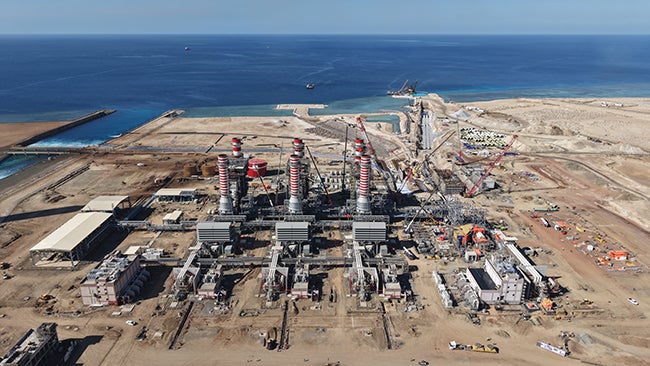
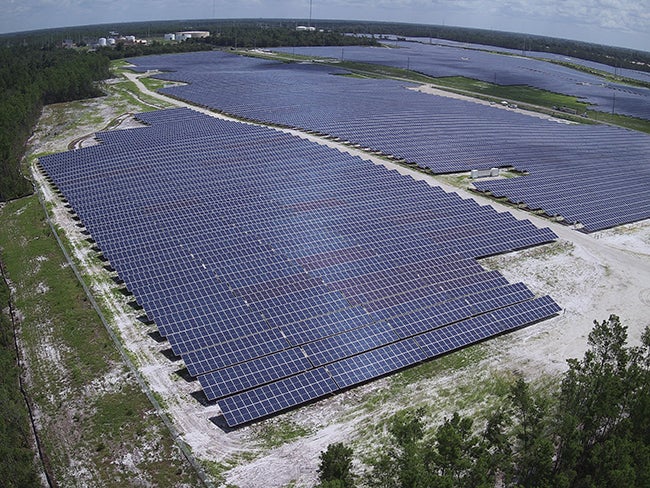
It would be difficult to list every contributing factor that drove this change, but the ITM 2025 highlights some particularly noteworthy ones. For example, investments in clean energy (Figure 1) have increased to the point of being twice that of investments in fossil fuels. According to the International Energy Agency (IEA), clean energy investments increased to $2.2 trillion in 2025, as opposed to $1.1 trillion invested in fossil fuels.
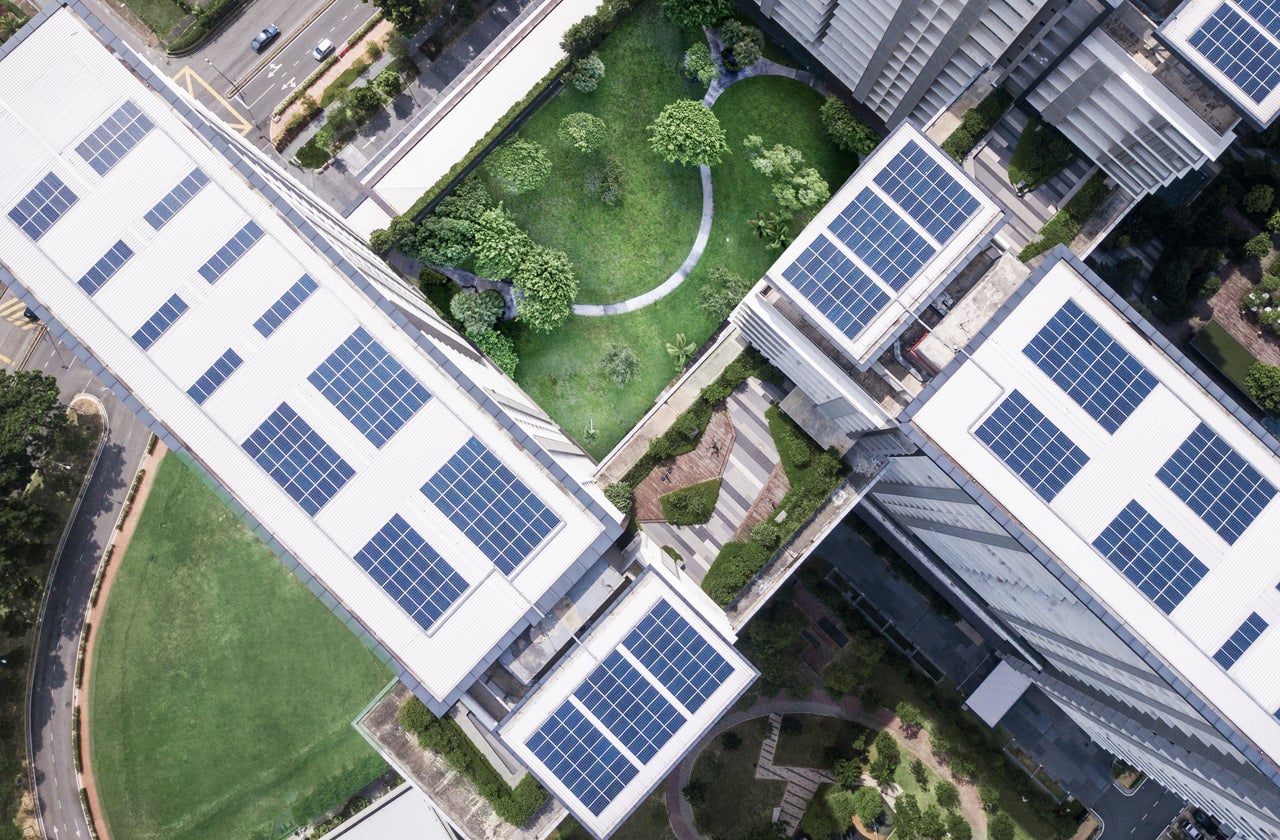
What is also intriguing is how the transition is being fueled by shifting priorities of organizations toward energy resilience. In a list of highest priorities in the report, ensuring a resilient energy supply jumped from third place in 2023 to first in 2025, while national energy independence and proactive management of climate risks rose prominently in priority. These changes make sense. In a world facing growing geopolitical tensions and climate-related crises, countries seek to stabilize their energy grids against unforeseen risks. Clean energy enables that by divesting from those risks, such as a heavy dependence on fossil fuels.
The Potential of Digital Transformation
No matter the reasons behind the energy infrastructure transition, the need for stable, functional energy grids will always be forefront. Continued progress on building sustainable infrastructure will depend heavily on whether an infrastructure’s transmission and distribution systems can handle increased demand and the new dynamics of the energy system.
One of the biggest obstacles to those goals toward progress is the lack of data visibility. Without easy access to real-time data from grids, grid operators can encounter greater difficulties trying to monitor, predict, and manage the flow of electricity effectively. This is especially challenging as behind-the-meter energy assets, such as solar panels and electric vehicles, become more commonplace, as well as when multiple stakeholders must collaborate for the same grid.
This is why organizations are turning to digital transformation to turn grids into smart grids. According to ITM 2025, 74% of respondents believe smart grids and grid software are critical enablers of the energy transition. By integrating software and digital technologies, organizations hope to optimize their grids while also bridging together data gaps.
One such technology that can accomplish these goals is the comprehensive digital twin. As the digital representation of a physical asset or process, a comprehensive digital twin of a grid can be simulated in a virtual environment, allowing operators to see flow patterns, asset impacts, and emerging risks before carrying out changes to the grid. These early insights reduce the chances of damage or failure during the transition and provide a single source of truth all stakeholders of a grid can use to maximize outputs.
The Rise of AI in Grids
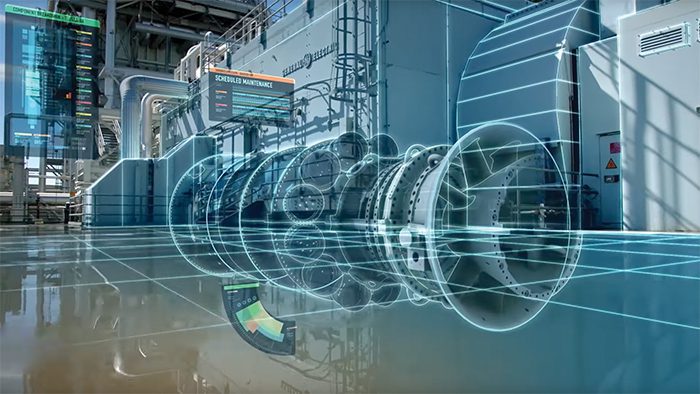
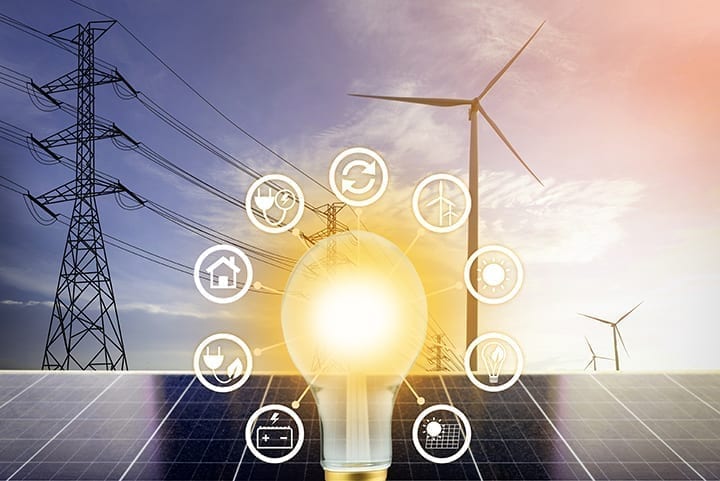
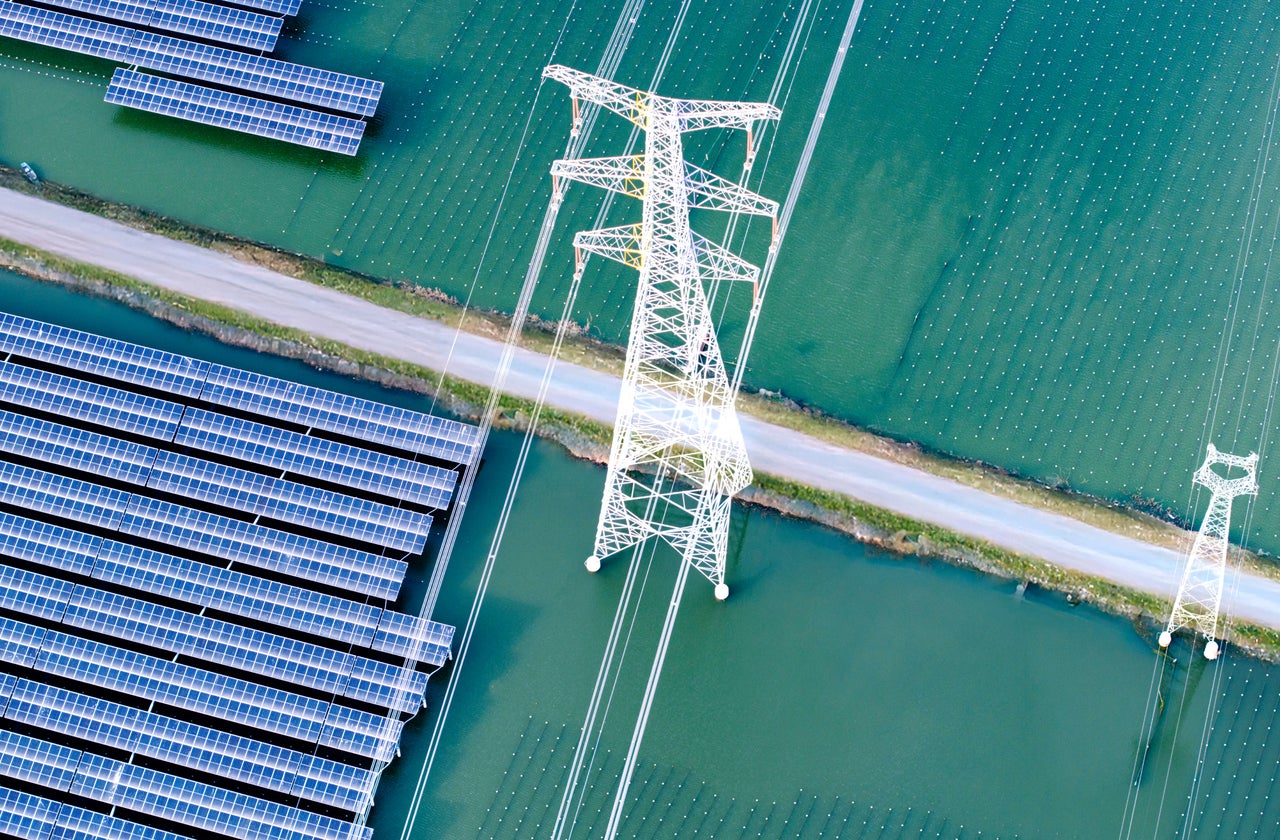
While digitalized power grids have a lot to offer, the most advanced are merely the foundation for even more powerful innovations. As is the case in many other fields, AI is a digital technology expected to fundamentally transform energy infrastructure (Figure 2). In fact, a majority of ITM 2025 respondents see AI playing significant roles in the energy transition, with 72% saying it will transform how their organizations operate in the next three years and 74% stating it will make critical infrastructure more resilient.

In the case of grids, AI has the potential to push them beyond smart capabilities and enable autonomous systems, allowing grids to be reconfigured in real time, optimizing energy generation, storage, and transmission supporting greater reliability, safety, and economic growth. There is no doubt that the future grid will be more dynamic, this will be driven by necessity, as AI will play a fundamental role in enabling that dynamic grid and a high-quality digital twin will be the essential foundation for applying AI in the digital transformation of operational technologies (OT).
Of course, there are still some challenges standing in the way of AI-implementation in grids. Legacy infrastructure may lack the interoperability necessary to enable real-time data exchanges, requiring further infrastructure upgrades. Additionally, every stakeholder needs to be on the same page, using common data protocols and standardized application programming interfaces (APIs) to prevent custom integration at every handover point, which only adds to difficulties in implementation.
Nevertheless, AI, alongside the comprehensive digital twin, is already delivering measurable changes in multiple places, balancing energy distribution, and improving resilience and demand forecasting. Organizations are also showing increasing willingness to adopt AI and autonomous systems, with 63% of ITM 2025 respondents claiming the benefits of autonomous systems outweigh the costs.
Challenges and obstacles are to be expected in a task as monumental as the global energy transition, but based on the results of the ITM 2025, significant progress is being made and many organizations are committed to the task at hand and recognize digital transformation as a crucial factor for success. As technologies such as the comprehensive digital twin and AI continue to advance, they will empower organizations to bring the energy transition to fruition and unlock greener energy for all.
To read the full ITM report, visit: https://www.siemens.com/global/en/company/insights/infrastructure-transition-monitor-2025.html.
—Marcus McCarthy is senior vice president, Siemens Grid Software, Americas.