![POWER Digest [July 2026]](https://www.powermag.com/wp-content/uploads/2023/07/powerdigest-wordcloud-300x300.jpg)
News briefs curated from June 2026 by the editors of POWER, highlighting key developments across global power markets, technology, finance, and energy infrastructure.
X-energy Advances 6-GW Nuclear Partnership With UK’s Centrica. Advanced nuclear reactor developer X-energy on June 2 said it submitted an application for the UK’s Generic Design Assessment (GDA)—the country’s established regulatory pathway for licensing new nuclear reactor technologies—for its Xe-100 high-temperature gas-cooled reactor, an 80-MWe advanced modular reactor that can be deployed in four- or twelve-unit plants and is capable of producing both electricity and high-temperature industrial heat and steam. The GDA, which is administered jointly by the UK Office for Nuclear Regulation (ONR), the Environment Agency, Natural Resources Wales, and the Department for Energy Security and Net Zero, is expected to conclude by the end of 2029. X-energy has been in active regulatory dialogue with UK authorities since 2024 through the ONR’s Early Engagement process. The submission is also poised to benefit from expanded cooperation between the ONR and the U.S. Nuclear Regulatory Commission, which could allow the direct transfer of design documentation and previously approved safety analyses into the UK review. The GDA submission advances X-energy’s September 2025 Joint Development Agreement with UK energy company Centrica, which targets up to 6 GW of Xe-100 capacity across the UK. Hartlepool was identified as the preferred site for a first 12-unit, 960-MWe plant. In 2024, X-energy was selected for the UK government’s Future Nuclear Enabling Fund, and technical and commercial studies completed under that program estimated the Hartlepool project alone would generate at least£12 billion in economic value, with lifetime value across the full program reaching at least£40 billion.
Siemens Energy to Acquire Camlin Group, Adding Digital Grid Intelligence to Hardware Portfolio. Global energy technology company Siemens Energy on June 2 announced a definitive agreement to acquire Camlin Group, a Northern Ireland–based specialist in grid monitoring, analytics, and asset digitalization, which employs about 650 people and generates revenue of more than£90 million annually from operations across the UK, Europe, North America, Australia, and Asia. Founded in 2010 by a small group of engineers in Lisburn, Camlin expanded by delivering engineering solutions across energy and rail systems, and has built a software portfolio centered on real-time grid insight, predictive maintenance, and faster fault detection. The acquisition broadens Siemens Energy’s digital grid offering at a moment the company says is defined by aging infrastructure, rising electrification, higher load volatility, and the rapid integration of renewable energy. Financial terms were not disclosed. The transaction is subject to regulatory approvals and is expected to close before the end of 2026.
Baseload Capital, Furusato Netsuden Bring 4.995-MW Geothermal Plant Online in Kumamoto Prefecture. Swedish geothermal investment firm Baseload Capital and Japanese power company Furusato Netsuden on June 4 heralded the completion of the Waita No. 2 Geothermal Power Plant in the Waita district of Oguni Town, Kumamoto Prefecture, Japan. The 4.995-MW plant began commercial operations in March 2026 and was developed in collaboration with Waita-kai LLC, an organization representing local residents who participate directly in the project’s ownership structure. The companies said the model is designed to more closely connect the economic value of geothermal development to the host community. Japan holds one of the world’s largest geothermal resources, though geothermal accounts for less than 1% of the country’s electricity mix today, owing mainly to barriers related to land use, regulation, and local acceptance. Baseload Capital’s partnership with Furusato Netsuden was established in 2025, and the companies describe Waita No. 2 as a proof of concept for replicating community-aligned development across Japan rather than as an isolated project.
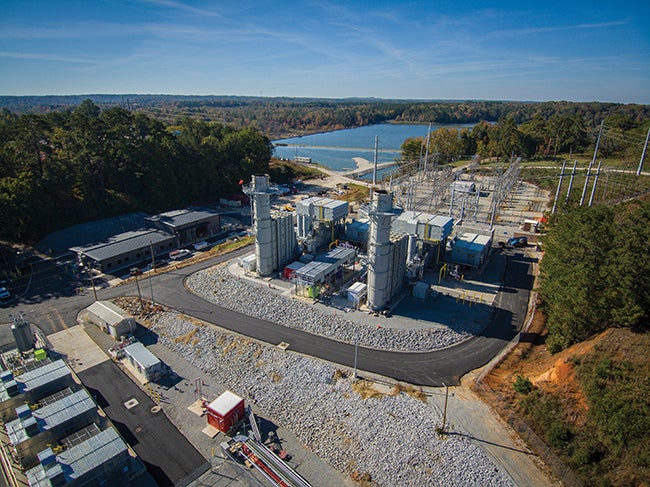
Tallgrass, Mitsubishi Power Allocate First JAC Turbines for Wyoming’s Cheyenne Power Hub. Tallgrass Energy, a midcontinent pipeline and energy infrastructure company, and Mitsubishi Power Americas on May 15 announced that the first two M501JAC gas turbines have been allocated to Phase 1 of the Cheyenne Power Hub, a dedicated on-site generation complex under development within the Switchgrass Industrial Park in southeast Wyoming. The turbines are expected to provide approximately 1,150 MW fueled by natural gas supplied through Tallgrass’ Rockies Express Pipeline. The project is designed to deliver power directly to a large-scale data center on-site, which will “avoid strain on the existing electricity grid” and ensure local ratepayers are not responsible for costs associated with new data center demand, the companies said. The project also incorporates a grid interconnection to support future integration of renewable energy. Component arrival and installation for the first M501JAC turbine unit is slated to begin as early as July 2026. The project is notably adjacent to Tallgrass’ Trailblazer project—one of the largest operating, permanent carbon capture and sequestration projects in the U.S.
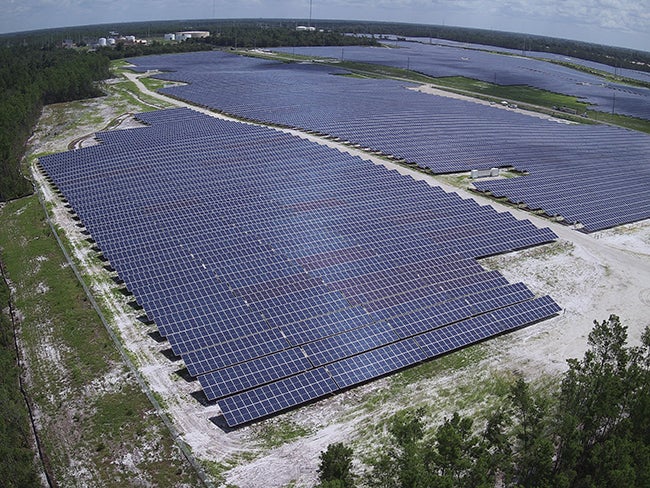
Terra-Gen Brings 125-MW Lockhart III Solar Project Online in San Bernardino County. Terra-Gen, one of the largest independent, integrated renewable energy producers in the U.S., said on May 20 that its 125-MW Lockhart III solar project in San Bernardino County, California, has reached commercial operation. Capacity from the project, which uses the existing gen-tie line connecting toSouthern California Edison’s Kramer Junction Substation, is contracted under long-term agreements with corporate buyers and California load-serving entities. Terra-Gen is also building a fourth phase at the same site—Lockhart IV (80 MW)—which is expected to reach commercial operations in the third quarter of 2026. Terra-Gen is jointly owned by Masdar—the United Arab Emirates’ flagship clean energy company—and Igneo Infrastructure Partners, a global investment manager. It operates a gross portfolio of 4.2 GW of wind, solar, and battery storage projects across 33 sites in the U.S., predominantly in California and Texas, including 5.6 GWh of energy storage facilities.

In This Issue
Full issueGE Vernova Launches 3.8-MW Wind Turbine in India With 100-MW Botad Wind Farm Order. Global energy technology company GE Vernova on June 4 said it has signed an agreement with onshore wind developer and engineering firm Powerica Limited to supply 28 of its 3.8-MW–154m onshore wind turbines for the 100-MW Botad Wind Farm in Gujarat, marking the India debut of the 3.8-MW platform and the fourth wind farm project the two companies have delivered together. The deal includes turbine supply and installation. Powerica secured the project’s power purchase agreement through a competitive auction conducted by Gujarat Urja Vikas Nigam Limited (GUVNL), and deliveries are expected to begin in the fourth quarter of 2026 from GE Vernova’s manufacturing facility in Pune, which at full capacity is expected to support up to 1,500 MW of annual production. GE Vernova also announced it has been certified by India’s Ministry of New and Renewable Energy and added to the Approved List of Models and Manufacturers of Wind Turbines (ALMM)—a mandatory requirement for wind turbine original equipment manufacturers (OEMs) participating in India’s wind market. The order was booked in the first quarter of 2026. GE Vernova’s wind business surpassed 5 GW of installed capacity in India in 2025. India has set a target of 500 GW of non-fossil energy capacity by 2030, including 100 GW from wind.
—Sonal Patel is a POWER senior editor.