
T&D
-
 Trends
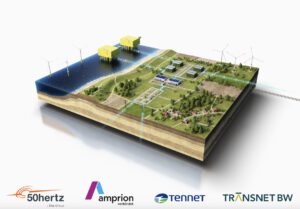
Industry Giants, German TSOs Team to Revolutionize HVDC Grid With Multi-Terminal Hubs
Three major high-voltage direct current (HVDC) technology giants—GE Vernova, Siemens Energy, and Hitachi Energy—will join forces with four German transmission system operators—50Hertz, Amprion, TenneT and TransnetBW—to develop multiterminal hubs with direct current circuit breakers. The initiative is the latest development in ongoing European collaboration to enhance the interoperability of HVDC systems, facilitate the integration of […]
-
 Connected Plant
Logical Data Management for the Energy and Utility Industries
By now, with the most devastating effects of the pandemic behind us, it’s important to remember the key takeaway—there’s no such thing as “business as usual.” As a result, companies have learned that to be able to thrive are those that quickly adapt to sudden, unforeseen changes is essential. This is especially true for energy and […]
-
 Renewables
GOP-Held Congressional Districts Cash in on Clean Energy Projects
More than $106.5 billion in large-scale clean energy project investments have been announced in Republican-held congressional districts in the U.S. during the period from August 2022 through June 2024. The figure was released by E2, a national, nonpartisan group of business leaders, investors, and professionals from every sector of the economy who advocate for “smart […]
-
 Hydrogen
POWER Digest [July 2024]
Economics Could Bring Early Closure for Slovenia Coal-Fired Plant. Slovenian Prime Minister Robert Golob in May said the Termoelektrana Šoštanj (TEŠ) facility, the country’s only remaining coal-fired
-
 Legal & Regulatory
FERC Adopts Transmission Reform; Commissioner Cries Foul
There has been a growing consensus in recent years that the transmission planning process must be reformed to ensure reliability in the face of a rapidly changing grid. Despite the need for new transmission to
-
 O&M
O&MNext-Gen Geospatial, AI, and Other Tech Is Critical for Utilities to Mitigate Wildfires
The danger of wildfires has risen dramatically over the past two decades as more extreme temperatures and more volatile weather patterns have increased the frequency and intensity of fires. The most prominent examples of this have been in the western U.S. and Canada, but wildfire risks are rising in every geographic area of North America. […]
-
 O&M
O&MRugged Mobile Devices Enhance OPPD Operations
Many power companies have turned to digital technology to streamline operations and improve worker efficiency. One example is Omaha Public Power District (OPPD), the 12th-largest public power utility in the U.S. OPPD recently decided to deploy hundreds of semi-rugged TOUGHBOOK 55 devices across multiple units, including meter technicians, troubleshooters, line crews, and system protection and […]
-
 T&D
T&DStrengthening America’s Electric Power Grid: How the Government and Industry Are Improving T&D Systems
The U.S. transmission and distribution (T&D) network is reliable and well-maintained, but as renewable energy continues being added to the grid, and demand increases due to growing data center needs and the electrification of transportation and manufacturing processes, work is necessary to keep up with the changing times. The U.S. government understands the need for […]
-
 Interview
The POWER Interview: Solving the Challenges Facing the Grid
The power generation industry continues to grapple with a multitude of challenges when it comes to producing more electricity, and to ensure that power is delivered where and when it is needed. There is pressure to integrate more renewable energy resources to help meet net-zero targets and other decarbonization goals. Electrification efforts, notably from the […]
-
 News
NewsGE Vernova Building Synchronous Condenser Sites to Support New York Grid
GE Vernova said it has been awarded a contract by National Grid’s upstate New York business to supply and construct two separate 115 kV synchronous condenser sites at the company’s Coffeen and Taylorville substations. GE Vernova on June 26 said it will install three synchronous condenser machines, including Prolec GE generator step-up (GSU) transformers, at […]
-
 Energy Security
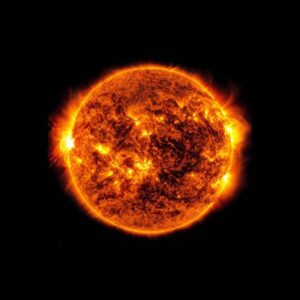
Mitigating EMP and GMD Risks for Power Grid Resilience
Risks posed by geomagnetic disturbance (GMD) and electromagnetic pulse (EMP) events add challenges to an already complex power system environment. But they remain crucial to address. How prepared is the power grid to withstand these powerful natural and man-made disturbances? On the evening of May 10, grid operator PJM Interconnection activated a rare geomagnetic disturbance […]
-
 T&D
T&DBuilding a Better Grid—Infrastructure Upgrades Require Ingenuity, Innovation, and Investment
The need for more reliability and resilience of power delivery, both in the U.S. and worldwide, has utilities and grid operators looking for solutions to the challenge of bolstering the electricity supply. Electric grid infrastructure, both in the U.S. and other parts of the world, needs an upgrade. Increased power demand from energy-intensive industries such […]
-
 T&D
T&DThe Transformer Crisis: An Industry on the Brink
Facing unprecedented lead times and skyrocketing costs, the transformer supply chain crisis threatens the backbone of the electric power industry, driving urgent calls for increased manufacturing capacity and innovative solutions. Can the industry rise to the challenge? For several years now, the power sector has frantically raised the alarm about an impending transformer supply chain […]
-
 Distributed Energy
Microgrids Take Major Role for Reliability, Resiliency
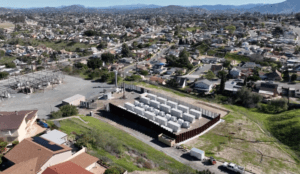
An array of technologies, both thermal and renewable, are being used in the design of microgrids, supporting distributed power generation across several sectors. The use of microgrids to provide reliable power for critical infrastructure is growing, and these off-grid installations also are becoming more prevalent as part of commercial and industrial (C&I) enterprises and residential […]
-
 T&D
T&DHigh-Voltage Power Transmission Projects Are Booming Around the World
High-voltage power transmission systems are more important today than ever before because power generated at renewable energy sites in remote locations must often be transmitted to distant load centers. Several state-of-the-art projects being done around the world are reviewed below. The majority of major electric power transmission lines in the U.S. are 115-kV, 230-kV, or […]
-
 T&D
T&DPlanning for a Reliable and Resilient Electric Power Grid
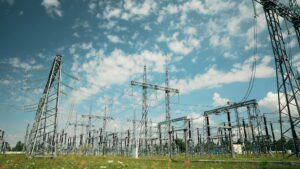
In the U.S., regional transmission organizations (RTOs) and independent system operators (ISOs) are responsible for overseeing the reliable operation of the high-voltage transmission system within their respective regions. In other countries, transmission system operators (TSOs) perform similar roles. In most cases, the primary objectives of these entities are to ensure the reliable and efficient operation […]
-
 T&D
T&DWhat Does It Take to Bring Stability to a Renewable-Focused Grid?
As coal, gas, and nuclear plants are retired, and wind and solar resources are added to the power grid, stability can become a problem. Understanding the solutions that are available to help manage potential issues is important for decision-makers so they can select the best options for their system. Grid stability and system strength have […]
-
 T&D
T&DDLR Is More Than Optimizing Capacity; How Can Utilities Ensure Safety and Reliability?
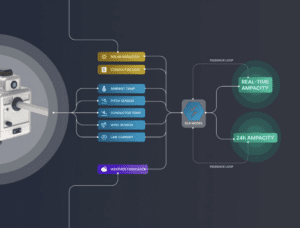
Dynamic line rating (DLR) enables utilities to unlock up to 40% additional capacity from existing infrastructure, allowing grid operators to rapidly increase energy throughput. This capability is crucial in today’s energy landscape, where the proportion of renewable energy sources is quickly expanding, and the existing aging infrastructure cannot support this growing demand. Operating power lines […]
-
 T&D
T&DNVIDIA CEO: AI Will Impact the Future of Energy
The future of energy may depend on technology with roots in the video game industry, by a company founded more than 30 years ago that wanted to use accelerated computing to improve the look and feel of the gaming experience. Jensen Huang, NVIDIA’s CEO and president since co-founding the Santa Clara, California-based company in 1993, […]
-
Commentary
It’s Time for Utilities to Back Smart Grid Optimization with the Right Tech
The utility industry is an unsung hero for nearly every community—until the power falters. A prime example is the extreme weather that passed through much of the central U.S. this spring. In Houston, where my company is based, we recently experienced severe storms that left around a million businesses and homes without power. These acts […]
-
 T&D
T&DU.S. Power Distribution System Reliability Has Declined Over the Past Decade: How to Make It Better
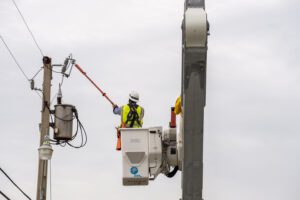
SAIDI (System Average Interruption Duration Index) and SAIFI (System Average Interruption Frequency Index) are widely used reliability indices that measure the performance of power distribution systems. SAIDI represents the total duration of interruptions for an average customer over a given time period, typically a year. It is calculated by taking the sum of all customer […]
-
 Offshore Wind
GE Vernova, Seatrium Will Build HVDC System for TenneT’s Dutch Offshore Grid Project
Global energy company GE Vernova and Seatrium Limited, a Singaporean state-owned group, said their consortium has been awarded a third contract by Dutch transmission system operator TenneT for construction of a 2-GW high-voltage direct current (HVDC) electric offshore transmission system in the Netherlands. The groups on June 10 said construction is set to begin this […]
-
 Trends
2024 Shaping Up to Be Dramatic for Transmission and Distribution
In a significant push toward modernizing America’s aging grid infrastructure, the Biden administration, in partnership with 21 states, has launched the Federal-State Modern Grid Deployment Initiative. The measure marks the latest triumph for transmission and distribution (T&D), which has seen “lumpy” progress in recent decades. The initiative unveiled on May 28 essentially seeks to establish […]
-
 Press Releases
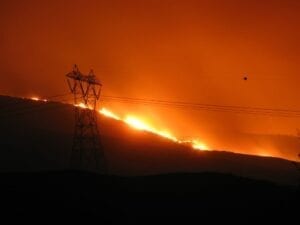
CORE Electric Cooperative and Technosylva Announce Partnership to Reduce Wildfire Risk Across Colorado’s Front Range
CORE Electric Cooperative to Deploy Technosylva’s Wildfire Risk Mitigation Solutions LA JOLLA, CA, and SEDALIA, CO, May 30, 2024 – Technosylva, the leading provider of wildfire mitigation technology solutions, and CORE Electric Cooperative (CORE), the largest electric distribution cooperative in Colorado, today announced a new partnership and collaboration to reduce the impacts of wildfire to […]
-
 T&D
T&DHow PG&E Is Reducing Wildfire Risks Using Satellite Imagery
Wildfires have had a devastating impact on California and on the state’s largest utility company, Pacific Gas and Electric (PG&E). PG&E’s equipment has been linked to several major wildfires in the past including the 2018 Camp Fire (the deadliest wildfire in California history, killing 85 people, according to CAL FIRE, the state agency responsible for, […]
-
 Sustainability
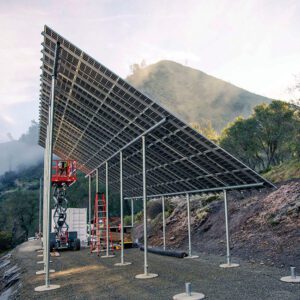
PG&E Recognized for Remote Grid Program
Pacific Gas and Electric Co. (PG&E) and its remote grid program received an honorable mention in the Energy category of Fast Company’s 2024 World Changing Ideas Awards. Winners were announced on May 14, highlighting fresh sustainability initiatives, cutting-edge artificial intelligence (AI) developments, and other creative projects that are helping mold the world. PG&E is one […]
-
 Legal & Regulatory
How Regulatory Burdens and Misguided Incentives Are Degrading Power System Reliability
It’s no secret that the U.S. electric power system has undergone a remarkable transition that continues today. Coal-fired generation, which was the leading source of power generation during the 20th century, often providing more than half of the country’s electricity supply, fell to about 16.2% of the mix in 2023. Meanwhile, the U.S. solar market […]
-
 Energy Security
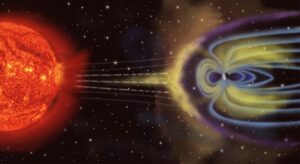
Historic Solar Storm Spurs PJM to Extend Geomagnetic Disturbance Warning
Grid operator PJM Interconnection has issued a geomagnetic disturbance (GMD) warning after observing “persistent geomagnetically induced current (GIC) at multiple stations” late on Friday. PJM initially issued a GMD warning on May 10 to generators and transmission operators that an ongoing severe solar storm could affect its system between 1:48 p.m. and 9 p.m. on […]
-
 T&D
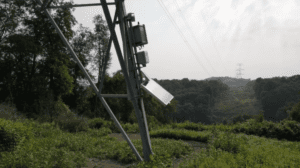
T&DHow Grid Enhancing Technologies Are Expanding Electric Power Transmission System Capabilities
It’s no secret that power grids around the world need to expand to accommodate more renewable energy and the so-called “electrification of everything.” The latter, of course, refers to the growing trend of using electricity to power various sectors and applications that have traditionally relied on fossil fuels, such as natural gas or petroleum-based products. […]
-
 Solar
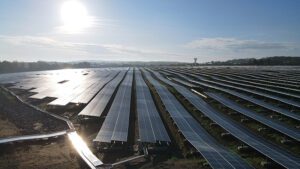
SolarHow the Massive Growth in Solar Power Is Affecting Power Grids
The Solar Energy Industries Association (SEIA) reported in March that the U.S. solar industry installed 32.4 GWdc of capacity in 2023, a remarkable 51% increase compared to 2022. It was the industry’s