Summer is the season utilities brace for. Demand peaks as air conditioners run flat out, equipment runs hot, and the workforce that keeps the grid alive does so under some of the year’s most punishing conditions. The same months that strain transformers and conductors also strain the people climbing structures and pulling cable beneath them. For power professionals, warm-weather preparedness is not a seasonal courtesy—it is a core safety discipline. Three hazards in particular deserve a fresh look before the mercury climbs: heat stress, lightning, and the chaos of severe-storm restoration.
Heat Stress: The Slow-Building Emergency
Heat illness rarely announces itself. It builds quietly across a shift until a worker who felt fine an hour ago is suddenly confused, cramping, or collapsing. For line and field crews, the risk is compounded by factors most workers never face: arc-rated clothing and flame-resistant layers that trap body heat, climbing exertion that drives core temperature up fast, and elevated or confined work positions where a dizzy spell becomes a fall hazard.
The progression matters. Heat cramps and heavy sweating are early warnings. Heat exhaustion—clammy skin, nausea, weakness, headache—signals the body losing its battle to cool itself. Heat stroke, marked by confusion, hot dry skin, and loss of consciousness, is a life-threatening emergency that demands immediate cooling and a 911 call. Crews should treat any worker who stops sweating in extreme heat as a red flag, not a sign of recovery.
Prevention is straightforward but requires discipline. Acclimatization is the most overlooked safeguard. New workers and those returning from time off need a gradual ramp-up over several days, because the body adapts to heat far more slowly than supervisors assume. Hydration should start before the shift and continue in small, frequent amounts rather than in occasional large gulps. Schedule the heaviest work for the morning, build in rest breaks in shade or air conditioning, and use the buddy system so someone is always watching for the early signs a struggling worker may not recognize in themselves.
There is still no federal heat standard. OSHA’s proposed heat-illness rule has stalled with no finalization date, so the agency enforces through its General Duty Clause and a national emphasis program it revised in April 2026—while a number of states maintain their own heat rules. A written heat illness prevention plan remains a smart safeguard regardless of where federal rulemaking lands.
Lightning: Thirty Seconds to Decide
Summer thunderstorms develop fast, and for crews working aloft or handling conductors, lightning is among the most unforgiving hazards out there. The danger zone extends well beyond the storm itself. Lightning routinely strikes miles ahead of visible rain, which is why the “30/30 rule” remains the field standard: when the time between a flash and its thunder drops to 30 seconds, the storm is close enough to be dangerous, and work should stop. Crews should not resume for at least 30 minutes after the last thunder.
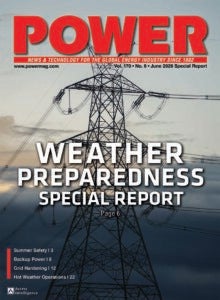
In This Issue
Full issueThat guidance only works if someone is responsible for watching the sky. Assign storm-spotting duty before work begins, and pair it with a real-time weather alerting tool so crews are not relying on a passing glance at the horizon. Bucket trucks, elevated platforms, and steel structures all turn workers into the high point of the landscape—exactly where lightning seeks ground. The safest refuges are a fully enclosed vehicle or a substantial building, not a shed, not a bucket, and never the partial shelter of an overhead structure. The instinct to finish “just one more connection” before retreating has killed experienced linemen. The rule has to override the schedule.
Severe Storms and the Restoration Scramble
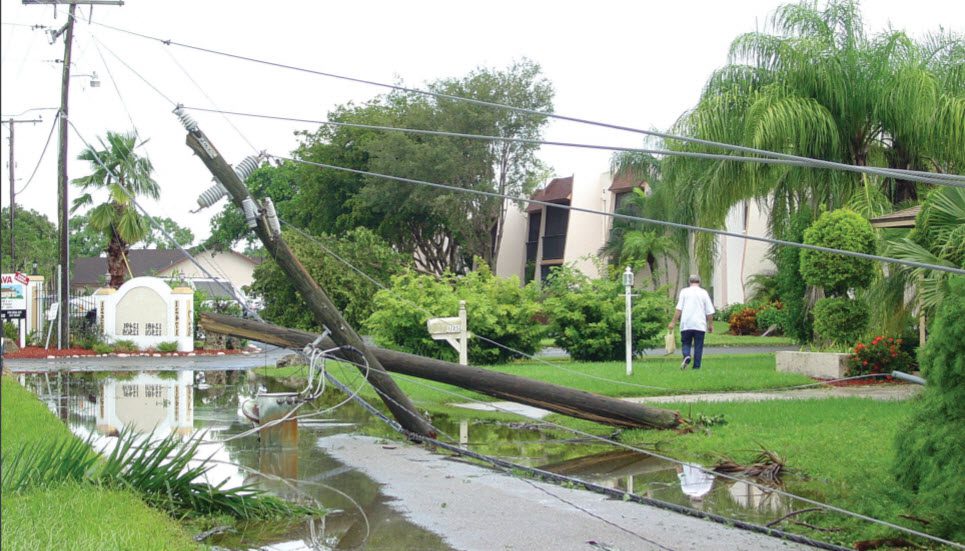
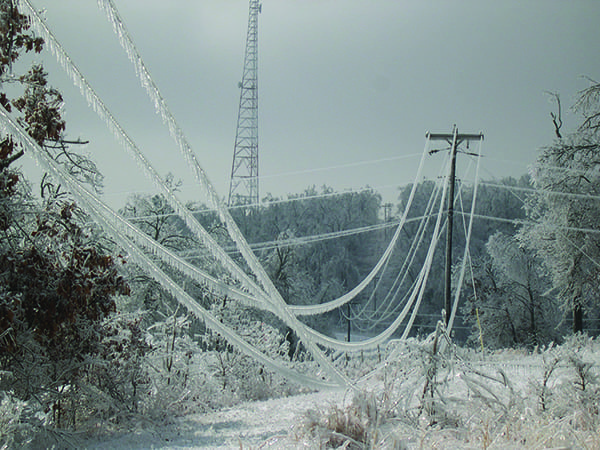
When summer storms move through, the work shifts from routine to restoration, and the risk profile changes with it. Outage response concentrates the industry’s most dangerous conditions into a compressed, high-pressure window: downed conductors that may still be energized, damaged poles and crossarms under unpredictable load, debris-strewn footing, and crews running on adrenaline and too little sleep.
Fatigue is the quiet driver of restoration incidents. As outages stretch into long shifts and back-to-back days, judgment erodes and reaction time slows precisely when the hazards are greatest. Managing rotations, enforcing rest, and resisting the pressure to push crews past safe limits are safety functions, not logistical afterthoughts. Every downed line should be treated as energized until tested and grounded, and crews must stay alert to backfeed from customer-owned generators—improperly connected portable units can re-energize a “dead” line and endanger anyone working it. Mutual-aid crews arriving from other utilities add another layer of risk: unfamiliar territory, different equipment standards, and crews who have not worked together before. Clear briefings and consistent grounding practices keep that coordination from becoming a hazard of its own.
Preparedness Before the Season
The common thread across all three hazards is that the response cannot be improvised in the moment. Heat plans, storm-spotting assignments, hydration supplies, weather-alerting tools, and restoration protocols all need to be in place and rehearsed before the first heat wave or thunderstorm tests them. Toolbox talks in late spring are the ideal moment to refresh crews on warning signs and stop-work authority—and to make clear that any worker can halt a job over a weather concern without second-guessing.
Summer will push the grid and the people who run it to their limits. The utilities that come through it safely are the ones that prepared for the season before it arrived.
—Aaron Larson is POWER’s executive editor.