Utilities, federal agencies, and the national labs have finally assembled the tools to harden the grid against an increasingly hostile environment. The question is whether they can put them together fast enough.
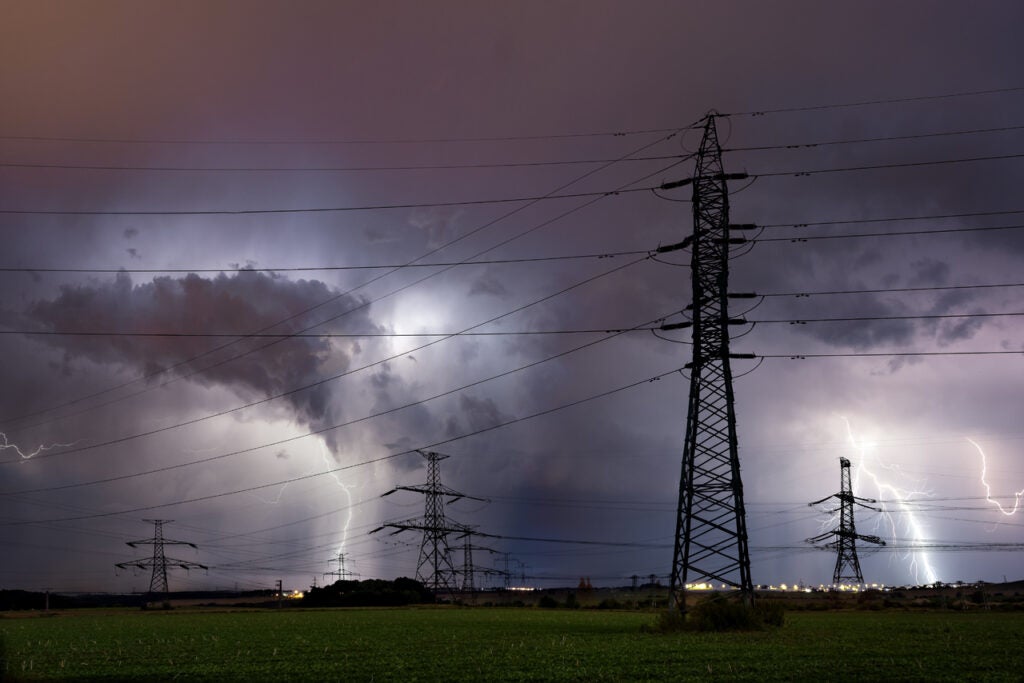
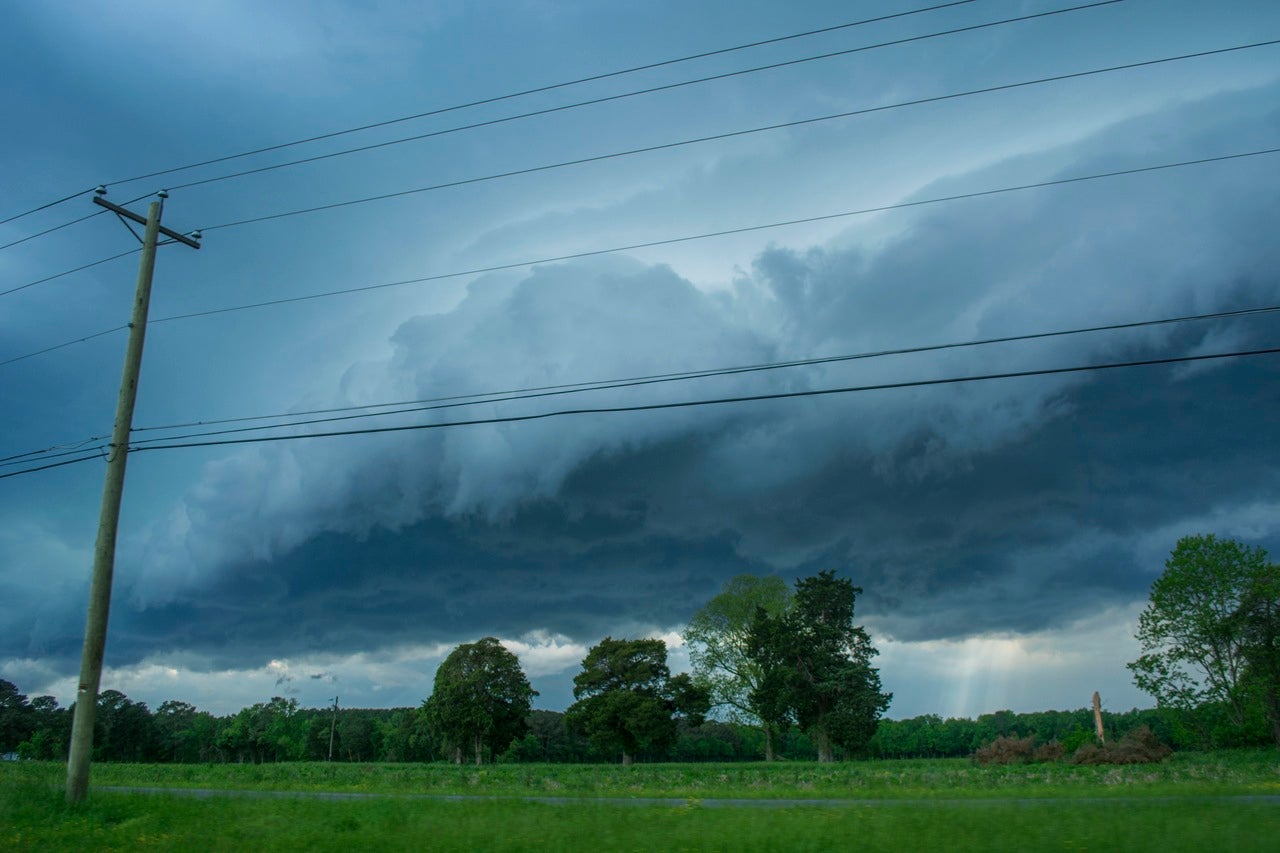
When a line of storms tore across the Northeast in late April 2025, racing from Ohio into central Pennsylvania, meteorologists recognized the signature instantly: a bow echo, the curved radar shape that betrays a wall of straight-line winds strong enough to flatten trees and snap power poles for hundreds of miles. To the utilities in its path, it was something more specific—another entry in a ledger that has been growing alarmingly long. Extreme weather is no longer an occasional stress test for the American power grid. It has become the defining engineering and planning challenge of the decade.
The numbers explain why. According to the Electric Power Research Institute (EPRI), the U.S. logged roughly 70 confirmed weather and climate disasters in just three years, each one causing more than a billion dollars in losses—a sharp acceleration over previous decades. Heat waves now arrive earlier and last longer. Winter storms reach further south than the grid was built to withstand, as Texas learned in catastrophic fashion in 2021. Wildfires threaten transmission corridors across the West, and hurricanes batter the Gulf and Southeast with intensifying force. Each hazard attacks the grid differently, but the cumulative message is the same: a system designed for a stable climate now operates in an unstable one.
A Framework for Measuring the Unmeasurable
For years, the central difficulty was not awareness of the threat but the absence of a shared method for quantifying it. Utilities knew extreme weather was worsening; they lacked a rigorous, standardized way to translate that knowledge into investment decisions. In May 2025, EPRI moved to close that gap with the release of its Climate READi: Power Framework, the product of more than three years of collaboration.
The scale of the effort signals how seriously the industry now takes the problem. EPRI assembled more than 40 utilities alongside over 100 academic institutions, consulting firms, finance organizations, national laboratories, regulators, and government bodies to build the framework. The initiative—short for the Climate Resilience and Adaptation Initiative—set out to give the power sector a common language for physical climate risk, covering how to plan, design, and operate a grid that can absorb shocks rather than simply break under them.
What distinguishes Climate READi from earlier resilience guidance is its integrated approach to planning. Rather than treating climate as a separate variable bolted onto traditional models, the framework’s modeling component weighs climate impacts alongside the other forces reshaping the grid at the same time: surging electricity demand, the transition toward decarbonized generation, and persistent regulatory uncertainty. That matters because these pressures interact. A heat wave that spikes air-conditioning demand also degrades the transmission lines carrying that power, and it does so just as the grid leans more heavily on weather-dependent solar and wind. Planning for any one of these factors in isolation produces a dangerously incomplete picture.
In This Issue
Full issueEPRI’s leadership has framed the work as foundational rather than optional. President and CEO Arshad Mansoor has called extreme weather and climate “urgent problems,” positioning the framework as a set of tools for addressing current and future risks while keeping energy reliable and affordable. Utility executives involved in the project have echoed that, describing grid hardening against extreme weather as one of the sector’s defining challenges for years to come and praising the framework’s data-driven, science-based design as a way to make smarter investment decisions. EPRI has made the framework publicly available, and its distribution research arm maintains a parallel body of work focused specifically on wildfire and extreme-weather threats to local power lines, including seasonal readiness guides and vegetation-management studies.
Federal Dollars Follow the Risk
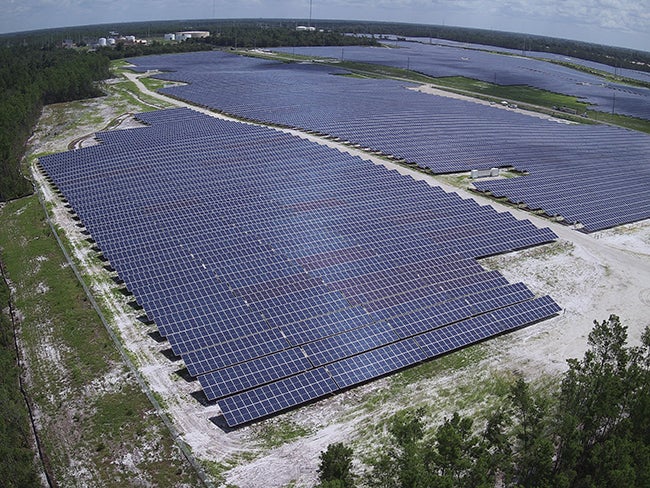
If EPRI supplies the analytical scaffolding, the U.S. Department of Energy (DOE) has supplied much of the money. The centerpiece is the Grid Resilience and Innovation Partnerships program, known as GRIP, which channels federal investment into modernizing transmission and distribution (T&D) infrastructure against extreme weather and natural disasters (Figure 1).
The sums are substantial. In October 2023, the DOE announced up to $3.46 billion in GRIP Program investments “to strengthen electric grid resilience and reliability across America,” which included projects selected under Grid Resilience Utility and Industry Grants. The following October, the DOE announced about $4.2 billion in federal investments intended to “protect the U.S. power grid against growing threats of extreme weather, lower electricity costs for America, and increase grid capacity to meet load growth stemming from an increase in manufacturing, data centers, and expanding artificial intelligence and cloud-ready approaches.”
In March this year, a third funding opportunity was announced. At that time, the DOE said approximately $1.9 billion was being made available “to catalyze electricity infrastructure investments to meet electricity demand growth and resource adequacy requirements, while reducing costs for American households and businesses.” This funding opportunity was renamed “Speed to Power through Accelerated Reconductoring and other Key Advanced Transmission Technology Upgrades (SPARK)” to provide clarity with the program’s updated emphasis, the DOE said. The application deadline has passed. Awards are expected to be made sometime between October 2026 and January 2027.
Behind the grants sits a broader vision. The DOE’s 2024 Grid Modernization Strategy frames the challenge across six dimensions—reliability, resilience, security, affordability, flexibility, and environmental sustainability—and names climate resilience as a core objective rather than an afterthought. The logic is that climate stress touches every one of those dimensions. Extreme heat degrades conductors and transformers; flooding can knock out substations; wildfire smoke can trip protective relays; and shifting wind and temperature patterns alter the load the grid must serve. A strategy that improves one dimension while ignoring climate exposure could undermine the others.
More recently, the DOE has turned to assessing the system’s overall health. An October 2025 federal report evaluating U.S. grid reliability and security drew on analysis from the national laboratories and reliability data from the North American Electric Reliability Corporation (NERC), reflecting a federal effort to take stock of where the grid stands as demand climbs and weather intensifies simultaneously.
The Laboratories Doing the Science
Much of the technical heavy lifting happens at the DOE’s national laboratories, where researchers convert climate science into the models and methods utilities and planners can actually use.
The National Laboratory of the Rockies (NLR, formerly known as the National Renewable Energy Laboratory [NREL]) has spent more than a decade helping communities rebuild and strengthen their energy systems after disasters. In research published in January 2025, NLR emphasized that as extreme weather grows more frequent and destructive, communities face mounting demands to secure their energy supply—and that there is no single template for doing so, because each community’s vulnerabilities and needs are distinct. That community-level focus complements the utility-scale planning tools coming out of EPRI, addressing the reality that resilience is experienced locally even when it is engineered system-wide. NLR has also developed methodologies for measuring and valuing resilience in energy systems, an attempt to put hard numbers on a quality that has long resisted quantification.
At Pacific Northwest National Laboratory (PNNL), researchers situate grid resilience within a broader national-security frame. PNNL’s work translates energy-transition and climate science into strategies that integrate security, sustainability, and resilience, modeling the intricate interactions between Earth systems and energy infrastructure. The lab treats a fragile grid not merely as an engineering concern but as a potential source of geopolitical and socioeconomic instability—a reminder that keeping the lights on during a heat dome or an ice storm is, ultimately, a matter of national resilience.
The Gap Between Intention and Execution
For all the frameworks, funding, and research, independent oversight suggests the federal response remains incomplete. The Government Accountability Office (GAO) has found that while the DOE has identified climate change as a risk to energy infrastructure, the department has lacked an overarching, department-wide strategy to guide and coordinate its resilience efforts. The GAO recommended that the DOE develop such a strategy and that the Federal Energy Regulatory Commission (FERC) systematically assess and plan for climate risks to the grid—pointing out that without clear goals linked to a coherent strategy, federal efforts risk being fragmented and difficult to measure.
That critique is worth holding alongside the optimistic announcements. A multibillion-dollar grant program and a comprehensive risk framework are meaningful, but they do not by themselves guarantee a coordinated national posture. The hazards are accelerating faster than institutions tend to move, and funding levels and program priorities can shift with political and budgetary cycles, leaving long-term planning exposed to short-term uncertainty.
The Pieces Exist—Some Assembly Required
The trajectory is clear even if the outcome is not. Electricity demand is climbing—driven by data centers, electrified transportation, and a hotter climate that pushes cooling loads to record highs—at the very moment the weather is growing more hostile to the infrastructure that delivers it. Federal regulators have warned that peak demand growth is outpacing recent years, and grid operators are revising their forecasting methods and reforming power markets in response.
The encouraging development is that the pieces of a serious response now exist in a way they did not a few years ago: a rigorous industry framework for quantifying climate risk, billions in targeted federal investment, and a national laboratory system steadily producing the underlying science. The open question is whether they can be knit together fast enough, and coherently enough, to stay ahead of a climate that is no longer waiting. The bow echo that crossed Pennsylvania was a single storm on a single spring day. The grid’s real test is the decade of storms still to come.
—Aaron Larson is POWER’s executive editor.