This article presents a practical four-phase engineering methodology for migrating legacy transmission substations toward adaptive protection architectures in power systems with high distributed energy resource (DER) penetration. Increasing DER integration introduces significant challenges to conventional protection schemes, including bidirectional power flow, dynamic fault current behavior, relay coordination complexity, and reduced protection reliability in aging substations.
The proposed methodology provides a structured and cost-effective transition pathway that enables utilities to modernize existing protection infrastructures incrementally without requiring complete system replacement. The approach addresses critical practical considerations such as legacy device interoperability, communication system modernization, cybersecurity requirements, operational continuity, and workforce readiness.
The migration strategy is organized into four progressive phases: infrastructure assessment, communication and intelligent device integration, adaptive protection deployment, and wide-area protection evolution. This phased implementation minimizes operational risks while improving system resilience, protection coordination, and grid adaptability under increasing DER penetration.
Although the article does not include a detailed utility-specific case study or simulation model, it presents implementation-oriented technical guidance and practical migration strategies applicable to real-world transmission substations. The proposed methodology offers utilities a scalable roadmap for transitioning toward resilient and adaptive smart grid protection environments.
Literature Review and Background
The increasing integration of DERs has accelerated the transition of modern power systems from conventional centralized structures toward more dynamic and decentralized network architectures. As a result, protection systems originally designed for predictable operating conditions and unidirectional power flow are facing growing technical limitations in DER-rich environments.
Traditional protection schemes in legacy transmission substations typically rely on fixed relay settings and static coordination principles. However, high DER penetration introduces challenges such as bidirectional power flow, fluctuating fault current levels, intermittent generation behavior, and changing network topology. These conditions can negatively affect protection sensitivity, selectivity, and coordination reliability.
To address these issues, considerable research has focused on adaptive protection techniques capable of dynamically adjusting relay settings according to real-time system conditions. Modern protection approaches increasingly utilize communication-assisted coordination, online measurements, Intelligent Electronic Devices (IEDs), and IEC 61850-based digital communication architectures to improve system flexibility and operational awareness.
In parallel, wide-area monitoring technologies, synchronized measurements, and Phasor Measurement Units (PMUs) have expanded the capabilities of modern protection systems by enabling faster fault detection, improved situational awareness, and enhanced coordination between substations.
Despite these technological developments, many utilities continue to operate aging transmission substations containing legacy relays and limited communication infrastructure. Full replacement of existing systems is often economically challenging and operationally disruptive. Consequently, gradual and practical modernization strategies have become increasingly important for utilities seeking to improve protection performance while maintaining operational continuity.
Although previous studies have presented valuable adaptive protection algorithms and DER-related coordination methods, relatively limited attention has been given to structured migration methodologies specifically designed for legacy transmission substations. This paper addresses this gap by proposing a practical four-phase migration framework that combines communication modernization, adaptive protection evolution, interoperability considerations, and implementation-oriented deployment strategies for high-DER power systems.
Protection Challenges in Legacy Transmission Substations With High DER Penetration
High penetration of DERs has significantly changed fault behavior and protection requirements in modern transmission networks. Legacy substations designed for centralized generation and unidirectional power flow are increasingly exposed to protection coordination and operational challenges under dynamic DER conditions.
Bidirectional Power Flow. DER integration introduces reverse and bidirectional power flow conditions that may affect directional relay performance and conventional protection coordination principles.
Variable Fault Current Levels. Inverter-based DERs contribute fault currents differently from synchronous generators. Variable fault current magnitude and duration can reduce the reliability of fixed relay settings and conventional fault detection assumptions.
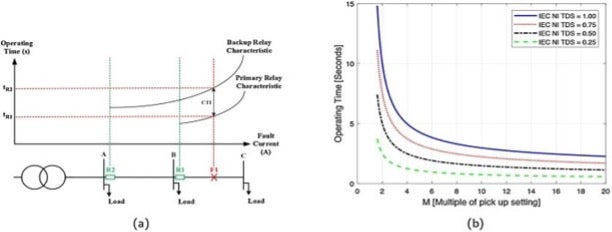
Relay Coordination Challenges. Changing network topology and fluctuating DER availability may alter fault current distribution and coordination margins between primary and backup protection devices. In addition, most existing coordination methods still rely on traditional inverse-time relay characteristics, which may not accurately represent nonlinear fault behavior under high DER penetration and dynamic operating conditions.
Protection Blinding and False Tripping. DER contribution can reduce relay sensitivity in some operating conditions while increasing the risk of sympathetic tripping and undesired relay operation during non-fault disturbances.
Communication and Adaptive Protection Limitations. Many legacy substations lack high-speed communication infrastructure, synchronized measurements, and real-time monitoring capabilities required for adaptive protection schemes. Furthermore, adaptive protection systems may face practical limitations such as restricted relay setting groups in commercial devices, communication delays, vulnerability to communication failures, and cybersecurity exposure.
Legacy Infrastructure Constraints. Existing substations often contain aging relays and partially digitalized systems with limited interoperability, monitoring capability, and cybersecurity readiness. These constraints make full modernization costly and operationally challenging.
These challenges demonstrate the need for gradual and practical modernization strategies for adaptive protection deployment in DER-rich transmission networks.
Proposed Four-Phase Migration Framework
The proposed migration framework provides a gradual and practical pathway for transitioning legacy transmission substations toward adaptive protection architectures under high DER penetration. The methodology is designed to minimize operational risks, maintain service continuity, and improve interoperability between existing and modern protection infrastructures. Each phase focuses on a specific stage of modernization while allowing incremental implementation according to utility operational and financial constraints.
Legacy Infrastructure and Protection System Assessment
The first phase focuses on evaluating the technical readiness of existing substation infrastructure for adaptive protection migration. This stage establishes the operational baseline required for subsequent modernization activities and identifies critical limitations within legacy protection systems.
Computational and System-Level Assessment. Initial system studies are performed to evaluate the operational impact of increasing DER penetration on network behavior and protection performance. These studies may include load flow analysis, short-circuit analysis, contingency evaluation, and DER penetration simulations using tools such as MATLAB/Simulink, DIgSILENT PowerFactory, ETAP, or PSCAD. The objective is to analyze fault current distribution, relay coordination margins, bidirectional power flow conditions, and network operating scenarios under varying DER conditions.
Technical Infrastructure Assessment. The technical assessment includes evaluation of existing relays, protection coordination schemes, circuit breaker operating performance, CT/VT characteristics, switching device condition, feeder configuration, substation topology, auxiliary systems, and device interoperability. Existing transformers, reactors, capacitor banks, and associated protection arrangements are also assessed since these components directly influence fault behavior, reactive power conditions, and protection coordination performance. These parameters directly influence protection reliability, fault clearing performance, and adaptive protection capability.
Communication Infrastructure Analysis. Communication infrastructure assessment is conducted to determine the availability of real-time monitoring, synchronization capability, network redundancy, and compatibility with IEC 61850-based architectures.
Cybersecurity Baseline Assessment. Cybersecurity evaluation is performed to identify vulnerabilities associated with legacy protection devices, communication systems, and digital interfaces.
Workforce Readiness Evaluation. Workforce readiness and operational capability are assessed to support future deployment, maintenance, and management of adaptive protection systems within digital substation environments.
Communication and Intelligent Device Integration
The second phase focuses on modernization of substation communication infrastructure and gradual integration of intelligent protection devices required for adaptive protection implementation.
Communication Architecture Assessment and Migration. Existing communication infrastructures such as PLC (Power Line Carrier), pilot wire, microwave, SDH/PDH, and conventional copper-based communication channels are evaluated to determine their suitability for adaptive protection applications. Migration capability toward high-speed Ethernet and fiber-optic communication networks is assessed based on bandwidth, latency, reliability, redundancy, and interoperability requirements. Communication protocols and standards including IEC 61850, IEC 60870-5-103, IEC 60870-5-104, DNP3, Modbus, and IEEE 1588 Precision Time Protocol (PTP) are evaluated according to utility operational requirements and compatibility with existing protection systems.
Intelligent Electronic Device (IED) Integration. Conventional relays and monitoring devices are gradually upgraded with IEDs capable of supporting digital communication, event recording, remote configuration, disturbance analysis, and adaptive protection functions. Hybrid operation between legacy relays and numerical IEDs may be maintained during migration stages to minimize operational risk and outage requirements.
Supervisory Control and Data Acquisition (SCADA) and Monitoring Modernization. SCADA and monitoring systems are upgraded to improve centralized supervision, disturbance recording, alarm management, and real-time operational visibility of protection assets and substation equipment. The modernization process may also include integration of Digital Fault Recorders (DFRs), Sequence of Events (SOE) systems, and condition monitoring platforms.
Time Synchronization Implementation. Accurate time synchronization is required for coordinated protection operation, fault analysis, event correlation, and wide-area monitoring applications. Synchronization technologies such as GPS clock systems, IRIG-B, and IEEE 1588 PTP are evaluated according to system accuracy and reliability requirements.
Communication Redundancy Improvement. Redundant communication architectures are implemented to improve reliability and availability of communication-assisted protection schemes. The assessment may include redundant Ethernet rings, backup fiber-optic channels, dual communication paths, and failover communication mechanisms to reduce the impact of communication failures.
Adaptive Protection Deployment
The third phase focuses on implementation of adaptive protection schemes capable of responding to dynamic operating conditions associated with high DER penetration, changing network topology, and variable fault current behavior.
Adaptive Relay Coordination. Adaptive relay coordination methodologies are implemented to maintain protection selectivity and coordination under varying system operating conditions. Relay settings are dynamically adjusted according to network topology, DER operating status, fault current variation, and feeder configuration changes. The coordination architecture may be centralized, decentralized, or hybrid depending on communication infrastructure, computational capability, and utility operational philosophy. Protection coordination studies are continuously validated using real-time system data and predefined operating scenarios to maintain coordination margins between primary and backup protection devices.
Dynamic Setting Groups. Numerical relays and IEDs are configured with multiple setting groups to support different network operating conditions, including varying DER penetration levels, transmission line outages, islanded operation, and maintenance configurations. However, practical implementation is constrained by the limited number of setting groups available in commercial protection relays, communication latency, processing delay, and synchronization requirements. Therefore, optimized setting group management strategies are required to ensure reliable adaptive protection performance.
DER-Aware Protection Logic. Protection algorithms are modified to account for inverter-based DER characteristics, bidirectional power flow, limited fault current contribution, fault ride-through capability, and variable generation behavior. Adaptive protection functions may include directional supervision, adaptive pickup adjustment, voltage-dependent overcurrent elements, synchrocheck logic, and coordinated DER tripping strategies to improve fault discrimination and operational stability. Relevant protection functions and implementation methodologies may follow utility practices and applicable standards such as IEC 60255 and IEEE C37 protection guidelines.
Real-Time Topology Monitoring. Real-time monitoring of circuit breaker status, disconnect switch position, busbar configuration, feeder status, and network topology is implemented to support adaptive protection decision-making. Topology processing functions continuously evaluate network configuration changes and communicate operational updates to adaptive protection controllers and IEDs.
Automated Protection Setting Management. Centralized or distributed protection setting management platforms are implemented to automate relay setting updates, configuration validation, access authorization, version control, and event logging. Automated setting management reduces configuration errors, improves coordination consistency, and supports faster adaptation to changing network conditions within modern digital substations.
Wide-Area Protection, Monitoring, and Measurement Integration
The fourth phase extends the framework from substation-level adaptive protection to wide-area coordination across multiple substations in DER-rich transmission networks, enabling system-level observability and coordinated protection response.
Wide-Area Monitoring and Measurement Integration. Wide-area protection relies on synchronized measurements and high-speed data acquisition through PMUs and WAMS. These systems, aligned with IEEE C37.118 synchrophasor standards, provide real-time voltage, current, and phase angle visibility across geographically distributed substations, improving situational awareness and disturbance detection.
Inter-Substation Protection Coordination. Protection coordination is extended beyond individual substations to inter-substation levels, enabling system-wide selectivity, improved backup protection, and mitigation of hidden failures and miscoordination under dynamic topology and DER variability.
System Stability and Dynamic Response Support. Wide-area protection contributes to both fault clearance and system stability. Based on synchronized measurements and coordinated with system operators, it enables controlled islanding, selective DER disconnection, load sharing among distributed generation clusters, and controlled load rejection during severe disturbances. These functions enhance frequency stability, congestion management, and prevention of cascading failures. All actions are executed within coordinated protection–control schemes rather than autonomous decision logic.
Communication and Data Infrastructure Requirements. Implementation requires high-speed, low-latency, and reliable communication infrastructure, typically based on fiber-optic networks, redundant communication paths, and time-synchronized data exchange. Integration with IEC 61850 (GOOSE, MMS, and sampled values where applicable) and synchrophasor communication protocols ensures interoperability and scalability.
Cyber-Physical Coordination Considerations. Wide-area protection introduces cyber-physical dependencies where protection performance is influenced by communication latency, data loss, and synchronization accuracy. Therefore, robustness against delays, packet loss, and cybersecurity threats is essential for reliable system operation in wide-area protection environments. Synchrophasor-based wide-area protection systems are inherently sensitive to communication latency and time synchronization errors. Delays in PMU data transmission, packet loss, or timestamp inaccuracies can degrade the effectiveness of protection decisions and reduce system stability margins. Therefore, latency-aware design and robust time synchronization mechanisms are essential requirements for reliable wide-area protection operation.
This phase represents the transition from localized adaptive protection to fully coordinated wide-area smart grid protection capable of supporting high DER penetration.

Implementation Considerations and Practical Challenges
Economic and Cost Considerations. The economic value of the proposed framework lies not in reducing the total modernization cost, but in distributing investment over time and aligning it with utility planning and asset replacement cycles. Unlike complete protection system replacement strategies, the phased migration approach allows modernization activities to be synchronized with scheduled equipment upgrades and budget allocation plans. This reduces financial pressure, avoids premature retirement of functional assets, and enables progressive realization of adaptive protection benefits while maintaining operational continuity.
Cybersecurity Considerations. Cybersecurity challenges in adaptive protection systems extend beyond communication security to the validation of operational data used for protection decision-making. Since adaptive protection relies on real-time measurements, network topology information, and dynamically updated settings, incorrect or manipulated inputs may lead to inappropriate protection actions even when communication networks remain fully operational. Therefore, cybersecurity measures should focus not only on ensuring data integrity but also on detecting invalid or inconsistent operational information. When the integrity of critical inputs cannot be verified, adaptive protection functions should revert to a validated fail-safe operating mode, preventing erroneous decisions based on potentially compromised data.
Legacy Infrastructure and Technical Implementation Constraints. One of the primary challenges in adaptive protection migration is the integration of modern protection technologies within existing substation infrastructure. Legacy substations often contain aging primary equipment, limited monitoring capabilities, incomplete documentation, and physical space constraints that can restrict the deployment of new IEDs, communication systems, and measurement devices. In addition, the performance of advanced protection functions depends not only on modern relays and communication systems but also on the characteristics and capabilities of existing primary equipment. Limitations associated with instrument transformers, circuit breakers, and other primary system components may affect measurement quality, equipment observability, and protection response characteristics, thereby influencing the practical implementation and effectiveness of adaptive protection schemes. Therefore, practical migration strategies should account for existing infrastructure limitations and prioritize solutions that maximize modernization benefits while minimizing modifications to in-service assets.
A Framework for Grid Modernization
Increasing penetration of DERs is changing transmission system behavior, leading to lower fault current predictability, bidirectional power flow conditions, and more frequent network reconfiguration. These changes reduce the security margin of conventional protection systems, which were originally designed for more stable and centrally controlled grid conditions.
This paper proposed a phased migration framework for the implementation of adaptive protection in legacy transmission substations. The framework divides the modernization process into four sequential stages covering system assessment, communication and intelligent device integration, adaptive protection deployment, and wide-area monitoring and protection functions. This staged structure enables gradual system evolution while maintaining protection dependability and limiting operational disruption in existing infrastructure.
The practical implementation of adaptive protection is influenced not only by technology readiness but also by constraints related to existing primary equipment, economic limitations, and cybersecurity requirements. These factors directly affect the achievable levels of observability, data quality, and protection performance during the migration process.
The proposed framework provides a structured engineering approach for utilities operating transmission networks with increasing DER penetration. Its effectiveness depends on proper engineering execution, staged validation, and alignment with actual field conditions during deployment.
—Farshad Shamoradi (farshadpower1@gmail.com) is an electrical and instrumentation engineer with Ramin Power Management Co. in Tehran, Iran.
References
[1] J. L. Blackburn and T. J. Domin, Protective Relaying: Principles and Applications, 4th ed. Boca Raton, FL, USA: CRC Press, 2014.
[2] International Electrotechnical Commission, IEC 61850: Communication Networks and Systems for Power Utility Automation, IEC 61850 Series, Geneva, Switzerland, 2013.
[3] IEEE Power & Energy Society, IEEE Std C37.118.1-2011: IEEE Standard for Synchrophasor Measurements for Power Systems, 2011.
[4] J. Hong, R. Karnati, C.-W. Ten, S. Lee, and S. Choi, “Implementation of Secure Sampled Value (SeSV) Messages in Substation Automation Systems,” IEEE Transactions on Power Delivery, vol. 37, no. 1, pp. 405–417, 2022.
[5] M.-S. Kim and S.-H. Kang, “Centralized Multiple Back-Up Protection Scheme With Sharing Data Between Adjacent Substations Based on IEC 61850,” Energies, vol. 15, no. 12, Art. no. 4195, 2022.
[6] M. S. Hossain, M. M. Rahman, and A. M. T. Oo, “A Review of the Legacy and Future of IEC 61850 Protocols Encompassing Substation Automation Systems,” Electronics, vol. 12, no. 15, Art. no. 3345, 2023.
[7] M. A. Zamani, A. A. S. A. Ali, and M. Benbouzid, “A Review on Adaptive Power System Protection Schemes for Future Smart and Microgrids: Challenges and Opportunities,” Energy, vol. 288, 2024.
[8] M. A. Zamani, A. A. S. A. Ali, and M. Benbouzid, “Challenges and Mitigation Techniques in Adaptive Protection for Microgrids: A Comprehensive Review,” Sustainable Energy, Grids and Networks, vol. 39, 2024.
[9] J. Hong, C.-W. Ten, and S. Choi, “Cybersecurity Risk Mitigation in Digital Substations Based on a Control Model for Communication Systems: An Experimental Validation,” Automation, vol. 7, no. 3, 2026.
[10] National Institute of Standards and Technology (NIST), Framework for Improving Critical Infrastructure Cybersecurity, Version 2.0, 2024.
[11] CIGRE Working Group B5.68, Guidelines for Digital Substation Engineering, CIGRE Technical Brochure 811, Paris, France, 2020.