The power sector recognizes the urgent need to harden the power grid, which involves upgrading and fortifying electrical infrastructure to withstand severe weather, cyberattacks, and surging demand for electricity. The U.S. Dept. of Energy is providing billions of dollars to groups involved with modernizing the grid, underscoring the importance of measures designed to support power reliability and resilience.
Some firms, as part of that effort, are working with energy groups to lessen the risk to equipment from extreme weather and other issues. FM, a group with expertise in loss prevention, provides insurance programs for a variety of industries, including the power sector. The company conducts research-based engineering at its research and testing center to provide customers with information about equipment risk, including turbines, transformers and generators.
Brian Palmer, Staff VP Principal Engineer for Power Generation at FM, provided POWER with insight about the best practices for making power generation and delivery more reliable and resilient in the face of increasing threats from extreme weather and natural disasters.
POWER: What are some of the ways utilities and grid operators can harden power generation and transmission equipment?
Palmer: In addition to literal hardening of the grid—e.g., adding rugged equipment—conceptual hardening is equally important in ensuring customers get reliable power 24/7/365. By conceptual hardening, we essentially mean vigilance. It’s applying research, engineering best practices and historic loss data to a comprehensive generation/grid resilience strategy. It sounds simple, but it’s not. And it matters just as much as adding new, more robust equipment to a power system.
Conceptual hardening—also known as risk management or loss prevention—entails:
- Understanding extreme weather and how from an engineering perspective it affects structures, equipment and processes. It’s also critical to understand how weather is becoming more extreme as the climate changes.
- Continuously monitoring, inspecting, testing, and preventively maintaining equipment before it breaks down.
- Extracting insights from large volumes of real-world loss data tied to equipment manufacturer, age and environmental factors to calculate risk. At FM, we rely on proprietary data, our internal research group, third-party research and constant interaction with OEMs (original equipment manufacturers).
- Detecting equipment anomalies, e.g., noise, vibration or heat—that signal the need for urgent inspection and maintenance.
- Signing service agreements with suppliers to replace equipment, e.g., turbines, generators and transformers, so you don’t have to wait months or years for replacements. FM’s funding membership in the Electric Power Research Institute (EPRI) keeps us closely connected to OEMs and industry research, allowing us to anticipate equipment lead times and emerging issues and proactively share that insight with clients.
- Equipment contingency planning, scenario analysis, redundancy and reserving spares of essential equipment.
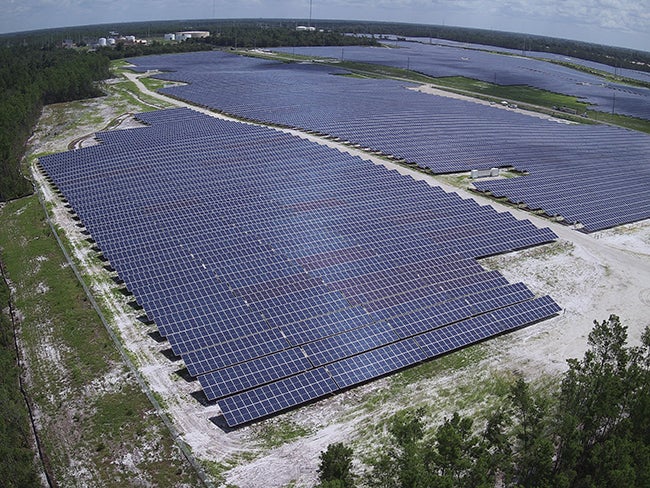
Hardening can also involve moving generation equipment out of harm’s way. At FM, for example, we are researching the optimal stow angles for ground-mounted photovoltaic solar panels during storm events. Hail damage can be reduced by tilting panels along a vertical plane, but ideal stow angles get more complex when wind is a factor and the panels can catch violent gusts like sails.

The power industry’s most urgent decisions are being made right now.
Be in the room where they happen.
View Conference Program
POWER: Are there structural designs that should be implemented to harden transmission lines and towers, things such as engineering to withstand high winds, ice and snow, etc.?
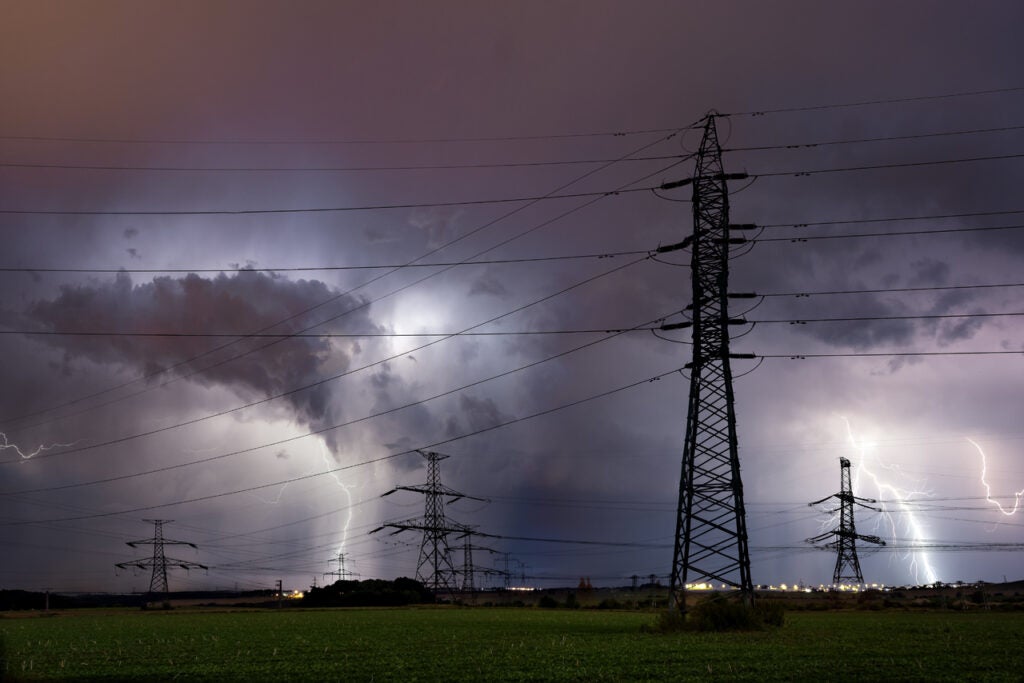
Palmer: Yes—and wind farms are particularly vulnerable. Lightning strikes are a high frequency hazard and a common cause of loss at wind farms, resulting in damage to blades, turbines, and electrical systems. As a result, we place strong emphasis on robust lightning protection design for turbines and associated transformers. We also encourage clients to adopt protection systems with proven field performance, including products that have been independently evaluated and approved through the FM Approvals process. (Many of these approved solutions are available at www.fmapprovals.com.)
We recommend a lightning-detection system that can send notifications to operators when a turbine is struck. We also recommend surge arrestors, surge suppression and Faraday Cage-type protection for equipment in and near the nacelle. (More details here.)
POWER: Should hardening of power generation and transmission infrastructure include remote monitoring of power lines?
Palmer: Yes, at FM we recommend remotely monitoring as much of the grid as technically possible. That includes drones, digital tools and human inspectors. But it also includes specialized technologies like dissolved gas-in-oil analysis devices that continually sample transformer insulating fluid for changes in operation.
Many transformer losses begin with electrical arcing failures that could have been detected with dissolved-gas-in-oil analysis. Increases in the amount of specific dissolved gases in transformer oil are telltale signs of internal defects. When the gassing increases, the probability of failure also rises.
For example, an increase in acetylene gas is a good indication of a worsening internal arcing condition. Once this acetylene gas level rises above a specific threshold, the likelihood of catastrophic failure is imminent and the transformer should be removed from service immediately. Unfortunately, there may be no other indication of problem with the transformer.
This is especially important for geographically remote assets such as wind farms and collector substations, where on site inspections are infrequent and a single failure can isolate a large block of generation.
POWER: How can artificial intelligence (AI) be utilized?
Palmer: At FM, we support our clients’ use of AI to detect and better understand anomalies in power generation equipment, including vibrations, abnormal noises and rising temperatures.
AI can help clients understand what certain anomalies mean, what kind of losses might be imminent and how important preventive maintenance is. Such event-based maintenance can be far more effective, and cost-effective, than calendar-based maintenance.
Many equipment manufacturers remotely monitor their power generation equipment for clients as well, and FM’s Property Loss-Prevention Data Sheets include benchmark operating parameters that can inform this process. (FM Loss Prevention Data Sheets can be reviewed here.)
FM sees value in our clients’ use of digital twins, including as training simulators and tools to assess the risk and impact of operational changes. When fueled by real world operating data, these models can be integrated into broader AI solutions to identify and analyze emerging operational issues.
—Darrell Proctor is a senior editor for POWER.