
Shifting electricity consumption patterns are complicating energy management. Increased electrification, whether from electric vehicles, smart appliances, or other technologies, along with the use of smart meters is changing how and when electricity is used. The World Economic Forum, among other groups, has noted how classical computing systems that have long served the energy industry are in need of an upgrade.
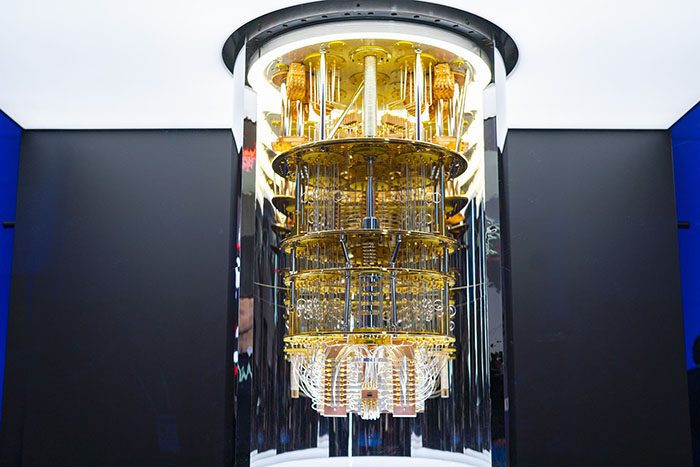
Quantum computing offers a solution. Quantum computers, using quantum bits or qubits, which can exist in multiple states simultaneously, can handle complex, large-scale computations. These computers process a multitude of datasets, and study a range of potential outcomes, to find an optimal solution. Dr. Remy Notermans, director of Strategic Planning for Atom Computing, a Boulder, Colorado-based group developing large-scale quantum computers, recently provided POWER with information about how quantum computing works. Notermans discussed how quantum computing can benefit electric utilities and the power generation sector, including how it can support energy management and load forecasting, and also optimize the power grid.
POWER: Quantum computing is not a single technology; several different modalities have evolved over the past few years into several competing camps such as superconducting, trapped ions, and neutral atoms. Tell us about Atom Computing’s approach and your work in the space.
Notermans: Atom Computing is a quantum computing hardware company built on neutral atom technology. Neutral atoms, in our case ytterbium atoms (a rare-earth metal), are naturally identical, highly coherent physical qubits. We trap and arrange them in a small vacuum chamber using optical tweezers formed by laser light, allowing us to create tiny, reconfigurable arrays of many qubits to compute with.

A key advantage of this approach is scalability. The same laser systems used to control hundreds of atoms can be extended to thousands and hundreds of thousands, without fundamentally changing the underlying technology. The uniformity of neutral atoms also reduces calibration complexity, making this a strong path to utility-scale, fault-tolerant quantum computing.
(Editor’s note: Reports on May 21 say the U.S. government is awarding $2 billion in grants to nine quantum-computing companies in deals that include U.S. government equity stakes, according to the Commerce Department. Atom Computing said it would receive $100 million of that funding.)
Atom Computing is also among a small group of companies that have demonstrated so-called logical qubits, an essential step toward achieving the low error rates needed for economically valuable applications. The company has built some of the world’s most advanced systems in this area and is commercially deploying one in partnership with Microsoft in Denmark.
POWER: Why should electric utilities and power generators care about quantum computing?
Notermans: There are important developments across quantum computing technologies that could impact utilities and power generators’ organizations in the next few years. Some approaches, such as superconducting and photonic systems, require multi-megawatt infrastructures for a single machine. This is posing challenges for planned power generation and grid capacity, and communities already strained by growing data center demands.
Neutral atom quantum computing offers a more sustainable alternative, with significantly lower power and space requirements as the platforms’ compute capabilities scale exponentially. For quantum computing to become a readily-available compute resource the long-term viability will depend on its physical impact on the power grid, an area where different technologies vary greatly.
POWER: Analysts have said quantum computing could revolutionize the electricity sector by optimizing power grid management, accelerating material discovery for better batteries, and enhancing energy forecasting—all while potentially using less energy per complex task than classical supercomputers. Is this a fair statement, and are we seeing this in action today?
Notermans: Quantum computers today are best viewed as research tools, with both the technology and practical applications still evolving. While the potential is significant, it remains to be seen which specific use cases will deliver early success.
Early breakthroughs are most likely in inherently quantum problems like chemistry and materials science. In the energy sector, this could enable better understanding of physical and chemical processes in batteries and solar cells. Other research is aimed at identifying where quantum computing can provide real-world advantages. For instance, Atom Computing partnered with the National Laboratory of the Rockies (long known as the National Renewable Energy Laboratory) to demonstrate how its “Quantum-in-the-Loop” workflow can improve electric grid decision-making processes.
Energy efficiency, meanwhile, depends heavily on the underlying technology. Power requirements for utility-scale systems vary widely, and neutral-atom approaches like Atom Computing’s offer a more energy-efficient path as systems scale.
POWER: Can you explain why the neutral atom approach is gaining traction in the energy space?
Notermans: Two main reasons stand out. First, neutral atom technology offers a much lower energy footprint, making it a more sustainable path to utility-scale quantum computing.
Second, the technology has advanced rapidly, with neutral atom systems achieving industry-leading logical qubit performances and showing a clear path to scale. As a result, timelines to economically valuable applications are noticeably shrinking, likely closer to five years than 10, prompting organizations across many industries including the energy space to start investing people, time, and money now if they want to competitively leverage this technology at that timescale.
POWER: What sectors within the energy industry do you expect quantum will impact first, and why?
Notermans: Quantum computers are naturally suited to address problems in the energy sector that are quantum in nature, such as battery chemistry, solar cell behavior, and nuclear radiation transport.
It is important to emphasize that this work is still active R&D (research and development). There are few off-the-shelf applications available and instead solutions are being developed through close collaboration between researchers and quantum experts. As hardware and algorithms mature together, organizations building expertise today are likely to be the first to realize real-world impact in the next few years.
POWER: What do the next 5 to 10 years look like for quantum advancements in the energy space?
Notermans: Quantum computing is evolving quickly, and the anticipated timelines to economically valuable applications fall in that 5-to-10-year window. Organizations that build in-house expertise now will be best positioned to leverage advanced quantum systems in the coming years, whether for emerging use cases or new applications they develop themselves, and start demonstrating the first industry-relevant real-world use cases in that timeframe.
POWER: How can companies in the energy industry utilize quantum computing right now?
Notermans: Organizations can start using quantum computing in several ways. The simplest is direct cloud access to quantum systems, which typically requires strong in-house expertise. Another option is partnering with quantum software providers to co-develop applications and access appropriate hardware.
For organizations who are just getting started in quantum and want to familiarize themselves with the landscape, joining a local ecosystem is a great entry-level step. Most regions have local, regional, or national groups and consortia (e.g., Quantum Economic Development Consortium, or QED-C, in the U.S.) that are an effective way to learn, connect with experts and industry partners, and explore potential collaborations.
—Darrell Proctor is a senior editor for POWER.