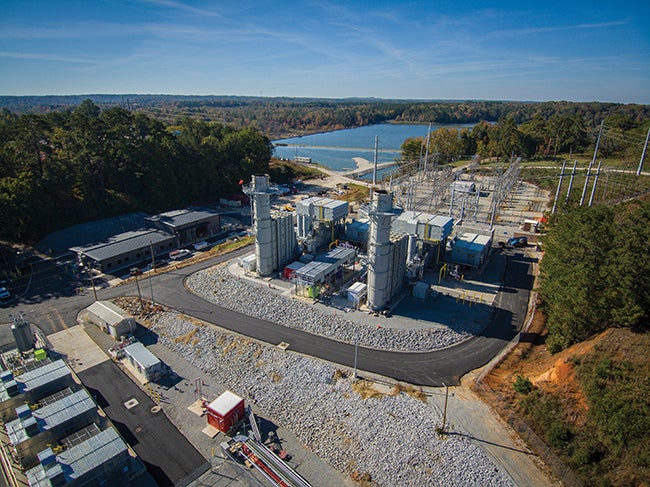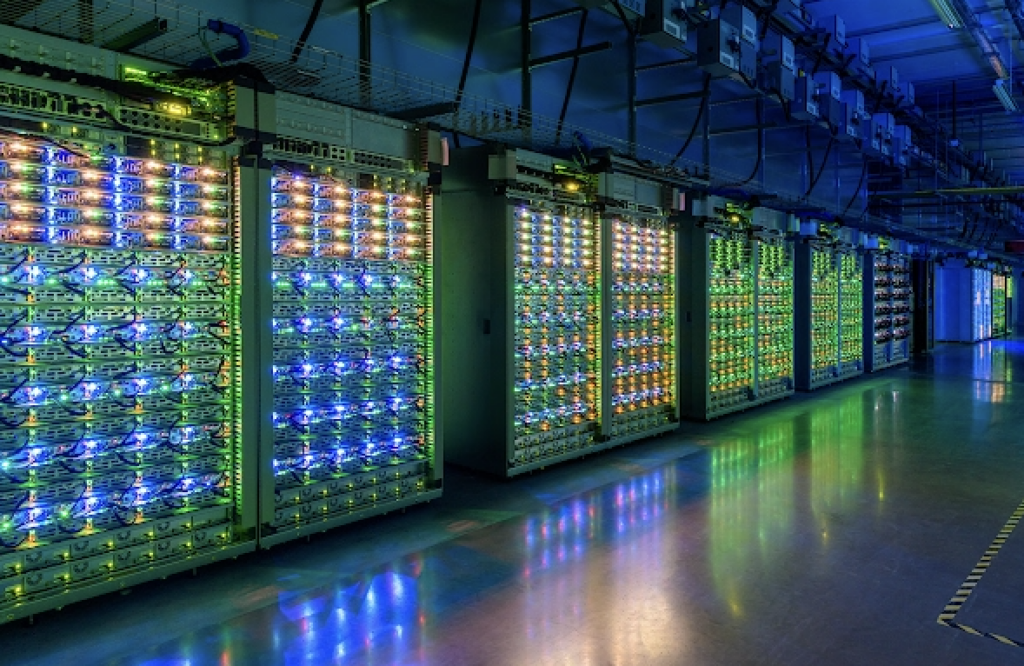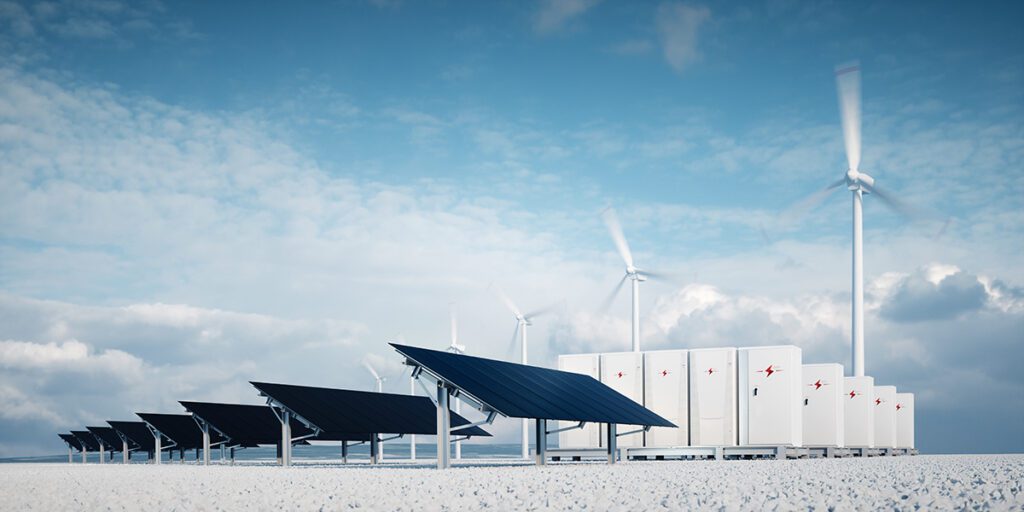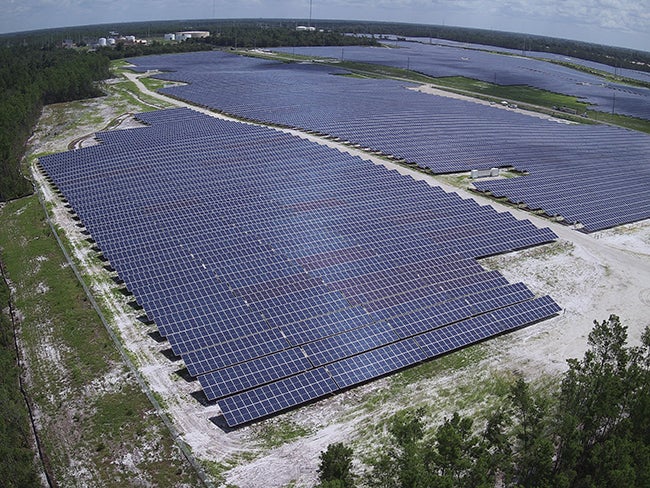
Data centers have traditionally depended on uninterruptible power supply (UPS) systems and backup generators to keep them online during a power cut, grid event, or natural disaster. But the critical nature of modern artificial intelligence (AI) workloads is such that there is no tolerance of downtime. Further measures must be in place to ensure energy continuity. For some, that may even mean setting up an adjacent power plant that can either entirely power the data center or can come online when needed.
“Those wanting to build new data centers have discovered that many utilities can’t deliver the power they need for several years,” said Vlad Galabov, research director for Digital Infrastructure at analyst firm Omdia. “That’s why more than 35 GW of data center power is likely to be self-generated by 2030.”
Grid Constraints
In Virginia, 25% of electricity already goes to data centers. By 2028, data centers across the U.S. are projected to account for 12% of nationwide electricity demand, up from approximately 4% in 2023, according to Lawrence Berkeley National Laboratory’s 2024 United States Data Center Energy Usage Report. Those building data centers expect power to be there on a one-to-two-year timeline. Utilities typically tell them it will be three to five years before they can have the power they need for a new facility. Some learn that there is no power available.
The hard truth is that utility providers are unable to meet demand. In the U.S. alone, there are more than 12,000 active projects currently seeking grid interconnection representing 1,570 GW of generator capacity and 1,030 GW of storage. The shortage of power for data centers could amount to more than 45 GW, according to Boston Consulting Group. Power availability has emerged as the top consideration in data center site selection—scoring higher than proximity to a major metro area. Twenty-seven percent of data centers are expected to rely entirely on onsite generation for primary power by 2030, up from 1% a year ago, according to a Bloom Energy survey.
“The number one constraint for AI data centers is power,” said Bill Kleyman, author of the 2025 State of the Data Center Report. “The advantages of on-site power generation include bypassing grid congestion, the avoidance of transmission losses, mitigation of environmental impacts, accelerated speed-to-market for new data centers, and improvement in facility reliability by reducing vulnerability to transmission and distribution outages.”
Those rushing headlong into the building of huge AI data centers don’t have the patience to wait for traditional utilities to provide the power they need. Laura Laltrello, COO at data center developer Applied Digital, goes as far as to advocate that data center developers abandon conventional site selection and embrace a power-first design.
“Major metros are tapped out—they are grid constrained, overbuilt, and slow to scale,” she said. “Power permitting, utility coordination, and substation builds can delay data center deployments by many years.”
Solutions to Constrained Power
Data centers have a couple of go-to solutions to address grid constraints. A UPS is an electrical device that offers near-instantaneous emergency power to a data center when utility power ceases. Power is supplied via batteries and power management software to bridge the gap between the moment of power loss and a backup generator coming online. UPS systems also provide voltage sag, surge, and spike protection. It takes milliseconds for UPS to take over the supply of power to data center equipment. Most UPS systems allow only a few minutes of grace period—just enough for the backup generator to take over. But some have enough battery capacity to last a couple of hours in an extreme event.
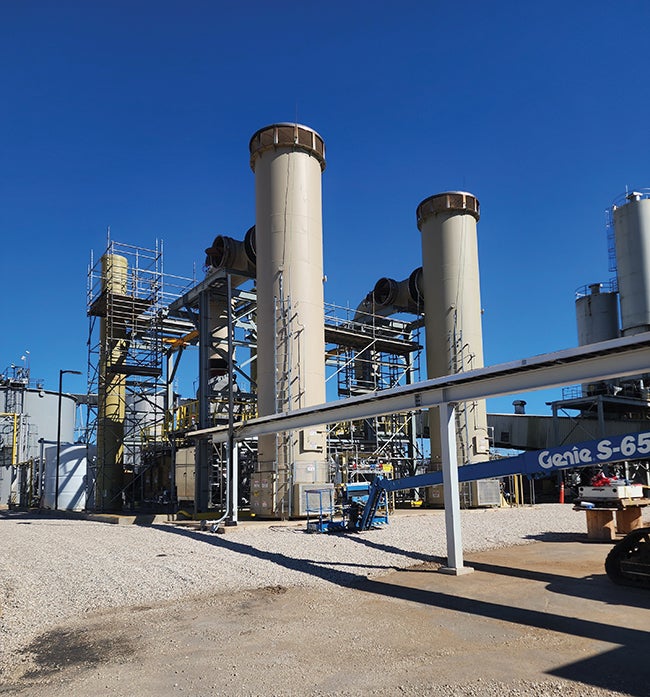
Generally, though, backup generators are relied upon to take up the slack. These are typically diesel generators—basically reciprocating (internal combustion) engines. Depending on the availability of fuel, they can run for a day or up to 72 hours in some cases before refueling is necessary. But with power on the grid heavily constrained and utilities telling data centers they might have to wait several years before they can have access to the electricity they need, another option is emerging: relying on backup generators for prime power until the grid interconnect becomes available. In some cases, the backup generators may even be established as an onsite power plant that is available on standby to run the entire data center and provide ancillary services to the grid.
No wonder the backup generator business is booming. According to Rolls-Royce, sales of power generation products for the data center segment grew almost 50% in 2024. Encouraged by the boom, Rolls-Royce is investing $75 million to increase production of mtu Series 4000 engines at its facility in Aiken, South Carolina. The investment will increase machining capabilities and expand the facility’s footprint. This funding is in addition to the $24 million expansion of its Mankato, Minnesota, facility.
Cummins Power Generation, too, has increased its generator offerings for data centers. The containerized Centum Force is engineered for easy transportation, simple installation, and stackability. It offers up to 34% space utilization savings over traditional builds.
“As data centers and mission-critical industries expand rapidly, we’re committed to offering solutions that combine exceptional engineering with effortless deployment,” said Cummins executive Ignacio Gonzalez.
Prime Power Generators
Some facilities are buying generators now to supply power rapidly while they arrange the grid connectivity required. Others have decided to ignore the grid entirely and power their own facilities.
Wärtsilä Energy, for example, is supplying 282 MW of engines to operate a new data center project in Ohio. The onsite power facility, providing power directly to the data center, will operate with 15 Wärtsilä 18V50SG engines running on natural gas.
“Data center developers are facing increasing time-to-power challenges due to grid connection delays,” said Risto Paldanius, vice president, Americas at Wärtsilä Energy. “Quick access to power combined with high reliability, fuel efficiency, and exceptional heat resilience make engines the ideal power supply for data centers.”
Similarly, generator packager Fidelity Manufacturing of Ocala, Florida, is hustling to supply more generator packages to data center customers. The company has grown from 40 to 500 personnel over the past nine years, primarily due to a surge in data center business.
Improving Generator Economics
Fuel costs can often be a concern for those running data centers. One way to improve availability and profitability is to add a clutch between the generator and the engine that drives it. This enables the unit to switch between power generation and a mode that lets the data center utilize its generator to offer ancillary services such as grid stability, synchronous condensing, and spinning reserve. Some U.S. states pay for such services. Others are beginning to follow suit.
According to Morgan Hendry, CEO and president of SSS Clutch Company of New Castle, Delaware, the benefits are twofold:
- Power plants equipped with clutches can keep their generators spinning to provide immediate rotational inertia for grid stability and frequency response, while the prime mover remains ready to deliver sustained power once battery storage is depleted.
- A generator that was previously rarely used can become a revenue-generating asset, improving the economic viability of the data center.
“By specifying the addition of synchronous self-shifting (SSS) clutches along with generators, the data center may be able to obtain double duty for its investment,” said Hendry.
When power is required, the clutch is engaged and the gas engine drives the generator to produce power. When the clutch is disengaged, the generator continues to rotate to provide stabilization services for the network such as inertia, voltage control, and short circuit power.
Alternatively, natural gas generators with clutches are being deployed with UPS systems inside the data center in some parts of Europe in preference to electric motor-driven UPS, noted Hendry. Piller Energy Systems, for example, provides its UniBlock series to serve this market.
“Besides providing backup generation when utility power is lost, the generator can filter out utility disturbances and protect against brownouts, voltage sags, line noise, harmonic distortion, high voltage spikes, and frequency variations that affect power quality,” said Hendry. “Repeated use of UPS batteries for this function results in reduced life expectancy.”
Generator Lead Times
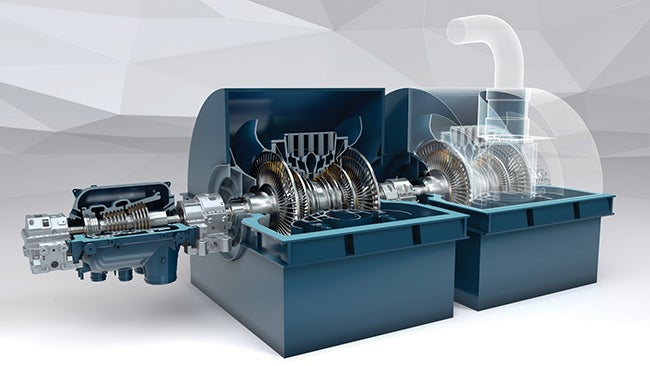
The lead times for gas and diesel generators are generally much smaller than those for gas turbines (often two to four years) and utility connections (three to five years). Those planning and building data centers don’t have the patience to wait. They want their facilities up and running now so they can fulfill soaring demand for AI services.
“Time to power wins,” said Laltrello. “The AI race favors builders who can energize fast—compute demand isn’t going to slow down.”
—Drew Robb (drewrobb@sbcglobal.net) has been a full-time freelance writer for more than 25 years specializing in engineering and technology.