 |
Engro Powergen Thar Limited turned an untapped desert coalfield into Pakistan’s cheapest power—and a template for energy independence.
Pakistan entered the second half of the 2010s in chronic power deficit. While consumption was rising alongside population growth and industrial expansion, much of the generating fleet still relied on imported furnace oil, high-speed diesel, and coal from Indonesia and South Africa at a steep cost of about $11.4 billion, as Tayyab Saeed, technical manager at Engro Powergen Thar Limited (EPTL), explained to POWER. Compounded by circular debt that left suppliers short on cash, and by chronic technical and non-technical losses, the system suffered stunning shortfalls of as much as “7 GW to 15 GW,” Saeed said. Clearly, “There was an immediate need for the provision of cheap power,” he said.
It was not that Pakistan lacked indigenous resources. In 1988, the British Overseas Development Agency struck coal while drilling for water in the Tharparkar desert, a remote, arid stretch of southeastern Sindh near Pakistan’s border with India, about 360 kilometers (km) from Karachi. Through the 1990s, Pakistan’s Geological Survey, aided by the U.S. Geological Survey, established the stunning scale of the raw, native resource: the Thar coalfield holds an estimated 175 billion tonnes of lignite that stretches under more than 9,000 km 2 of stable sand dunes. Yet, while enormous, the resource remained difficult to develop, given that it was remote, wet (with a moisture content of as high as 43% to 49%), deeply buried, water-constrained, and unproven at scale in Pakistan.
But the imperative had already been a core pursuit at Engro for more than a decade. In 2009, the company formed Sindh Engro Coal Mining Company (SECMC) with the Government of Sindh—establishing the largest public-private partnership in Pakistan’s history—to unlock the Thar coalfield. In 2014, it broke ground on Thar Coal Block-II. EPTL, incorporated that same year as a joint venture led by Engro Powergen Ltd. with China Machinery Engineering Corp., Habib Bank, and Liberty Mills, sought to burn the mine’s output in two 330-MW units at Islamkot in Sindh’s Tharparkar district, fed 3.8 million tonnes of lignite a year from SECMC next door.
When EPTL synchronized its first unit to the national grid in March 2019, followed by its second that April, and declared commercial operations that July, it became the first power plant in Pakistan to run on indigenous coal. In the seven years since, EPTL has confronted several crucial challenges, including the variable quality of its lignite, a remote and fragile transmission link, a water-scarce site, and a 2022 coal-dust explosion that knocked the plant offline. EPTL’s hard-earned POWER Top Plant nomination recognizes that it met each of those trials—and has topped Pakistan’s national merit order for four straight years while doing so.
No Precedent, Two Unknowns
EPTL approached the project knowing “there were too many unknowns,” Saeed said. Beyond a remote location and limited transportation options, “on the technical front, the two major challenges were fuel and grid.”
In This Issue
Full issueOn the fuel front, EPTL ran a detailed feasibility study of the coal’s properties drawing on more than 3,600 core samples—yet no actual coal was available until July 2018, by which point the plant was already deep into commissioning. “To cater for this unknown, RWE—Germany’s largest power producer—was engaged as owner’s engineer and was part of the detailed engineering design and review,” Saeed said.
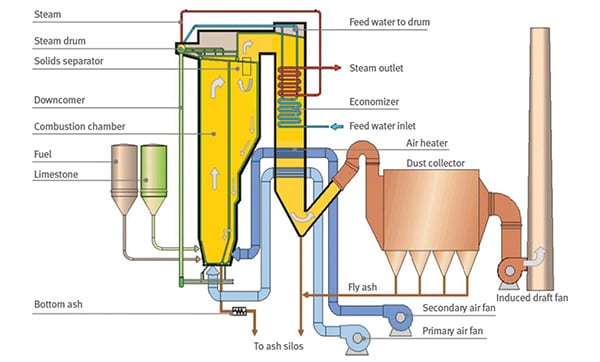
EPTL’s two 330-MW units use circulating fluidized bed (CFB) boilers, a choice driven by the wide variation expected in Thar lignite. While the boilers came from GE’s CFB line—technology it acquired through Alstom Power—the design incorporated a larger steam-cooled cyclone surface area, modified superheater panels, and heavier-duty ash coolers to improve boiler efficiency under variable fuel conditions. But, as Saeed noted, Thar coal also contains metallic oxides, including sodium and potassium oxides, that can accelerate slagging and corrosion on boiler tubes when concentrations rise. EPTL applied a specialized GE AmStar coating on boiler heating surfaces to improve tube reliability while preserving heat-transfer performance. Notably, the plant also targets the International Finance Corp. (IFC) emissions standards, a stricter benchmark than Pakistan’s national requirements, to keep its environmental footprint to a minimum.
 |
|
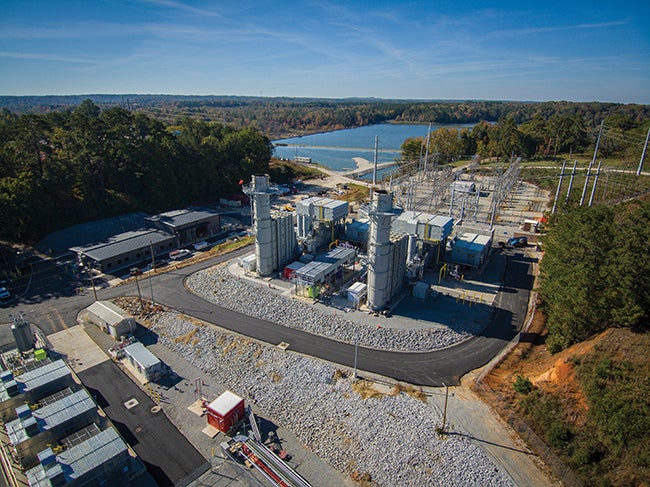
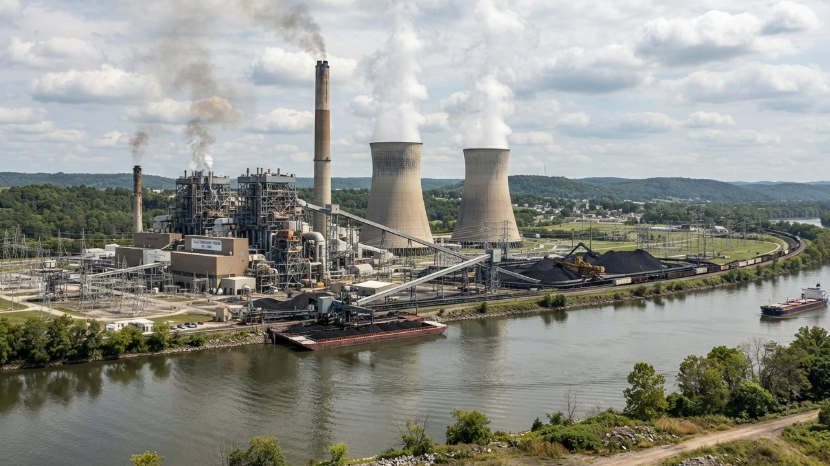
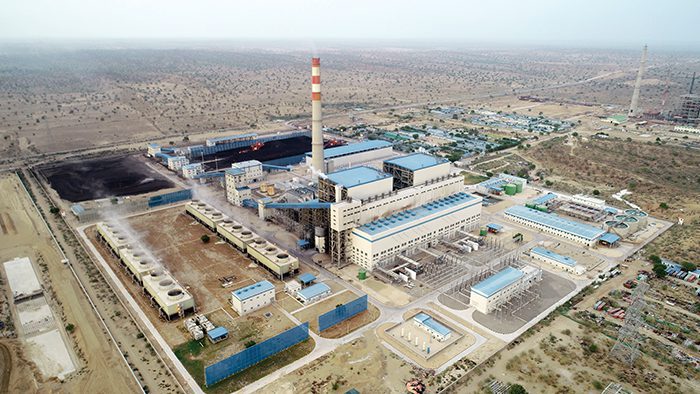
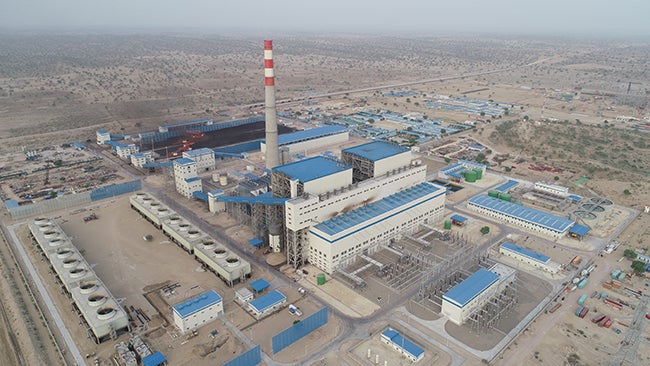
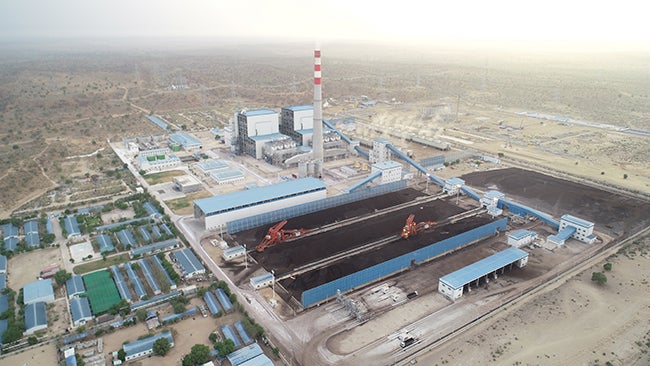
1. The 660-MW Engro Powergen Thar Limited plant at Islamkot, in Sindh’s Tharparkar district, pairs two 330-MW circulating fluidized bed units with the adjacent Thar Block-II mine, which feeds it 3.8 million tonnes of lignite a year. Courtesy: Engro Powergen Thar Limited |
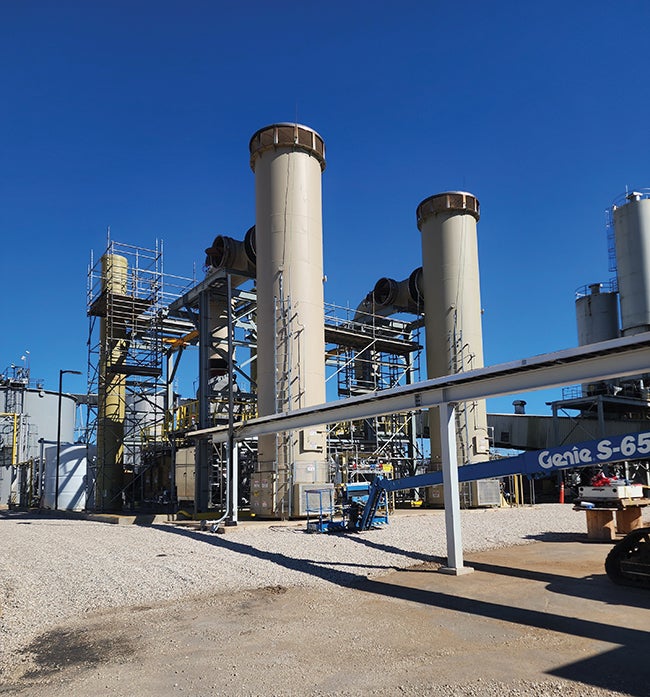
Still, managing variable fuel in real time has become a discipline, Saeed noted. EPTL maintains roughly two weeks of coal storage (Figure 1) and runs a layered quality regime that begins at the mine, where a third-party audits sampling, testing, and reporting, and each coal pile receives a quality certificate. At the plant gate, EPTL tests at least 25% of the incoming supply to capture the full spectrum of variation. Before coal reaches the storage yard, a SOLAR Germany online analyzer reads ash properties on the feed. In addition, an Excel-based algorithm then segregates piles by quality and guides blending based on ash and volatile content to ensure smooth combustion, while an in-line sampler confirms the final feed before it is sent to the boiler.
The entire system was engineered for contingency. “The plant has had numerous instances in which high-ash coal, containing up to 12% ash, was fed to the boiler,” Saeed said. That pushed hourly coal consumption to 310 tons, compared with a design average of 276 tons, straining the ash coolers and transport system. “However, since the system is designed to handle worst-quality coal at consumption rates ranging from 256 to 330 tons per hour, this condition is covered in plant operating procedures and manuals, and relevant actions were taken,” he said.
The site’s water conditions demanded as much ingenuity. Given Thar is a desert, and its cleaner, usable water is largely confined to the shallow first aquifer, extracting coal requires drawing down the deeper third aquifer, lowering its water table. That created two problems at once: a falling groundwater level below the mine, and a stream of high-salinity brine from the plant’s reverse-osmosis (RO) system that had to go somewhere. EPTL’s solution addressed both. After a detailed hydrological assessment, the plant began re-injecting the RO brine back into the third aquifer—a first of its kind in Pakistan—simultaneously helping to maintain the groundwater level that mining had depleted and disposing of the brine safely, well below the first aquifer water that local communities rely on. Additional sealing layers were built into the re-injection wells, and observation wells monitored by a third party confirm that the first aquifer remains uncontaminated.
A Grid from Scratch
 The grid, the second unknown, was in some ways harder. At the outset, EPTL had no transmission lines to sustain construction, so the site ran on solar panels, solar water heaters, and biogas. The company coordinated with the National Transmission and Dispatch Company and Matiari Transmission Company to complete the evacuation lines and deployed three shunt reactors to manage voltage and frequency. Yet, because the location remained grid-weak, the plant is hardened against failure. Each unit has a dedicated emergency diesel generator and feedwater pump, as well as an enhanced uninterruptible power supply–battery bank supplying direct current power to critical loads, including turbine lube oil, generator seal oil, and boiler makeup water. Integration has since improved with a secondary and dedicated evacuation line, Saeed noted.
Benchmarking also translated into specific plant changes. Learning exchanges through VGBE and EPRI, and with operators in the U.S., Bosnia, Germany, and Türkiye, led EPTL to inspect intermediate-superheater bend tubes after Stanari identified accelerated wall thinning. Non-destructive testing confirmed the same condition, prompting adoption of the Bosnian plant’s specialized refractory. The company also adopted Red Hills’ dust-wash method and commissioned an independent review of its inspection routines to strengthen long-term equipment reliability.
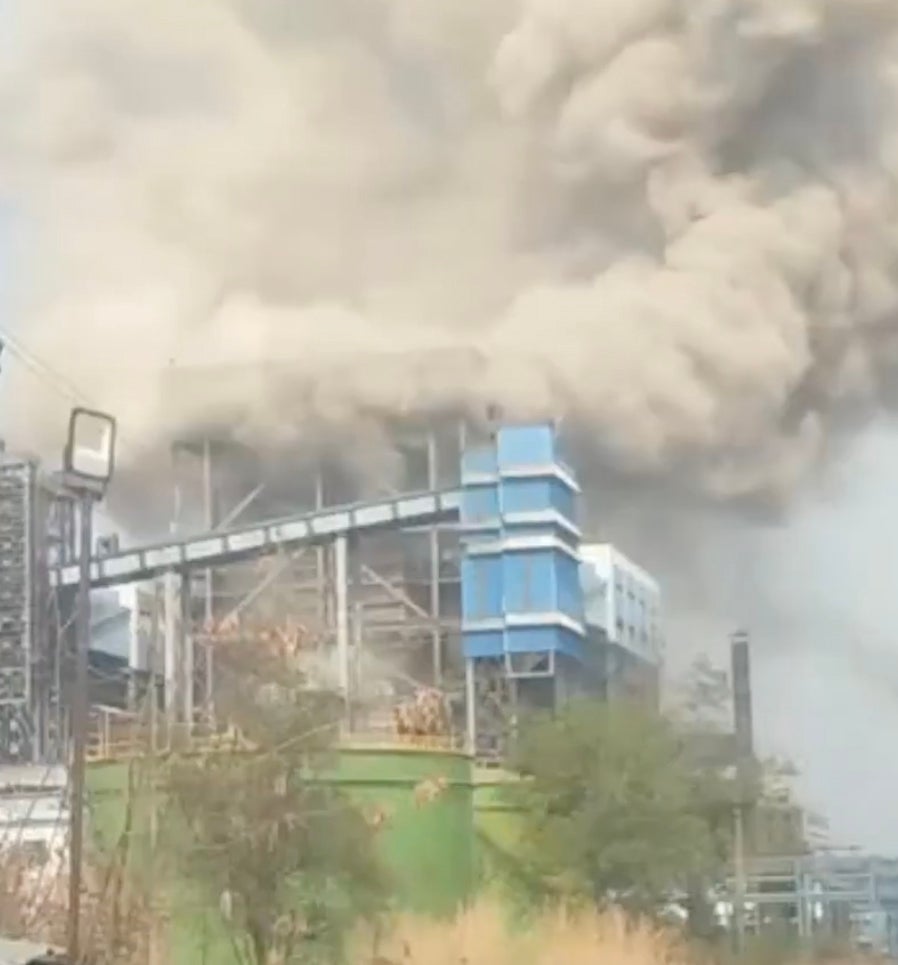
Finally, the plant’s improvement culture was tested by a serious process safety incident. In 2022, during startup of the crushing section, “a primary explosion happened inside the variable-frequency screening unit,” Saeed said, and it “quickly propagated to the upstream equipment because of a continuous deflagration event.” Investigators concluded that Thar coal dust could explode when dispersed in a confined space and exposed to an ignition source such as friction, a heated bearing, or faulty grounding. EPTL responded by installing explosion detection, prevention, and de-coupling systems to prevent recurrence. Saeed said other Thar coal plants have since begun deploying similar protection, though many plants still rely mainly on dust-mitigation protocols rather than formal combustible-dust hazard systems.
Top of the Merit Order
EPTL’s clearest measure of merit may be cost. For four consecutive years, it has topped the National Electric Power Regulatory Authority’s (NEPRA’s) cost-based merit-order list, ahead of many supercritical units. Saeed credits the standing to “EPTL’s strong focus on benchmarking, continuous learning, and improvement” and “robust operational discipline,” from conserving small energy streams to plant performance.
EPTL says it has generated 27,000 GWh to date, supported more than 3,000 local jobs, and saved more than $1 billion in foreign exchange by using domestic lignite. Government restrictions on new foreign-fuel plants and efforts to convert foreign-coal units to Thar coal show confidence in “EPTL’s performance and its impact on [the] economy,” Saeed said.
—Sonal C. Patel is a POWER senior editor (@sonalcpatel, @POWERmagazine).