 |
A North Dakota–based membership cooperative teamed with a major infrastructure engineering and construction group to build a new natural gas–fired power station, supporting an urgent need for power generation capacity in the region.
Utilities and co-ops across the U.S. are wrestling with a challenge many did not foresee a decade or even five years ago. Unprecedented load growth, driven by industrial expansion and artificial intelligence in a post-pandemic world, mean new power generation resources are needed—and fast.
Basin Electric Power Cooperative, a not-for-profit generation and transmission cooperative, owned by its 139 member systems across nine states, faced a significant challenge early in 2022. With near-term load growth in the Bakken region of northwest North Dakota projected to increase by more than 300 MW compared to previous forecasts, it was determined that additional new generation was required by the summer of 2025 in order for Basin to continue to provide its members with safe, reliable electricity. Basin Electric also wanted to avoid the risk of not meeting generation commitments to the Southwest Power Pool Regional Transmission Organization.
Basin Electric and its partner, Burns & McDonnell, developed a project development and execution approach to complete a new natural gas–fired power station on an accelerated timeline. A traditional, multi-year development cycle for a new power plant was not an option; meeting the need for speed required a new approach rooted in trust, speed, and collaboration.
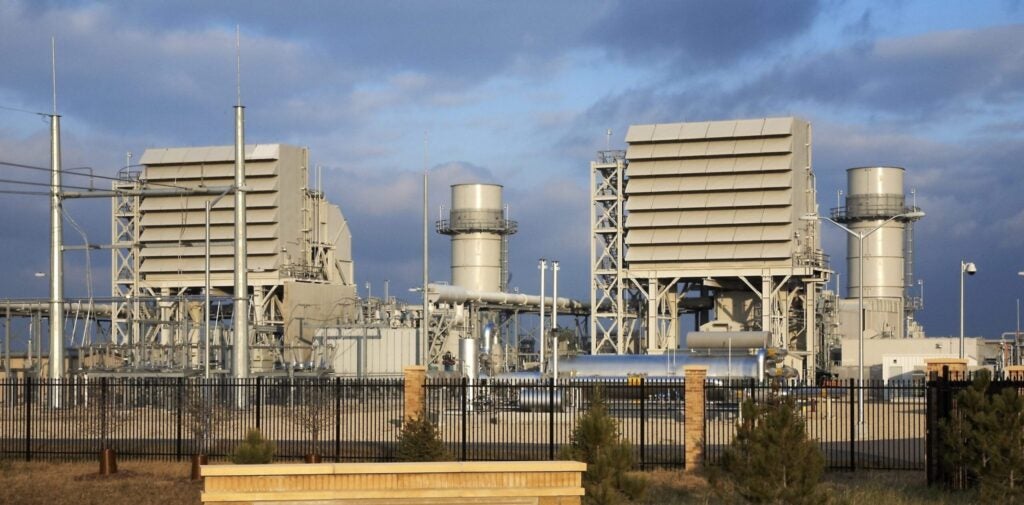
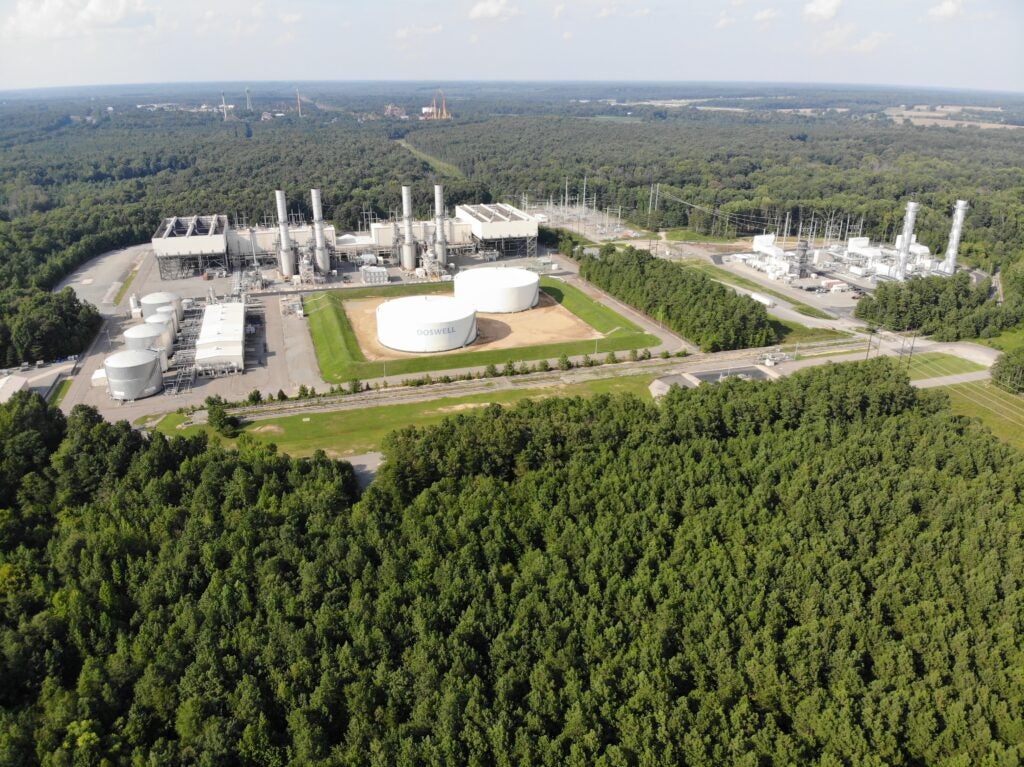
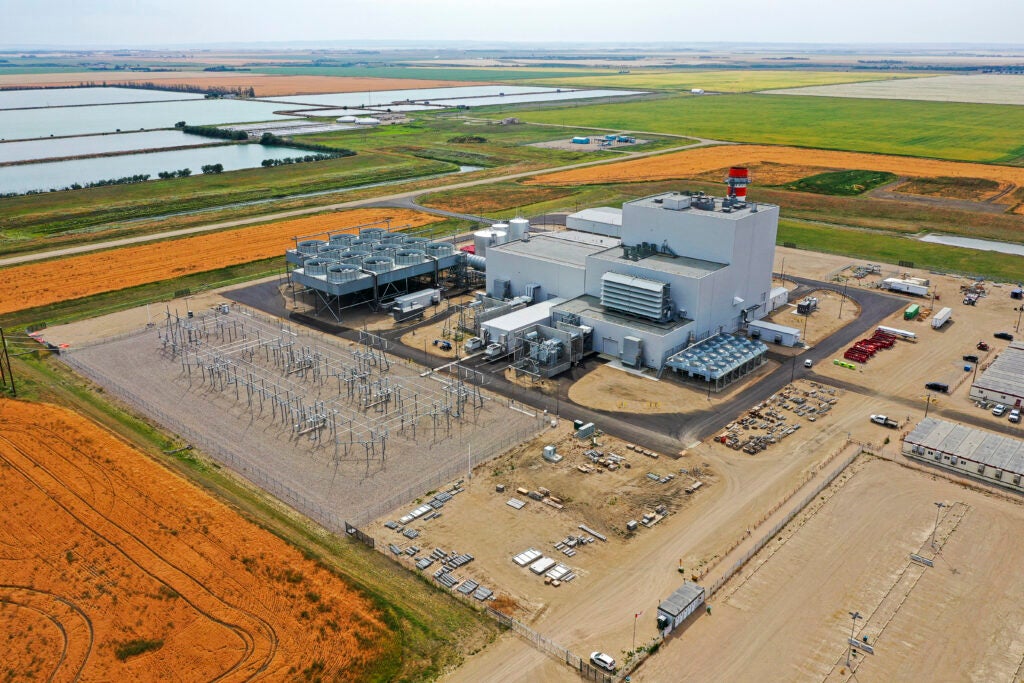
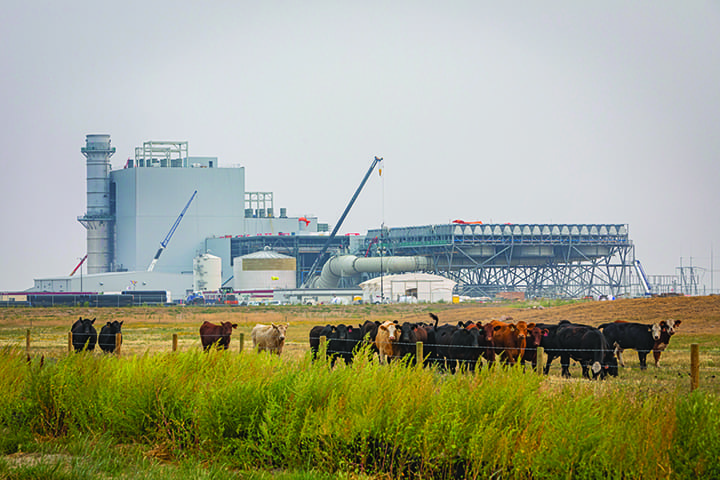
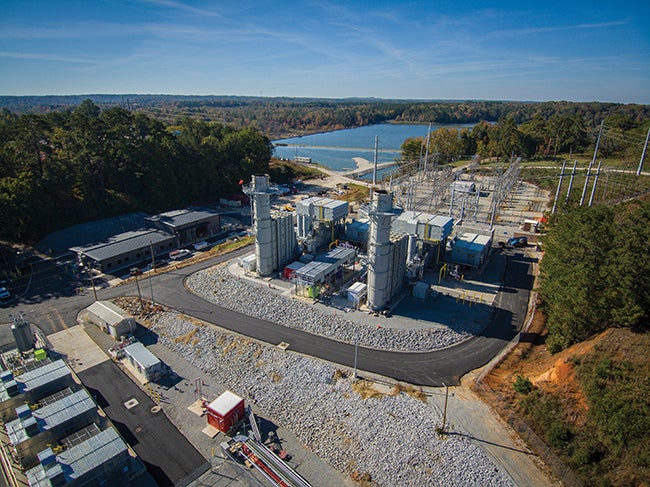
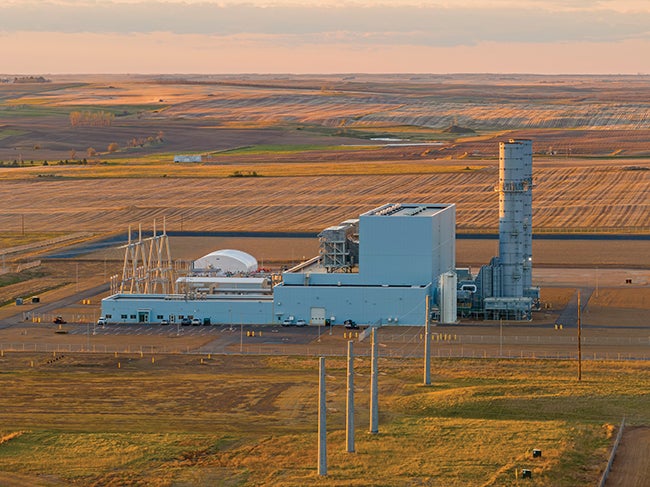
The result is Pioneer Generation Station Phase IV (PGS IV), a 580-MW simple-cycle combustion turbine and reciprocating engine–powered addition to the existing 803-MW natural gas–fired Pioneer Generation Station northwest of Williston, North Dakota. The new project was delivered on time and under budget, filling the critical need for electricity in the region. Basin Electric and Burns & McDonnell adopted a fast-track development plan along with a progressive, open-to-closed book, engineering, procurement, and construction (EPC) model.
The companies said the new generation provides power dispatch flexibility while addressing near-term load growth and long-term grid stability in the Bakken region.
In This Issue
Full issueThis strategic decision was the key to the project’s success. It allowed engineering, major equipment procurement, and construction planning to begin immediately after project approval, which shaved months off the schedule. The model provided the flexibility to navigate a volatile market while giving Basin Electric’s leadership the cost certainty it required, proving that speed and fiscal responsibility can go hand in hand.
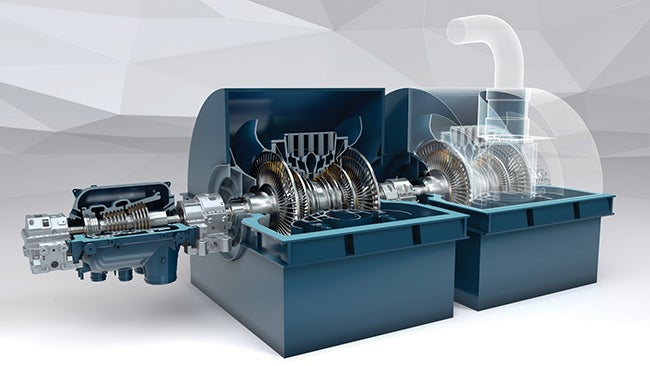
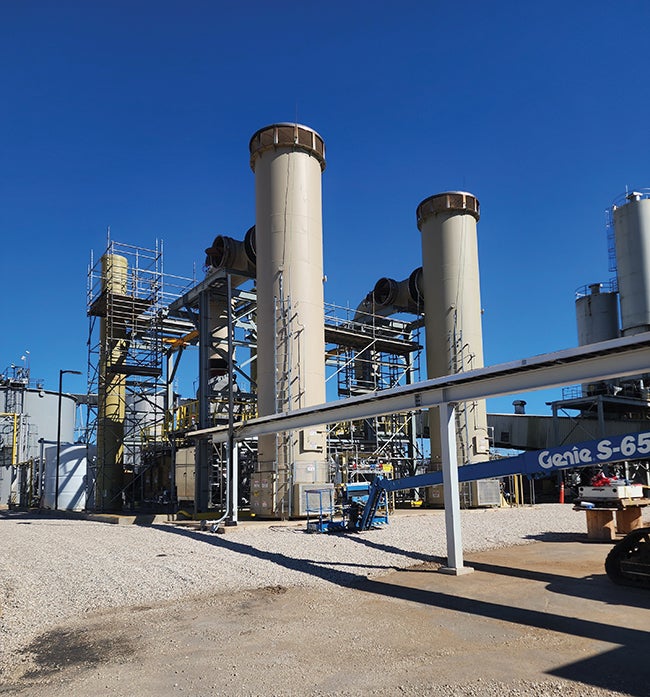
“Basin Electric has partnered with Burns & McDonnell for more than 50 years and has also worked with its construction subsidiary, AZCO, for over 25 years,” said Jim Lund, Basin Electric senior mechanical engineer. “This longstanding collaboration enabled Burns & McDonnell to develop an EPC project plan that aligned with Basin’s schedule and financial objectives.” AZCO said its construction scope on the project included mechanical installation of a series of six 18-MW Wärtsilä W18V50SG reciprocating engines, and two 240-MW Siemens Energy STG6-PAC-5000F combustion turbines.
The development plan and EPC model enabling the rapid deployment of much-needed power has made the Pioneer project a finalist for a POWER Top Plant award for natural gas–fired generation.
Close Collaboration
Officials with Basin Electric and Burns & McDonnell said teams from both companies worked closely to complete required design, procurement, and permitting to achieve early construction and equipment delivery milestone targets, in order to maintain the project schedule. Basin Electric’s board of directors approved the purchase of the gas turbines, reciprocating engines, and generator step-up transformers before the total project cost was even finalized, a decisive move that secured a spot in the production line and avoided what could have been a lengthy delay. Basin Electric also self-performed a 17-mile 345-kV transmission line project in parallel with the generation project to interconnect the new generation to Basin Electric’s grid system.
“The collaboration and transparency between Basin Electric and our team made for a seamless process that smoothed project planning and design efforts early on, which helped support rapid mobilization,” said Travis Fucich, a vice president in the power group at Burns & McDonnell. “Site readiness was also accelerated through early land purchases and concurrent preconstruction and permitting activities.”
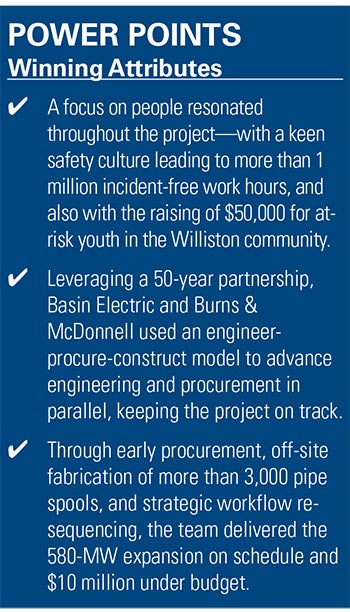 The companies maintained what they called a “relentless” pace from the moment ground was broken in March 2023. The first steel was in the air just five months later. The groups said this was made possible by fabricating 3,158 spools of pipe and 100 tons of structural steel off-site, and using specialized equipment to rip through frozen ground. The project’s collaborative EPC framework helped mitigate the impacts of supply chain disruptions and equipment delays. By re-sequencing tasks, the team was able to absorb the delays without impacting the final completion date of August 2025.
Gavin McCollam, Basin Electric senior vice president and chief operating officer, said the successful completion of the PGS IV project—on time, under budget, and with a great safety record—is exactly what the team strives for every single time. “They skillfully met every challenge, and the end result aligns with our mission to provide energy to rural America,” he said.
“From planning to execution, the project team was committed to overcoming complex problems. The team delivered exceptional results, executing the project safely, on schedule and on budget,” said Sam Yoder, a director in the Gas and Heavy Industrial Group at Burns & McDonnell and the EPC project manager for the PGS IV project.
The project required the seamless integration of two different generation technologies, which demanded a significant and innovative approach to unify controls and existing utility infrastructure. Building near the existing plant, constructing what was effectively two greenfield power plant facilities separated by one mile on a brownfield site, presented immense logistical and engineering challenges.
The companies said the project’s success was founded on a “one-team” mentality, where all stakeholders—Basin Electric, Burns & McDonnell, Siemens Energy, and Wärtsilä—were encouraged to work toward the project’s goals above individual company interests. The result of this disciplined, partnership-driven approach was a facility expansion completed $10 million under budget. The groups said PGS IV is a testament to the power of a progressive EPC model to deliver complex projects on schedule and under budget, even in the most demanding circumstances.
The completion of PGS IV represents far more than an operational achievement; it is a testament to Basin Electric’s dedication to its members and the communities it serves. “I’m incredibly proud of the team for successfully delivering what was essentially two projects in parallel, blending multiple technologies into the existing facility,” Matt Ehrman, vice president of Engineering and Construction, said. “The facility is ready to provide reliable power for our members for many years to come.”
“We are proud to support Basin Electric in its mission to provide reliable energy to its membership in rural America,” said George Ransom, Basin Electric account manager at Burns & McDonnell. “Delivering the PGS IV expansion on schedule and under budget allows us to contribute to the long-term growth of the communities that depend on this power every day.”
PGS IV is the largest single-site electric generation project built in North Dakota in 40 years, and its impact extends beyond the fence line. The project team raised more than $50,000 for Eckert Youth Homes, providing critical resources for at-risk teens in the Williston community. Officials said the project tells a story of what is possible when partnership is prioritized over process.
A New Standard for Safety
The companies told POWER the project’s most profound success was its transformative safety culture. Leadership made the decision to fully commit to a new safety philosophy. This was not a top-down mandate; it was a site-wide cultural shift. The “Live Safer” mindset was adopted by every worker, from leadership to craft professionals. This people-first approach created a job site where every individual felt empowered and invested in the well-being of their colleagues.
The results were exemplary. The team achieved more than one million consecutive work hours without a recordable incident, finishing the project with a stellar TRIR (Total Recordable Incident Rate) of 0.54. The companies said the team at PGS IV “did not just build a power plant; they built a blueprint for a safer, more engaged workforce, ultimately setting the foundation for the Burns & McDonnell Live Safer program.”
 |
|
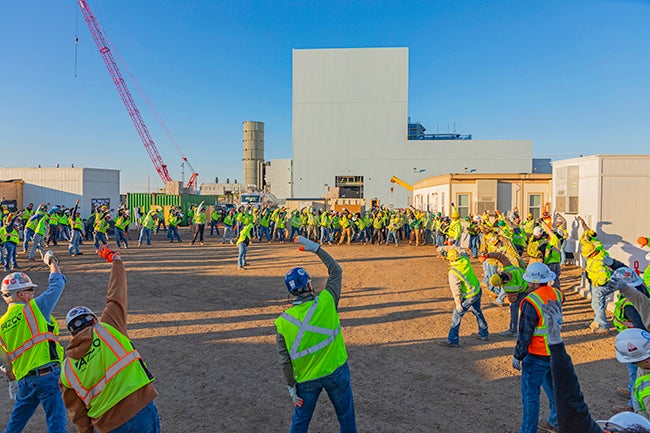
1. Workers warm up during the morning stretch and flex program for the site team at the Pioneer power plant site. Courtesy: Burns & McDonnell |
Basin officials said the project relied on a broad and dedicated workforce, drawing subcontractors and craft professionals from across the country. The company said construction staffing peaked at close to 500 workers (Figure 1), with more than 1.6-million work hours logged.
“Building this project in one of the tightest labor markets we’ve seen forced us to challenge every assumption about how we staff, sequence, and safeguard a project,” said Scott Strawn, senior vice president and general manager of the Power group at Burns & McDonnell. “The result was a world-class facility and a new benchmark for jobsite safety and project execution.”
—Darrell Proctor is a senior editor for POWER.