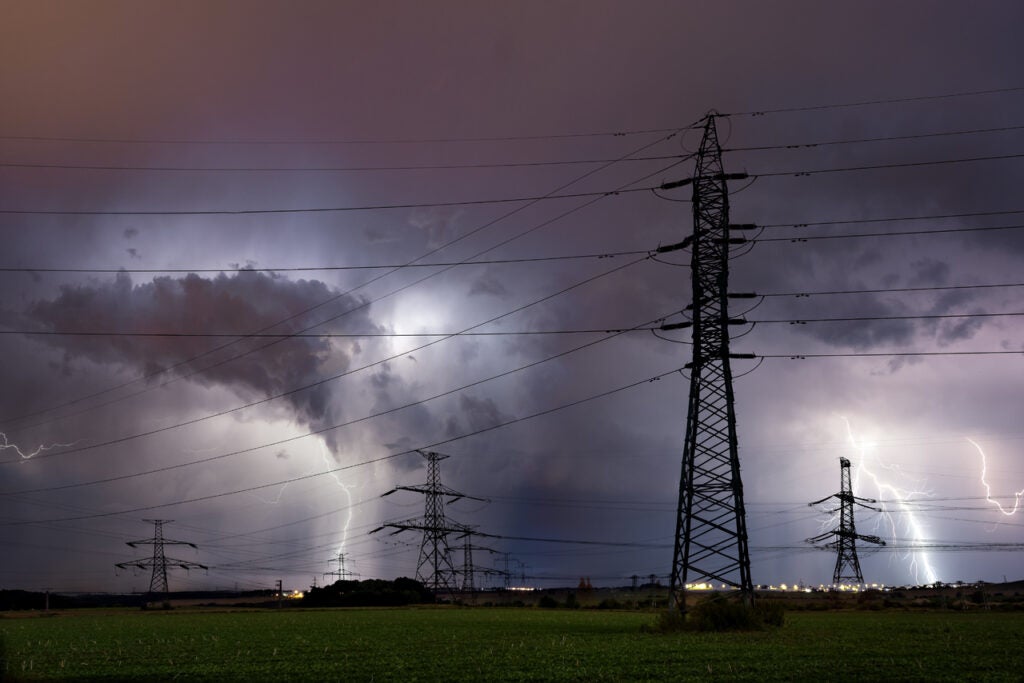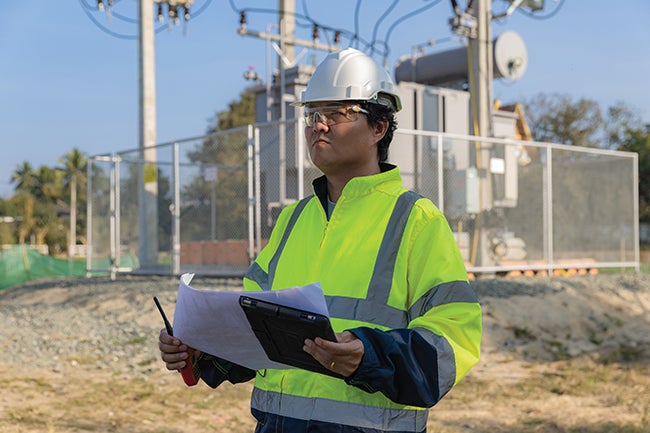
As utilities prepare for the 2026 Atlantic hurricane season, forecasters predict at least 10 named storms, with at least three expected to impact the U.S. directly. The familiar preparations are underway: staging crews, inspecting infrastructure, and reinforcing vulnerable assets. Billions of dollars have gone into physical hardening over the past decade through steel poles, underground lines, and elevated substations.
But extreme weather over the past year has made one thing clear: hardening alone isn’t solving the problem. Storms are becoming less predictable, stressing systems in unexpected ways and compressing recovery windows. At the same time, the grid faces mounting operational complexity from new loads, distributed energy resources, and reliability demands that go beyond what infrastructure upgrades alone can address.
In that environment, making the system stronger is necessary but not sufficient for resilience.
The shift toward hardware solutions for smarter grid utilization is already underway at the transmission level. Grid-enhancing technologies (GETs), such as dynamic line rating, are being deployed to increase capacity by 10% to 40% using real-time data, without building new lines.
The same principle applies to distribution, where more than 90% of customer outages originate, and aging infrastructure built decades ago is now reaching the end of its life. Many constraints that drive prolonged interruptions during severe weather are operational rather than structural, including limited visibility into system stress, inability to balance loads dynamically, and constrained switching options.
A storm-resilient grid must do more than withstand damage. It must operate through disruption with visibility and real-time adaptability as conditions change.
Hidden Vulnerabilities in Hardened Systems
It is easy to see how outages during storms come from trees falling or lines snapping. But beneath those visible failures lie more subtle limitations. Grid operators often lack the visibility and control needed to detect hidden weaknesses such as overloaded conductors, phase imbalances, or constrained switching options. These invisible challenges can turn what appears manageable into disruptions spanning hours or days.
Recent hurricanes have repeatedly demonstrated this dynamic. In 2024, Hurricanes Helene and Milton exposed how operational constraints compound physical damage across multiple states. Helene knocked out power to 4.7-million customers across the Southeast at its peak. Weeks later, Hurricane Milton left about 3.4-million customers without power in Florida.
These operational vulnerabilities are not limited to hurricanes. Just this year, Winter Storm Fern demonstrated that these same constraints affect grid performance regardless of season. More than 2-million customers lost power across 10 states, not because the infrastructure failed catastrophically, but because ice accumulation and operational blind spots prevented an effective response.
Even with blue skies, these vulnerabilities degrade reliability. In 2022, U.S. customers experienced an average of 5.6 hours without power during nearly 1.5 service interruptions per year. That marked the longest average outage duration in more than a decade, underscoring that interruptions are becoming both more frequent and more prolonged. In 2023, customers experienced an average of two hours without power, excluding major events, rising to more than six hours when major events are included.
From Physical Hardening to Operational Resilience
Addressing these vulnerabilities requires a fundamental shift in how utilities think about resilience. Storm-ready grids need three core capabilities: real-time visibility into system stress before it becomes a failure, dynamic load balancing to prevent cascading outages, and automated switching to reroute power without manual intervention. Physical hardening creates durability. Operational intelligence paired with automation creates adaptability.
Across the Southeast, utilities are moving beyond traditional hardening toward integrated strategies that combine durable infrastructure with smarter grid operations. Duke Energy Florida’s performance during hurricanes Helene and Milton demonstrated this integrated approach. The utility’s self-healing technology prevented more than 300,000 customer outages during the back-to-back storms, saving customers more than 300 million minutes of total outage time. The technology works similarly to GPS navigation, automatically detecting outages and rerouting power, often restoring service in less than a minute. With 77% of customers now served by this technology, Duke restored 95% of outages within 72 to 96 hours.
Other Southeast utilities are implementing comparable strategies. Georgia Power has integrated Smart Wires into its transmission and proven phase-balancing technology into its distribution storm-hardening initiatives, with field deployments demonstrating the ability to reroute power in real time and reduce congestion between circuits. This adaptability helps manage capacity more efficiently while controlling costs.
In Vermont, Green Mountain Power takes a complementary approach through customer-sited solutions such as home batteries. These distributed energy resources provide backup during storms while reducing daily peak demand, building a system that performs better in both crisis and calm.
These successes show that both centralized and distributed strategies, when paired with operational intelligence, materially improve resilience outcomes.
Enabling Real-Time Flexibility at the Distribution
Utilities also need options that deliver results without decade-long capital cycles. Technologies that optimize power flow on the distribution network offer this flexibility.
Modernizing operations requires adopting tools like automated load balancing, which enable operators to reroute power around faults, avoid congestion, and relieve stress on aging assets. Phase-balancing technologies can correct imbalances and redirect power flows in real time, unlocking 10-20% additional capacity without costly reconductoring, and deliver benefits beyond storm response, including improved reliability, reduced energy losses, and extended asset lifespans.
For large investor-owned utilities, these capabilities are increasingly incorporated into broader grid modernization and approaches that address system constraints without long development timelines. Cooperatives and municipal utilities face different challenges. Many serve rural or financially constrained regions where budgets and staffing make large-scale overhauls difficult. For these utilities, dynamic solutions offer meaningful improvements without breaking budgets, a critical consideration as regulators increasingly scrutinize capital efficiency and ratepayer impact alongside resilience outcomes.
Flexible, data-driven solutions can be deployed in 14 to 20 weeks at roughly one-tenth the cost of traditional infrastructure, allowing utilities to address capacity and reliability constraints without relying on multi-year capital projects.
Redefining Hardening for Today’s Grid Realities
The Atlantic hurricane season will test the grid again this year. Utilities that combine physical hardening with operational intelligence, including real-time visibility, automated load balancing, and flexible capacity management, will recover faster and serve customers more reliably.
The tools to build this resilience already exist. Field deployments of advanced phase-balancing and power-flow control technologies are proving how utilities can extend asset life, improve day-to-day reliability, and unlock hidden capacity, all while preparing for the next storm.
The distribution grid has long been treated as a patchwork of isolated systems requiring one-size-fits-all solutions. It must evolve into a flexible, responsive network where distributed problems get distributed solutions, with technologies deployed across multiple circuits where bottlenecks actually exist, rather than waiting for single mega-projects that may arrive too late.
It’s no longer a question of if operations need to evolve alongside infrastructure, but how quickly utilities can put these capabilities to work at scale.
—Charles Murray is CEO and co-founder of Switched Source.