America’s power grid was built for a world that no longer exists.
For more than two decades, U.S. electricity demand grew at well below 1% annually, and utilities knew to expect one or two large-load interconnection requests a year. Today, demand is projected to grow by 5.7% annually through 2030, and utilities are fielding 40 to 50 large-load proposals.
COMMENTARY
In Houston, Texas, CenterPoint Energy’s data center interconnection requests surged from 1 GW to 25 GW within 12 months. Exelon, which serves the Mid-Atlantic and Midwest, said only 22% of its 65-GW pipeline through 2040 is likely to materialize.
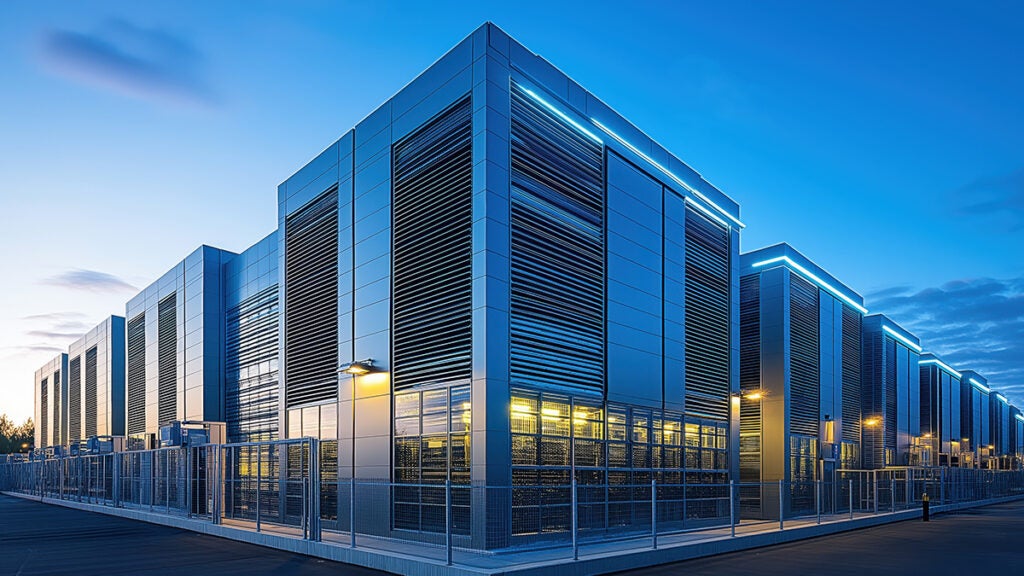
If these numbers seem unreal, in one sense, they are. The requests flooding interconnection queues come from data center developers, private equity funds, land brokers, and shell companies, many of whom lack site control, a construction timeline, or even a signed customer. They secure a queue position, bet that powered land will attract a buyer, and wait. The industry calls them “phantom data centers,” and the grid isn’t prepared to handle them.
These requests didn’t create today’s power infrastructure crisis, but they exposed one that had been building for 80 years. The grid’s fragility intensified amid near-zero demand growth because utilities had little incentive to invest in new capacity and regulators had little reason to approve it. In the 1950s, during post-war electrification, electricity demand grew by 8.5%. By the 2010s, efficiency gains drove that to 0.2%.
The longer that pattern held, the harder it became to disrupt it. Utilities want signed contracts to justify investment, but customers want visible infrastructure before they commit—and regulators need proof of demand before approving it. If a utility spends $500 million on transmission upgrades and its commission determines the investment wasn’t justified, that expense can’t be recovered.
Even phantom requests carry real costs. PJM’s forward capacity auction, which secures electricity supply in 13 Eastern and Midwestern states, jumped from $2.2 billion for the 2024-25 delivery year to $16.4 billion in 2027-28, primarily because of data center load forecasts. In January, electricity prices had risen 8.25% nationally year over year, including 19.35% in Virginia, the largest data center market. These price increases are driven in part by demand projections that may never materialize.
Beyond the cost increases, phantom demand is displacing other industries. By occupying queue positions, these requests have made grid capacity so scarce that committed projects are fighting for what remains. Power allocated to Intel’s planned semiconductor plant near Columbus, Ohio, has been redirected to a Meta data center. The Berry Hill megasite near Danville, Virginia, was designed to attract large industrial users, but data centers are moving in because power-ready land is too valuable to sit idle.
Utilities and states are pushing back by making developers pay for what they claim they’ll use. In Chicago, Illinois, ComEd now charges $1 million for anyone seeking 50 MW or more. Ohio requires new data centers to pay for at least 85% of their projected energy use. Virginia has locked large-load customers into 14-year contracts. Texas mandates that large-load users fund infrastructure upgrades and disclose duplicate applications.
Measures like these are helping filter out the least serious actors. Developers added half as much pipeline capacity from October through December as they did in the previous quarter. But filtering who gets into the queue doesn’t address the primary issues. The regulatory deadlock that kept the grid frozen through two decades of flat demand is still intact.
I spent 25 years on the utility side of this equation, watching demand forecasts that rarely moved. Now, as VP of Energy for Flexential, a national data center operator, I see the same system from the other side. What phantom data centers made clear is that powered land, sites with a utility contract in place, has become one of the most valuable assets in development. Over the next five years, access to power will matter more than the perfect location, the ideal zoning, or the building itself.
That has reshaped how serious operators approach development. The regulatory cycle moves slower than the market does, so we secure utility contracts before buying land and make purchase agreements contingent on a commitment from the provider. Utilities can’t accommodate a single massive request, so we phase demand schedules over years rather than asking for everything upfront. Projects that surprise communities are projects that stall, so we engage regulators and municipalities long before construction begins.
None of that matters, though, if the grid can’t keep up. In 2022, the Federal Energy Regulatory Commission (FERC) projected 3.7% electricity demand growth between 2025 and 2030. The anticipated rate is now 29%. The U.S. built 888 miles of high-capacity transmission lines in 2024, but the Department of Energy estimated 5,000 miles must be built annually over the next decade.
The regions where utilities and regulators have aligned—where load, generation, and transmission are planned together —are getting things right. A data center takes two to three years to build. When permitting and connection do, too, development stays on track. When they run longer, operators seek a faster-moving state.
FERC is standardizing how large-load users connect to the transmission grid and has ordered PJM to revise its tariff structure for large colocated loads. But while federal policy moves toward clarity, some states, like Oregon, are heading the other direction and creating oversight bodies without direct input from data center operators. These policies will push development elsewhere.
In time, phantom data center requests will fade. The least-committed applicants are already bowing out. But the grid infrastructure failure they exposed isn’t going anywhere.
Every manufacturer reshoring a supply chain, every logistics company expanding operations, and every community trying to attract investment is running into the same constraint. Power now determines where and whether America builds.
—Tom Bailey is VP of Energy at Flexential.