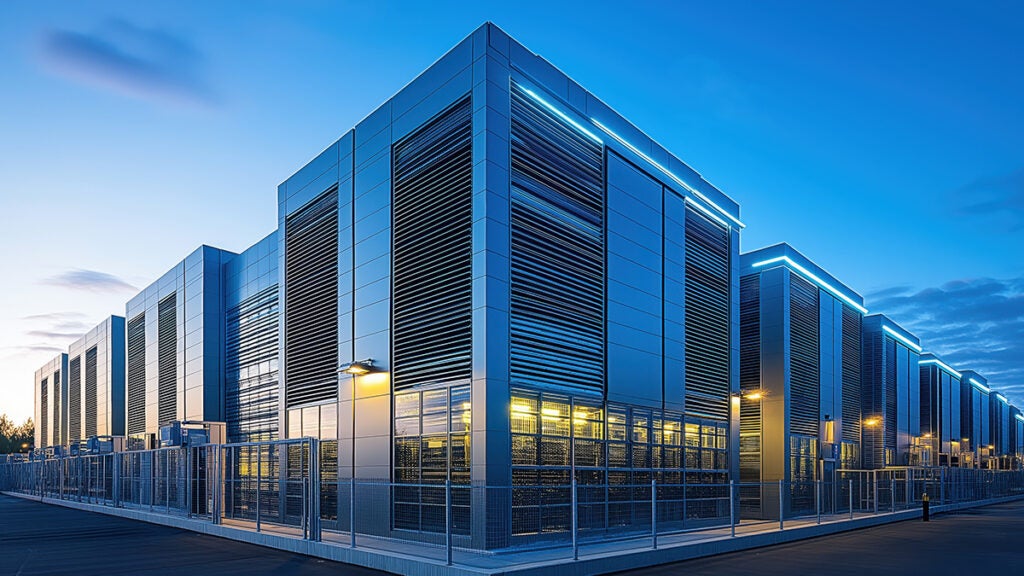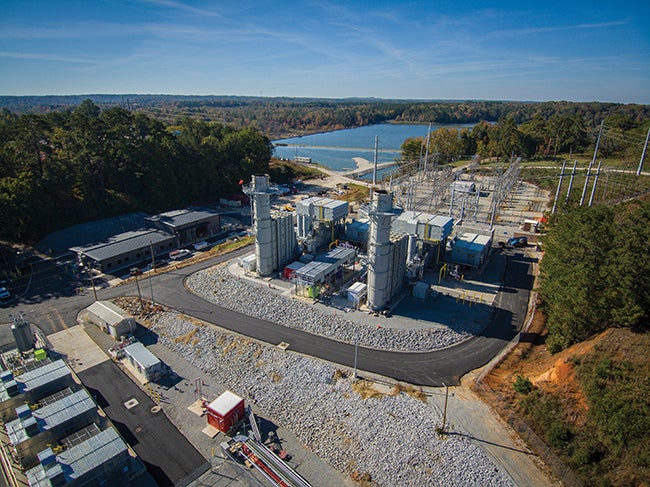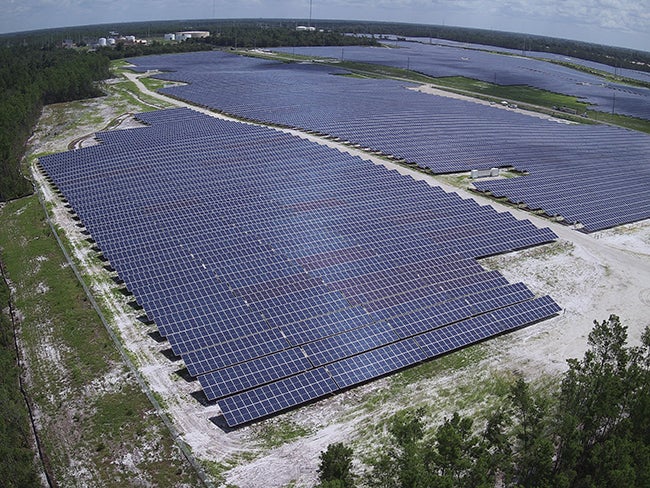

Grid capacity and the interconnection queue aren’t the only constraints on U.S. data center growth. Community acceptance is becoming the toughest bottleneck to break through, and a hot political topic with the approach of the midterm elections. Load growth is well understood by utilities and developers, but less so is how to manage growing community opposition.
COMMENTARY
The latest industry data points to a jump in project delays and cancellations tied to local opposition, alongside increasing scrutiny of electricity demand, water use, and infrastructure impacts associated with large-scale facilities.
The stakes are rising as broader concerns about artificial intelligence (AI) begin to shape public perception of data center development. While most facilities support a wide range of digital infrastructure needs, they are increasingly viewed through the lens of AI, amplifying concern around their impacts.
Data center development is no longer just a project-by-project permitting challenge. It is now a question of public acceptance on a national scale. Opposition is moving beyond public meetings and into formal governance mechanisms with moratoriums and referendums on local and state levels.
For utilities and system planners, this introduces a new variable into an already complex equation. Data centers are exposing a widening gap between technical feasibility and community acceptance.
Want to learn more about how data centers will source their power? Register to attend the Data Center POWER eXchange event at the Omni Shoreham in Washington, D.C., Sept. 30-Oct. 1, 2026. Click here to learn more about the conference.
A Different Kind of Infrastructure Conflict
To better understand this shift, Invera Energy analyzed a set of data center projects across multiple U.S. markets, comparing them to utility-scale renewable energy infrastructure projects in the same regions. Not all infrastructure faces opposition in the same way. Wind and solar projects are typically evaluated through a spatial lens of land use, visual impact, and environmental disruption. Data centers, by contrast, are evaluated through a resource lens. Communities are less focused on how a data center will change the landscape, and more on how it will affect electricity, water, and local infrastructure. This perception is often shaped by broader concerns about artificial intelligence, even though many data centers support a wide range of digital services beyond AI workloads.
Across multiple U.S. markets, three concerns consistently drive opposition:
- Strain on electricity infrastructure and potential cost impacts.
- Water consumption and resource competition.
- Unclear or limited long-term local economic benefit.
These concerns closely mirror the questions utilities themselves must answer when integrating large new loads. Can the current infrastructure absorb this demand? Who ultimately bears the cost? Community resistance is a localized expression of the same system constraints utilities are managing.
The Hidden Risk in Current Development Models
Most data center development still follows a linear model: secure land, secure power, and announce the project. Community engagement often follows later, if at all. From a technical standpoint, this model can work. But it is increasingly incompatible with how communities evaluate large-scale energy infrastructure.
Late-stage engagement tends to reinforce, rather than resolve, concerns. By the time a project is introduced publicly, key decisions have already been made. Communities are left reacting to a fully formed plan, rather than participating in shaping it.
The result is a growing disconnect: projects that make sense from a grid planning perspective are delayed, reworked, or cancelled due to local opposition. For utilities, this introduces planning risk—load forecasts may assume projects that never materialize, and infrastructure investments may be timed around capacity that comes online later than expected or not at all.
Aligning Technical Strategy with Community Reality
As data center development scales, a critical disconnect is emerging. Projects are often designed to meet technical requirements, but not how communities evaluate the proposed new infrastructure.
In practice, successful projects are those that align three elements early in the development process:
- Resource strategy—Clearly communicating how electricity and water demands will be met, and how impacts to local systems will be managed.
- Community value—Demonstrating tangible, long-term local benefits that offset perceived impacts, and clear articulation of the data center purpose.
- Engagement approach—Involving stakeholders early, before key siting and design decisions are finalized.
Projects that address only technical feasibility are increasingly encountering resistance, even when they meet all regulatory requirements. Those that align technical planning with community priorities are more likely to move forward.
Engagement is Now a System Requirement
Across the projects analyzed, a consistent pattern emerges: how developers engage is as important as what they build. Projects that rely primarily on informing through websites or public meetings face higher levels of opposition. Those that incorporate deeper engagement, including collaboration and local partnerships, demonstrate stronger alignment.
This is not simply a communications issue. It is a system requirement.
Communities are evaluating whether new infrastructure aligns with their long-term resource stability and economic interests. When that alignment is unclear, opposition builds. For utilities and planners, this reinforces the need to treat community acceptance as part of the development lifecycle to manage after key decisions are made.
Why This Matters for the Broader Power Sector
The implications extend beyond individual projects. As opposition increases, jurisdictions are beginning to respond with moratoriums or stricter permitting requirements.
At the same time, data center development is becoming increasingly intertwined with broader energy infrastructure, including renewable generation and transmission expansion. Poor engagement on data center projects risks eroding trust not only in those developments, but in adjacent energy infrastructure investments as well. Social acceptance is becoming a sector-wide necessity.
Closing the Gap
Data centers are critical to economic growth and digital infrastructure. Their demand for power will continue to shape grid planning for decades. The emerging constraint is not just capacity, but alignment between developers, utilities, and the communities where these projects are built.
Until data centers are planned and communicated as shared infrastructure, rather than isolated loads, that gap will persist. And as recent developments suggest, it will increasingly determine which projects move forward and which do not. In the next phase of development, social license will be as core a requirement as power, land, and capital.
—Evelyn Carpenter is president and CEO of Invera Energy.