 |
A deliberate shift from reactive maintenance to a reliability-centered operating culture cut the 500-MW combined cycle plant’s forced outage rate by 90%—and delivered perfect availability through Texas’s most demanding months.
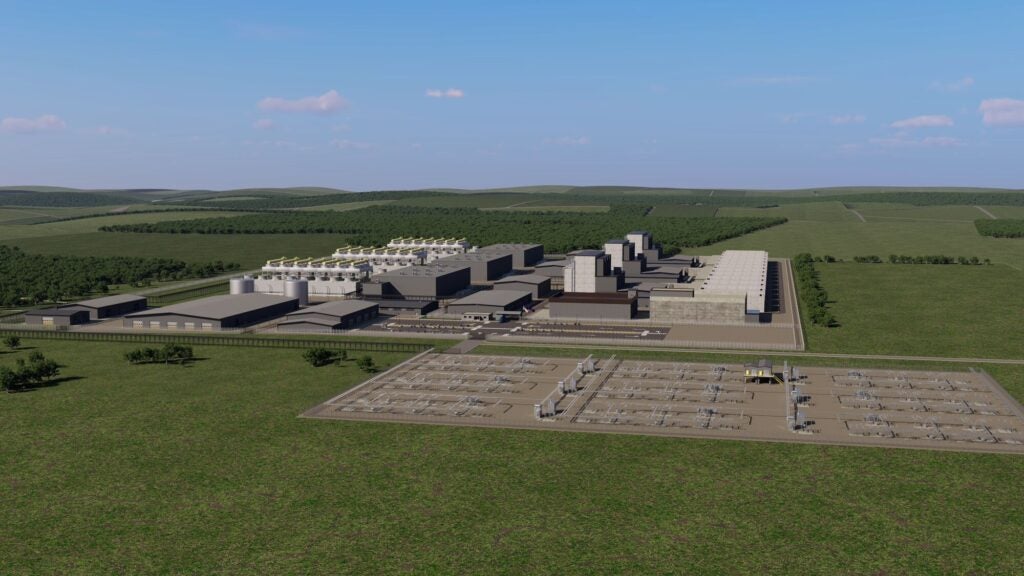
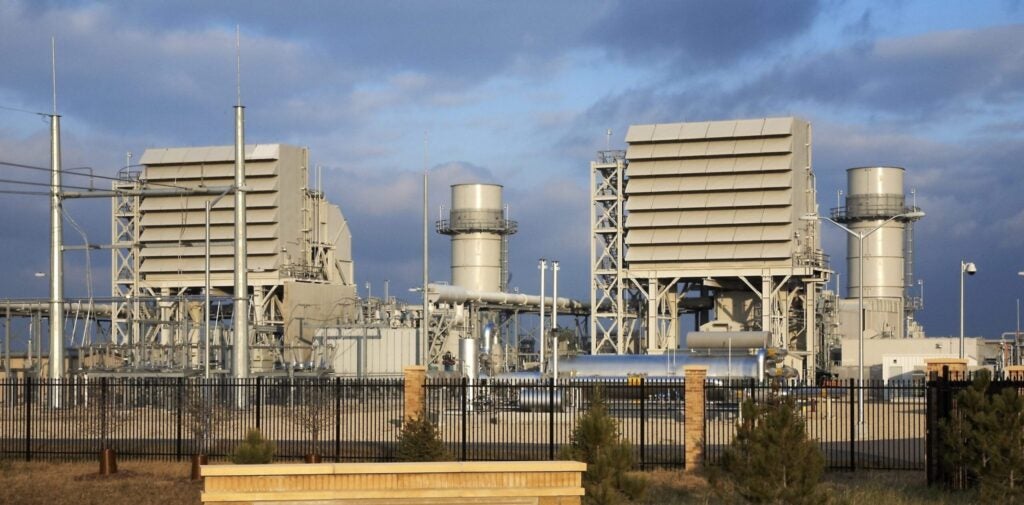
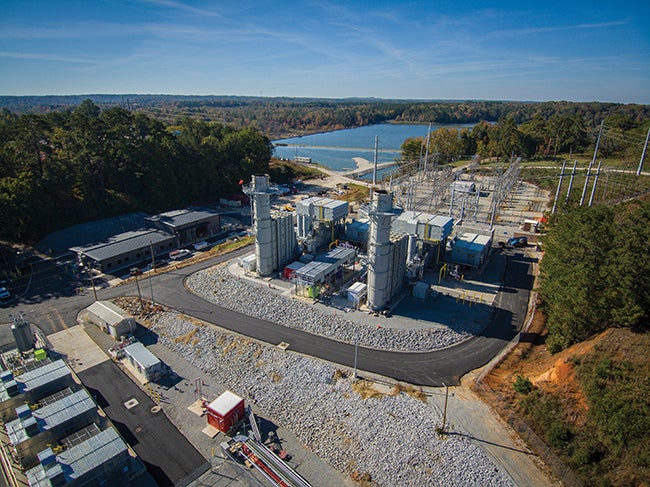
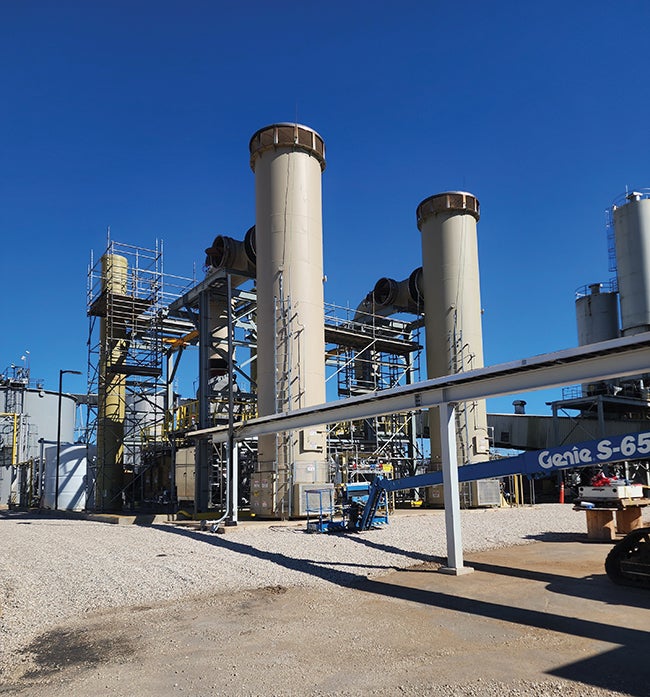
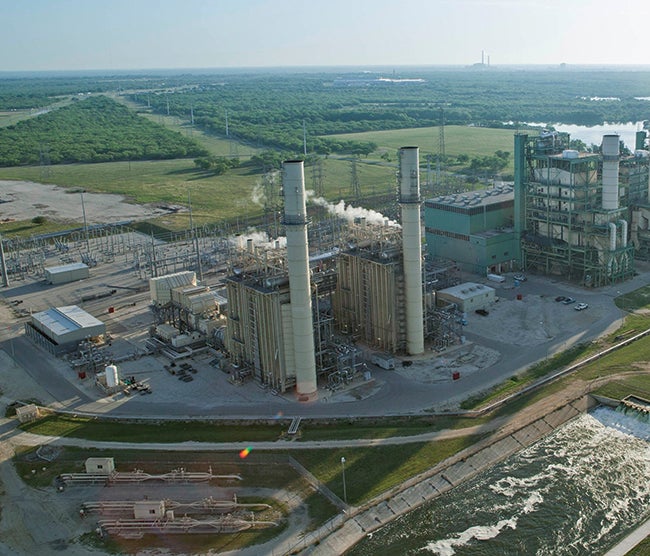
On Aug. 29, 2025, CPS Energy’s system hit a peak demand of 5,674 MW—the kind of summer stress test that Texas grid operators plan around all year. For the Arthur von Rosenberg (AvR) Power Plant, a 500-MW gas-fired combined cycle facility in Elmendorf, Texas, the day was unremarkable in the best possible way. The plant was available, as it was through every critical month of 2025—every winter cold snap, every summer scorcher, every dispatch call from the grid. AvR finished the year with 100% starting reliability and a 100% Equivalent Availability Factor (EAF) across the seven months CPS Energy designates as most critical to grid reliability.
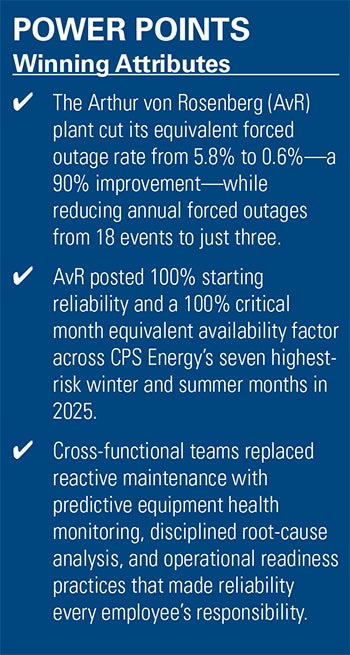
Two years earlier, that outcome would have seemed out of reach. The plant was posting an Equivalent Forced Outage Rate (EFOR) of 5.8% and averaging 18 forced outages a year—a level of unplanned downtime that, according to the utility’s account, meant even small equipment issues could cascade into lost generation, operational stress, and eroded market competitiveness. The turnaround that followed is why the plant is being recognized as a POWER Top Plant finalist. Not because CPS Energy built something new, but because it fundamentally changed how it ran something it already had. In a market where new dispatchable capacity is expensive and slow to procure, AvR’s transformation is a case study in extracting more reliable megawatts from existing equipment—through data, discipline, and culture rather than capital-intensive additions.
A Plant That Knew Its Vulnerabilities
The “before” picture was familiar to anyone who has operated an aging dispatchable fleet. A December 2021 report from CPS Energy’s interim CEO to the utility’s Board of Trustees offers a glimpse of the challenge. AvR’s Combustion Turbine 1 had suffered an unplanned outage from a compressor failure that threatened to derate the unit through the winter season, reducing overall generation capacity when the grid could least afford it. The report credited plant engineer Paolo Solorzano with leading a restoration effort that returned the unit to service four weeks ahead of schedule—a save worth celebrating, but also a reminder of how much of the plant’s story was being written by equipment failures rather than by plan.
“Rather than treating individual outages as isolated events, the plant’s leadership team made a deliberate decision to fundamentally transform the facility’s reliability culture,” CPS Energy told POWER. The effort began with a comprehensive review of historical outage data and operating practices. Cross-functional teams from operations, maintenance, and engineering worked together to identify systemic vulnerabilities across plant equipment, maintenance planning, and operational response.
Three priorities emerged from that review: proactive equipment health monitoring to detect degradation before it produced a forced outage; disciplined root-cause analysis following every reliability event; and operational readiness improvements focused on starting reliability and dispatch performance. Taken together, the priorities amounted to a shift in operating philosophy—from reactive maintenance to a predictive, reliability-centered approach.

In This Issue
Full issueReliability as Everyone’s Job
CPS Energy is emphatic that the transformation was not driven by technology alone. It required a cultural shift in which reliability became everyone’s responsibility, from operators in the control room to maintenance technicians in the field.
Operators implemented enhanced startup procedures and condition-verification steps designed to confirm equipment readiness before dispatch. Maintenance teams reprioritized corrective work identified through predictive diagnostics, eliminating failure modes before they could affect generation. Engineering teams backed both groups with detailed reliability analysis and targeted equipment improvements aimed at the root causes of the plant’s historical outages.
To support summer and winter season reliability required innovative outage planning. CPS Energy shifted its outage season philosophy from a lone fall outage to two seasonal readiness outages. These outages were shorter but targeted specific seasonal tasks to prepare the unit to operate reliably in the summer and winter seasons. Emergent reliability concerns were addressed in the spring rather than deferring to the annual fall outage, thereby proactively mitigating emergent operational risks.
The Numbers Behind the Turnaround
The results, in CPS Energy’s words, “were both rapid and dramatic.” EFOR fell from 5.8% to 0.6%—a 90% improvement. Annual forced outages dropped from 18 events to three, an 83% reduction in unplanned interruptions. And the plant achieved 100% starting reliability, answering every dispatch call from the grid.
The metric CPS Energy highlights most, however, is one it created for itself. In 2024, the utility implemented a Critical Month Equivalent Availability Factor (CMEAF) to evaluate generation performance during the months when the Electric Reliability Council of Texas’s (ERCOT’s) seasonal readiness standards matter most: December through February and June through September. Those windows combine the grid’s highest demand with its highest risk of equipment failure—extreme cold and extreme heat arriving simultaneously with peak load. In 2025, AvR posted a CMEAF of 100%.
That distinction matters more than a conventional annual availability figure. A plant can post a respectable equivalent availability factor while still missing the most important hours; CMEAF strips out the shoulder seasons and asks a harder question—was the unit there when the grid genuinely needed it? For AvR in 2025, the answer was yes, every time. The nomination calls it “100 percent reliability when it matters most.”
One Plant in a Fleet Under Pressure
 AvR’s performance carries extra weight because of where it sits. CPS Energy, founded in 1860 and acquired by the City of San Antonio in 1942, is the nation’s largest community-owned electric and natural gas utility, serving nearly 997,000 electric customers across a 1,515-square-mile territory in one of America’s fastest-growing metropolitan areas. Gas-fired generation supplied 36.8% of the utility’s 43.9 TWh of actual generation in the fiscal year ended Jan. 31, 2026—the largest single share of its mix.
And the utility is racing to add more. Under its Vision 2027 generation plan, CPS Energy closed a September 2025 agreement with PROENERGY to acquire four natural gas plants totaling approximately 1,632 MW; launched Padua 1, a 50-MW battery storage project it describes as the first phase of a 400-MW system; and issued requests for proposals for up to 600 MW of solar, 400 MW of wind, and 500 MW of additional battery storage—all while committing to transition off coal generation by 2028. Every megawatt of that buildout must clear procurement, development, and interconnection timelines. The megawatts recovered at AvR required none of that. By cutting its forced outage rate 90%, the plant effectively returned capacity to the system that had been leaking away in unplanned downtime—arguably the cheapest reliable capacity a utility can acquire.
Achievable and Repeatable
CPS Energy frames the AvR story as a model rather than an anomaly—evidence that top-tier reliability is, in the nomination’s words, “achievable and repeatable.” The ingredients it cites are notably transferable: strategic seasonal outage planning to ensure reliability when it really counts, root-cause discipline any organization can enforce, and a cultural expectation that readiness is verified before dispatch rather than assumed.
None of that diminishes what the numbers represent. Plenty of plants have reliability programs; far fewer can point to a year in which they never failed to start and never missed a critical hour. For a fleet-anchoring combined cycle unit in ERCOT—a market that has spent the past several years measuring the cost of generation that isn’t there when temperatures spike—AvR’s 2025 performance is the standard the rest of the industry keeps saying it is chasing. CPS Energy’s plant in Elmendorf spent two years proving the chase can end in a catch.
—Aaron Larson is POWER’s executive editor.