For most of the last two decades, the anxiety in power planning was about demand: would consumption grow fast enough to justify new capacity, and how would an aging fleet keep pace? That question has inverted. Demand is no longer the uncertain variable—it is the one thing forecasters are confident about. The uncertainty now sits on the supply side: whether the workforce, the equipment, and the political and economic conditions needed to build and run generation can keep up with a demand curve that is accelerating for the first time in a generation.
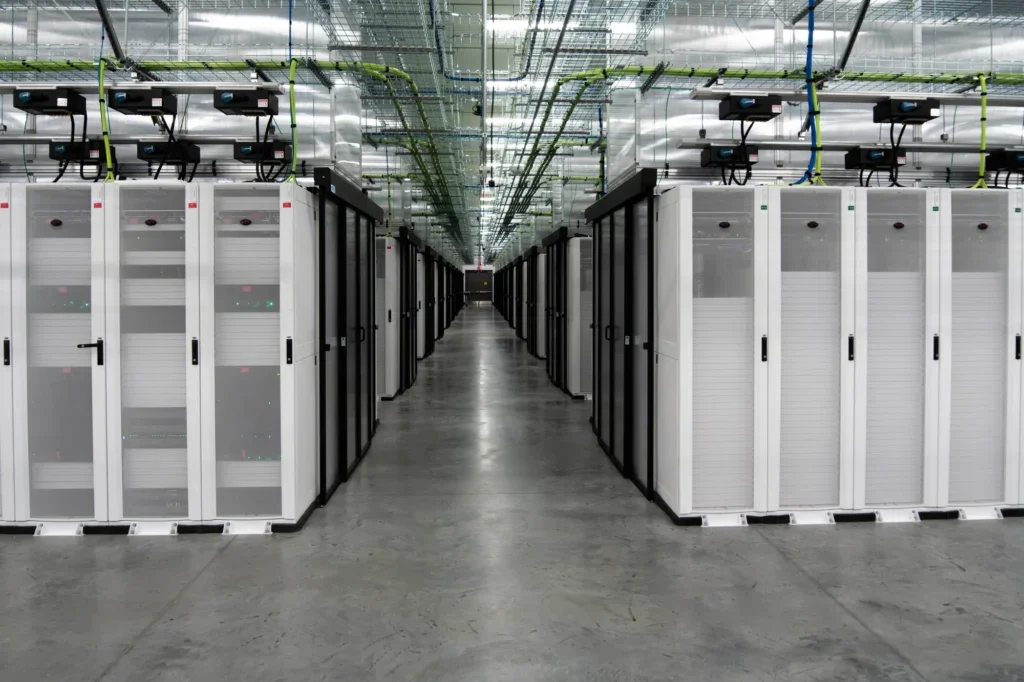
The International Energy Agency (IEA) put a number on the demand side in its Electricity 2026 report, projecting that global electricity demand will grow by an average of 3.6% per year through 2030, roughly 50% faster than the average over the previous decade, driven by industrial electrification, electric vehicles, air conditioning, and data centers. For the first time in three decades outside of a crisis period, electricity demand has begun to grow faster than the global economy itself. The demand is coming. The open question is deliverability.
That framing—supply-side constraints as the binding risk—runs through recent research from Verdantix, a UK-based analyst firm whose Industrial Dislocation Index scores nine major economies on how far their operating conditions have diverged from their own 30-year norms. For power generation specifically, Verdantix identifies four factors that carry disproportionate weight: politics, geo-economic friction, energy prices, and production inputs.
Energy: A Widening Gap Between the Resilient and the Exposed
The clearest signal in the Verdantix data for a power audience is the energy sub-index, which scores each country on how far its energy position has moved from its own historical baseline. The spread is wide. The U.S. sits at the resilient end, with the lowest energy-dislocation score in the study at 1.83, a reflection of its position as a net exporter of natural gas, crude, and coal, with electricity and fuel costs below the global average. At the other end is the UK, at 7.33, the highest in the study—a measure of how sharply its energy position has diverged from what UK industry was historically built around. Germany (5.67) and France (5.50) sit high as well; Japan (4.50), India (3.50), China (3.17), Saudi Arabia (3.00), and Canada (2.67) fall in between.
What that gap looks like on the ground varies by market, and Verdantix’s country profiles fill it in. The UK’s high score traces to underinvestment in nuclear, the grid-modernization costs of shifting to decentralized renewables, and windfall taxes on oil and gas—a combination severe enough that Verdantix notes chemical producers citing UK energy costs as a reason to pull back operations. France is Europe’s largest net electricity exporter thanks to its nuclear fleet, but that same concentration is a vulnerability: recent questions about the quality of French reactor maintenance, Verdantix observes, show how quickly a strength can turn into a present-day problem. Japan, having cut its nuclear reliance after Fukushima, now leans on imported liquefied natural gas (LNG) and coal—and, unlike Europe’s interconnected grids, cannot easily trade its way out of a supply shock. In the U.S., the fastest-moving pressure is data-center load, which Verdantix and the IEA both flag as concentrating strain on specific regional grids. China is the study’s sharpest paradox: the dominant manufacturer of renewable and battery technology, and the controller of rare-earth refining, yet still the world’s largest importer of crude and gas. India remains exposed as a heavy importer of coal and oil even as its renewable build-out accelerates.
The Workforce Is the Hardest Constraint to Engineer Around
Of the pressures on the supply side, the one with the least room for a quick fix is people. Capital can be raised and turbines can be ordered, but an experienced control-room operator or transmission engineer takes years to develop—and the sector is losing them faster than it is replacing them at the senior level.
The IEA’s World Energy Employment 2025 report found that across advanced economies, the energy sector as a whole has roughly 2.4 workers nearing retirement for every worker under 25. The imbalance is sharper in the parts of the system that are hardest to staff: the report puts the ratio at about 1.7 to 1 in nuclear and 1.4 to 1 in grid roles, against a global economy-wide average of about 1.2 to 1.
The replacement problem is compounded by a thinning of experience even among those already on the job. The Center for Energy Workforce Development’s 2023 survey of U.S. utilities found that 56% of the workforce has fewer than 10 years of service—a figure that climbs above 60% for engineers and line workers.
The result is a workforce that is being backfilled on paper, but is, in aggregate, greener than it has been in years—precisely as the demands on it grow more complex.
AI Helps at the Margins, Not the Core
If there is a near-term lever, it is in software that squeezes more reliability out of existing assets rather than building new ones. Predictive maintenance is among the most widely adopted artificial intelligence (AI) applications in the sector, in part because it improves reliability while keeping humans in control of intervention decisions—machine-learning models reading transformer temperature and vibration data to flag failure risk months ahead of a reactive repair. Verdantix, in its Market Insight: AI In Grid Operations report, cites one deployment in which Pacific Gas and Electric (PG&E) reduced outage frequency by roughly 15% and outage duration by about 20% within the first year. The gains are real, but they are efficiency at the margins; a way to hold reliability steady under rising load, not a substitute for the workforce and capacity the sector still has to build.
That is the uncomfortable shape of the deliverability problem. The demand forecast is the confident part. Everything required to meet it—the people, the equipment, the political and economic conditions—is where the uncertainty now lives.
—Aaron Larson is POWER’s executive editor.