
DOE
-
 Nuclear
Google Deal Backs 890 MW of Constellation Nuclear Uprates at 11 PJM Reactors
Hyperscaler Google and Constellation Energy, the largest nuclear operator in the U.S., have signed a 20-year power purchase agreement (PPA) designed to support $4.3 billion of upgrades at 11 nuclear units across the PJM Interconnection, which is slated to add 890 MW of generating capacity from Constellation’s existing reactors by the end of 2032. The […]
-
 Fusion
Denver-Based Fusion Group Receives $30.5-Million Award from DOE
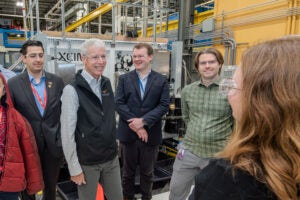
Fusion energy company Xcimer Energy said it has finalized an agreement for up to $30.5 million in additional federal funding through the U.S. Department of Energy’s (DOE’s) Milestone-Based Fusion Development Program. The new DOE award, announced October 6, is for the program’s second budget period. It brings the total DOE funding for potential Milestone payments […]
-
 Nuclear
Vistra in Line for $4.2B DOE Loan Package to Uprate Nuclear Plants in Ohio and Pennsylvania
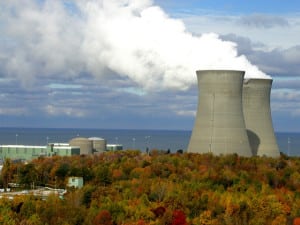
The Department of Energy’s (DOE’s) Office of Energy Dominance Financing (EDF) has announced a conditional loan commitment of up to $4.2 billion to finance uprates and modernization at Vistra’s Beaver Valley nuclear plant in Pennsylvania and its Davis-Besse and Perry plants in Ohio. The projects could add 433 MW of new nuclear capacity and preserve […]
-
 Commentary
Retired and Retiring Coal Plants Offer the Grid’s Fastest Path to New Capacity
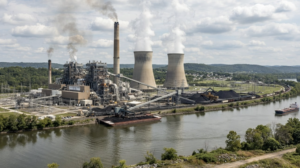
The issue of load growth for the power grid and electric utilities has an overlooked answer: reinvesting in the coal-fired power plant sites being retired.
-
 Power
PowerPurdue Nuclear Reactor Test Demonstrates Remote, Automated Power Control
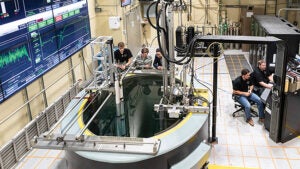
Engineers at Purdue University have, for the first time in the U.S., adjusted a nuclear reactor’s power experimentally, remotely and automatically in real time—a demonstration they say offers an early
-
 Technology
What the DOE’s Quantum Computing Competition Could Mean for Fusion and Battery Materials
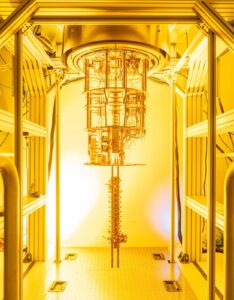
The Department of Energy (DOE) on Sept. 17 announced the Quantum Genesis Q Competition, a $215 million initiative to fund private-sector teams racing to build the world’s first fault-tolerant, scientifically relevant quantum computer. Structured as a milestone-based competition rather than a conventional grant, it will pay out fixed awards of up to $1.5 million per […]
-
 Legal & Regulatory
Court Rules Against Trump Order to Keep Michigan Coal-Fired Plant Operating
The D.C. Circuit Court of Appeals has ruled against the Trump administration’s order to keep the J.H. Campbell coal-fired power plant in Michigan operating. The decision that could impact other orders that have been issued to keep U.S. coal-fired power plants operating past their scheduled retirement dates.
-
 Nuclear
DOE Closes $1.9-Billion Loan to Restart Duane Arnold Nuclear Plant
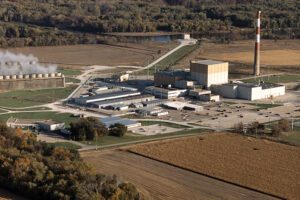
The U.S. Dept. of Energy (DOE) said the agency has closed a loan of as much as $1.9 billion to NextEra Energy to support the restart of the Duane Arnold Energy Center in Iowa.
-
 Commentary
Coal Got an Order. Nuclear Got a Meeting
The most consequential number in current American energy planning is one that nobody in the room where it gets made believes.
-
 advanced nuclear
NRIC Adds 13 Projects to Nuclear Energy Launch Pad, Expanding Advanced Reactor and Fuel-Cycle Pipeline
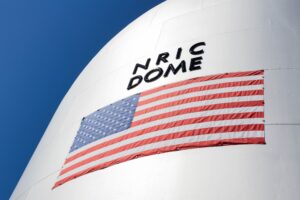
The Department of Energy’s (DOE’s) National Reactor Innovation Center (NRIC) has selected 13 new projects across 12 companies for its Nuclear Energy Launch Pad initiative in a significant expansion of the DOE-authorization pathway that channels advanced reactor and fuel-cycle developers toward demonstration on federal and non-federal sites. The selections—spanning microreactor developers, enrichment startups, fuel fabrication […]
-
 Commentary
Don’t Ask States to Become Nuclear Waste Dumps. Make Them Partners in Solving the Problem
A new federal effort to develop nuclear “lifecycle” campuses has produced something Washington, D.C., has rarely seen: states competing for a role in managing America’s used nuclear fuel.
-
 Nuclear
DOE Approves Safety Design of Deep Fission’s Underground SMR
California-based Deep Fission said the DOE signed off on the Nuclear Safety Design Agreement (NSDA) for its Gravity Nuclear Reactor. The group called it a major regulatory milestone that confirms Deep Fission’s reactor design warrants advancement under the DOE Reactor Pilot Program.
-
 Trends
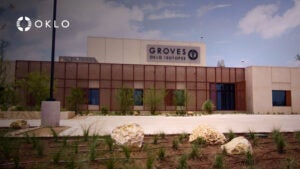
Oklo’s Groves Becomes Fifth DOE Pilot Reactor to Reach Criticality, First on Private Land
Oklo’s Groves Isotope Test Reactor in Lockhart, Texas, has become the fifth reactor to achieve criticality under the U.S. Department of Energy’s Reactor Pilot Program (RPP), and the first under the program to do so on private land. The low-power test reactor reached criticality at 9:19 p.m. ET Aug. 5, achieving a controlled, self-sustaining nuclear […]
-
 Energy Security
World’s Largest Energy Lender Steers Federal Financing Toward Baseload, Transmission, and Nuclear
The U.S. Department of Energy’s (DOE’s) Office of Energy Dominance Financing (EDF) closed a loan of up to $3.26 billion to American Electric Power (AEP) Texas on July 8, the office’s third utility
-
Legal & Regulatory
Five States Emerge as Finalists for DOE’s Nuclear Lifecycle Innovation Campuses
The Department of Energy (DOE) has selected Utah, Tennessee, Oklahoma, Louisiana, and Idaho as initial contenders to host Nuclear Lifecycle Innovation Campuses—voluntary federal–state partnerships designed to co-locate fuel fabrication, enrichment, spent fuel reprocessing, and waste disposition within integrated, full‑cycle nuclear ecosystems. U.S. Secretary of Energy Chris Wright signed non-binding memorandums of understanding (MOUs) with the […]
-
 Nuclear
Microsoft’s $60 Million Genesis Mission Commitment Puts Nuclear AI at the Center
Last week, Microsoft announced a $60 million, multiyear commitment to the Department of Energy’s (DOE’s) Genesis Mission, the national initiative to embed artificial intelligence (AI) across the country’s 17 national laboratories. The company’s stated goal, echoing DOE’s own framing, is to help “double the productivity and impact of American research and innovation within a decade.” […]
-
 Research and Development
AI Is Usually Cast as a Grid Burden. The Genesis Mission Is Betting It’s a Grid Tool.
The explosion of artificial intelligence (AI) computing is, for most utilities, a problem to be absorbed: gigawatts of new data-center demand arriving faster than transmission can be planned or built. The U.S. Department of Energy’s (DOE’s) Genesis Mission does not dispute that framing. But buried in the national research portfolio it unveiled July 22 is […]
-
 Commentary
America Needs a Fifth Nuclear Executive Order
President Trump’s four nuclear executive orders issued on May 23, 2025, represented a historic liftoff for American nuclear energy. COMMENTARY As electricity demand surges, geopolitical energy competition intensifies, and America’s power infrastructure faces mounting strain, the administration acted decisively. It recognized that American energy dominance—and leadership in the digital age—requires a resurgence of nuclear reactor […]
-
 Data Centers
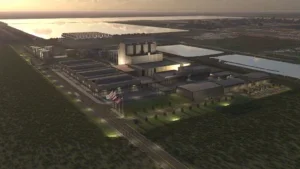
The New Power Build Cycle for AI Data Centers
AI-driven load growth is putting significant strain on the grid, intensifying pressure on utilities and developers to secure firm capacity and meet increasingly compressed delivery timelines. While tools such as transmission optimization can deliver incremental gains, they do not address the core issue: the pace of AI data center expansion is forcing a shift from […]
-
 advanced nuclear
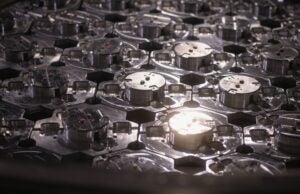
Aalo Atomics’ Test Reactor Reaches Criticality at INL, Fourth DOE-Authorized Advanced Reactor by July 4
Aalo Atomics’ Aalo-X Critical Test Reactor (CTR)—dubbed “Project First Light”—has reached criticality at Idaho National Laboratory (INL), marking the fourth Department of Energy (DOE)–authorized advanced reactor startup under the federal push to accelerate reactor testing and demonstration. The U.S. Department of Energy (DOE) said July 6 that Aalo’s test reactor, which DOE referred to as […]
-
 Nuclear
Centrus Signs $900M DOE Contract, Pivots Sole U.S. HALEU Cascade to Commercial Operation
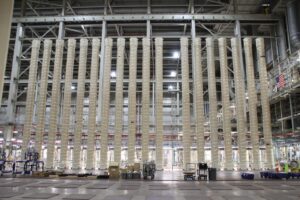
Centrus Energy has finalized a $900 million task order with the U.S. Department of Energy (DOE) that clears the way for the company to transition its pioneering high-assay low-enriched uranium (HALEU) cascade in Piketon, Ohio, from a government-funded demonstration to private commercial operation. The Bethesda, Maryland-headquartered firm on July 1 announced that its wholly owned subsidiary American […]
-
 Coal
CoalA New Coal Plant in the U.S.? Once Unthinkable, Now a Strong Maybe
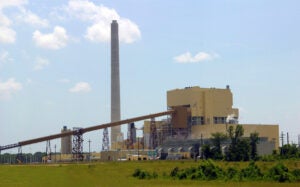
A $350 million Department of Energy (DOE) coal-revival program has put $18.5 million toward the TerraSpark Energy Campus, a 1.6-GW greenfield project in West Virginia pairing Babcock & Wilcox (B&W) supercritical boilers with Mantel Capture’s molten borate carbon capture. In responses to POWER, developer TerraSpark laid out a 2030 startup target, a 95% to 98% […]
-
 Fusion
DOE Approves Xcimer Energy Fusion Power Plant Design
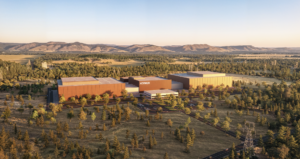
A Colorado-based fusion energy company said the U.S. Dept. of Energy (DOE) has approved the company’s preconceptual technical design for its commercial fusion power plant.
-
 Legal & Regulatory
From Tail Risk to Design Baseline: How the Grid Is Adapting to Extreme Heat
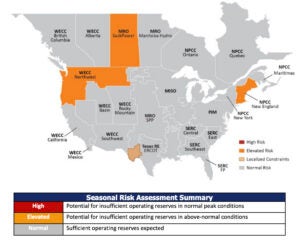
System planners and grid operators are treating extreme heat as an assumed operating condition given new pressures, including drought, demand growth, and fuel concerns. Will it be enough? For decades, the U.S. power system treated extreme heat as a tail risk, managed through seasonal readiness—something for which to prepare. But hotter conditions are now arriving […]
-
 T&D
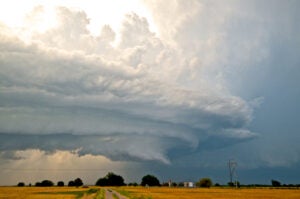
T&DHow the Power Sector Is Bracing for a More Violent Climate
Utilities, federal agencies, and the national labs have finally assembled the tools to harden the grid against an increasingly hostile environment. The question is whether they can put them together fast enough. When a line of storms tore across the Northeast in late April 2025, racing from Ohio into central Pennsylvania, meteorologists recognized the signature […]
-
 Trends
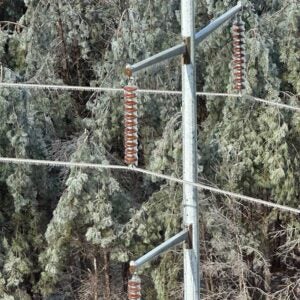
Five Winters After Uri: Why Winter Readiness Must Go Beyond Weatherization
From EOP-012-3 to Order 587-AB, from Cold Weather Critical Component inventories to dual-fuel conversions, the bulk power system has spent five years rewiring how it prepares for extreme cold. Winter Storm Fern, the latest test, showed the system ran “very close to the edge.” The last five winters have given the North American power sector […]
-
 Nuclear
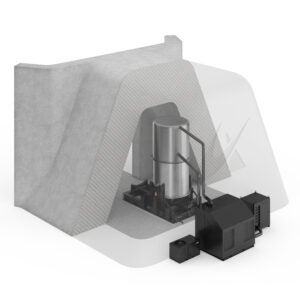
Antares Mark-0 Becomes First Advanced Nuclear Reactor to Achieve Criticality Under DOE Pilot Program
Antares Nuclear Inc.’s Mark-0—a sodium heat-pipe-cooled microreactor fueled by high-assay low-enriched uranium (HALEU) tri-structural isotropic (TRISO) fuel compacts—has achieved zero-power criticality at Idaho National Laboratory’s (INL’s) Reactor and Critical Experiment (RACE) facility, becoming the first advanced reactor to reach that milestone under the Department of Energy’s (DOE’s) Reactor Pilot Program. The development, announced on June […]
-
 Business
Energy Experts Discuss Implications, and Intrigue, of NextEra/Dominion Deal
NextEra’s purchase of Dominion Energy, if approved, would have an impact on many areas of the electricity sector. Some analysts told POWER they’re concerned about how it would affect customers’ power bills. Others wonder whether the $67-billion deal s part of a trend that will lead to more mergers and acquisitions in the power space.
-
 advanced nuclear
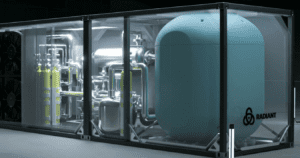
DOE Opens Nuclear Energy Launch Pad and DOME Test Bed to Industry Applicants, Sets July 8 Deadline
Two days after naming its first four participants, the U.S. Department of Energy’s (DOE’s) National Reactor Innovation Center (NRIC) on April 29 issued a request for applications (RFA) for its Nuclear Energy Launch Pad, formally opening the program to a broader pool of advanced nuclear developers and setting a July 8, 2026, deadline for initial […]
-
 Nuclear
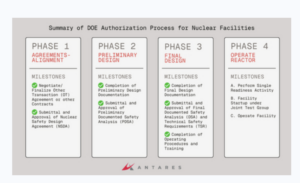
Antares Receives DOE Approval of Mark-0 Demonstration Reactor
California-headquartered Antares, an advanced nuclear energy company, said it has received U.S. Dept. of Energy (DOE) approval of the Documented Safety Analysis for the company’s Mark-0 reactor.