
Power Demand
-
 Gas
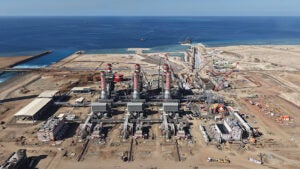
GasBeyond the Contract: How Rabigh Reinforcement Reached First Fire 14 Months After Award
When no suitable vessel was available to carry its gas turbine generators from the U.S. to Saudi Arabia’s Red Sea coast, the Rabigh Reinforcement project team turned to the heavy-lift charter market at a time when shipping conditions were already challenging. Drawing on its logistics experience and global agreements, the consortium engaged one of the […]
-
 Trends
Data Centers, Gas, and Who Pays: Power Association Leaders Find Common Ground
When the heads of three of the power sector’s biggest trade associations shared a stage at Experience POWER on Sept. 30, the most notable thing was how little they disagreed. Whether the question was data center backlash, grid security, or what to do about gas-plant emissions rules, the answer came back to the same point: […]
-
 Nuclear
Google Deal Backs 890 MW of Constellation Nuclear Uprates at 11 PJM Reactors
Hyperscaler Google and Constellation Energy, the largest nuclear operator in the U.S., have signed a 20-year power purchase agreement (PPA) designed to support $4.3 billion of upgrades at 11 nuclear units across the PJM Interconnection, which is slated to add 890 MW of generating capacity from Constellation’s existing reactors by the end of 2032. The […]
-
 Nuclear
How Advanced Nuclear Can Expand Utility Options
Over 2,060 gigawatts. That is the staggering volume of generation and storage capacity currently trapped waiting in U.S. interconnection queues. According to data from RMI, the typical project now takes almost five years—stuck in administrative and transmission review before a single watt can be delivered to the grid. In 2008, it was only two years. For […]
-
 Nuclear
Winning the Nuclear Market Before the Reactor Is Sold
For most Americans, electricity is so woven into daily life that we rarely consider what its absence means. Hospitals depend on it to preserve medicines and operate equipment. Schools, factories, farms, and businesses depend on it to function. Reliable electricity is one of the foundations of a modern economy. COMMENTARY Yet 655 million people worldwide […]
-
 Nuclear
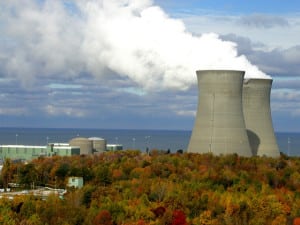
Vistra in Line for $4.2B DOE Loan Package to Uprate Nuclear Plants in Ohio and Pennsylvania
The Department of Energy’s (DOE’s) Office of Energy Dominance Financing (EDF) has announced a conditional loan commitment of up to $4.2 billion to finance uprates and modernization at Vistra’s Beaver Valley nuclear plant in Pennsylvania and its Davis-Besse and Perry plants in Ohio. The projects could add 433 MW of new nuclear capacity and preserve […]
-
 Gas
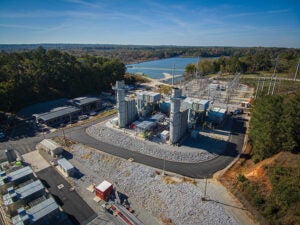
GasParr Station Modernization Writes the Next Chapter in a Century of Reinvention
POWER’s 2026 Reinvention Award goes to Dominion Energy South Carolina’s Parr Station, where new dual-fuel turbines replace decades-old peaking units and extend a century-long pattern of reinvention at one
-
 T&D
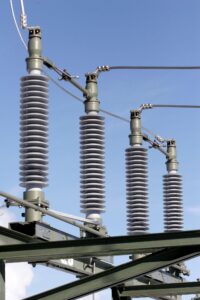
T&DThe Grid Reliability Risk Hiding on High-Voltage Insulation
A high-voltage insulator can look unchanged for years while its operating environment steadily alters the conditions on its surface. Salt carried inland from a coast, industrial residue, road dust, moisture, ultraviolet radiation, and repeated weather cycles create an exposure history that can influence electrical performance and maintenance demands long before an asset reaches a predetermined […]
-
 Hydrogen
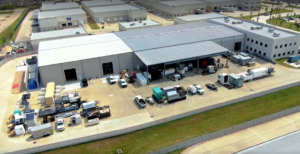
Hydrogen Award Finalist: Total Hydrogen Solutions’ Texas Production Facility
Late in construction of Total Hydrogen Solutions’ new hydrogen plant in Katy, Texas, someone cut and stole the incoming high-voltage cable. The theft forced a complete replacement of the affected run just as the team was preparing for utility energization. “It was a frustrating hurdle, but the team coordinated the replacement and kept moving toward […]
-
 Commentary
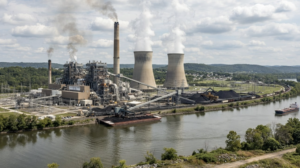
Retired and Retiring Coal Plants Offer the Grid’s Fastest Path to New Capacity
The issue of load growth for the power grid and electric utilities has an overlooked answer: reinvesting in the coal-fired power plant sites being retired.
-
 Data Centers
The Rise of Low-Power Instrument Transformers in Data Center and Industrial Applications
Traditional magnetic induction-based instrument transformers have served the power industry reliably for decades, but a new generation of low-power alternatives is gaining ground — particularly in data centers and industrial facilities where accuracy, size, and integration with digital secondary systems matter. This paper reports on LPIT history, standardization, and some of the applications in […]
-
Data Centers
On-Demand Podcast – The Data Center Challenge: Build Faster, Be Efficient, and Keep the Data Flowing
Data centers face big challenges, from processing trillions of search queries, storing billions of emails and photos and serving countless hours of video every day while at the same time developing ways of decreasing their energy and carbon footprints and increasing data security. In this episode, Angad Sandhu, CTO of Giga Energy (director of […]
-
Data Centers
Keeping the Lights On — Smarter Fault Management for Data Center Power Systems
Data centers commonly deploy looped medium-voltage (MV) distribution systems with automated protection and control schemes to deliver exceptionally high levels of power availability. However, these automation schemes rely on communications infrastructures where latency and scalability can affect fault-response performance. This paper presents a robust, hybrid FLISR strategy that integrates centralized and decentralized control to […]
-
 Data Centers
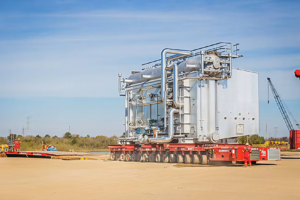
AI Data Centers Turn to Industrial Boilers and Steam Turbines for Power
Artificial intelligence (AI) data centers are being built at an unprecedented pace. There are more than 12,000 active projects in the U.S. currently seeking grid interconnection representing 1,570 GW of generator capacity and 1,030 GW of energy storage. Analyst firm Omdia predicts that AI will drive more than 50% of installed power generation capacity over […]
-
 O&M
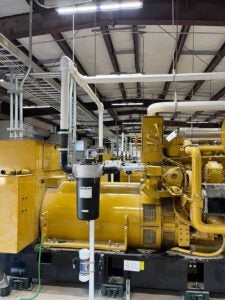
O&MWhy Crankcase Ventilation Matters in Engine-Based Power
As reciprocating engines/gensets assume a larger role in distributed generation, data center infrastructure, and other critical duty applications, crankcase ventilation and the resulting emissions warrant increased attention and mitigation. When power generation professionals discuss engine emissions, the conversation typically focuses on the exhaust stack. While this emphasis is justified, it underestimates another emissions pathway: the […]
-
 Smart Grid
NextEra, Santee Cooper Point to Real Dollar Savings From AI Deployments
NextEra Energy says an artificial intelligence (AI)–driven dispatch and outage-scheduling tool has saved its customers more than $20 million so far this year. Santee Cooper expects a custom AI weather-forecasting model to help it avoid spot-market purchases that can cost $100,000 an hour during extreme weather. Both utilities say the tools moved from concept to […]
-
 Nuclear
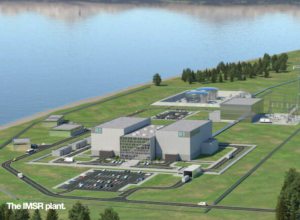
Three Questions Every Utility Should Ask About Advanced Reactors
The U.S. power grid is entering a period unlike any it has experienced in decades. Rapid electrification, domestic manufacturing, and the exponential growth of artificial intelligence are reshaping electricity demand. A recent report from Lawrence Berkeley National Laboratory, supported by the U.S. Department of Energy, projects that data centers alone could account for between 9.5% […]
-
 Gas
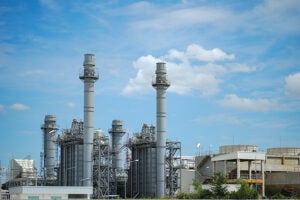
GasCleaner Gas, Smarter Design: A Practical Path to Lower-Emissions Power
Lower-emissions gas sourcing, efficient combined-cycle generation, and carbon capture-ready construction offer hyperscalers a way to meet data center power demands without compromising on emissions. As
-
 Gas
GasSupercritical CO2 for Gas Turbines: Accelerating Speed to Power
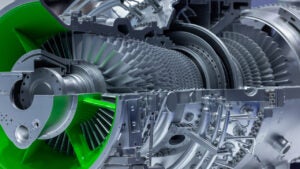
Many simple-cycle gas turbines are running harder than they were ever intended to—yet steam retrofits have never penciled out for most of that fleet. Supercritical CO 2 bottoming cycles change the economics
-
 Data Centers
NVIDIA, Cloverleaf Partnering to Advance Data Center Development
Technology giant NVIDIA is furthering its support of artificial intelligence (AI) and data center construction. Cloverleaf Infrastructure, a group that supports the AI buildout by providing power sources and infrastructure for site development, on August 21 said it has entered into a strategic partnership with NVIDIA to advance the development of digital infrastructure across the […]
-
 Legal & Regulatory
Shapiro Sets Binding GRID Requirements in Pennsylvania, Targets Data Center Power Costs
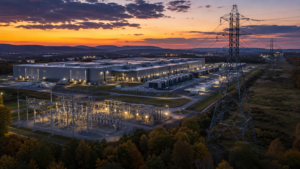
Pennsylvania Gov. Josh Shapiro signed an executive order on Aug. 18 that raises the bar for large data center development in the state, directing agencies to condition favorable permitting treatment and tax benefits on compliance with new energy, infrastructure, environmental, workforce, and community requirements. Executive Order 2026-05 applies its central permitting provisions to data centers with […]
-
 Trends
PJM Widens Response to Data Center Load as Capacity Shortfalls Deepen
PJM Interconnection has proposed a new framework that would allow large data centers and other major electricity users to enter service without first securing enough new capacity to cover their demand—but would make the uncovered portion of that load available for reduction before PJM calls on existing pre-emergency demand-response resources if electricity supplies become dangerously […]
-
 Interview
AVEVA CEO: Sustainability Commitments Must Be Backed by Measurable Results
As artificial intelligence (AI)–driven data center demand strains grid infrastructure across the U.S. and beyond, operators are facing rising scrutiny from utilities, regulators, and the communities where they build. Caspar Herzberg, CEO of industrial software company AVEVA, argues that the industry’s response can’t stop at sustainability commitments—it requires operational transparency and measurable performance data that […]
-
 Data Centers
Contested 5-GW Ridgeline Gas, Solar, and Data-Center Complex in West Virginia Clears Site-Control Question
The West Virginia Department of Environmental Protection’s (WVDEP) Division of Air Quality (DAQ) has determined that Purcellville, Virginia-based Fundamental Data satisfied the site-control requirements associated with its August 2025 air quality permit for the Ridgeline Facility—a gas turbine power plant that Fundamental Data is planning as the first phase of a project intended to include […]
-
 Commentary
3 GW Off PJM, Again: What NERC’s 2024 Investigation Already Told Us
More than 3 GW of data center load left the PJM system on July 22, 2026, after a single transmission fault. The North American Electric Reliability Corporation (NERC) investigated the same failure mode in 2024 and found that utility equipment shed none of it. Customer-side protection did all of it. Those settings are about to […]
-
 Commentary
Alarm Bells Are Sounding for the Grid: Answering Them Takes More Than Megawatts
When federal emergency powers become routine operating procedure, the system is not holding up. It is operating at its ceiling. And the customers who kept their lights on paid triple for the privilege, which means the event that operations survived is one that affordability did not.
-
 Data Centers
More Data Center Operators Commit to Abbott’s Texas Standards as Power Companies Endorse ERCOT Batch Framework
A growing group of data center operators—including Dallas-based Skybox Datacenters, Austin-headquartered bitcoin miner and hyperscale developer Mara, and global colocation giant Digital Realty—have publicly committed to comply with Texas Gov. Greg Abbott’s data center standards and the state’s active audit of projects in the Texas grid operator’s interconnection queue. They join QTS Data Centers, Blackstone’s […]
-
Data Centers
Texas Audit Could Delay 49.8 GW of Data Center Load, Cost Projects Up to $15 Billion, BNEF Warns
Texas Gov. Greg Abbott’s Aug. 3 order pausing all new data center connections to the Electric Reliability Council of Texas (ERCOT) grid until a comprehensive audit is complete could delay 49.8 GW of new data center electricity demand from advancing on the ERCOT system—nearly 20% of the U.S. development pipeline—BloombergNEF (BNEF) said in an Aug. 5 […]
-
 Interview
The POWER Interview: NRG’s Case for Bring Your Own Power—and the Labor to Build It
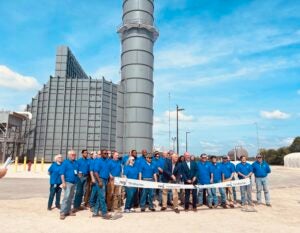
NRG Energy on Aug. 4 unveiled its first Bring Your Own Power (BYOP) project, a 1.2-GW combined-cycle plant in Texas supported by a 15-year contract with an investment-grade “leading global cloud and artificial-intelligence hyperscaler.” The $3.2 billion facility, backed by a customer parent guarantee, is targeted for commercial operation in late 2029 and could be […]
-
 Data Centers
AI’s Obstacle: Why the Grid Can’t Keep Pace With the Data Center Boom
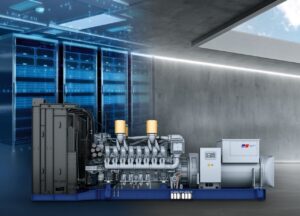
Growth in artificial intelligence (AI) is outpacing the world’s ability to generate enough power to sustain it. As AI adoption accelerates worldwide, it’s colliding with a power system that wasn’t built for its level of demand. Vittorio Pierangeli, senior vice president PowerGen at Rolls-Royce Power Systems (Figure 1), explains why electricity, not chips or algorithms, […]