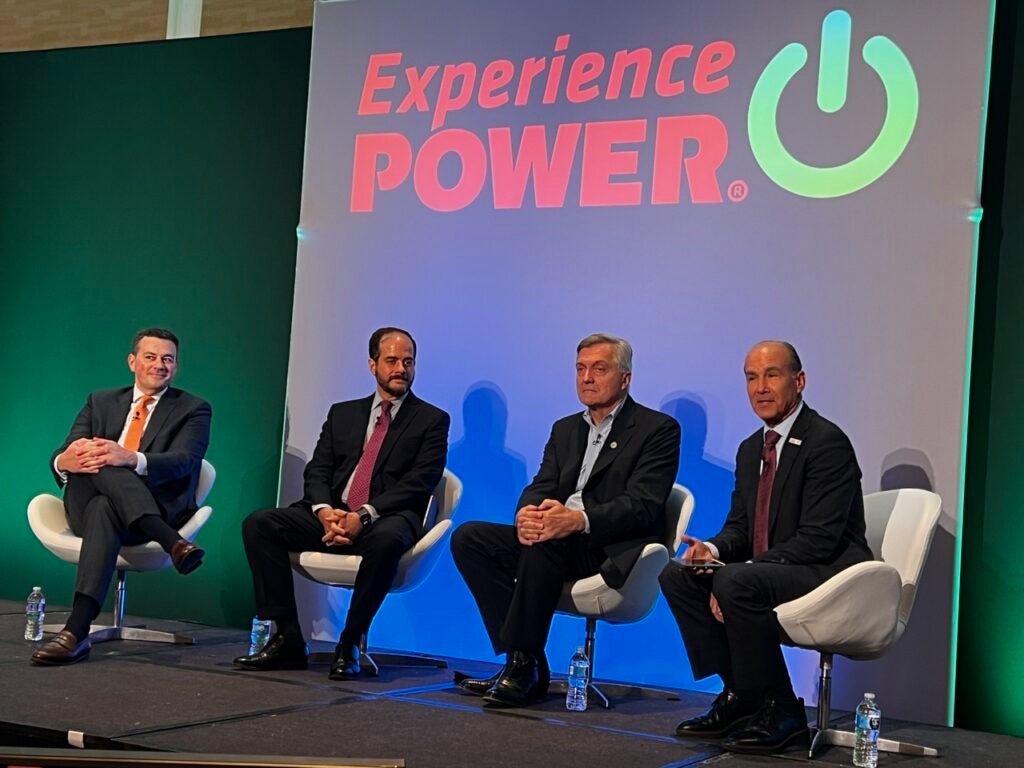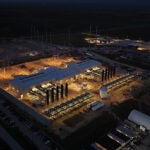
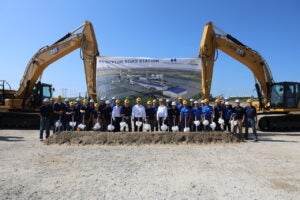
Nebraska Public Power District (NPPD) marked the start of construction on Princeton Road Station with a groundbreaking ceremony the morning of July 17, drawing state and local officials, community stakeholders, and NPPD staff to the site just north of Hallam, Nebraska. The 694-MW dual-fuel facility will be the largest natural gas generation plant in NPPD’s fleet once complete.
The groundbreaking comes as NPPD, like utilities across the country, contends with a sharp rise in electricity demand. “Today marked a truly historic moment for NPPD. Utilities nationwide are experiencing unprecedented surges in electrical demand, and Nebraska is no exception,” said NPPD President and CEO Tom Kent. “Princeton Road Station is an asset we need now, to ensure we continue reliably serving our current customers as well as supporting the new industries bringing an economic boost to our local communities. We do this while keeping a strict focus on maintaining the reliability and affordability of our whole system.”
Much of that demand is tied to Nebraska’s agriculture sector and other businesses expanding or relocating in the state, according to NPPD.
Equipment and Site Details
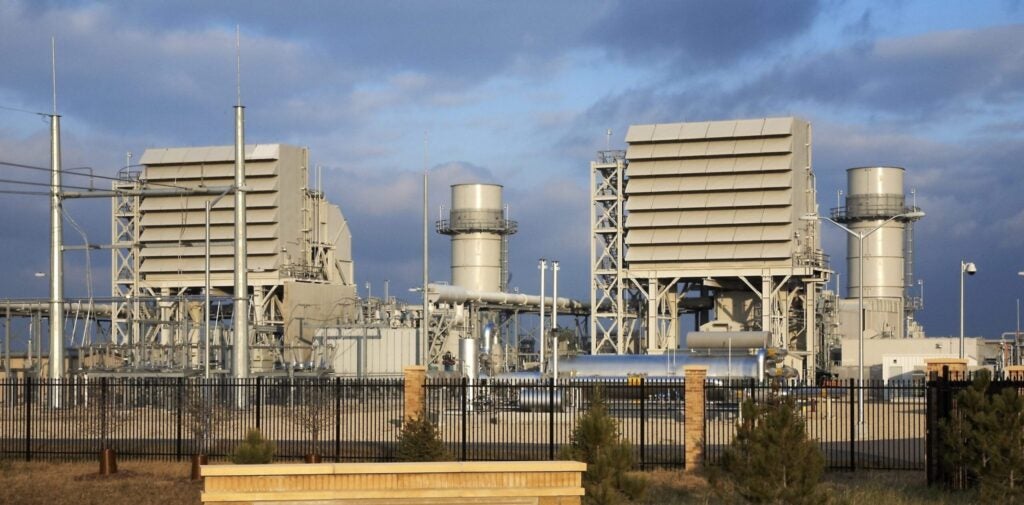
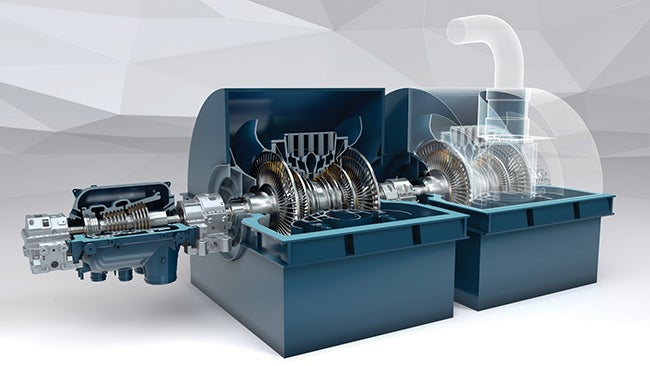
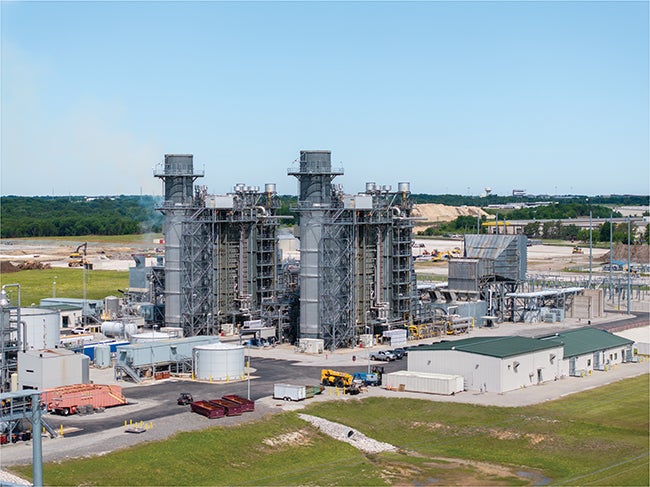
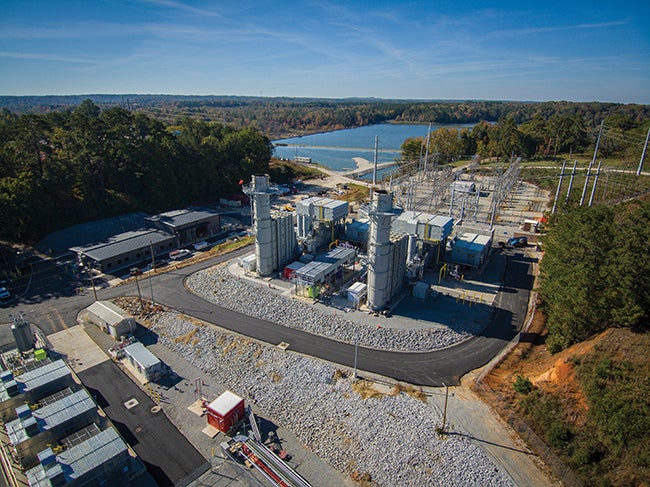
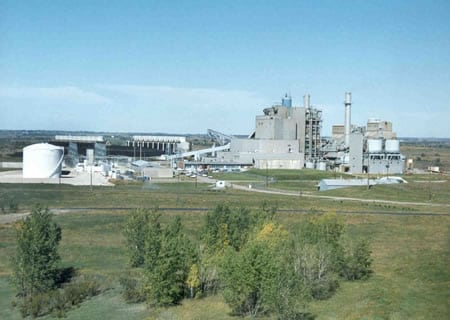
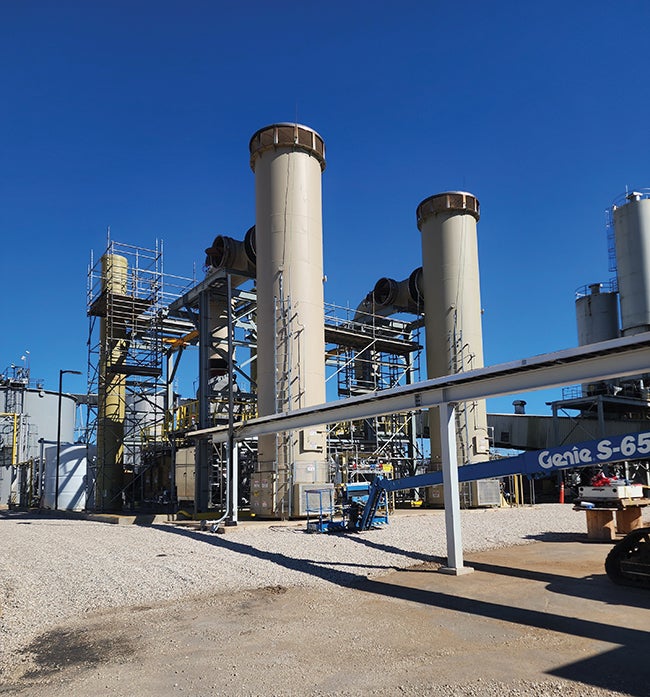
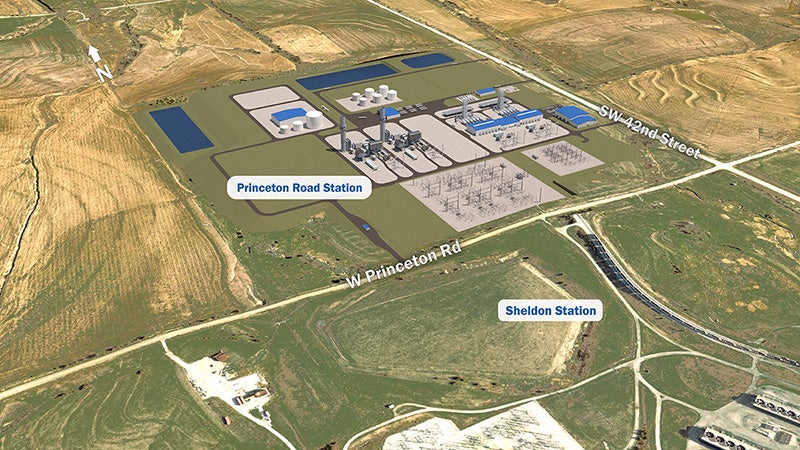
Princeton Road Station will be built on NPPD-owned land adjacent to the utility’s existing Sheldon Station in southern Lancaster County (Figure 1). The plant will combine two Siemens Energy F-class combustion turbines, rated at a combined 478 MW, with 12 Wärtsilä reciprocating internal combustion engines (RICE units) totaling 216 MW, according to Burns & McDonnell, which is serving as the engineer-procure-construct (EPC) contractor for the project. Both technologies are dual-fuel, capable of running on natural gas or diesel.
NPPD has said the combustion turbine and RICE combination was chosen after comparing cost, risk, environmental attributes, operating flexibility, and accredited capacity against the utility’s existing generation mix, and that both technologies were selected in part for their fast-start capability, which allows them to respond quickly to fluctuations in grid demand.
At full capacity, the plant is expected to serve about 318,000 average residential homes. NPPD said it has no plans to retire any existing generation facilities as a result of the new plant coming online.
Cost, Timeline, and Permitting
The project carries an estimated total cost of $3.1 billion, including transmission costs, which NPPD plans to fund through long-term bonds, with repayment built into electric rates over time. The utility has said the added generation and resulting load growth are expected to help offset costs through increased revenue.
Construction began in 2026 and is expected to take approximately three years, according to Burns & McDonnell, with NPPD targeting a June 2029 in-service date. NPPD expects to hire about 32 employees to staff and operate the completed facility.
The project still requires environmental permitting. NPPD must obtain a pre-construction air permit and, within a year of the plant entering service, apply for an operating permit from the Lincoln-Lancaster County Health Department. Emissions will need to meet Environmental Protection Agency (EPA) ambient air standards, verified through air dispersion modeling, and NPPD will be required to install state-of-the-art emissions control technology. On the water side, NPPD is working with the state of Nebraska and the local Natural Resources District (NRD) to secure well permits for plant operations, cooling, and potable use; the NRD will issue drilling permits, with the wells subsequently registered with the state.
Kent thanked those involved in bringing the project to this stage. “These units are extremely flexible and strengthen our diverse generation mix that provides the reliability and resiliency our customers count on,” he said. “I want to extend my gratitude to our customers, community partners, state and local stakeholders, and the many teams within NPPD who have worked tirelessly to bring this project forward.”
NPPD serves approximately 530,000 Nebraskans through a mix of retail and wholesale power arrangements, spanning 81 retail communities, 35 municipalities, and 23 public power districts or cooperatives served under wholesale contracts. Ground has been broken; keeping to the three-year build, in a market where turbine and engine lead times have upended schedules elsewhere, will be the harder part.
—Aaron Larson is POWER’s executive editor.