A coalition led by Brookfield and NextEra Energy has unveiled plans to build a $100 billion, privately funded artificial intelligence (AI) data center campus at the U.S. Department of Energy’s (DOE) Paducah Site in Western Kentucky, paired with up to 4.6 GW of dedicated new power generation that will be built and paid for solely to serve the campus.
Construction is expected to be completed in 2031. When fully built out in 2032, the campus will support up to 1.8 GW of utility capacity and more than 1.2 GW of compute load, according to a July 29 announcement from the newly branded Paducah American Energy Hub coalition. Backing the project are New York-based investment firm Brookfield, utility NextEra Energy, Big Rivers Electric Corporation, a member-owned generation and transmission cooperative serving 22 counties in Western Kentucky, Jackson Purchase Energy Cooperative, a Paducah-based distribution cooperative with more than 23,000 consumer-members across six counties, and Paducah Power System, a municipal utility that serves about 22,500 customers in Paducah/McCracken County.
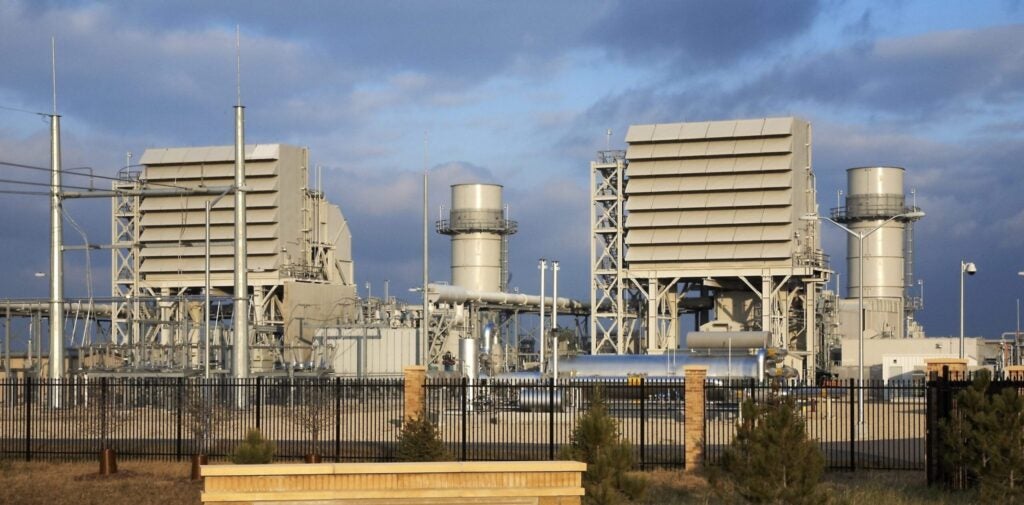
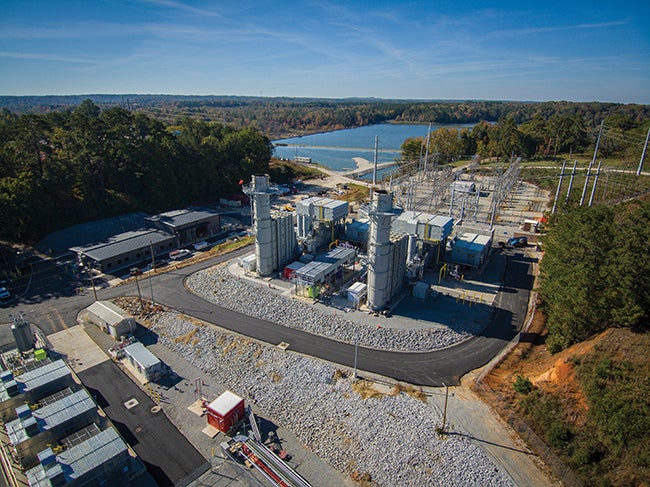
Under the arrangement, Brookfield will lease land from the DOE and develop and operate the data center campus. NextEra Energy will own and operate the dedicated generation resources—up to 2 GW of natural gas and up to 2.6 GW of battery energy storage systems (BESS)—which will be added in stages as compute load ramps. NextEra will also upgrade existing transmission infrastructure at or near the campus.
Big Rivers Electric is slated to provide wholesale electric service, and Jackson Purchase Energy Cooperative will handle retail delivery, while Paducah Power System is slated to serve as a community supporter. The power service agreement between Big Rivers and Jackson Purchase will be subject to additional oversight and approval by the Kentucky Public Service Commission (KPSC).
On Wednesday, the DOE specified that NextEra’s 2 GW of natural gas will be grid-connected rather than sited behind the meter. The DOE, notably, said the project’s combined generation and storage capacity ‘would exceed the campus’s energy needs, allowing excess electricity to be delivered to the regional grid.’ Big Rivers, the wholesale provider, has been a MISO member since 2010, though the Paducah Site’s transmission also ties into Tennessee Valley Authority (TVA) and Louisville Gas and Electric/Kentucky Utilities (LG&E/KU) territory, neither of which operates within an organized wholesale market. NextEra has not disclosed the interconnection point.
Paducah: From Cold War Enrichment to AI Hub
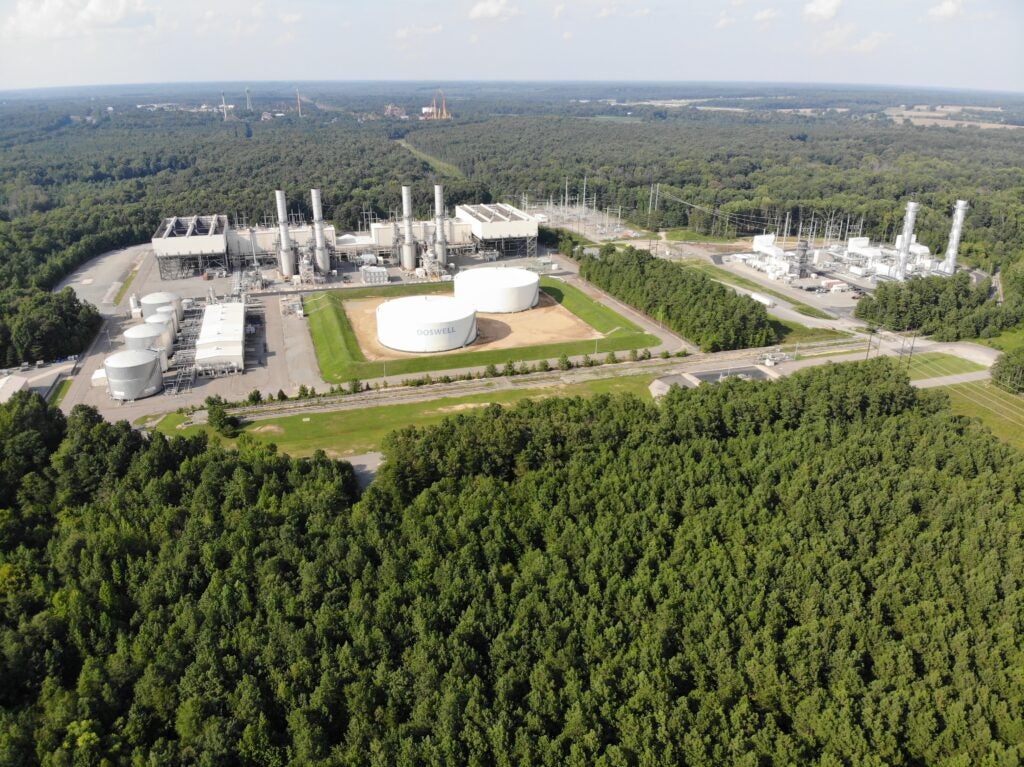
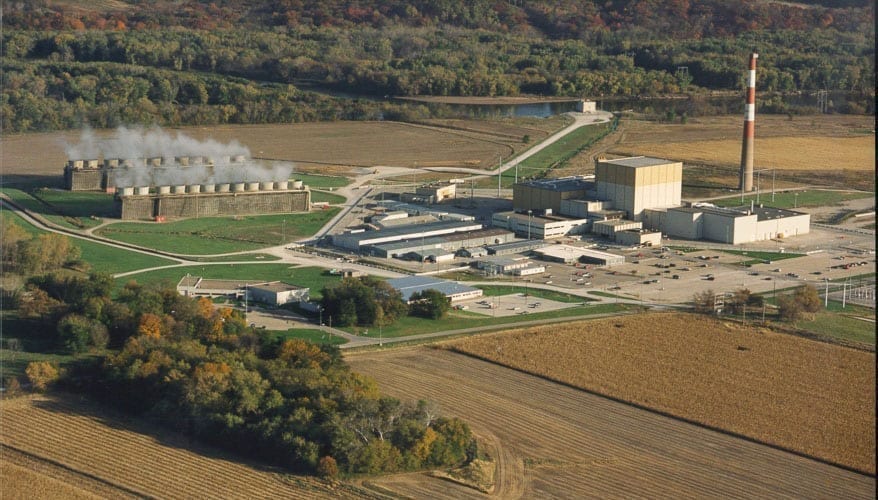
The 3,556-acre Paducah site—which housed the former Paducah Gaseous Diffusion Plant (PGDP) in McCracken County—is one of the most industrially built-out federal parcels in the country. Originally selected by the Atomic Energy Commission in October 1950 as the second of three planned U.S. uranium enrichment plants, the PGDP began operations in 1952, producing enriched uranium first for the nation’s nuclear weapons program and later as fuel for commercial power reactors. It was the last government-owned uranium enrichment facility operating in the U.S. when commercial enrichment ceased in May 2013, and its facilities were formally returned to DOE’s Office of Environmental Management (EM) on Oct. 21, 2014, which has since managed deactivation, decontamination, and cleanup.
The 500-plus-facility footprint already includes heavy transmission capacity, an on-site water treatment plant, fiber connectivity, roadway access, and vast tracts of ready-to-develop land. In July 2025, the DOE named Paducah, along with Idaho National Laboratory, the Oak Ridge Reservation, and the Savannah River Site, as the first four federal sites where it planned to invite private-sector partners to develop AI data centers and energy generation projects. The selection was rooted in a series of Trump administration executive orders directing federal agencies to leverage federal land for faster data center and generation buildout. Those include Removing Barriers to American Leadership in Artificial Intelligence, Unleashing American Energy, and Accelerating Federal Permitting of Data Center Infrastructure.
The DOE said the Paducah selection builds on “the partnership model” it rolled out at the Portsmouth Site in Piketon, Ohio, in March. Portsmouth, which shares Paducah’s Cold War lineage, was the 1952-chosen federal site chosen to host the third of the three U.S. gaseous diffusion plants, alongside Oak Ridge and Paducah, to expand production of fissionable materials for the nation’s atomic weapons program. While its enrichment operations ceased in 2001, DOE-EM has since managed one of the largest environmental cleanup and redevelopment efforts in the country. The March deal—announced separately from the four-site July 2025 solicitation—paired SoftBank subsidiary SB Energy and AEP Ohio to build the 10-GW PORTS Technology Campus at the former Portsmouth Gaseous Diffusion Plant, backed by 9.2 GW of new natural gas generation, $4.2 billion in SB Energy-funded 765-kV transmission upgrades through AEP Ohio, and $33.3 billion in Japanese government funding tied to the U.S.–Japan Strategic Trade and Investment Agreement.
But compared to Paducah, at PORTS, the U.S. government would own the gas generation. Construction on SB Energy’s initial 800-MW phase is expected to begin this year, with the full buildout projected to create 35,000 construction jobs and 2,500 permanent positions. SB Energy also committed $40 million to a community benefits agreement. The Portsmouth project gained FAST-41 permitting coverage on June 16, becoming the first project listed under the permitting council’s high-performance computing sector, with the U.S. Army Corps of Engineers as the lead federal permitting agency.
DOE-EM issued the Paducah Request for Offers (RFO) on Nov. 4, 2025, seeking proposals under long-term leasing agreements that would be “solely funded by the applicants.” Under the RFO, applicants would be responsible for building, operating, and decommissioning each project, as well as securing utility interconnection agreements. The solicitation, notably, drew on DOE’s authority under the Atomic Energy Act of 1954 and the 1993 Hall Amendment, which lets the agency lease unneeded property at federal facilities being closed or reconfigured.
DOE in its RFO also explicitly invited proposals integrating “innovative energy generation and storage technologies with the AI infrastructure, particularly nuclear technologies including small modular reactors.” RFO responses were due Jan. 30, 2026. Tuesday’s announcement identifies Brookfield and NextEra as the selected offerors—pairing the campus with natural gas and battery storage instead of an on-site nuclear resource—though the coalition noted the transaction “is subject to negotiation and execution of definitive documentation.”
“We are intently focused on finding ways to put federal land back to use for American taxpayers,” said DOE Assistant Secretary for Environmental Management Tim Walsh said on Wednesday. “That commitment is at the heart of our office’s American Energy Hubs initiative. Our employees are working with urgency to transform legacy sites that played a key role in the prosperity and success of our nation, like Paducah, into hubs for energy and innovation that keep our nation secure and create new jobs and economic opportunities for the region.”
Rep. Andy Barr (R-Ky.), whose 6th District covers central Kentucky, said he “personally advocated with the Secretary to help make the project happen” after speaking with local and state officials. “The $100 billion private sector investment in Paducah is historic,” Barr said, calling it a commitment that will “create jobs, strengthen our energy security, and deliver lasting economic growth for Paducah and the Commonwealth for decades to come.”
A Test Case: Ratepayer Protection Pledge Meets BYOP
The new deal’s financing structure is engineered to align with the Ratepayer Protection Pledge, a voluntary White House-brokered commitment first signed on March 4 by Amazon, Google, Meta, Microsoft, OpenAI, Oracle, and xAI. Under the pledge, hyperscalers and the utilities, cooperatives, and data-center developers behind them commit to “build, bring, or buy” the generation capacity their facilities need and to fund the transmission and distribution upgrades required to serve them, rather than passing those costs onto households and small businesses. The White House expanded the pledge on July 23, bringing the total number of signatories to more than 200 organizations across four stakeholder groups, including 23 Republican governors. NextEra Energy and Big Rivers Electric are among the pledge signatories.
“The data center will bring its own power, pay for its own power infrastructure and create good-paying jobs for local workers—and in doing so, it will make the local communities stronger,” said John Ketchum, chairman, president, and CEO of NextEra Energy. “New jobs, new energy resources, a more reliable grid and not a dollar of added cost on an existing customer’s electric bill.”
Energy Secretary Chris Wright called the Paducah project a “crucial roadmap for future projects in the U.S. by revealing the ability to build world-leading infrastructure without passing costs on to surrounding communities.” Brookfield CEO Bruce Flatt described the site as “the seed of our plan to invest $100 billion in AI infrastructure” and said the project would ensure “innovation and affordability go hand in hand with creating high-quality jobs, attracting new investment, and strengthening the local economy.”
Kentucky PSC Oversight and the Federal Backdrop
Even with dedicated generation, the wholesale and retail service arrangements among Big Rivers, Jackson Purchase, and the Brookfield campus must be approved by the KPSC, which has authority over cost allocation and rate design for the state’s regulated cooperatives. Big Rivers President and CEO Don Gulley emphasized member protection on Tuesday. “We believe this project will provide significant benefits to our members without compromising the affordability or reliability of their electricity,” he said.
The deal emerges as federal lawmakers press to shield ratepayers from the electricity-cost pressures of rapid data center growth. On July 21, the House Energy and Commerce Committee voted 52-0 to advance H.R. 9340, the Ratepayer Protection Act, a bipartisan bill from Reps. Gabe Evans (R-Colo.) and Kathy Castor (D-Fla.) that would amend Section 111(d) of the Public Utility Regulatory Policies Act (PURPA) to require state utility commissions to consider a large-load standard directing data-center customers of 100 MW or more to recover the full incremental cost of any generation, transmission, or distribution upgrade needed to serve them, along with financial assurances against stranded-cost exposure.
The Paducah announcement also arrives against the backdrop of the Federal Energy Regulatory Commission’s (FERC) June 18 show-cause orders directing all six U.S. RTOs and ISOs—including the Midcontinent Independent System Operator (MISO), where Big Rivers has been a member since 2010—to justify or reform tariff rules covering large loads.
Kentucky has been pursuing a parallel track at the state level. The KPSC on Oct. 30, 2025, approved East Kentucky Power Cooperative’s Data Center Power (DCP) tariff in Case No. 2025-00140, which created a new customer class for data-center loads of 15 MW or larger and required a KPSC-approved special contract for each project, with enhanced requirements—including a dedicated power-supply plan—for projects above 250 MW. Louisville Gas & Electric and Kentucky Utilities are separately pursuing an “extremely high load factor” tariff before the KPSC that would apply to new data-center loads of 100 MW or more, and Kentucky Power (an AEP subsidiary) has its own data-center tariff case underway. In February 2026, Kentucky lawmakers introduced HB 544, the “Kentucky Ratepayer Protection Act,” which would have codified a statutory 100-MW threshold and a financial assurance mechanism nearly identical to H.R. 9340. However, the bill died on the final day of the state legislative session.
Another Big Deal for the NextEra Playbook
The Paducah selection marks the first federal-hub award under a strategy that NextEra CEO John Ketchum outlined during the company’s Q2 2026 earnings call on July 24, five days before the announcement. Ketchum highlighted the Juno Beach-based utility’s large-load demand and data center hub strategy as a “major area of opportunity.”
“Hyperscalers and other large load customers are increasingly focused on speed, certainty and scalability, and that plays directly to our strengths,” he said. “We believe Energy Resources [NextEra’s competitive arm] is one of the few companies in the country that can support these customers with a full suite of solutions from renewables and battery storage in the near term to gas-fired generation and potentially nuclear over time. In fact, we now have 30 potential hubs we are discussing with the market, and we continue to expect that number to rise to 40 by year-end.”
Ketchum pointed to four origination channels feeding a base-case target of 15 GW of new generation to serve large load by 2035, and an upside case of 30 GW or more: “working directly with hyperscalers, with investor-owned utilities, with cooperative and municipal utilities and with federal partners.”
The Paducah offer falls within a broader market repositioning Ketchum linked directly to FERC’s June show-cause orders. “When you think about where the market is heading and what’s happened over the last couple of years, a lot of low-hanging fruit from utilities that might have been in an excess generation position. That surplus generation has been sold off,” he said. “And now if you look at FERC show-cause order matching load with [generation] and making sure large load pays their own way, I mean, it’s really going to, I think, shift the scales to creating a level playing field where people are going to have to compete on cost.”
The Paducah selection also arrives as NextEra advances a proposed combination with Dominion Energy, the Richmond-based utility serving Virginia’s data center alley—the densest concentration of hyperscale load in the country. NextEra filed for merger approval on July 15 with the Virginia State Corporation Commission, the North Carolina Utilities Commission, and the Public Service Commission of South Carolina, and separately with FERC, the Nuclear Regulatory Commission, and the SEC. The combined company would maintain dual headquarters in Richmond and Juno Beach, Florida, and an operational headquarters in Cayce, South Carolina. NextEra has offered $2.25 billion in shareholder-funded bill credits to Dominion customers in Virginia, North Carolina, and South Carolina. Ketchum called the transaction “a merger of addition, not subtraction,” and told analysts that scale “creates efficiencies that compound over time into lower cost, better experience and stronger outcomes for customers.”
While Brookfield and NextEra’s offer pairs the Paducah campus with gas and battery storage, on Friday’s call Ketchum said NextEra is “closely evaluating the capabilities of various SMR OEMs” and has “6 GW of SMR co-location opportunities” at its existing nuclear sites, but “any new nuclear build would have to include the right commercial terms and conditions with appropriate risk-sharing mechanisms that limit our ultimate exposure.”
—Sonal Patel is a POWER senior editor (@sonalcpatel, @POWERmagazine).