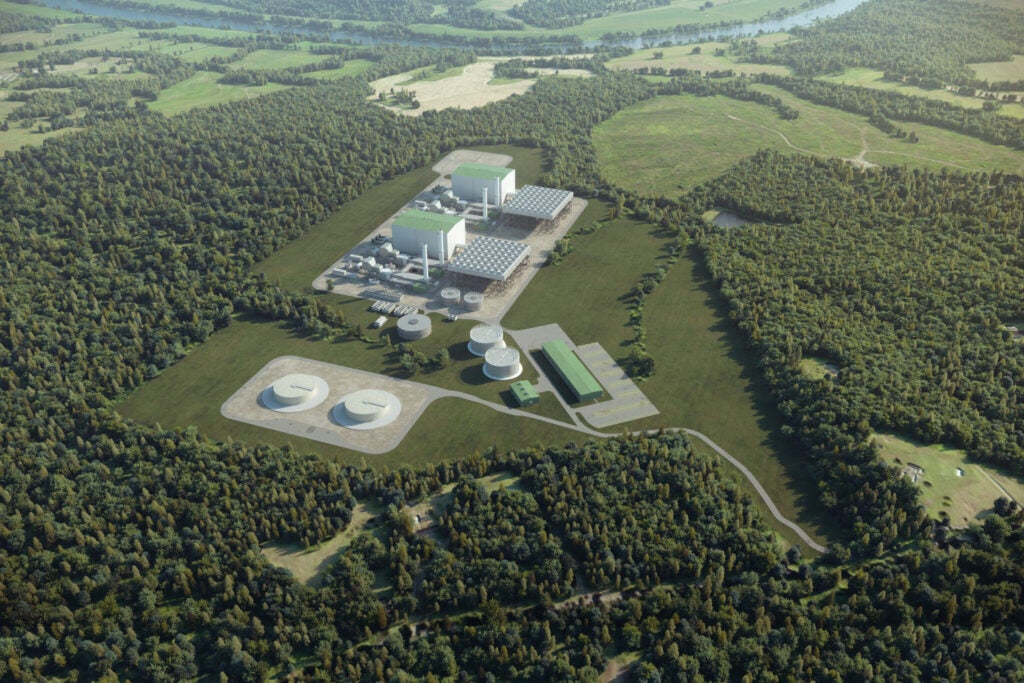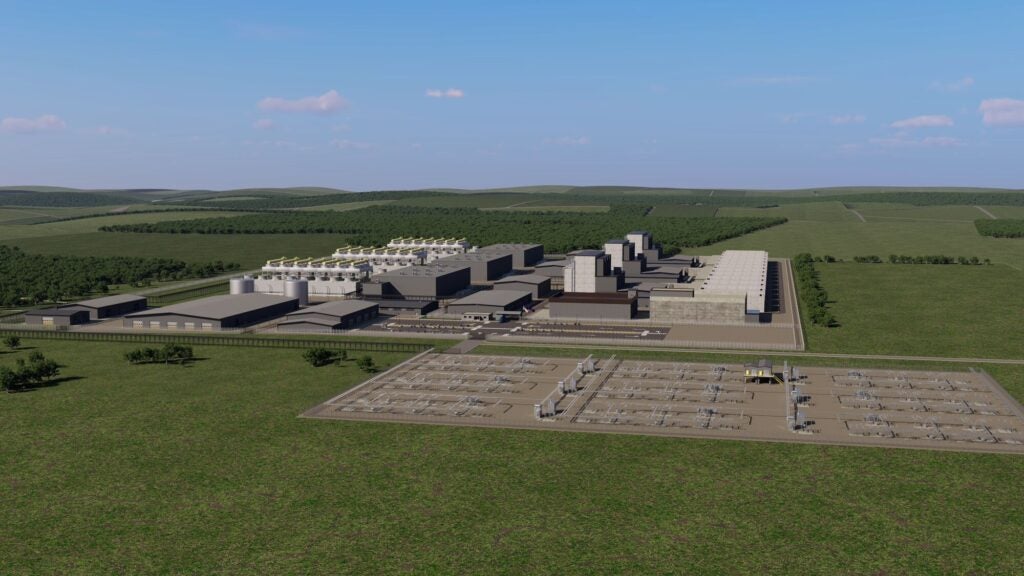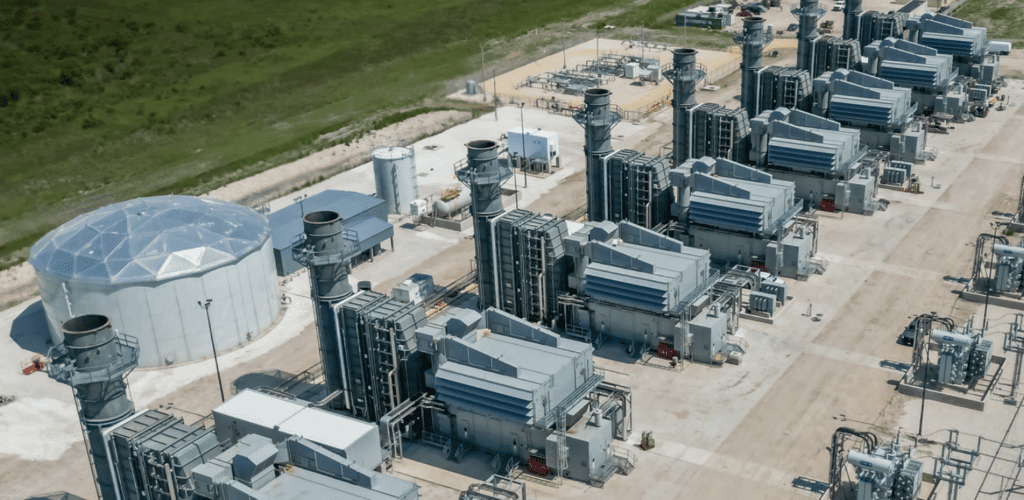
NRG Energy on Aug. 4 unveiled its first Bring Your Own Power (BYOP) project, a 1.2-GW combined-cycle plant in Texas supported by a 15-year contract with an investment-grade “leading global cloud and artificial-intelligence hyperscaler.” The $3.2 billion facility, backed by a customer parent guarantee, is targeted for commercial operation in late 2029 and could be expanded to 2.4 GW.
NRG said it has aligned with the customer on principal commercial terms, but negotiations and remaining land-related matters are continuing, and a final investment decision remains subject to internal approvals and other customary conditions. The company plans to develop, own, and operate the plant, which would serve an expected 1-GW data center load while adding more generation than the customer is expected to require. The facility is being designed to operate connected to the grid, in island mode, or transition between the two configurations.
During its second-quarter 2026 earnings report on Aug. 4, the company said approximately 95% of the project’s free cash flow would be supported by capacity payments independent of data center utilization. Fuel and operating costs would be recovered separately, insulating NRG’s return from power demand, merchant electricity prices, and natural gas prices. NRG pegged the build cost at $2,700/kW and said the project falls within its 12% to 15% pretax unlevered internal rate of return (IRR) target. “We will not trade discipline for scale,” President and CEO Robert Gaudette told analysts. “Each project must stand on its own, meet our risk-adjusted return thresholds and be supported by the commercial and credit protections appropriate to the capital we deploy.”
As executives note, the BYOP framework is intended to address reliability and affordability concerns raised by elected officials and regulators as the Electric Reliability Council of Texas (ERCOT) confronts a demand curve that could double the state’s July 2026 peak within a decade. So far, NRG says it has secured 5.4 GW of turbine and engineering, procurement, and construction (EPC) capacity through 2032 under a U.S.-based development venture with GE Vernova and Kiewit-TIC. The company also identified roughly 2 GW of uprate potential across its PJM Interconnection gas fleet from combustion-turbine-to-combined-cycle conversions.
Combined with 445 MW of previously signed data center agreements, NRG said the new 1.2-GW project could help lift its illustrative contracted free cash flow to $1.2 billion in 2030. By 2033, the company said free cash flow supported by long-term agreements and capacity revenues could reach about 95% of the midpoint of its 2026 free-cash-flow-before-growth guidance, or roughly $2.9 billion, assuming current capacity-auction prices remain constant through 2033. That development strategy builds on a generation portfolio that roughly doubled to 25 GW following NRG’s acquisition of LS Power assets. NRG also serves about 8 million retail customers, including more than 2 million in Texas, a prospect which aligns the company on both sides: building generation for large new loads while managing the affordability consequences for existing electricity customers.
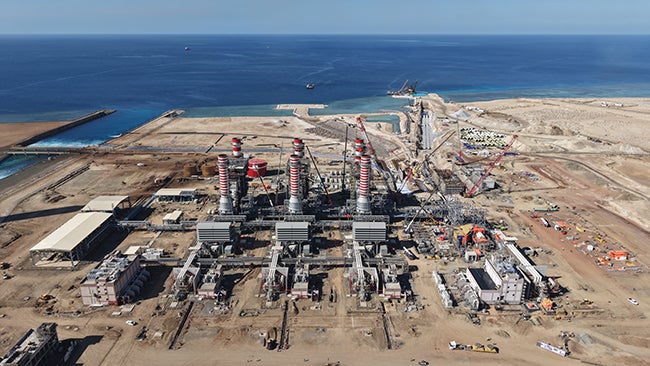
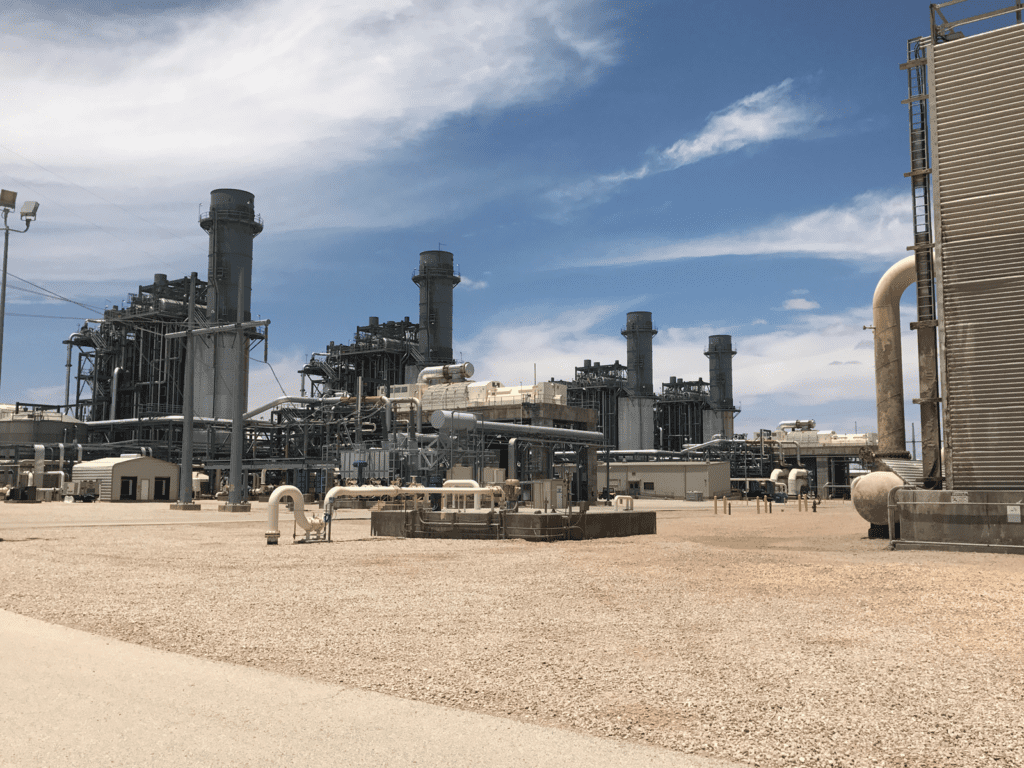
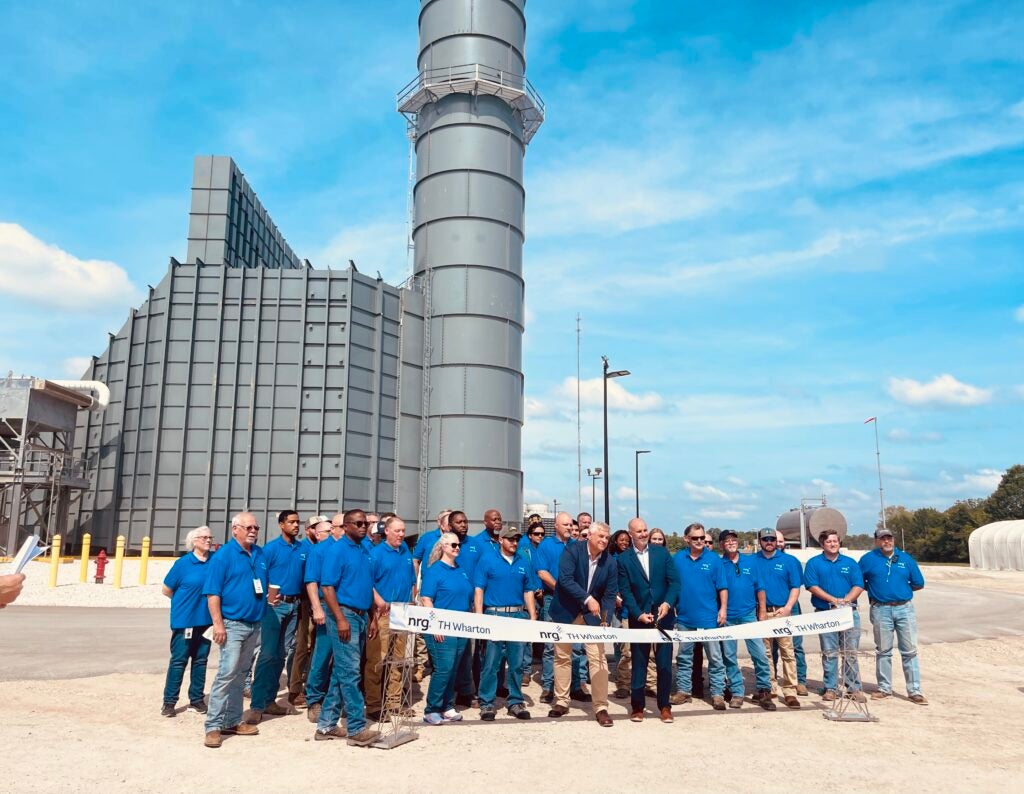
On the Aug. 4 call, NRG repeatedly pointed to T.H. Wharton as evidence that it can deliver new gas capacity in ERCOT. The 456-MW simple-cycle peaker—NRG Energy’s first new power plant in over a decade—was built at an existing NRG plant site in northwest Houston. It uses Siemens SGT6-5000F turbines and entered commercial operation in May 2026.
It is also the first newbuild generator delivered under the Texas Energy Fund (TEF), financed with $1.15 billion of state loans at 3% across three projects and eligible for a completion bonus of up to $55 million over 10 years starting in the third quarter of 2027. Two more TEF projects are slated to follow it: the 689-MW Cedar Bayou 5 combined-cycle unit and the 443-MW Greens Bayou 6 peaker, both targeted for mid-2028. On Wednesday, President and CEO Robert Gaudette told analysts the 1.5-GW TEF portfolio “remains on track, including T.H. Wharton, which we delivered on time and on budget.”
POWER sat down with Matthew Pistner, executive vice president and president of NRG Wholesale, at the T.H. Wharton ribbon cutting on July 23. Pistner, a 33-year plant, technical, and corporate leader, oversees NRG’s commercial operations, plant operations, asset management, and development, engineering, and construction functions. In the brief interview, Pistner discussed how the 456-MW T.H. Wharton peaker is operating during its first summer amid ERCOT record demand, why NRG sees bring-your-own generation as necessary for large data center loads, and why labor may prove as limiting as turbines, transformers, and high-voltage equipment.
This interview has been lightly edited for length and clarity. Bracketed material was added by POWER for context.
POWER: How has T.H. Wharton been operating since it came online in May?
Pistner: This plant has been dispatched almost every day, and it varies depending on the weather. On days like today, we’ll see the Electric Reliability Council of Texas (ERCOT) call it online sometime in the early to mid-afternoon and then run through about midnight.
The way I think about that is that electricity demand stays high during what we call the “Netflix hours,” when people are home, kids are home doing homework or watching Netflix, and air conditioning is running high. That’s when we tend to see the peak demand.
A plant like this, a peaker plant, steps into that peak. On really hot days, you’ll see it come on in the early to mid-afternoon, be there through those evening hours, and then come back off.
What we see in the market is what I call the handshake between solar and wind. Every day, the sun sets and the wind comes up. That handshake can occur over about two or three hours. That’s when we’re all still using a lot of electricity. Batteries solve part of that problem, but a plant like this can come on very quickly and fill in any gaps to maintain reliability through that period.
POWER: T.H. Wharton is a simple-cycle unit. How quickly can it reach full load?
Pistner: It can be at full load in about 20 minutes. You can start it quickly and get up to the full 456 MW in about 20 minutes.
POWER: Where does the fleet stand after the LS Power acquisition?
Pistner: With the LS Power acquisition, we essentially doubled the size of our fleet to 25 GW. Through the Texas Energy Fund projects, we have more than 1.5 GW of generation coming, and that is to serve the customers in need in the state today.
When you think about the artificial intelligence demand that we know is coming, it is here a little bit today, but we are at the very beginning of how we see that demand from data centers coming in. That is the next set of development options we have.
We announced last year a partnership with GE Vernova and Kiewit to build 5.4 GW. Most of those projects will likely be in Texas, but we have the option to put them in a couple of other locations. That is nine combined-cycle units totaling 5.4 GW.
POWER: NRG has described bring-your-own generation as central to its data center strategy. How do you define that concept?
Pistner: If I’m a data center or a user of data center chips and I need a gigawatt of power, in our view, we’d like to see that gigawatt of generation come with it.
There’s room for some data centers to come online without bringing generation. But when you think about the macro environment, you really want to try to keep generation and supply aligned. There’s always going to be a little bit of an over-under, but you want to try to keep that in balance.
What we’re being asked to do, if you believe some of the projections, is essentially double the peak we saw [on July 22] in the next five to 10 years in terms of demand in the state. You can see pretty quickly that if generation doesn’t come with it, doubling demand is an equation that doesn’t work.
POWER: How do you see the relationship between behind-the-meter and front-of-the-meter solutions?
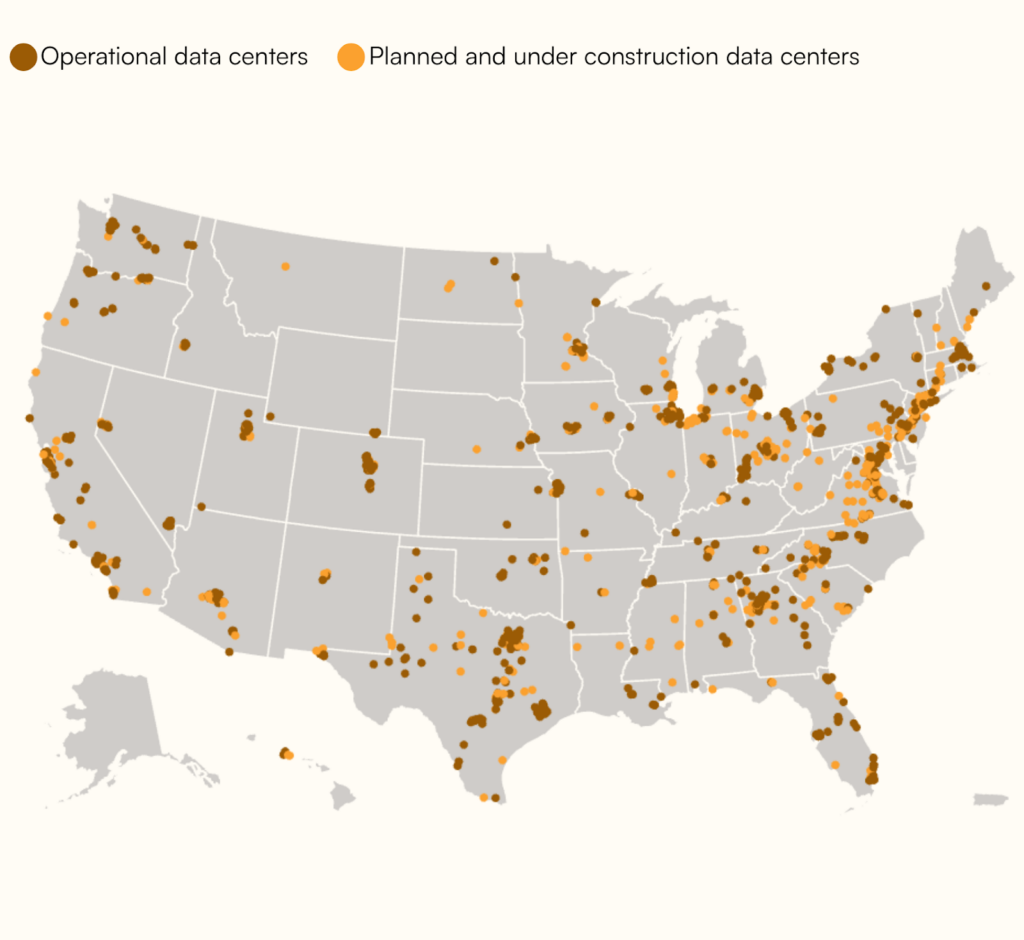
Pistner: I think the reason you’re seeing behind-the-meter data centers get built is that the interconnection queue for them to pull power from the grid is taking longer than the customers they have who want to use the chips being installed.
One way to speed past that is not to rely on the grid. You build a behind-the-meter plant, bring the data center and the generation online, and solve the demand-and-supply equation within that arrangement, with no reliance on the grid.
That’s a really hard equation to solve when data centers want five-nines reliability. It’s also an expensive solution.
Ultimately, what you’re going to see is that everything behind the meter eventually will want to be connected to the grid. There is no better way to provide five-nines reliability than to be connected to the grid. The behind-the-meter approach is about a speed pass. The front-of-the-meter solution is going to be the ultimate one.
Our solutions are in front of the meter. We also have a behind-the-meter solution. As data center customers come to us, we have a menu of options they can pick from. But I think what you’ll see over time is that everything will eventually be connected to the grid. That is the best solution for balancing supply and demand and providing reliability.
POWER: Given the scale of projected data center load growth, how realistic is it to build enough generation with today’s equipment and supply-chain constraints?
Pistner: If you go back in time and ask when the U.S. had the kind of growth we’re talking about now, it was really right after World War II until about the end of the 1970s. That 30-plus-year window of demand growth inside the United States is what we’re being asked to do in the next 10 years.
It’s something this country has done before, but what’s changed is the pace and scale of it in such a short period of time.
As data centers became a bigger part of our vocabulary, what you heard in the market was, if you don’t have turbines, you’re not going to solve the problem. Then you heard, if you don’t have transformers and high-voltage equipment, you’re not going to be able to solve the problem.
Because we’re building this plant and the other two plants [Cedar Bayou 5 and Greens Bayou 6], we’ve been experiencing that a little bit longer than everyone else. We realized pretty quickly that if you don’t have labor, all you’re going to have is a lot of expensive equipment sitting in a field waiting for someone to install it.
That’s why we announced the GE Vernova–Kiewit partnership, recognizing that labor is going to be a bottleneck for how quickly these plants can be built.
POWER: What makes the labor constraint so difficult?
Pistner: We have a demographic in the industry where a lot of the skilled craft operators, mechanics, electricians, and instrument and control technicians have significant tenure. A significant portion of them will be reaching retirement eligibility in the next five years.
There’s a large challenge in replacing the existing workforce. Then you think about going from this country building one or two large natural gas power plants a year to building 100 to 200 over this period of time.
We have a demographic that is retiring at the same time the buildout is going to require another wave of employees to come in with those skills. That’s the challenge in front of us, and it’s going to take all-of-the-above solutions. No one company can do this by itself. How do we skill the workforce of today and tomorrow to be there for that challenge?
POWER: How does NRG think about sites that enter the development funnel but do not move forward?
Pistner: This is a development funnel. When we think about it, there may be 30 different sites out there, and Tolar was one of those sites.
As you work through all the attributes that need to go into the funnel and start to filter those down, you may have 30 sites in the funnel and only three that actually turn into projects. Tolar is one where one of those filters kicked it out. But there are a number of projects in that funnel.
POWER: Does that change how you evaluate site selection or community engagement?
Pistner: Making sure there is a stakeholder process, both at the state and in the local community, is critical to where these projects are going to be sited, as is listening to the legitimate concerns of the community where the site is located.
I understand there is the affordability issue, which is everywhere, and all of us experience that. You hear legitimate concerns about water consumption. You hear legitimate concerns about noise. Making sure we understand the needs of the community is important so that, as we think about siting these projects and designing the plant, those needs are addressed.
POWER: Is the power industry competing with data center developers for the same construction resources?
Pistner: We don’t see it in today’s world. But here’s the statistic: To build a gigawatt-scale data center requires about four times the electrical labor needed to build a gigawatt of generation.
If I need electricians for the power plant and the data center is being built adjacent to it, requiring four times as many electricians, there’s going to be a natural partnership we’ll have to have to make sure we’re not competing with each other and can do both at the same time. That’s something that is paramount for us to figure out.
—Sonal C. Patel is a POWER senior editor (@sonalcpatel, @POWERmagazine).