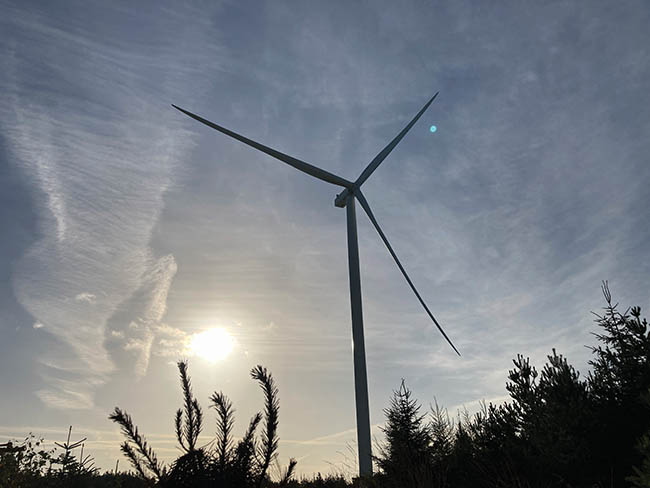
It’s a known fact that wind power sites across the U.S. eventually will reach the end of their lifecycles. So now what? The industry is coming upon an age where owners and operators must repower these sites by leveraging existing infrastructure to help meet the growing national demand for power.
With more than 75,000 turbines across 45 states, many approaching 15-20 years of operation, wind repowering— upgrading existing wind farms with newer, more efficient technologies to increase energy production and extend operational life—is no longer a niche consideration. It is a central pillar of the wind industry’s future. Our country’s renewable energy repowering strategy is essential to the nation’s future clean energy ambitions and its evolving power demands.
COMMENTARY
In recent years, there has been a downturn in greenfield wind project development due to supply chain challenges, changes in tax laws, and limited, new interconnection opportunities. Repowering, as a supportive and sustaining measure, can deliver increased annual energy production (AEP) and extended project lifetime at lower cost, while leveraging existing infrastructure, interconnection position, land rights, and certain permits. This process has emerged as a bright spot for turbine equipment manufacturers and developers and, while it requires strategic and detailed technical evaluation, the economic, operational, and environmental advantages are substantial.
Strategies for Wind Repowering Evaluation
With the demand for asset modernization comes the need for greater component inter-dependability. As turbines age, their performance declines due to component degradation and outdated technology. Repowering extends the life of these assets by replacing major components—or even entire turbines—with new technology operating at higher capacity factors. This process must be evaluated from varying perspectives to assess feasibility and potential benefits.
These perspectives could include some pertinent questions on component compatibility and project planning, such as:
Component compatibility: Can the existing foundations, towers, and/or electrical systems support newer, larger turbines? What upgrades might be necessary? Should a total rebuild of the existing site be considered? Consideration of these key questions is critical to understanding the overall scope, required work streams, and associated capital expenditure (CAPEX) requirements for repowering. A prospective repowering site assessment provides insight into other technical considerations, such as turbine selection.
Site conditions: An updated wind resource assessment of the surrounding area may be needed to ensure understanding of site classification and optimal turbine selection. However, it is also important to evaluate any changes in local features or conditions – different from those in the original site assessment – that could affect the repowered project’s relationship with the natural surrounding environment.
As a key input to revenue generation and cash flow, it is important to understand how much power the repowered project will generate on an annual basis. Also, identifying specific environmental (such as avian) or grid conditions that may require intermittent curtailment is another important factor to determine the expected energy yield.
Another consideration should be around current environmental baselines, land use changes and ecological sensitivities, which can help determine whether site conditions remain comparable to the original consented scheme, or whether additional environmental assessment and mitigation may be required.
Grid interconnection: Maintaining an existing interconnection position is advantageous, but upgrades may still be required. Consulting with the interconnecting transmission service provider on the prospective repowering plan is critical to determine if the repowered project constitutes a material modification. If the repowering plan remains within the boundaries of the original project’s capacity and grid interface, it’s likely that fewer or no grid upgrades will be required.
Permitting: Repowering may trigger new environmental reviews or local permitting processes, especially if turbine height and/or rotor diameter increases. Increases in turbine physical size may impact other project aspects such as Federal Aviation Administration approvals, avian interactions, shadow flicker, and noise levels. If any of these aspects are impacted, project owners should determine which construction/operation permits (new or updated) are required and conduct a new environmental impact assessment. Early-stage environmental screening and proportionate impact assessment can help identify where changes are material, clarify regulatory requirements, and support efficient engagement with regulators and stakeholders.
Financing: While CAPEX can be significantly lower for repowering—as compared to greenfield —project owners must consider the cost of capital, financing structures, and securing a new, long-term revenue stream (such as a power purchase agreement [PPA]). To determine the business case for repowering, the project owner should update the energy yield assessment and conduct an independent grid study. Aligning revenue projections with expected CAPEX and operating expenditures (OPEX) is important to build an accurate financial model for the project.
A Change in the Wind
The business case for repowering has shifted as federal tax incentives and the domestic supply outlook have changed. In the past, feasibility was driven primarily by an increase in annual energy production and (re-)qualification for the federal Production Tax Credits (PTC). Today, construction-start timelines and supply chain considerations are more important, and safe harbor strategies remain essential in qualification and the overall project economics.
In parallel, the ever-changing tax equity landscape and ongoing mergers and acquisitions activity, including transactions involving older “vintage” wind assets, are pushing sponsors to consider other options beyond traditional repowering aimed at renewing tax credits. For instance, less-expensive, targeted upgrades to auxiliary systems—such as cooling, lubrication, or hydraulics—can be highly cost-effective, as they boost long-term reliability, extend project life, and increase energy output while cutting OPEX.
With much of the U.S. wind fleet reaching maturity, repowering is the next frontier for industry growth. The wind sector is highly resilient, and its continued success will depend on making informed, proportionate decisions that balance technical, commercial, and environmental considerations.
By delivering a ‘second wind’ to gigawatts of aging assets, we can ensure that the existing wind power generation infrastructure remains productive and competitive for decades to come.
—Nicholas Reuben Capaldo, P. Eng., is Director, Wind Advisory-North America for Enertis Applus+. He is responsible for client engagement and delivery of Enertis Applus+ wind advisory offerings in the U.S. and Canada.