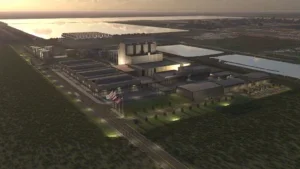
AI-driven load growth is putting significant strain on the grid, intensifying pressure on utilities and developers to secure firm capacity and meet increasingly compressed delivery timelines. While tools such as transmission optimization can deliver incremental gains, they do not address the core issue: the pace of AI data center expansion is forcing a shift from optimizing existing infrastructure to building new, reliable supply.
As demand accelerates, attention is shifting toward next-generation technologies, particularly small modular reactors (SMRs) and, longer term, fusion. A recent U.S. Energy Information Administration (EIA) survey of SMRs and microreactors suggests the industry may be approaching an inflection point. The report highlights a shift in how nuclear power is being positioned—not as large, centralized generation, but as a more flexible, distributed resource capable of serving industrial sites, military installations, data centers, and microgrids.
That shift reframes the core question facing the power sector. AI load growth is changing the development challenge from incremental grid optimization to siting, permitting, financing, and deploying new firm capacity near major load centers. SMRs could be part of that solution, but only if the industry can close the execution gap.

SMRs Are Becoming a Feasible Option for Data Centers
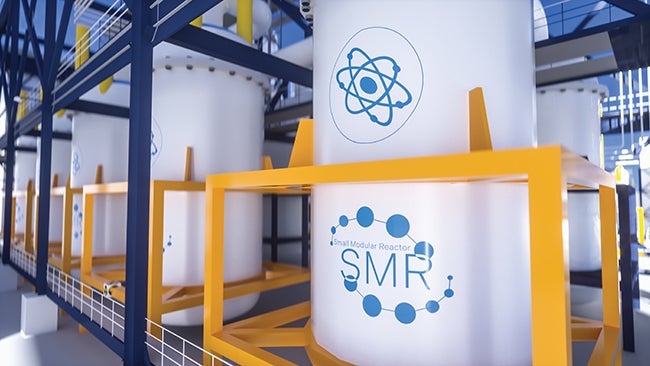
As this new data center challenge emerges, SMRs offer a potential pathway for firm, dispatchable power. Their value lies in a combination of attributes that are difficult to achieve simultaneously with other technologies: consistent baseload generation, long-duration reliability, and the ability to scale capacity in modular increments. That combination is well-suited to data centers, which require continuous, high-uptime power.
What differentiates SMRs is how they reshape the nuclear development model. Traditional large light water reactors typically succeed at the gigawatt scale and often require multiple units at a single site. By contrast, SMRs and microreactors operate at a much smaller scale, ranging from a few megawatts up to roughly 300 MW. Smaller footprints allow reactors to be sited in more locations and closer to where power is needed.
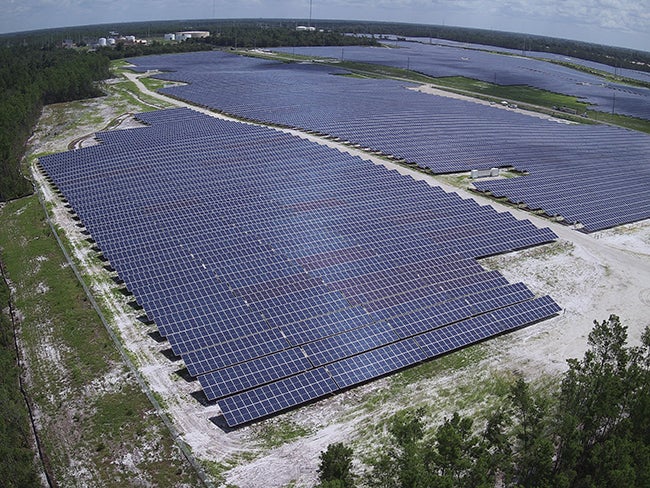
SMRs are attracting growing interest because they align with the operational needs of large-scale AI infrastructure. Unlike intermittent resources such as wind and solar, SMRs can provide consistent, high-capacity-factor power to support continuous workloads. Their modular design also allows capacity to be added incrementally as campuses expand, rather than requiring large upfront buildouts.
They may also help address one of the biggest constraints facing data center growth: transmission. By enabling behind-the-meter or near-site deployment, SMRs could reduce dependence on congested transmission systems and lengthy interconnection timelines, while helping bring firm capacity online closer to where demand is growing fastest.
This shift toward more distributed deployment is already taking shape. Industrial companies are exploring dedicated, on-site nuclear generation. Recently, Dow partnered with X-energy to deliver an SMR at one of its Texas chemical facilities. Projects like this could help establish an early blueprint for how future large-scale power users secure a reliable, long-term energy supply.
There is also increasing federal support, with the U.S. Department of Energy (DOE) backing SMR deployment pathways, including cost-shared support tied to TVA and Holtec. Combined with this growing policy support, SMRs are in the early stages of moving from concept to a viable pathway for delivering firm, reliable power at scale to meet the next generation of demand.
Early Deployment Will Be Targeted
The first wave of SMR and microreactor deployment is unlikely to be widespread. Early adoption will focus on use cases where reliable, on-site power carries the highest value.
These include AI data centers, industrial facilities, and remote locations where electricity is expensive or difficult to deliver. Military installations and remote communities are also strong candidates, particularly where diesel fuel must be transported and power costs are high. For example, Eielson Air Force Base in Alaska is piloting a microreactor project designed to strengthen energy resilience and support future power-intensive operations and is actively seeking partners to develop AI data center infrastructure across multiple installations in the state.
Recent DOE efforts to accelerate advanced reactor deployment, including a newly announced $94 million funding initiative focused on site preparation, licensing, and supply chain development, could help position some of these projects as early leaders. While these initial deployments are likely to be smaller and less economically efficient than scaled projects, they will serve as proof points for technical viability, regulatory pathways, and long-term commercial deployment.
Fusion Is Gaining Momentum as a Future Power Source
Fusion has long been viewed as the power source of the future, but recent progress suggests it is moving closer to becoming a viable solution within the next decade. While that timeline remains distant, momentum is building, with growing interest and support from both government and private investors.
When government funding targets the biggest technical hurdles, it can accelerate progress and influence which companies and technologies reach the market first. Programs like ARPA-E’s recent $135 million commitment to develop and commercialize fusion technologies are aimed at addressing key technical barriers and speeding progress toward commercialization. However, the scale of capital required to move fusion from demonstration to commercial deployment is significantly larger, and fully catalyzing the industry will require a much broader and more sustained level of federal support over time.
If the U.S. is going to be strategic about powering the AI economy in the long term, fusion offers an enormous value proposition. The next phase will depend on how quickly innovation moves beyond the lab to deployable energy solutions at scale.
The Bottom Line
The shift now underway is not just about adding capacity, but about rethinking how it is delivered. SMRs are emerging as a potential pathway to bring firm, reliable power closer to where it is needed, but their success will depend less on technological readiness and more on the ability to site, permit, and build projects in a timely and scalable way.
This new AI era gives next-generation nuclear an opportunity to address this challenge. SMRs are being evaluated as a solution for both collocated and grid-supplied power, with fusion gaining real federal momentum to accelerate commercialization. The fastest progress will come from projects that pair new firm generation with the grid upgrades and interconnection plans needed to deliver power to data center hubs.
—Stephen Empedocles is CEO of Clark Street Associates, an advisory firm specializing in securing government funding and strategic partnerships for hard tech companies.