Two days after naming its first four participants, the U.S. Department of Energy’s (DOE’s) National Reactor Innovation Center (NRIC) on April 29 issued a request for applications (RFA) for its Nuclear Energy Launch Pad, formally opening the program to a broader pool of advanced nuclear developers and setting a July 8, 2026, deadline for initial submissions.
In a separate but simultaneous action, NRIC also opened a standalone solicitation for private developers to access its Demonstration of Microreactor Experiments (DOME) test bed at Idaho National Laboratory (INL). DOME is currently slated to host Radiant Nuclear’s Kaleidos microreactor under its first fueled test campaign, and its RFA runs on the same July 8 deadline but is independent of the Launch Pad process.
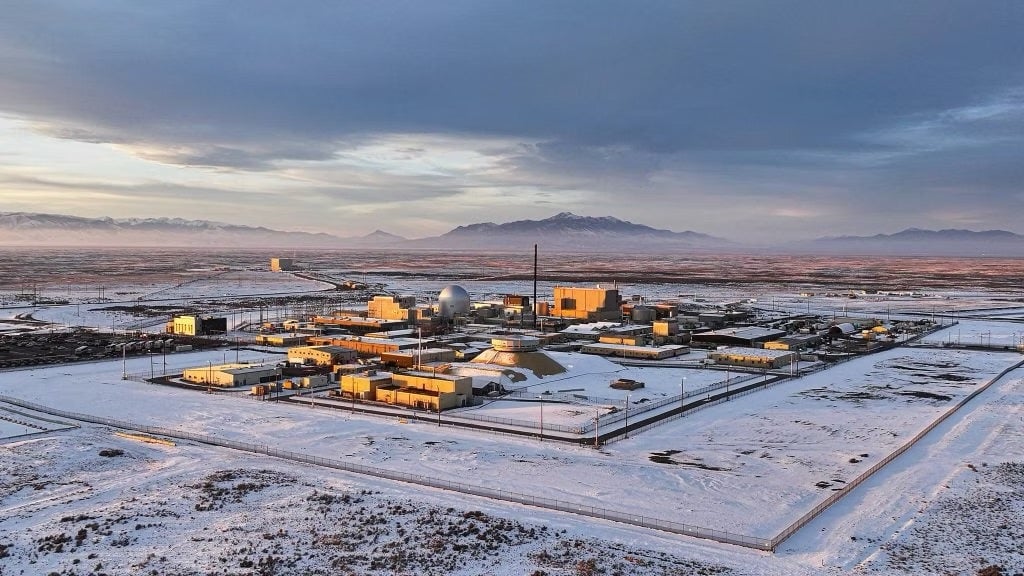
The Nuclear Launch Pad RFA invites private developers of nuclear reactors, enrichment facilities, fuel fabrication plants, reprocessing and recycling operations, and other supporting nuclear infrastructure to apply for one of two pathways under the program. These include Launch Pad INL, which provides access to approximately 2,000 acres of federal land near INL’s Central Facilities Area parceled into multiple plots; and Launch Pad USA, which extends DOE authorization to other DOE sites, national laboratories, and non-federal locations across the country.
NRIC’s Nuclear Energy Launch Pad, unveiled in March as a successor to the DOE’s Reactor Pilot Program and Fuel Line Pilot Program, is designed to expand federal support for advanced nuclear deployment beyond testbeds to include siting, infrastructure, and regulatory pathways across the full nuclear technology stack. The DOE on April 27 named four initial participants—Deployable Energy, General Matter, NuCube Energy in partnership with Idaho State University, and Radiant Nuclear—which it said were drawn from the existing pilot program applicant pool.
“The Nuclear Energy Launch Pad is delivering on its promise,” NRIC Director Brad Tomer said on Wednesday. “With the RFA now open, we are partnering with industry to accelerate the building of a strong pipeline of advanced nuclear technologies that will help define the next era of nuclear energy in the U.S.”
From Pilot Selections to Open Competition
As POWER reported earlier this week, the Launch Pad’s four initial participants span both program pathways. Under Launch Pad INL, Deployable Energy is targeting a near-term demonstration of its 1-MWe Unity microreactor under DOE authorization, seeking to reach criticality at INL’s Materials and Fuels Complex on or before July 4, 2026. Radiant Nuclear—the furthest along of the four, having received DOE approval of its Preliminary Documented Safety Analysis (PDSA) for the Kaleidos reactor in February 2026—took formal possession of the DOME test bed at INL on April 1 for a year of fueled testing, targeting initial customer deployments in 2028. As an INL-based project, Radiant would presumably operate under the Launch Pad INL pathway, though POWER has not confirmed that.
Under Launch Pad USA—the pathway for non-INL federal and non-federal sites—NuCube Energy and Idaho State University are jointly pursuing a high-temperature microreactor demonstration (the Advanced Research and Test (ART) Reactor) to support research, training, and Nuclear Regulatory Commission (NRC) licensing at ISU’s Pocatello campus. The pathway may also support General Matter, which received a $900 million indefinite delivery, indefinite quantity (IDIQ) contract from DOE in January 2026 as part of a $2.7 billion federal investment in domestic enrichment capacity, and is advancing plans to establish a high-assay low-enriched uranium (HALEU) enrichment facility at the former Paducah Gaseous Diffusion Plant site in Kentucky. Construction at the Paducah facility is expected to begin this year, and enrichment operations are targeted for the end of the decade.
As NRIC noted earlier this week, the four participants were drawn from the DOE’s earlier pilot programs. The RFA notes that some applicants from the previous programs “will be notified and transitioned into the Launch Pad program” and may update their submissions under the new framework. The open solicitation, however, now extends the same technical, financial, and execution criteria to a much wider field of applicants, it suggests.
Access Over Funding: How the RFA Works
The RFA lays out a structured but flexible framework that appears to emphasize speed to deployment and applicant readiness. The initiative intends to “promote the rapid development and implementation of private industry deployments of a variety of advanced nuclear technologies,” while building on the Reactor and Fuel Line pilot programs to “expedite advanced nuclear technology deployment using flexible technical and regulatory frameworks on federal and non-federal lands,” NRIC said.
Applications submitted by the July 8 deadline will be considered for an initial selection round, and NRIC anticipates announcements as early as Aug. 19, followed by ongoing, rolling evaluations. “After this date, applications may be submitted at any time and will be reviewed periodically for selection as soon as reasonably possible,” the RFA says.
Notably, as officials have repeatedly stressed, the Launch Pad program does not include federal funding. “NRIC and DOE will not be providing funding for projects selected as part of Launch Pad,” the RFA says, making clear that applicants must fully finance design, construction, operation, and decommissioning, as well as cover DOE and national laboratory costs associated with authorization and support activities.
The value proposition, as NRIC officials have noted, will center on access to land, expertise, and, critically, DOE authorization. “Facilities built and operated pursuant to the Launch Pad initiative will not require initial NRC licensing,” the RFA explains, noting that DOE-approved designs may later transition to commercial licensing pathways.
As critically, perhaps, the RFA specifies a structured authorization milestone sequence: from a Nuclear Safety Design Agreement (NSDA) and PDSA at approximately 50% design completion, through a final Documented Safety Analysis (DSA) and Technical Safety Requirements, to acceptance testing, fueling, and criticality, followed by operations and eventual decommissioning or transition to an NRC license.
While applications will be capped at 50 pages, they will require detailed information on technology maturity, fuel supply, and waste disposition, project schedule, site integration, funding, and commercialization plans. NRIC said it will place particular emphasis on execution readiness, which could require applicants to demonstrate “adequate financial resources and mature supply chain,” as well as a “sufficiently mature design” capable of supporting near-term safety analysis and deployment. Selection, it said, will be merit-based. The DOE reserves the right to accept “all, some, or none” of the applications, and to prioritize projects that can achieve earlier deployment timelines, it says.
The DOE will also screen all applications for foreign ownership, control, or influence, and reserve the right to reject applicants based on discovered security risks. Subsidiaries of foreign entities must submit an explicit waiver request at the time of application.
Finally, while DOE authorization may offer a potentially faster path to siting and early operation, it will not replace the need for eventual commercial licensing, the RFA makes clear. Launch Pad projects are limited to research, development, and demonstration activities, it says. The “delivery of qualified test reactor-generated electrical power to non-experimental equipment and/or onto the United States Electrical Grid for purchase or nuclear material produced and provided to commercial stakeholders/customers is outside of this RFA and must seek NRC licensing.”
NRIC Simultaneously Opens Solicitation for DOME
For now, NRIC plans to host a virtual Industry Day on May 19, from 9 a.m. to noon MDT, to walk prospective applicants through the Launch Pad RFA requirements and available pathways. The event will include a live question-and-answer session directly with NRIC and DOE staff. Registration is available on the NRIC website. NRIC DOME application page
Separately on Wednesday, NRIC opened a second solicitation—a standalone RFA—for private developers to access the Demonstration of Microreactor Experiments (DOME) test bed at INL. While that application process is independent of the Launch Pad RFA, it runs on a similar timeline.
A response is due on June 19, and applications are due July 8 at 5 p.m. MDT. The RFA, issued by Battelle Energy Alliance as INL’s management and operating contractor, invites applicants to schedule testing beginning after the first reactor experiment is complete—projected July 2027.
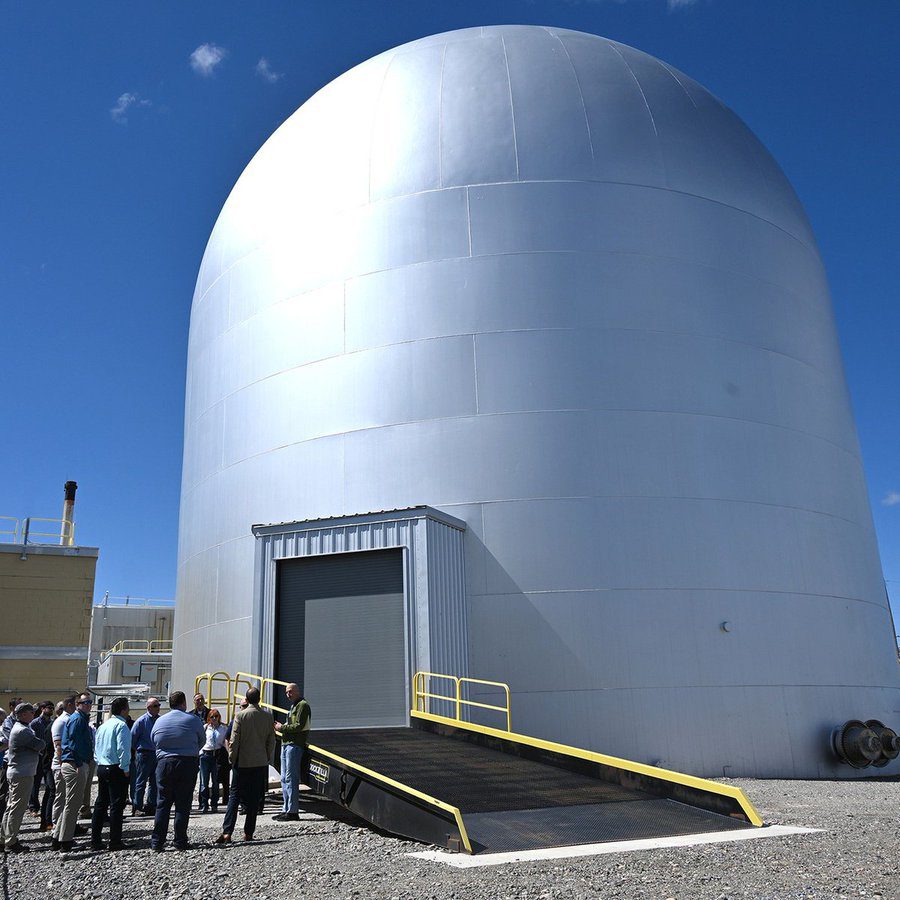
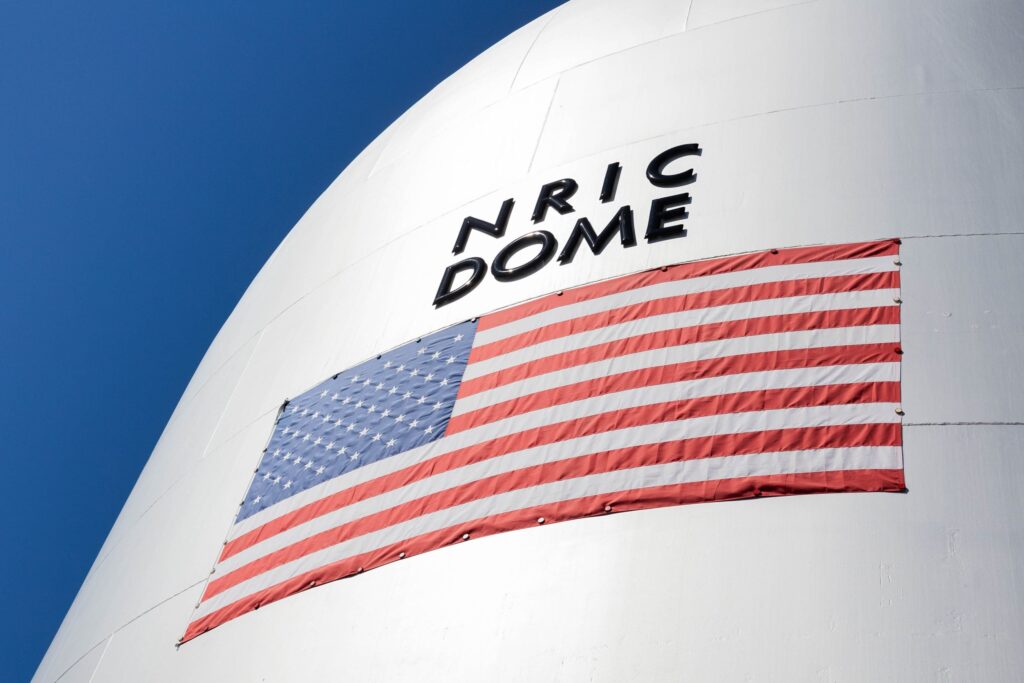
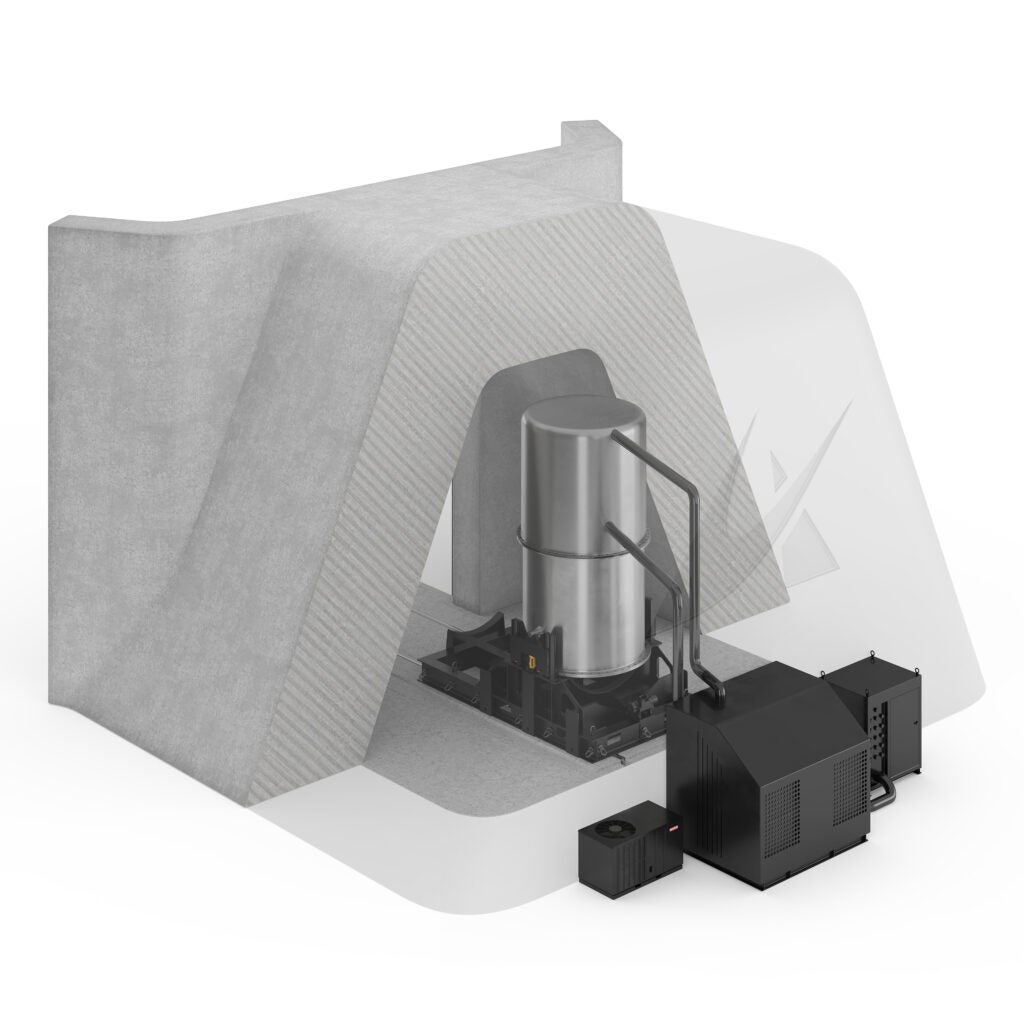
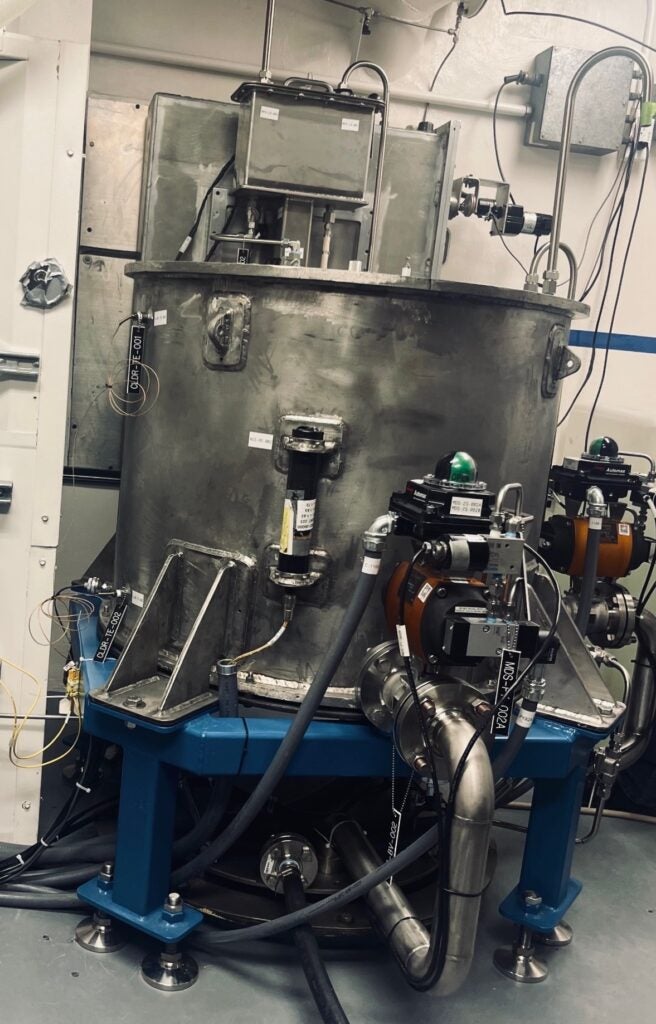
“DOME is the only facility in the country and the first in the world to provide reactor developers access to a containment structure where these fueled experiments can occur,” NRIC says. The facility is built around the containment dome of the decommissioned Experimental Breeder Reactor-II (EBR-II) at INL and is designed to support fueled TRISO microreactor experiments up to 20 MWth. The facility—built “for less than” $77.5 million, as NRIC notes—can accommodate a shipping container-sized experiment within its approximately 80-foot-diameter floor space, hosting one experiment at a time on roughly 12-to-24-month rotations over an estimated 20-year operational lifespan.
To be eligible, applicants must demonstrate conceptual design progress and DOE agreement or engagement on a Nuclear Safety Design Agreement (NSDA) or a 10 CFR 830 safety basis equivalent. Applicants must also be U.S.-owned companies or pass a DOE foreign ownership, control, or influence review under DOE-P 485.1A. NRIC will evaluate and sequence proposed experiments annually based on technology readiness, fuel availability, regulatory approval strategy, and developer capabilities, and will make a testing sequence recommendation to DOE, which retains final authority over the schedule. Results are anticipated within four to six months of receipt of applications.
Unlike the Launch Pad framework, where DOE functions as authorizer but not operator, DOME users should benefit from direct DOE operational involvement: the agency assists in project development, integrates experiments into the test bed, and operates the reactor experiment itself. Developers are responsible for transporting their reactor and associated equipment to INL and, as with the Launch Pad, are expected to self-fund their test campaigns.
Applications are capped at 50 pages and must address eight categories: reactor technology maturity, fuel qualification and procurement, planned tests, project schedule, DOME integration requirements, DOE authorization plan, funding, and experience and capabilities. Applicants must also submit a Master Document and Deliverable List (MDDL) and a project schedule as attachments, which do not count toward the page limit.
The first DOME test campaign is Radiant Nuclear’s Kaleidos reactor—a 1-MWe helium-cooled, HALEU-fueled microreactor—which took formal possession of the facility on April 1 for a one-year test campaign running through March 31, 2027. Radiant Chief Nuclear Officer Dr. Rita Baranwal, during an American Nuclear Society webinar on March 31, suggested the company’s target is full power, not just criticality. “Radiant will achieve full power this summer. That is our plan.” The testing protocol includes operating for at least 150 continuous full-power hours without operator intervention and accumulating 60 effective full-power days—benchmarks that she said “thoroughly test the fuel, the reactor and reactor materials, and the entire integration of the reactor system.” The DOME campaign is designed to generate the operational data Radiant needs to support commercial licensing and customer deployments, she said.
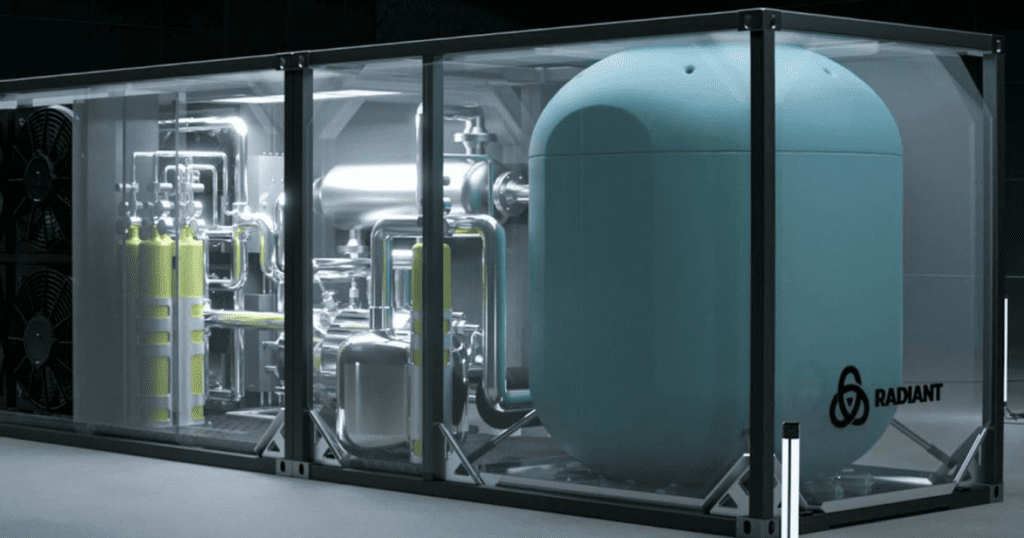
On April 22, notably, Radiant was selected under the U.S. Air Force’s Advanced Nuclear Power for Installations (ANPI) program to deliver Kaleidos reactors to Buckley Space Force Base in Colorado, formalizing a pathway the El Segundo, California–based company began charting in 2025 to move from a first-of-a-kind test to a mass-manufactured product. Radiant says it is prepared to deliver its first Kaleidos reactors by 2028.
However, NRIC, on its DOME website, suggests the facility’s readiness has been delayed by supply chain issues. While NRIC’s original target for accepting reactors had been summer 2026, it projected fall 2026 readiness for fueling, with testing beginning in 2027. The current target for reactor installation appears to be December 2026, with testing to follow.
“To facilitate earlier reactor testing, NRIC is working on options to start fueling activities earlier by moving some of those activities outside of DOME. In addition, NRIC is implementing a longer work week for the construction contractor that should improve construction completion by a few months. Further, the team is evaluating DOME readiness options that may allow installation of reactors upon completion of construction or during the final phases of construction,” it says.
INL has also received Defense Production Act priority rating authorization from the U.S. Department of Commerce—which elevates the lab’s supply chain priority status for both DOME and a second test bed under development, LOTUS—and is implementing an extended construction work week to compress the remaining schedule. DOE has also completed a National Environmental Policy Act environmental assessment for DOME operations and issued a finding of no significant impact, NRIC said. “At this point, we anticipate being able to install reactors in Dec 2026, and we are continuously evaluating ways to improve upon that date.”
—Sonal C. Patel is senior editor at POWER magazine (@sonalcpatel, @POWERmagazine).