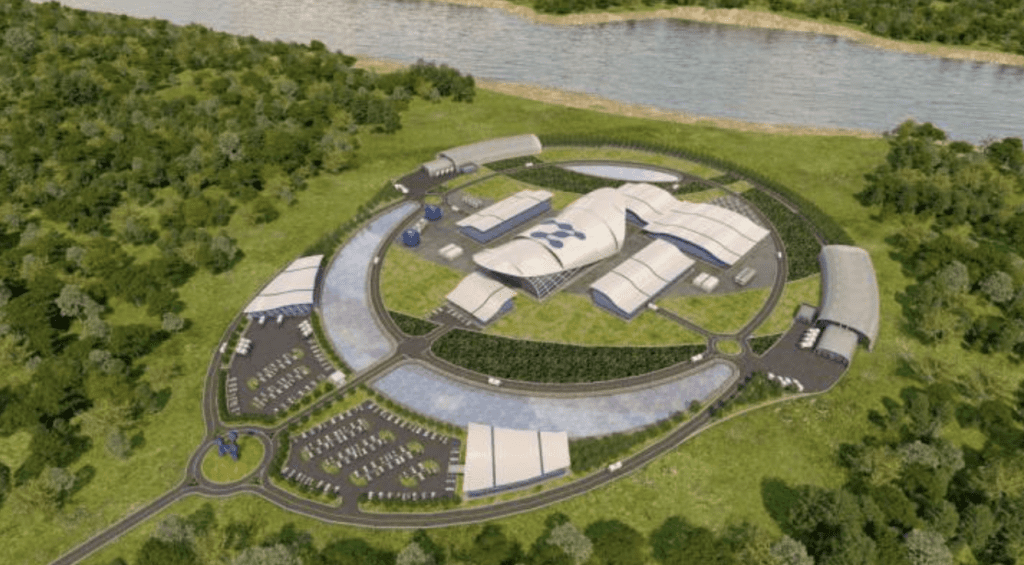
The Air Force’s ANPI program has tapped Radiant, Antares, and Westinghouse to develop first‑of‑a‑kind nuclear microreactors at Buckley, Malmstrom, and Joint Base San Antonio, with initial deployments targeted as early as 2028.
The Department of the Air Force (DAF) has named three microreactor vendors—Radiant Industries, Westinghouse Government Services, and Antares Nuclear—to develop and operate contractor-owned units at Buckley Space Force Base, Malmstrom Air Force Base, and Joint Base San Antonio under its Advanced Nuclear Power for Installations (ANPI) program. While the program envisions having at least one advanced nuclear reactor operating on a service installation by 2030, at least two reactor developers are eyeing a 2028 delivery.
The April 22 announcement, made in conjunction with the Defense Innovation Unit (DIU), formally pairs Radiant Industries with Buckley Space Force Base in Aurora, Colorado; Westinghouse Government Services with Malmstrom Air Force Base in Great Falls, Montana; and Antares Nuclear with Joint Base San Antonio (JBSA) in Texas.
Buckley and Malmstrom were identified on April 8 following extensive on-site analysis by DAF experts and Pacific Northwest National Laboratory, which evaluated utility infrastructure, land availability, and critical mission requirements. JBSA was added to the program on April 22 alongside the vendor pairings. DAF has not detailed the specific site-analysis process for JBSA, though Brig. Gen. Randy Oakland, JBSA and 502d Air Base Wing commander, said Wednesday that “energy resilience is imperative to sustaining operations” and that a successful ANPI deployment would move the installation’s resilience “forward to ensure reliable support for its many important missions.”
The selections—which mark the first time the U.S. military has matched specific commercial reactor developers to specific installation missions under a fully contractor-owned, contractor-operated model—narrow ANPI’s field from eight pre-qualified vendors to three active deployment tracks. Buckley Space Force Base supports space domain awareness and intelligence operations, while Malmstrom Air Force Base anchors the nation’s intercontinental ballistic missile infrastructure, and JBSA hosts a large joint training, cyber, and medical footprint.
Next steps for the ANPI program will focus on site-specific siting and environmental analysis under the National Environmental Policy Act (NEPA) process, which will evaluate project impacts, permitting pathways, and community considerations before any construction can begin. “The ANPI initiative seeks to have at least one advanced nuclear reactor operating on at least one DAF installation by 2030 or sooner,” DAF said on Wednesday.
ANPI and the Push for On-Base Nuclear Power
The ANPI program, launched in summer 2024 jointly by the DAF and DIU—the Pentagon’s technology accelerator charged with fielding commercial solutions for national security—seeks to “design and build fixed on‑site microreactor nuclear power systems on select military installations to support global operations across land, air, sea, space, and cyberspace.”
Explicitly tied to several recent energy and acquisition directives from the White House, the ANPI supports Executive Order 14156 – Declaring a National Energy Emergency, and Executive Order 14154 – Unleashing American Energy, issued on January 20, 2025, at the start of the second Trump administration. Both EOs highlight the risks posed by external energy dependencies and constrained grid systems to defense missions during natural disasters or physical and cyber attacks on infrastructure.
Under ANPI, the military uses DIU’s Commercial Solutions Opening (CSO) process, which leads to awards under Other Transaction Agreements (OTAs)—flexible contracting authorities that allow a federal agency to buy and prototype commercial technology outside the traditional Federal Acquisition Regulation system. The structure supports speed, flexibility, and rapid execution, DIU has said, noting that the program aligns with Executive Order 14269 – Modernizing Defense Acquisitions and Spurring Innovation in the Industrial Base, issued on April 9, 2025, which calls for streamlined acquisitions to accelerate defense procurement.
In April 2025, DAF and DIU unveiled eight companies selected by ANPI in its first round, which they said were “eligible” to receive other transaction awards to provide commercially available dual-use microreactor technology at various DOD installations. Companies named include Antares Nuclear, BWXT Advanced Technologies, General Atomics Electromagnetic Systems, Kairos Power, Oklo, Radiant Industries, Westinghouse Government Services, and X‑energy. DIU said they had been selected to “demonstrate the ability to deliver compliant, safe, secure, and reliable nuclear power” under ANPI’s objectives.
ANPI, notably, is distinct from other military microreactor efforts already underway. DAF’s microreactor pilot at Eielson Air Force Base in Alaska—initiated under a Fiscal Year 2019 National Defense Authorization Act requirement and publicly sited at Eielson in October 2021—is described by the service as “a stand‑alone effort focused on demonstrating the feasibility and operational benefits of a microreactor at a single installation.” Under that pilot, Defense Logistics Agency Energy issued a Notice of Intent to Award to Oklo in August 2025 to design, construct, own, and operate an Aurora powerhouse under a long‑term power purchase agreement sized to deliver about 5–10 MWe of electricity plus steam to Eielson. “Teams across the DAF, DLA‑Energy Office, NRC, Idaho National Laboratory (INL), and Oklo Inc. have been advancing the microreactor pilot with urgency,” DAF wrote in a March 2026 update. “Currently, the preliminary siting process is underway, and the teams are aligning timelines and anticipated milestones. While the operational date is by 2030, or earlier, if possible, the pilot aims to serve as a pathfinder and future model for scaling advanced energy solutions across the Department of War and U.S. communities.”
ANPI is also separate from the Office of the Secretary of Defense Strategic Capabilities Office’s (SCO’s) Project Pele mobile microreactor program, launched earlier in the 2020s as a five‑year effort “to design, build, and demonstrate a prototype mobile nuclear reactor” that can be transported in standard shipping containers and provide reliable, resilient power when deployed. Following groundbreaking on the Pele prototype at Idaho National Laboratory in 2024, BWX Technologies in late 2025 fabricated and delivered a full core of TRISO fuel to INL’s Transient Reactor Test Facility—a milestone the Department of Energy and SCO highlighted as moving the gas‑cooled, 1–5‑MWe reactor toward first power as early as 2028.
On the Army side, meanwhile, separate progress is ongoing for the Janus Program, a “next-generation nuclear power program” that the Army says is intended to deliver secure, resilient, and reliable energy to support national defense installations and critical missions, in accordance with the Trump administration’s May 2025 Executive Order 14299 – Deploying Advanced Nuclear Reactor Technologies for National Security. In November 2025, the Army said it identified nine installations for potential microreactor power plants: Fort Benning, Georgia; Fort Bragg, North Carolina; Fort Campbell, on the Kentucky–Tennessee border; Fort Drum, New York; Fort Hood, Texas; Fort Wainwright, Alaska; Holston Army Ammunition Plant in Kingsport, Tennessee; Joint Base Lewis‑McChord, Washington; and Redstone Arsenal, Alabama. The Army also executed a memorandum of agreement with the Defense Innovation Unit to use its Commercial Solutions Opening process and Other Transaction Agreement authority to solicit and prototype commercial advanced nuclear technologies.
While ANPI is a DIU/DAF collaboration that uses Nuclear Regulatory Commission (NRC) civil licensing and contractor‑owned, contractor‑operated microreactors on Air Force and Space Force installations, Janus appears to be distinctly Army‑run, under which the Army (acting as executive agent for the Department of War) will use its own nuclear regulatory authorities to field Army‑regulated microreactor plants on the nine candidate posts and start operation of at least one reactor by Sept. 30, 2028.
In ANPI briefings at an NRC conference last year, program leaders suggested they chose NRC—as opposed to internal DOW permitting—because NRC offers risk‑informed, performance‑based licensing, which would establish public confidence in nuclear safety, explicit subject‑matter expertise on microreactor technology, and a defined combined‑license review timeline under the ADVANCE Act, alongside environmental review and public hearings.
Radiant’s Kaleidos Heads to Buckley
On Wednesday, Radiant suggested that its selection under the ANPI program at Buckley Space Force Base will formalize a pathway it began charting in 2025 to move its Kaleidos microreactor from a first‑of‑a‑kind test to a mass‑manufactured product. The El Segundo, California–based company said it was prepared to deliver its first Kaleidos reactors by 2028.
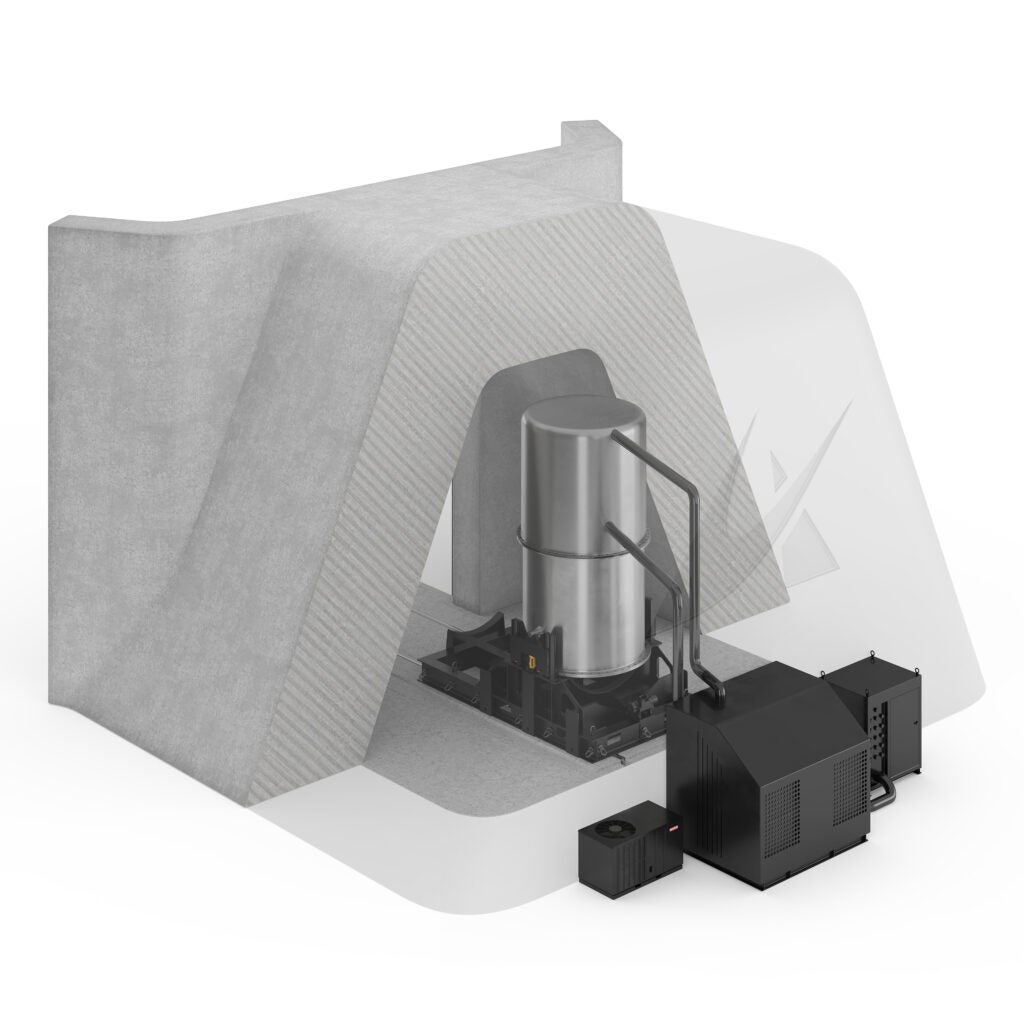
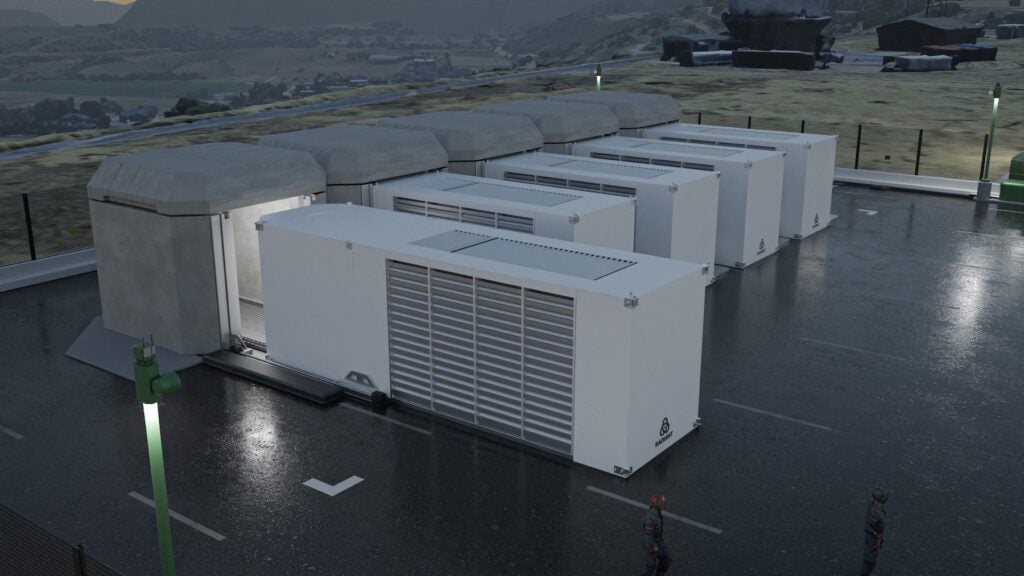
Radiant is developing Kaleidos, a 1‑MWe, high‑temperature, gas‑cooled microreactor that uses high‑assay low‑enriched uranium (HALEU) TRISO (tristructural isotropic) fuel, packaged in transportable modules that can be shipped by truck, installed on prepared pads, and operated for years without refueling. The company’s ultimate goal is to deliver a standard product configured for defense, remote industrial applications, and, eventually, data‑center applications. To that end, the company has focused on factory fabrication, dry cooling, and minimal on‑site construction, an approach it is backing with two facilities in El Segundo and a new “R‑50” microreactor factory now under development at a former Manhattan Project site in Tennessee, which it ultimately intends to scale to about 50 Kaleidos units per year.
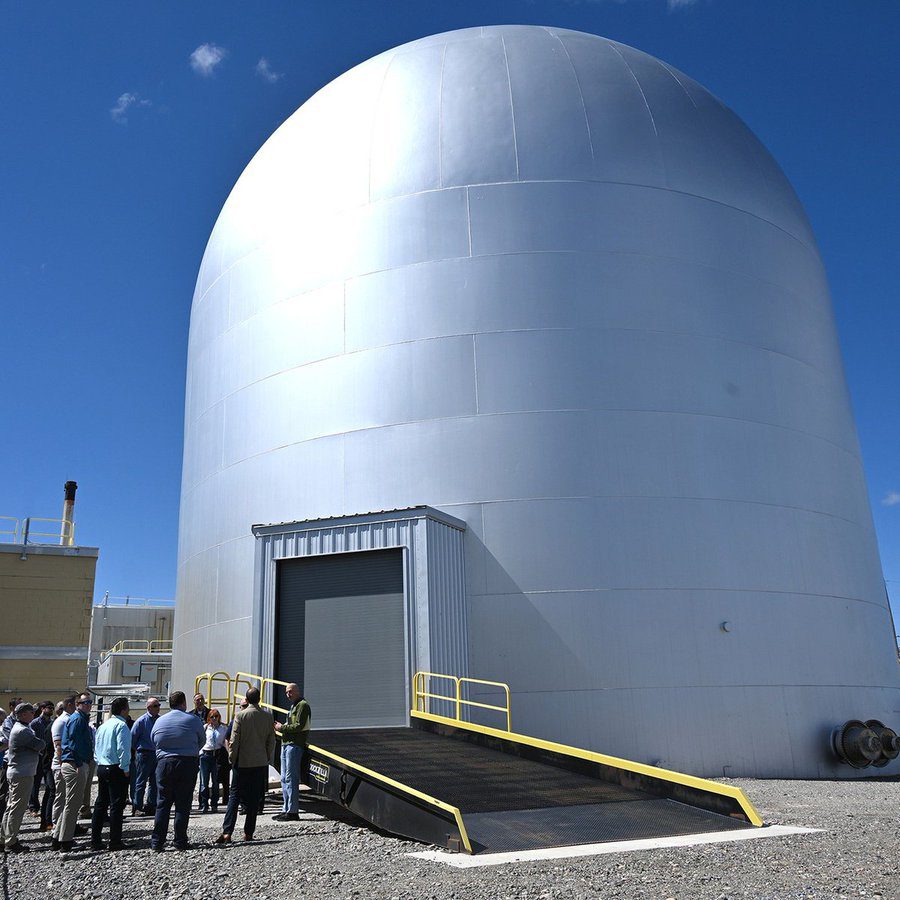
Radiant has also emphasized a staged hardware roadmap that runs from non‑nuclear test loops through a full‑power Kaleidos unit at INL’s Demonstration of Microreactor Experiments (DOME) facility—a repurposed containment structure from the former Experimental Breeder Reactor II that the DOE and INL have converted into a dedicated testbed for fueled microreactors. Radiant is expected to be the first developer to operate a full microreactor system in DOME, with testing structured as a yearlong campaign designed to move from initial criticality to sustained full-power operation. “Radiant is the only nuclear energy company conducting a full power, commercial-scale, multi-megawatt-powered test at the Idaho National Laboratory’s DOME test facility in 2026,” the company said Wednesday.
The ANPI selection, notably, stems from a July 2025 contract Radiant signed with DAF/DIU, which Radiant indicated was a major signal to deliver “mass-manufactured nuclear microreactors for a U.S. military base.”
The defense entity’s designation for the Buckley Space Force Base will place the base “at the forefront of the Department’s next-generation energy technology initiative,” said Col. Eamon Murray, Space Base Delta 2 commander at Buckley Space Force Base on Wednesday. “A secure and reliable power source will enable Buckley’s warfighters from all 6 services and allied nations to support the Joint Force in all situations, and we are proud to lead the charge to advance our warfighters’ technological superiority. The success of this endeavor depends on strong community trust we’ve built through proactive engagement and communication, and we’re excited to continue that engagement and transparency throughout this process.”
Antares’ Sodium Heat Pipe R1 Targets JBSA by 2028
Redondo Beach, California–based Antares also said on Wednesday that its selection under the ANPI initiative at JBSA will advance a development pathway it has been building through the DOE’s Reactor Pilot Program, with first criticality targeted by July 2026 and initial production deployments by 2028.
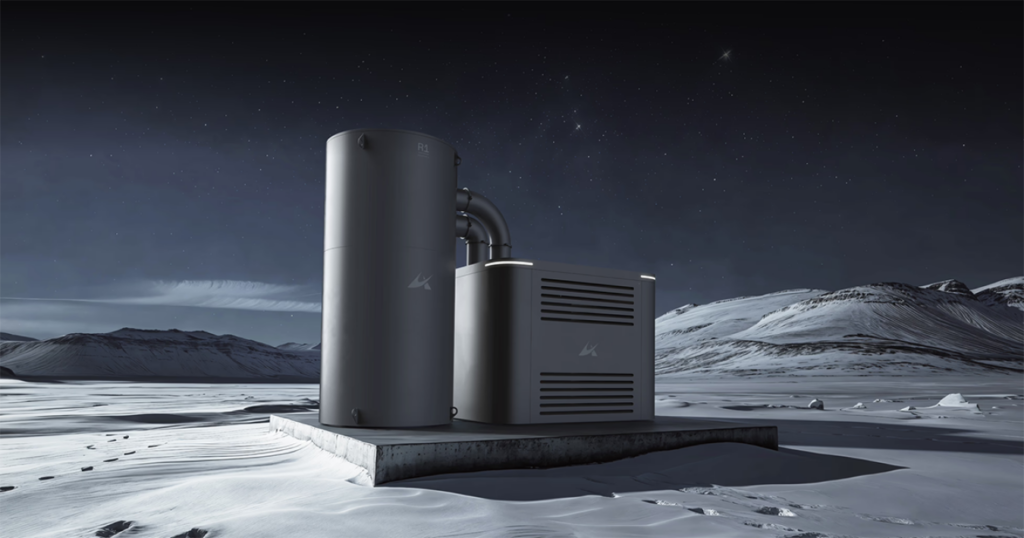
The company, founded in 2023 and backed by more than $140 million in funding, is developing R1 as a compact, sodium‑heat‑pipe–cooled microreactor that uses robust TRISO fuel in a configuration designed for years of operation between refuelings and without dependence on the commercial grid or specialized on‑site infrastructure.
Like Radiant and several other developers, Antares has described a staged plan, beginning with its Mark‑0 demonstration reactor under the DOE Reactor Pilot Program and followed by a Mark‑1 electricity‑producing reactor in 2027 that will use the same Idaho test facility and fuel batch. Fuel fabrication for Antares’ first reactors has been underway at BWX Technologies since October 2025, using HALEU fuel secured through a DOE allocation. In April 2026, the DOE approved the Mark‑0 Documented Safety Analysis under DOE‑STD‑1271, allowing Antares to enter the readiness review phase before startup.
The Mark-0 system is designed as a first-of-a-kind criticality and systems validation platform. Antares has indicated it will use the test to validate reactor physics, control systems performance, and core behavior ahead of scaling to electricity-producing configurations. Unlike Radiant’s planned full-system test campaign at INL’s DOME facility, Antares’ initial demonstration is being executed under a DOE authorization pathway using a dedicated test setup, reflecting a parallel but distinct route to deployment.
Under the ANPI effort, Antares said it anticipates siting, licensing, constructing, operating, and ultimately decommissioning its R1 microreactors at JBSA, with systems targeted for deployment by 2028 or earlier, subject to environmental review and regulatory approvals. On Wednesday, meanwhile, the Department of the Air Force and the Defense Innovation Unit pointed to JBSA’s utility infrastructure, land availability, and critical mission requirements—including large joint training, cyber, and medical footprints—as key factors in their selection of the installation as a potential R1 site.
Westinghouse Government Services Tapped for Malmstrom’s On‑Base Nuclear Pilot
While Westinghouse Government Services, a Westinghouse Electric Co. business, has not publicly said which technology it will deliver to Malmstrom Air Force Base in Great Falls, Montana, the company has been actively developing the heat‑pipe–cooled eVinci microreactor line for remote and defense applications.
The company notes eVinci is a factory‑built, transportable “nuclear battery” capable of providing several hundred kilowatts to up to 5 MWe of carbon‑free power for more than eight years without refueling, for applications that range from data centers and remote communities to industrial sites and defense facilities.
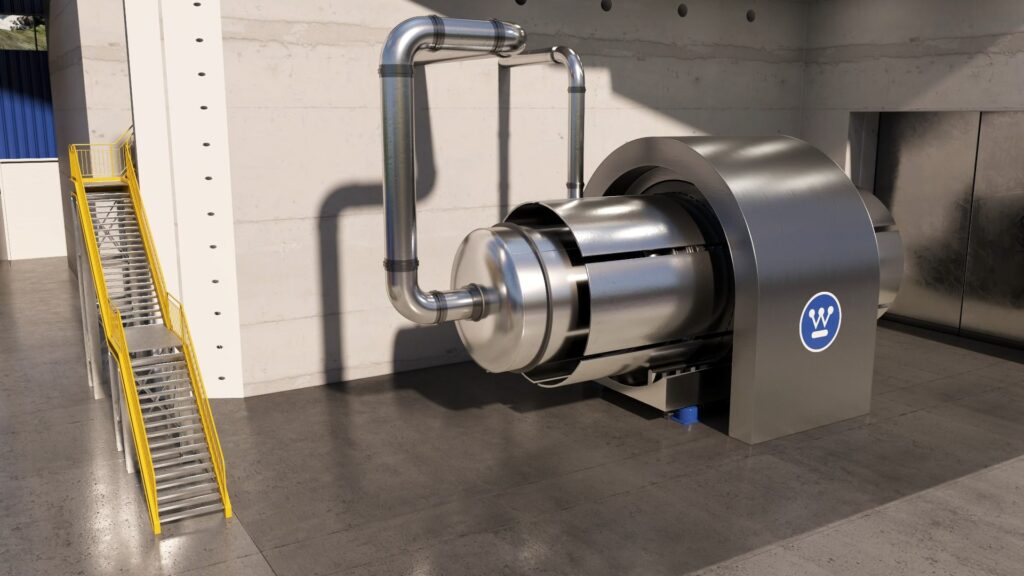
Westinghouse has also been moving eVinci toward both demonstration and licensing. In mid‑2025, notably, alongside Radiant, the DOE selected Westinghouse for the first fueled microreactor experiments at INL’s DOME facility. Westinghouse has said eVinci test reactor is a scaled 3MWth heat pipe microreactor designed to demonstrate key portions of the eVinci design and enable the development of the larger commercial eVinci microreactor.
More recently, Westinghouse has been advancing eVinci through critical experiments and validation campaigns at national laboratory testbeds, including Los Alamos National Laboratory, where it is working with HALEU TRISO fuel and conducting experiments to support reactor physics, fuel performance, and operational modeling.
In parallel, Westinghouse has advanced an extensive pre‑application program with the NRC, including a 2025 Regulatory Engagement Plan that outlines anticipated license applications and NRC interactions, along with topical reports and safety evaluations covering eVinci’s TRISO fuel design methodology, nuclear design methodology, and Advanced Logic System v2 instrumentation and control platform.
In March 2025, the NRC also approved Westinghouse’s Principal Design Criteria topical report for the eVinci design, a milestone the company said provides a “clear path to licensing the eVinci microreactor for deployment” and simplifies the licensing process for customers by confirming how the reactor’s structures, systems, and components conform to NRC design‑basis requirements.
—Sonal C. Patel is senior editor at POWER magazine (@sonalcpatel, @POWERmagazine).
Correction: An earlier version of this article, in some parts, incorrectly attributed the Janus Program and related November 2025 installation identifications to the Department of the Air Force. Janus is an Army program, and those references have been corrected to the Army.