
A year after President Trump signed Executive Order (EO) 14300 directing the Nuclear Regulatory Commission (NRC) to cut red tape and speed nuclear deployment, the agency is claiming a string of historic firsts, a backlog of rules in motion at unprecedented scale, and an internal reorganization due to take effect next month.
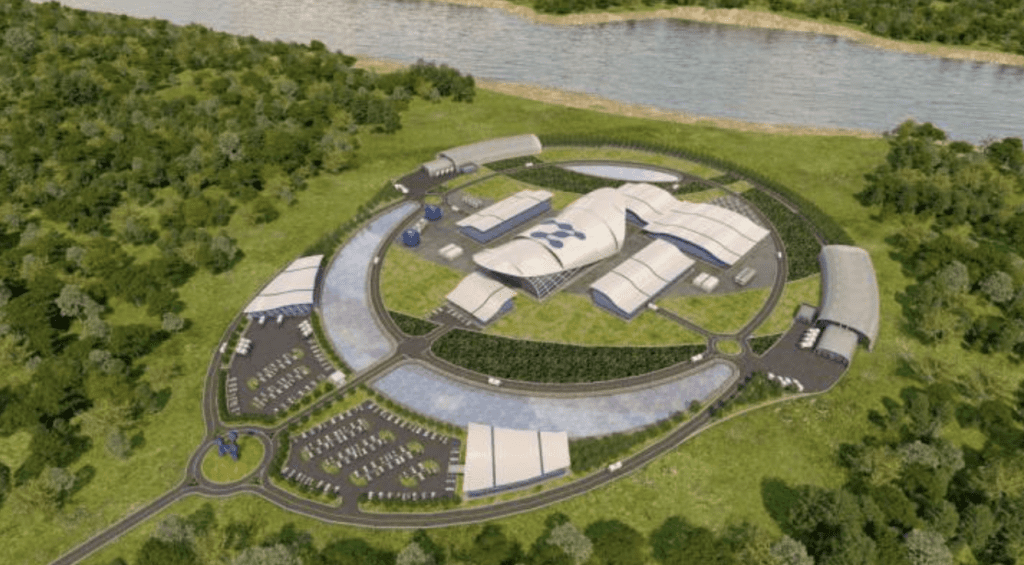
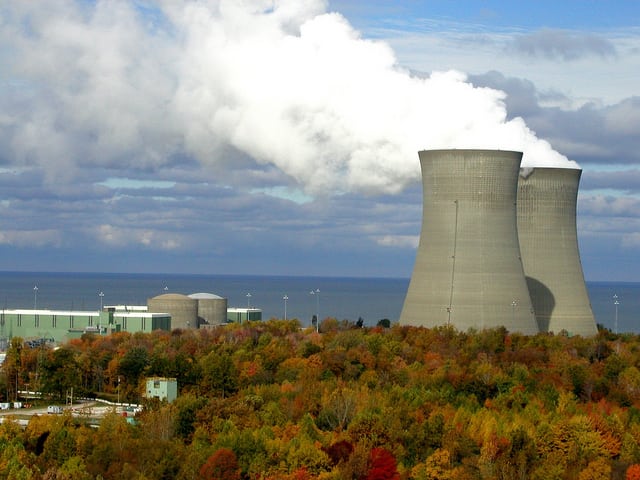
In a news release marking the anniversary, the NRC tallied milestones it says are reshaping U.S. nuclear regulation for the first time in nearly half a century. Among them, the first commercial advanced reactor construction permit in decades, granted to TerraPower’s Kemmerer facility in Wyoming; the first-ever license to commercially manufacture TRistructural ISOtropic (TRISO) fuel, issued to TrisoX; the first-ever approval to restart a decommissioning reactor, at Palisades; 18 operating license renewals representing roughly 17 GW of generation; and the fastest-ever subsequent license renewal review, finishing the Robinson plant in less than 12 months.
“Executive Order 14300 was the catalyst,” Chairman Ho K. Nieh said in the release. Nieh, a former NRC resident inspector who was sworn in as a commissioner in December and designated chairman by President Trump in January, framed the past 12 months in starker terms during a roundtable with reporters: the NRC, he said, is in the middle of “the most comprehensive redesign of our regulatory system in nearly 50 years.”
Signed May 23, 2025, the EO directed the NRC to complete a wholesale rewrite of its regulations within 18 months and to set fixed deadlines for licensing decisions—18 months for new-reactor construction and operation licenses, and 12 months for continued operation of existing plants. Its preamble cited what it called a long regulatory failure: 133 civilian reactors were authorized for construction between 1954 and 1978, the order noted, but only two new reactors have entered commercial operation in the decades since, and suggested the NRC’s hourly fee structure and prolonged timelines were designed to “maximize fees while throttling nuclear power development.”
The order told the agency to adopt “science-based” radiation exposure limits in place of the linear no-threshold model and the “as low as reasonably achievable” standard, streamline its National Environmental Policy Act (NEPA) compliance, create an expedited pathway for reactor designs already tested by the Department of Defense (now Department of War) or the Department of Energy, and stand up a high-volume licensing process for microreactors and small modular reactors with standardized applications. It also pressed the NRC to consider economic and national-security benefits alongside its traditional safety, health, and environmental mandate, and set an explicit policy goal of growing U.S. nuclear capacity from approximately 100 GW in 2024 to 400 GW by 2050. Asked during the briefing whether the agency was on track to hit that quadrupling target, Nieh declined to forecast, saying only that the NRC will have “the licensing frameworks in place” when the private sector is ready to apply.
Part 53 and Part 57: New Reactor Licensing Frameworks Take Shape
The headline regulatory product is Part 53, the first new reactor licensing framework in decades, which the commission finalized in March—about 21 months ahead of the congressional deadline set by the Nuclear Energy Innovation and Modernization Act. Nieh described it as technology-inclusive and risk-informed, suitable for light-water and non-light-water reactors alike, large or small. TerraPower’s Kemmerer project, he noted, already used a foundational element of Part 53—the so-called licensing modernization project method—to identify its design-basis events.
Alongside Part 53, the NRC has proposed Part 57, a streamlined framework aimed at high-volume licensing of microreactors, and proposed the country’s first regulatory framework for fusion machines. Asked why a developer would choose Part 57 over Part 53, Nieh said Part 57 is built for simple, small designs—with proposed entry criteria of one rem at the exclusion-area boundary and a 10-metric-ton fuel limit—moving them through a more deterministic process suited to factory-style deployment. Part 53, by contrast, is “more structured” and better suited to a wider range of designs, including light-water small modular reactors.
“The name of the game is optionality,” Nieh said, describing a future in which the NRC will have a fit-for-purpose pathway for any reactor type rather than “force-fitting new technologies into old frameworks.”
33 Active Rulemakings: An Unprecedented Regulatory Sprint
The scale of the effort is unusual by the agency’s own standards. NRC Deputy Executive Director for Reactor and Preparedness Programs Sabrina Atack told reporters the commission’s typical throughput is three to six rulemakings per year, on timelines of five to seven years apiece. It currently has 33 active rulemakings in process, with a target of completing many in under two years. Of 27 planned EO 14300–related rulemakings, the agency has finalized five and published seven proposed rules for public comment.
The finalized rules include legal practices and procedures, a sunset rule that pares back duplicative requirements including parts of the Aircraft Impact Assessment regime, and Freedom of Information Act updates. Proposed rules out for comment touch reactor design reviews tied to Department of Energy and Department of War demonstration projects, physical protection of radioactive materials, contested hearings, materials licensing, and fees—the last of which the executive order tied directly to its licensing-deadline regime, requiring fixed caps on the agency’s recovery of hourly fees as an enforcement mechanism. Still under development are some of the most consequential items on the list: a reconsideration of the linear no-threshold model and the “as low as reasonably achievable” standard for radiation exposure; a reactor oversight rewrite; NEPA implementation; low-level waste disposal; in-situ uranium recovery; transportation packaging for irradiated microreactors; and export controls.
Atack said the agency is using artificial intelligence to help bin and process public comments, and is pulling staff from lower-priority work to handle the surge. Nieh pushed back on the suggestion that compressed timelines mean rushed analysis, arguing that much of the technical basis has been in development for more than a decade. “We are not rushing our work,” he said.
Still, the chairman conceded the agency has updated its schedules and that some final rules will land beyond the executive order’s 18-month target, citing the workload of processing public comments and the additional review required by the Office of Information and Regulatory Affairs.
License Renewal Reviews Raise Public Comment Concerns
Not every change is uncontroversial. When pressed by a reporter on subsequent license renewals—where the NRC has accelerated reviews in part by relying on environmental assessments (EAs) and findings of no significant impact (FONSIs) rather than full environmental impact statements (EISs)—Nieh acknowledged that the EA route does not include the draft-document public comment period or public meeting that accompanies an EIS. Members of the public who want to weigh in on the environmental review of a license renewal, he said, would do so through the contested-hearing process at the front end of the docket. The chairman cast the shift as consistent with how the agency has long handled licensing actions that come in with an EA, and as part of broader NEPA streamlining aimed at doing “what the act requires, nothing more, nothing less.”
New Office of Advanced Reactors and an NRC Reorganization
Behind the rule-by-rule work is a structural overhaul. The NRC is standing up a new Office of Advanced Reactors to handle new licensing work, while the existing Office of Nuclear Reactor Regulation will continue to handle the operating fleet, including power uprates, license renewals, and the introduction of advanced fuels and digital systems. Atack said the reorganization is planned for implementation in mid-June, with leaders across the agency drafting 100-day plans and performance metrics being cascaded from agency-level goals down to individual staff.
The executive order itself was more pointed about the structural side than the agency’s anniversary materials were. It directed the NRC to carry out the reorganization in consultation with the agency’s DOGE Team—the NRC-level component of the President’s Department of Government Efficiency (DOGE) initiative—and to undertake reductions in force in conjunction with the restructuring, even as functions tied to new reactor licensing may grow. It also ordered that the personnel and functions of the Advisory Committee on Reactor Safeguards (ACRS) be “reduced to the minimum necessary” to meet statutory obligations, with the committee’s review of permitting and licensing issues confined to matters that are “truly novel or noteworthy.” Neither the NRC’s anniversary release nor the media roundtable addressed the status of staff reductions or changes at the ACRS.
The agency is also weighing how to pay for the talent it needs. Nieh said the NRC is reviewing compensation levels for its technical workforce, and engaging Congress and the fee-paying industry on the question, pointing to special pay authorities used by the Securities and Exchange Commission and the Federal Energy Regulatory Commission as potentially relevant models. The Accelerating Deployment of Versatile, Advanced Nuclear for Clean Energy (ADVANCE) Act, he noted, already gave the agency some bonus flexibilities.
A January 2025 update to the NRC’s mission statement, the agency notes, formally recognizes its role in enabling civilian nuclear technology alongside its safety and security mandate—a rhetorical shift that several of Nieh’s answers underscored. “When commercial interests align with the financing, the supply chain, the workforce, and the business case to move forward with a facility license,” he said, “the NRC will be ready for whatever type of facility the nuclear energy landscape in America will need to help advance and reestablish the United States as a global leader in nuclear energy.”
—Aaron Larson is POWER’s executive editor.