Duke Energy’s 11-unit nuclear fleet finished 2025 with a capacity factor greater than 97%—its best result on record. For Steven Capps, Duke’s senior vice president and Chief Nuclear Officer, that number is the foundation everything else has to sit on.
“2025 was the best year we have had in terms of overall capacity factor for the fleet,” Capps said as a guest on The POWER Podcast. He attributes the result to two things: sustained maintenance and capital investment at the stations, and a more disciplined approach to identifying and managing risk. The next two decades of Duke’s nuclear strategy—license extensions, capacity uprates, and eventually new construction—depend on that performance holding up.
Capps frames the strategy as “today, tomorrow, and the future”—a sequence in which present-day execution earns the right to extend the existing assets, and extended assets buy the time and capital headroom needed to build new ones.
Today: Operating at Record Levels
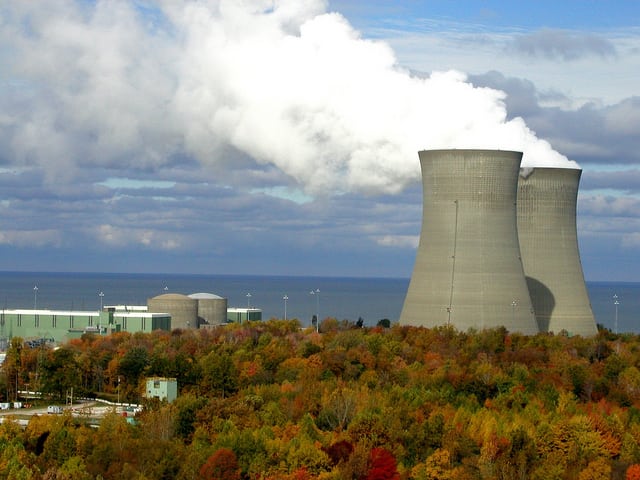
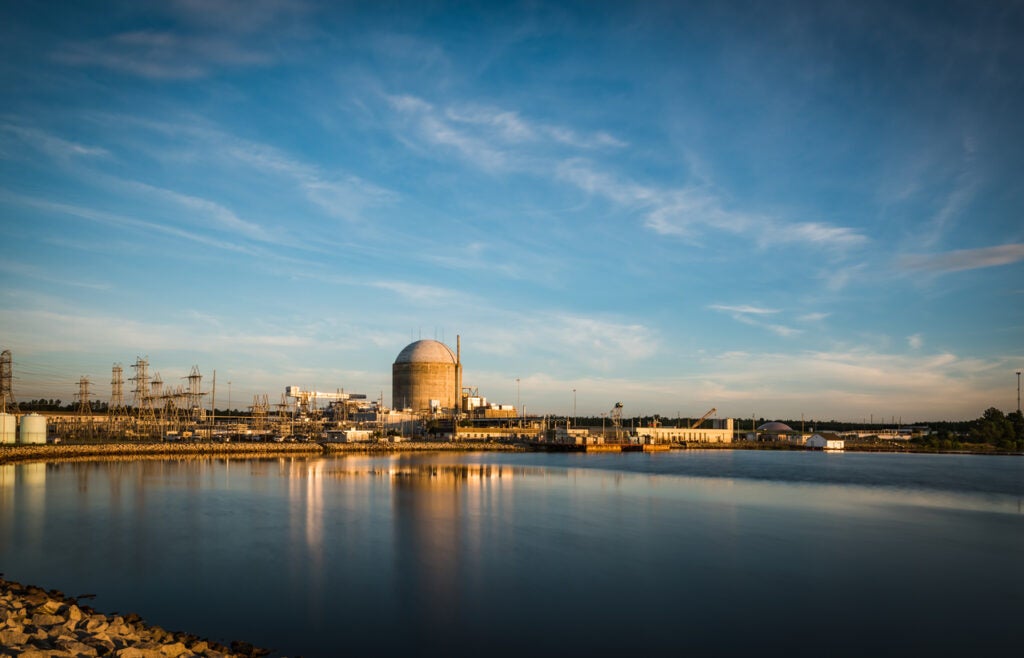
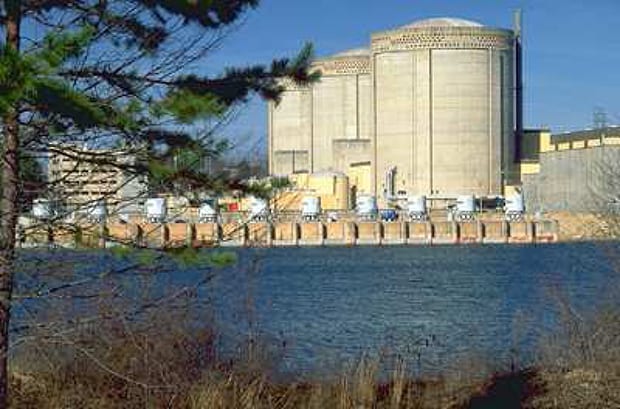
Duke operates 11 reactors at six sites across the Carolinas, totaling roughly 11,000 MW of capacity. The oldest, Robinson, started up in 1970; the newest came online in 1986. Together, the fleet produces more than half of the electricity consumed in the Carolinas year in and year out, making nuclear what Capps called “a cornerstone of our generation portfolio.”
The 97%-plus capacity factor reflects more than equipment reliability, he said. Duke has spent the past several years systematically identifying risks that could disrupt operations and putting controls in place to manage them—an organizational shift Capps credits for fewer surprises and more predictable generation.
Tomorrow: Stretching the Useful Life
The near-term agenda runs on two parallel tracks: subsequent license renewals (SLRs) and capacity uprates.
The Nuclear Regulatory Commission approved 80-year operating licenses for the three units at Oconee Nuclear Station in April 2025. The agency followed this year with approval for the 759-MW Robinson plant in Darlington County, South Carolina, clearing the half-century-old reactor to operate through 2050. An SLR application for Brunswick is planned for the latter part of this year, and Capps said Duke’s intent over the next several years is to take the entire fleet to 80-year licenses.
The uprate program is advancing alongside the licensing work. Several Duke units were uprated in the early 2000s, but the two reactors at McGuire and Catawba Unit 1 were not. That work is now underway, with each affected unit expected to gain roughly 75 MW of electrical output. Combined with smaller measurement-uncertainty-recapture uprates at Oconee and Brunswick, the program will deliver about 300 MW of additional nuclear capacity, Capps said—“the equivalent of a small modular reactor,” for a modest capital outlay and essentially the same ongoing operations and maintenance cost.
Mechanically, the work concentrates on the secondary side. Raising a reactor’s licensed thermal megawatt output lets Duke load more highly enriched fuel and extract more thermal energy, but it requires upgrading components sized for the original rating—feedwater heaters, moisture separator reheaters, and some of the large secondary pumps and motors. The analytical and licensing scope is significant. The capital cost per megawatt is not.
The Future: New Nuclear, With Eyes Open
Duke’s most recent integrated resource plan reflects new nuclear capacity in the Carolinas in 2037. The company is now working through what Capps called a “decision-making framework” covering site selection, technology selection, and—most consequentially—the economic and financial aspects of the project. Multiple sites in the Carolinas are under consideration, and multiple reactor technologies are being evaluated using an industry-developed framework intended for that purpose.
Capps declined to name leading candidates, saying flatly, “no decisions at this point.” But he was direct about what would gate the decision. Duke’s residential rates are among the lowest in the country, and the company is acutely aware that large nuclear projects have a long history of schedule and cost overruns that has at times fallen hard on customers.
“Anytime you undertake a large capital project, you’ve got to have an eye towards how you will manage the risk and how you will ensure that you’re predictable relative to the schedule and to the cost,” he said.
Whether the future plant is a small modular reactor or a gigawatt-scale light-water reactor remains open. Capps acknowledged pros and cons on both sides, but he made clear the technology decision sits inside the economic evaluation, not above it.
Duke Energy’s Vision
Capps closed the conversation by returning to his framing. “Today is the safe, reliable, cost-effective operation of our existing fleet,” he said. “Tomorrow, we look at as the nearer term—those things like subsequent license renewal, uprates that will give us additional life and additional capacity. And then the future is where we put new nuclear, and the work we’re doing to plot a path there.”
The throughline is cost discipline. A 97% capacity factor, a fleet-wide license-renewal push, and 300 MW of uprate capacity are all ways of meeting load growth without asking customers to underwrite the risk that has historically come with new nuclear construction. The timeline gives Duke Energy the runway to make its next move deliberately.
To hear the full interview with Capps, listen to The POWER Podcast. Click on the SoundCloud player below to listen in your browser now or use the following links to reach the show page on your favorite podcast platform:
For more power podcasts, visit The POWER Podcast archives.
—Aaron Larson is POWER’s executive editor (@AaronL_Power, @POWERmagazine).