A Houston startup aims to bring Japan’s high-temperature reactor legacy to Texas, betting a 950C HTGR can open new markets for industrial heat, hydrogen, and advanced nuclear deployment.
A Houston-based nuclear technology startup is advancing a high-temperature gas-cooled reactor (HTGR) design that targets outlet temperatures of 950C (1,742F)—well beyond the range of most advanced reactor concepts under active U.S. development.
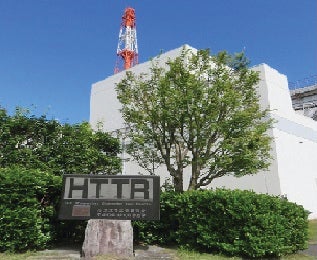
ZettaJoule’s ZJ0 reactor—a very-high-temperature gas-cooled reactor derived from Japan’s High Temperature Engineering Test Reactor (HTTR) program—targets industrial processes that require high outlet temperatures, including refining, synthetic fuel production, hydrogen production, steelmaking, chemical manufacturing, desalination, and data centers, ZettaJoule Co-Founder, President, and CEO Mitsuo Shimofuji told POWER in a March interview.
The approach depends on a high-temperature intermediate heat exchanger fabricated from Hastelloy XR, a nickel-based alloy developed by the Japan Atomic Energy Agency (JAEA) for the HTTR program. “It’s not about how much the reactor can produce,” Shimofuji said. “It’s about extracting that heat. The alloy is in the heat exchanger.”
The company has made rapid progress since signing a memorandum of understanding (MOU) with the Texas A&M Engineering Experiment Station (TEES) on Feb. 26, 2026. The MOU allows TEES to explore the construction of a ZJ0 on the College Station campus, adjacent to the TEES Nuclear Engineering and Science Center, which already operates two research reactors. Both parties are now negotiating a binding agreement that will specify design milestones, regulatory gates, and financing terms.
TEES would own the reactor and hold the Nuclear Regulatory Commission (NRC) license, Shimofuji said, while ZettaJoule would lead design, engineering, procurement, and construction management (EPCM), and assist in fundraising. Texas A&M projects the ZJ0 could attract up to $1 billion in downstream research collaborations, industrial partnerships, and federal funding over the following decade.
Shimofuji said the company’s commercial proposition rests on three elements: a proven reactor architecture, a heat exchanger material with a demonstrated high-temperature operating record, and a founding team drawn from the institutions that built and operated the original HTTR. “We are not starting our design from zero,” he said.
According to Shimofuji, ZJ technology targets a longstanding gap: While several industrial processes require temperatures above 700C, that heat is still largely supplied by burning natural gas. “As you might appreciate, nuclear reactors, regardless of the technology, the focus has been on electricity mainly,” he said.
Nuclear technology has long been viewed as a potential solution to this gap. The Generation IV International Forum (GIF) classifies this design space as the Very High Temperature Reactor (VHTR)—a graphite-moderated, helium-cooled architecture capable of core outlet temperatures between 700C and 950C, and potentially above 1,000C in future configurations. The VHTR is one of six Gen IV systems GIF has prioritized for development, in part because its thermal output range aligns with hydrogen production, petrochemical processing, metallurgy, and chemical synthesis.
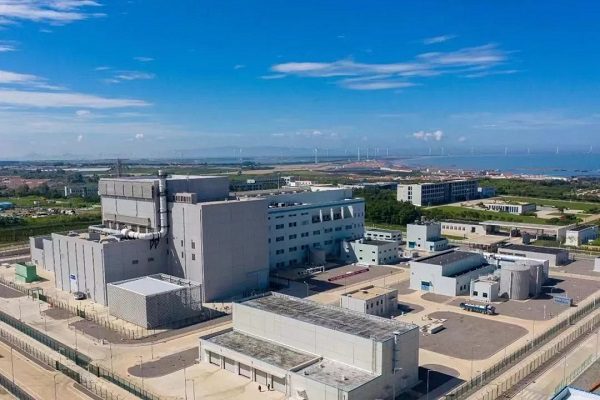
GIF’s own technology assessments note that most current VHTR development has gravitated toward the lower end of that range—700C to 850C—to reduce materials challenges and deployment risk. The only operating commercial-scale HTGR, China’s HTR-PM at Shidao Bay, which entered commercial operation in December 2023, runs at a 750C reactor outlet temperature. ZettaJoule is targeting the upper limit of the VHTR envelope: 950C at the reactor outlet—200C above the HTR-PM and the same ceiling Japan’s HTTR demonstrated at full thermal power in April 2004, the first time any HTGR achieved that temperature worldwide, sustained across a 50-day continuous run in March 2010.
ZettaJoule’s 950C HTGR Targets Industrial Process Heat, Hydrogen, and Data Centers
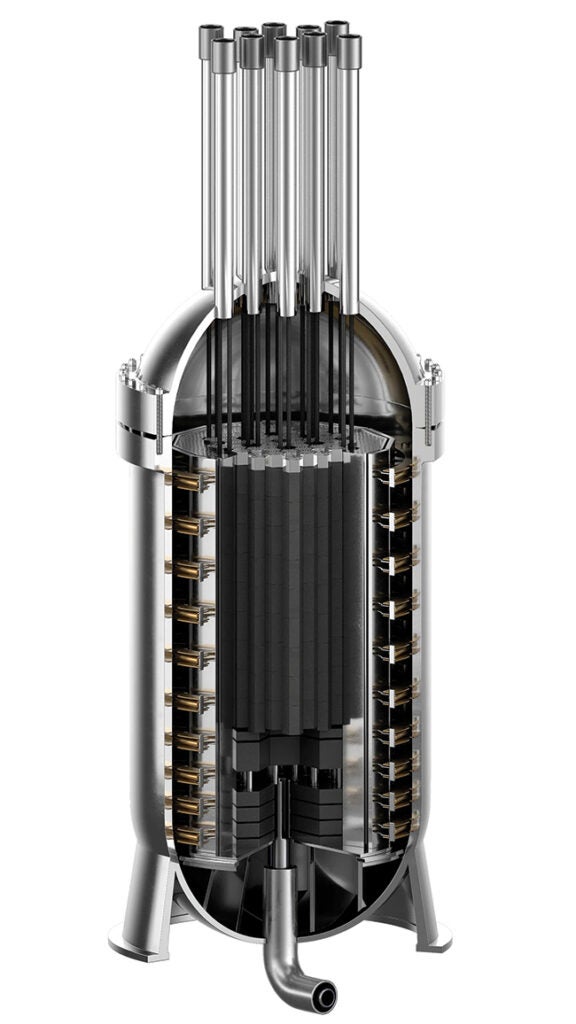
The ZJ is a prismatic-block HTGR. Fuel compacts containing tristructural isotropic (TRISO)-coated particles—uranium kernels approximately 350 to 500 microns in diameter, each encapsulated in successive layers of pyrolytic carbon and silicon carbide—are loaded into hexagonal graphite fuel blocks that form the reactor core. As the U.S. Department of Energy has noted, TRISO particles are capable of retaining fission products at temperatures up to 1,800C, well above any temperature the core would reach under normal operation or design-basis accidents.
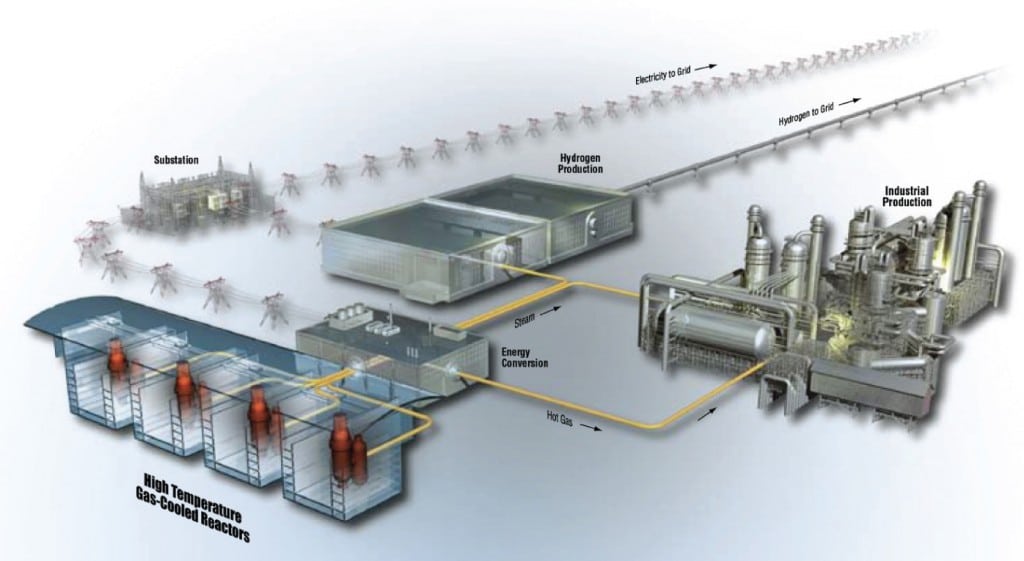
Helium at high pressure circulates through coolant channels in the graphite blocks, picks up heat from the fuel compacts, and exits the reactor vessel at up to 950C. That primary helium stream then passes through an intermediate heat exchanger, where its thermal energy transfers to a secondary loop for delivery to an industrial process or power conversion system.
The reactor’s graphite moderator, ceramic fuel, and low power density—30 MWth at initial deployment, scalable to 600 MWth—enable passive safety behavior, as demonstrated by the HTTR in a series of increasingly demanding tests. In 2010, JAEA completed a loss-of-forced-cooling test at 30% power. And in January 2022, it repeated the test at 100% power—30 MWth—after restarting the HTTR following post-Fukushima safety enhancements. On March 27–28, 2024, JAEA completed what it described as the world’s first loss-of-forced-cooling demonstration on a prismatic HTGR at 100% power under restricted control rod insertion: all helium circulators were stopped, control rod insertion was blocked, and reactor power decreased naturally and stabilized without operator intervention or core damage. “It’s enough to show that this works,” Shimofuji said.
ZettaJoule’s central technical focus rests on its intermediate heat exchanger—the component that extracts heat from the primary helium loop and transfers it to an industrial process. Extracting 950C heat from a primary helium stream requires a structural material that maintains mechanical integrity under sustained high-temperature, high-pressure helium service—a chemically reactive environment in which coolant impurities generated from graphite core materials can corrode metals and promote surface cracking under creep stress.
Developed specifically for high-temperature helium service, Hastelloy XR—a modified version of the commercially available Hastelloy X developed jointly by JAEA and Mitsubishi—was qualified for use in the HTTR’s intermediate heat exchanger. JAEA has described it as applicable at 950C—the highest temperature then approved for a nuclear structural material—and has documented its performance record in a 2018 technical summary of HTTR technologies developed for future commercial deployment.
However, Shimofuji noted that qualification of high-temperature structural materials remains an important area of focus. While materials such as Hastelloy XR—developed for the HTTR program—have demonstrated performance in high-temperature helium environments, they are not currently codified under the American Society of Mechanical Engineers (ASME) Boiler and Pressure Vessel Code. ZettaJoule is therefore evaluating multiple material pathways, including alloys with existing ASME code qualification as well as approaches that could support future qualification of advanced materials. “Material selection will ultimately be aligned with the applicable regulatory framework and licensing strategy,” he said.
He added that the company intends to draw on publicly available data and, where appropriate, engage with organizations that have prior high-temperature reactor experience to inform its approach. “We see value in leveraging existing operational knowledge while ensuring that any material deployed meets regulatory expectations,” Shimofuji said.
TEES would pursue licensing under the research reactor pathway—10 CFR Part 50—which carries a lower regulatory burden than a commercial power reactor application and allows the NRC to grant material exemptions for non-power facilities, Shimofuji said. Under that framework, ZettaJoule could seek to use high-temperature alloys in research service without full ASME Boiler and Pressure Vessel Code Section III, Subsection NH qualification, relying in part on existing test and operating records as the technical basis.
Texas A&M Research Reactor Path and IPP Model Could Advance U.S. High-Temperature Nuclear
The NRC accepted X-energy’s construction permit application for the Dow facility at Long Mott, Texas, in June 2025, estimating an 18-month review timeline, he noted. Kairos Power’s Hermes 2 construction permits cleared NRC review in just over one year, with approval issued in March 2026. Shimofuji expects the research reactor track to move faster than either commercial application. Formal pre-application engagement requires completing a preliminary design, which he estimated could take about one year. For now, the construction target at Texas A&M is 2031 to 2033, he said.
ZettaJoule’s commercial model is an independent power producer structure, which means the company would own reactor assets, site them at customer premises, and sell thermal energy, electricity, and cooling under long-term offtake agreements. While the first-of-a-kind project at Texas A&M is expected to require substantial upfront capital, Shimofuji said he expects vendor contributions and government support to increase as the deployment record develops and drive down the net cost of delivered energy over subsequent units. “Our hope is to become one of the lowest-cost producers by the late 2030s,” he said. “Initially, this is not going to be cheap. I’m not going to lie about that.”
For now, ZettaJoule’s team brings an unusually complete stack of experience that underwrites the feasibility of its high-temperature reactor concept. Co-founders Shimofuji and Jeffrey Harper are building commercial and project-delivery credibility through major-project, industrial, and customer-facing experience, while Kazuhiko Kunitomi and Finis Southworth contribute decades of hands-on HTGR and NGNP leadership that provide a proven technical pathway from Japan’s HTTR to U.S. deployment, Shimofuji said. On the regulatory side, Rumina Velshi, Andrea Veil, and Kym Harshaw bring deep command of Canadian and U.S. nuclear oversight and licensing, reducing execution risk around novel alloys, designs, and siting. Execution specialists like Ken Petrunik—who has delivered multiple CANDU units on time and on budget—and senior engineers such as Yasushi Fukuizumi, Tetsuaki Takeda, and Ikuo Ioka add the practical know-how to turn designs into operating assets.
The depth of expertise is deliberate, Shimofuji stressed: “We need people with credibility, who have a lot of social capital, which means a good track record, so they can attract more people, and they can attract partners or investors or customers or get political support.”
Texas A&M’s role is partly strategic, he said. The university feeds graduate engineering talent into the Gulf Coast refining and petrochemical corridor, and the addition of the ZJ0 would make it the only U.S. university operating more than two research reactors on a single campus. Shimofuji said the company chose the U.S. as its launch market because Japan lacks a regulatory framework for licensing commercial advanced reactors. “If you can license in the U.S. and succeed in the U.S., then we can go anywhere,” he said.
—Sonal C. Patel is a POWER senior editor (@sonalcpatel, @POWERmagazine).